2027 Online BA in Psychology - Mental Health: Choosing a Program When You Cannot Move for Your First Job
Audited and Verified:
Our Editorial and Data Verification Process
Research.com uses government datasets, official education statistics and primary institutional information to support its career and degree guides. Our review process checks factual accuracy, occupational definitions, source dates and the requirements associated with the credentials discussed.
How This Article Was Fact-Checked
Our editorial team verifies salary estimates, employment projections, education requirements and program information against original data providers and official organizations. Salary figures are checked against the relevant occupational definitions and reporting periods. Information about licensure, accreditation and required in-person training is reviewed separately.
Fact-checked and verified on:

Co-Founder and Chief Data Scientist
Your first job may be in the only place you can afford to live, while the psychology program that interests you is elsewhere. An online BA can remove the move from the equation, but it cannot automatically provide local experience, flexible hours, or a path into clinical practice. This guide is for students who need to keep working in one location while preparing for mental-health-related work. It explains how to compare programs against your job schedule, available placements, budget, and next career step before you enroll.
Key Things You Should Know
- An online BA can let you stay near your first job, but confirm live classes, campus visits, and whether required experience can be completed locally before enrolling.
- A bachelor's degree commonly requires about 120 semester credits; accepted transfer credits do not necessarily satisfy psychology-major requirements or shorten the course sequence.
- A mental-health focus can support applications for nonclinical roles, but the BA alone does not qualify you to diagnose conditions, provide psychotherapy, or practice as a licensed psychologist.
What is an online BA in psychology focused on mental health?
It is a psychology bachelor's degree delivered primarily online, with coursework that examines mental disorders, development, behavior, research, and mental-health service systems. "Mental health" may be an officially recorded concentration, a group of electives, or simply a program description. Check the catalog and transcript policy rather than assuming those labels mean the same thing.
The BA is an academic degree, not clinical training. Its value for someone who cannot move is the chance to study while building a work history in the local area. That advantage depends on whether the program permits local, remote, or optional applied experiences. If substance-use and recovery services are your specific interest, a bachelor's-level addiction psychology program guide can help you compare that narrower academic focus with a broader mental-health curriculum.
Can an online psychology bachelor's degree lead to mental health careers?
Yes, particularly in nonclinical support work, but employers hire for duties and demonstrated skills, not the concentration name alone. If you already work at a community agency, clinic, school, or nonprofit, consider whether the degree would help you take on documented responsibilities such as service coordination, outreach, program support, or data reporting. Ask your supervisor what qualifications the next role actually requires.
If your first job is outside human services, local volunteering or a supervised, nonclinical placement may help bridge the experience gap. For example, recovery organizations may need staff who organize referrals and communicate respectfully with clients; the rules for peer-support or addiction-counseling credentials are separate. Explore roles in community recovery organizations by their actual duties, then compare local postings with the experience your program can help you obtain.
How do you choose an accredited online psychology bachelor's program?
First, confirm the institution's accreditation with its recognized accreditor and check that the online BA, its requirements, and its state enrollment authorization apply to you. Institutional accreditation matters for academic quality and matters when seeking federal aid, but it does not certify that this BA leads to clinical licensure. APA does not accredit general psychology bachelor's programs.
Then compare programs against constraints that could force you to leave your job. The distinctions below are more useful than a general claim that a degree is "fully online."
| Feature to verify | Why it matters if you cannot move |
| Live sessions and time zone | Required meetings may overlap with work even when lectures are recorded. |
| Campus visits and examinations | Travel can make an otherwise online program impractical. |
| Internship or capstone rules | A local employer or remote project may need advance academic approval. |
| Course rotation and transfer audit | Missing prerequisites or infrequent required courses can delay graduation. |
| Advising and career support | Access to staff and employers in your area may be limited. |
Request the current catalog, a sample course schedule, and written answers about location-dependent requirements. When evaluating psychology degree programs for online learning, give more weight to those documents than to an advertised completion time or flexibility claim.
No. An online psychology BA - even one with a mental-health concentration - does not by itself authorize psychotherapy, diagnosis, independent psychological testing, or use of a protected clinical title. Requirements depend on the profession and state; licensed counseling, clinical social work, school psychology, and psychologist pathways involve different qualifying education and supervised training.
If your goal is licensed treatment rather than support or coordination, identify the specific license and the state where you expect to practice before choosing undergraduate electives. A later program designed for that credential may matter much more than the BA's concentration label. Likewise, addiction counseling education options online should be checked against the relevant state's credential rules, not treated as interchangeable with an academic psychology focus.
Expect a foundation in psychological science, statistics, research methods, development, and social or biological psychology, alongside available courses on psychopathology, health, addiction, or community mental health. Exact requirements vary. For a first job in services, prioritize courses that strengthen evidence reading, ethical communication, cultural responsiveness, and careful handling of sensitive information - not just courses with clinical-sounding titles.
Check prerequisites and when required methods courses are offered; an online course is little help if it is unavailable until after your intended graduation term. If a forensic elective attracts you, distinguish that interest from a separate graduate specialization. The forensic psychology master's study with faster pacing route serves a different academic decision and does not turn undergraduate mental-health coursework into forensic or clinical authority.
First-year applicants generally need to meet the university's undergraduate admission rules; transfer applicants also need an evaluation of prior college work. Some institutions separately control entry to the major. Ask for an official degree audit showing which credits count toward general education, psychology prerequisites, the major, and the institution's own credit requirements. Acceptance of a statistics course as elective credit, for example, does not prove it satisfies the major's statistics requirement.
If you may later apply to a specialized graduate program, preserve course descriptions and confirm its prerequisites separately; BA admission is not graduate admission. This distinction matters when comparing forensic psychology program costs and entry requirements with the requirements for finishing your undergraduate degree while employed.
A bachelor's degree commonly totals about 120 semester credits, but your remaining credits and completion time depend on the school's audit, course sequence, and how many classes you can take while working. Part-time enrollment may protect your income while extending the number of terms you pay fees. A faster calendar is useful only if required courses are available when you need them.
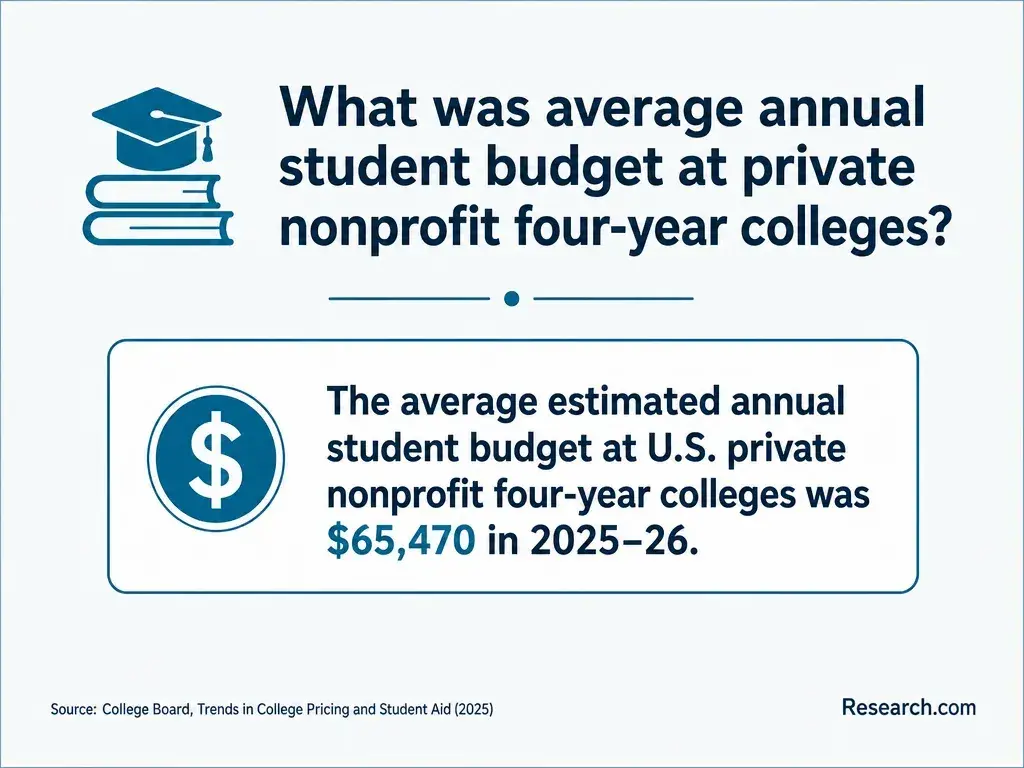
Compare the written cost to finish: remaining credits multiplied by the applicable tuition rate, plus mandatory fees, materials, technology, and any travel or unpaid placement expenses. Ask the financial-aid office how your planned enrollment level affects aid eligibility, and check employer tuition assistance before borrowing. Accelerated BA and BS psychology pathways are worth considering if their course load fits your job; speed alone does not establish a lower total cost.
Online study removes a routine commute or relocation, not necessarily scheduled attendance. Campus study may make faculty research, local recruiting, and informal peer contact easier to access. An online program can provide those opportunities too, but you should confirm how students actually meet faculty, collaborate on projects, and obtain references or approved experience.
Ask for a typical week in required courses: recorded lectures, fixed-time discussions, group meetings, and deadlines can have different effects on a work schedule. Check whether remote research assistance or a local nonclinical internship is possible without assuming either is guaranteed. If graduate study is part of your longer-term plan, remember that psychology master's programs with intensive pacing may impose a different workload and live-session schedule from the BA you choose now.
Potential applications include behavioral-health support staff, intake or referral coordinator, community outreach worker, human-services assistant, and research or program assistant. In these jobs, tasks may include explaining services, maintaining records under supervision, coordinating appointments, or collecting program data. Eligibility varies by employer, experience, and any state-specific credential rules; job titles alone do not establish what you may do with clients.
Use your current location as a career test: review nearby postings, note their required credentials and hours, and ask whether your existing job can offer relevant, supervised nonclinical duties. If postings consistently require a different credential, a targeted qualification or a job change may be more direct than this BA. For a later forensic interest, evaluating intensive forensic psychology graduate degree timelines is a separate planning step; a fast graduate degree is not itself authorization for forensic assessment.
What salaries and job outlook can psychology graduates expect?
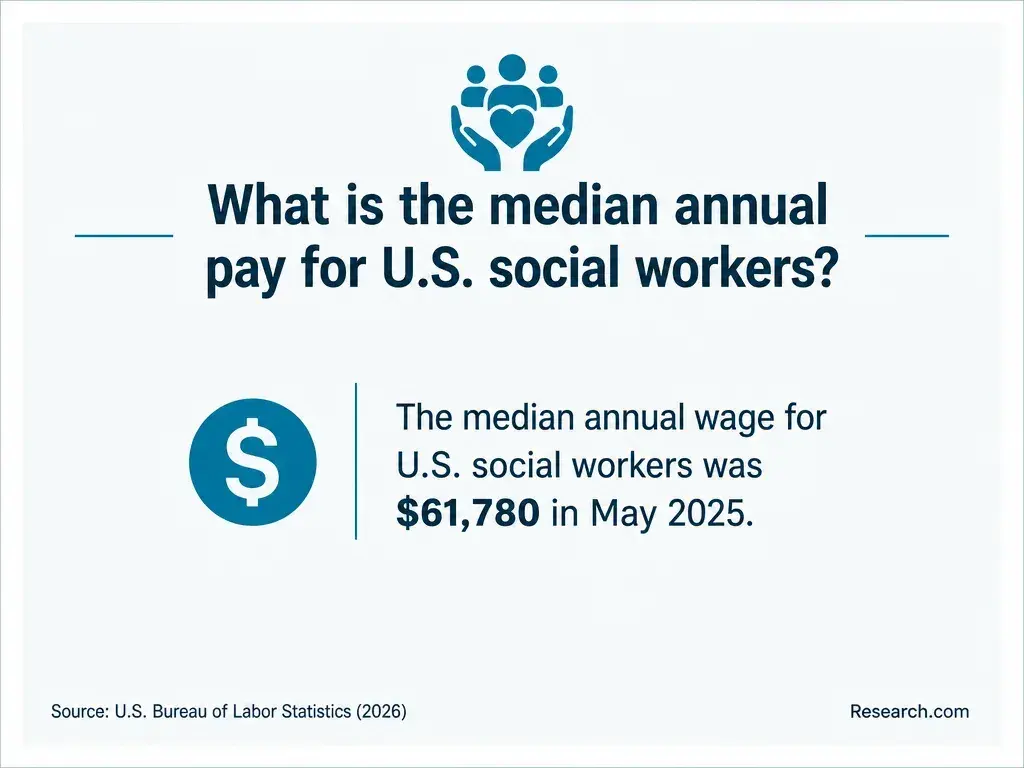
There is no single salary or job-growth rate for "online psychology BA graduates." The U.S. Bureau of Labor Statistics reports pay and projections by occupation, not by undergraduate concentration or delivery format. Its social and human service assistants category is a useful comparison for some support roles, but it also includes workers with different education and experience; it is not a prediction of your first offer.
For a decision you can use, compare the pay ranges and qualifications in local postings for your target role with your current earnings, likely education costs, and whether the job offers advancement without another credential. If your interest is substance-use services, investigate tuition assistance routes for substance abuse counseling undergraduates while checking whether that education matches your state's rules. A BA makes financial sense when its attainable local opportunities justify its remaining cost - not because an occupation-wide median looks attractive.
Other Things You Should Know About Psychology
Possibly, but tell the university before moving. State authorization, placement agreements, and access to services can differ by location.
That depends on the institution. Ask the registrar what appears on the diploma and transcript rather than assuming either will identify the delivery format.
Follow your employer's confidentiality rules and the course instructions. Do not share identifiable client information or assume that changing a name makes a case safe to disclose.
Contact your advisor before dropping a course. Ask about section changes, leave policies, and financial-aid consequences so a schedule change does not create an avoidable academic or billing problem.
- Cost of Attendance (Budget) | 2024-2025 Federal Student Aid Handbook https://fsapartners.ed.gov/knowledge-center/fsa-handbook/2024-2025/vol3/ch2-cost-attendance-budget
- Accreditation in the U.S. | ed.gov http://www.ed.gov/laws-and-policy/higher-education-laws-and-policy/college-accreditation/accreditation-in-the-us
- Types of Financial Aid: Grants, Work-Study, and Loans | studentaid.gov https://studentaid.gov/understand-aid/types
- State Authorization and Program Availability | UofL Online | Information Technology Services https://online.louisville.edu/resources/compliance/state-authorization
- Online Bachelor's in Psychology | University of Kansas https://online.ku.edu/undergraduate-programs/online-bachelors-psychology
- Preparing to Use Your Bachelor's Degree in Psychology | apa.org https://www.apa.org/education-career/guide/bachelors
- How Do Social Work Field Placements Work? | Virginia Commonwealth University https://onlinesocialwork.vcu.edu/blog/social-work-field-placement/
- State Authorization and Distance Education | Fitchburg State University https://www.fitchburgstate.edu/academics/100-online/state-authorization-and-distance-education
- Ready or Not, Here It Comes! New Regulations When Offering Programs Leading to a License Effective July 1! | WCET https://wcet.wiche.edu/frontiers/2024/05/16/ready-or-not-here-it-comes-new-regulations-when-offering-programs-leading-to-a-license-effective-july-1/