2027 Online BA in Psychology - General Psychology for Employee Experience Research: Which Courses Should You Look For?
Audited and Verified:
Our Editorial and Data Verification Process
Research.com uses government datasets, official education statistics and primary institutional information to support its career and degree guides. Our review process checks factual accuracy, occupational definitions, source dates and the requirements associated with the credentials discussed.
How This Article Was Fact-Checked
Our editorial team verifies salary estimates, employment projections, education requirements and program information against original data providers and official organizations. Salary figures are checked against the relevant occupational definitions and reporting periods. Information about licensure, accreditation and required in-person training is reviewed separately.
Fact-checked and verified on:

Co-Founder and Chief Data Scientist
An online BA in general psychology can teach you why people behave as they do at work, but not every curriculum prepares you to study employees' experiences responsibly.
If you want to investigate engagement, belonging, workload, or retention, course titles alone are not enough: you need research design, measurement, statistics, and opportunities to practice with realistic constraints.
This guide shows prospective students and career changers which courses to prioritize, what evidence of applied learning to seek, and when a shorter route than another degree may meet the same goal.
Key Things You Should Know
- Prioritize statistics, research methods, social psychology, and psychological measurement; add industrial-organizational psychology or organizational behavior if offered.
- Look for an approved project that produces a survey plan, analysis, and decision-ready report, not just coursework about workplace behavior.
- A bachelor's degree commonly requires about 120 semester credits, but prior credits, course availability, and project requirements determine your actual time and cost.
What Is a General Psychology Degree for Employee Experience Research?
Employee experience research examines how people encounter their workplace, including onboarding, management, collaboration, inclusion, and reasons for staying or leaving.
Researchers may combine surveys, interviews, and organizational data to help an employer decide what to investigate or change. An online BA in general psychology provides a broad foundation for that work; it is not usually a dedicated employee experience credential.
The strongest fit is a general psychology major that lets you pair behavioral science with substantial methods coursework and workplace-focused electives. When reviewing online psychology degree program comparisons, inspect the actual catalog and course schedule rather than assuming every program with the same degree name offers those choices.
If you already have a bachelor's degree and workplace experience, a targeted methods course and supervised project may be more direct than earning a second BA.
Which Courses Prepare You for Employee Experience Research?
Choose courses by the research tasks they teach you to perform. Catalog descriptions should show more than exposure to a topic: look for assignments involving study design, evidence evaluation, and communication of findings.
The table separates foundational courses from useful electives so you can assess a program even when its course names differ:
| Course area | Connection to employee experience research | What to look for |
| Statistics and research methods | Support sampling, comparisons, uncertainty, and defensible conclusions. | Applied analysis and a complete study proposal or report. |
| Social and personality psychology | Inform questions about groups, identity, attitudes, and individual differences. | Attention to context and limits on generalizing findings. |
| Psychological measurement | Helps distinguish a construct, such as belonging, from the questions used to measure it. | Reliability, validity, questionnaire design, and interpretation. |
| Industrial-organizational psychology or organizational behavior | Connects psychological concepts to jobs, teams, leadership, and organizational systems. | Evidence-based treatment of work settings, not just management advice. |
| Qualitative methods or interviewing | Supports careful exploration of experiences a survey might miss. | Interview design, coding, consent, and reporting limitations. |
A useful sequence is introductory psychology and statistics before advanced methods, followed by measurement or qualitative methods and a workplace-focused project. Check prerequisites and how often electives run: an attractive elective that is not offered before graduation has little practical value.
If your goal is treatment rather than workplace research, addiction counseling education options online address a different curriculum and potential credential pathway; a general psychology elective does not substitute for it.
How Can You Verify an Online Psychology Program's Accreditation?
First, confirm the institution's current accreditation in the U.S. Department of Education's accreditation database or the accreditor's own directory.
Then confirm with the school that the online BA is offered by that institution and ask for the catalog governing your expected entry term. Accreditation is an institutional check, not proof that a particular elective, research placement, or career outcome is available.
Do not reject a general psychology BA because it lacks American Psychological Association program accreditation: APA accreditation covers specified professional psychology training programs, not general undergraduate psychology majors.
This distinction also matters when comparing accredited forensic psychology study and career preparation; a specialization's name does not change the accreditor's scope. Ask the program directly which methods courses online students can take and whether its stated research opportunities are open to BA students.
Employee experience research starts with a question an organization can act on, such as whether new employees understand how to get help. Students should learn to define the concept, choose an appropriate measure and sample, identify who may be missing from the data, and explain what the results cannot establish.
A correlation between a survey response and turnover does not show that changing the surveyed factor will prevent departures.
Seek practice cleaning data, checking missing responses, interpreting uncertainty, and presenting findings without exposing individuals. Qualitative training should cover interview questions, consistent coding, and the limits of a small or self-selected sample.
For a course project using employees or workplace records, obtain faculty guidance and organizational permission before collecting or accessing data; check whether consent, institutional review, or a data-use agreement applies.
These skills also make later graduate applications more credible, though requirements vary by program. An intensive forensic psychology master's admissions and study plan serves a different specialization; it should not dictate which undergraduate methods courses you take for employee experience research.
Online delivery can remove a commute, but it does not guarantee an asynchronous schedule or easy access to research. Campus programs may make it simpler to meet faculty and join a research team; online programs may offer remote collaboration instead.
In either format, the decisive question is whether you can complete and receive feedback on substantial research work.
Ask each school how often methods courses meet live, whether group projects have fixed meeting times, and how online students obtain supervision, software access, and approval for projects. Confirm any campus visits before enrolling.
Published lists of clinical mental health master's programs by study pace illustrate why format and speed must be checked for the specific credential; their clinical training requirements should not be assumed to apply to a psychology BA.
Schools commonly request evidence of secondary-school completion or prior college study, but GPA standards, application materials, and transfer policies differ. Admission to a university is also distinct from satisfying the psychology major's statistics or methods prerequisites.
Request an official degree audit showing which accepted credits meet general education, major, elective, and residency requirements.
For a transfer applicant, the crucial question is whether prior statistics coursework satisfies the major requirement, not merely whether it earns elective credit.
Check this before planning an accelerated schedule. Guidance on intensive online forensic psychology bachelor's study may suggest questions about transfer credit and pacing, but only your chosen institution can determine your remaining requirements.
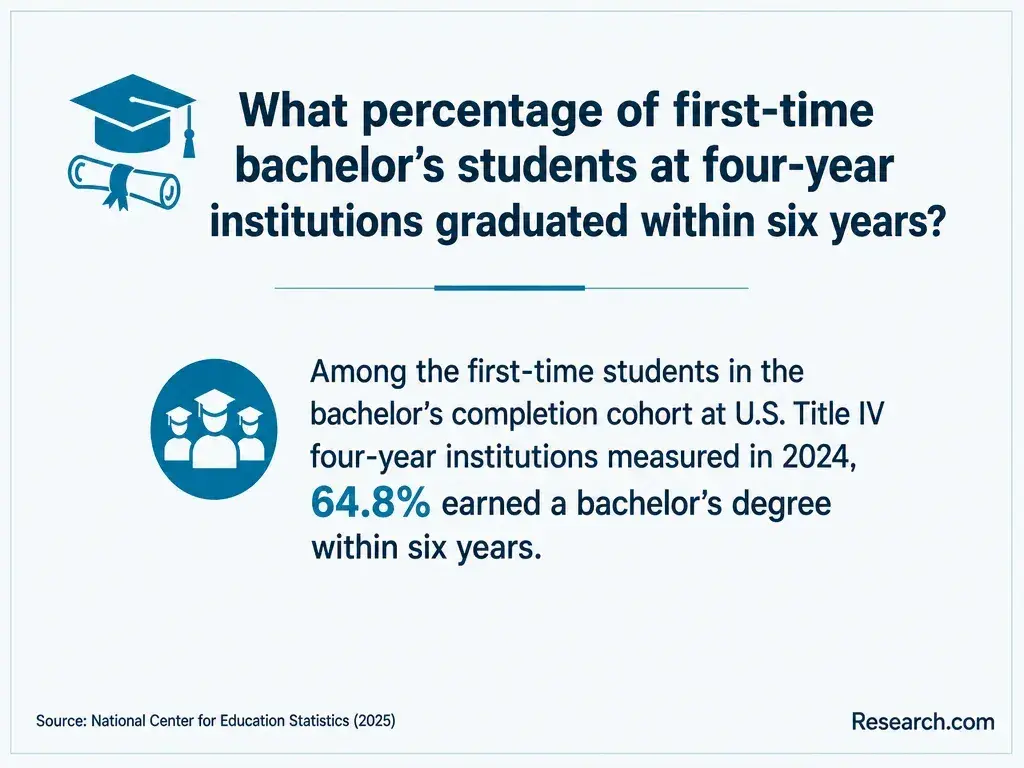
A bachelor's degree commonly totals about 120 semester credits and takes roughly four years of full-time study from the start of college.
Your remaining time depends on approved transfer credits, enrollment pace, prerequisites, and whether essential electives and capstones run when you need them. Ask for a term-by-term plan rather than relying on an advertised completion time.
Compare the cost of remaining required credits, not tuition rates alone. Include mandatory fees, materials, any project-related expenses, and the possibility of an extra term if a course is unavailable. Financial aid eligibility depends on your circumstances and the school's rules.
A guide to financial aid for substance abuse counseling bachelor's degrees can introduce common aid questions, but its program-specific assumptions should not be carried over to a psychology BA without checking.
Potential entry points include people analytics or HR research assistant, employee listening coordinator, survey operations specialist, and research assistant at an organizational consulting firm.
Responsibilities might include preparing questionnaires, scheduling interviews, checking data quality, analyzing responses under supervision, and writing findings for managers. Job titles vary, and some employers expect HR experience, stronger quantitative skills, or a graduate degree for analyst roles.
A BA is most persuasive when paired with evidence of work: a supervised project, an appropriately documented internship, or experience in HR operations or research support.
If you already work in an organization, a move into an internal survey or people analytics team may be more feasible than applying directly for a senior researcher position.
Forensic psychology graduate occupations and salary considerations describe a different labor market; match opportunities to employee research duties rather than to the word "psychology" in a degree title.
There is no reliable single salary for "employee experience researcher with a psychology BA." Employers may classify similar work under HR, market research, or specialized analytics roles, with different duties and pay.
U.S. Bureau of Labor Statistics wages for market research analysts can provide context for some survey and analysis work, but that occupation's median is not an entry-level offer or an outcome for psychology graduates.
For a useful estimate, compare local postings that specify the research tasks you can perform, required tools, experience level, and salary range. Weigh the likely change in your opportunities against the degree's remaining cost and time.
This same caution applies when reading about lower-cost addiction counseling bachelor's career preparation: earnings associated with another occupation cannot establish the return on an employee research pathway.
Do Employee Experience Researchers Need Licensure or Certification?
Nonclinical employee experience research generally does not require a psychologist's license. Employers may value training in surveys, HR systems, statistics, or data privacy, but no single certificate substitutes for demonstrated research judgment.
A psychology BA does not authorize diagnosis, psychotherapy, or independent clinical psychological assessment.
Verify requirements against the actual job description, especially if a role includes restricted assessments or clinical duties. A nonclinical master's degree does not automatically change those boundaries: online forensic psychology master's graduation planning, for example, is separate from checking a jurisdiction's requirements for licensed practice.
For employee research, prioritize ethical data handling and relevant project experience before paying for a credential an employer has not requested.
Other Things You Should Know About Psychology
No. Engagement usually describes an employee's connection or commitment to work; employee experience covers a wider range of interactions and conditions. Define which one your project will study before choosing questions.
Check its permissions, intended population, and evidence of measurement quality. An available questionnaire is not necessarily appropriate for your question or free to reproduce.
Small groups can be identifiable even without names. Discuss aggregation, access restrictions, or an alternative project with your instructor and employer before collecting responses.
Yes, if you label it as a proposal rather than completed research. Show your question, design, and limitations without including confidential workplace information or implying that recruitment or data access was approved.
- Best practice assessment methods for the undergraduate psychology program: a narrative review of the literature - PMC https://pmc.ncbi.nlm.nih.gov/articles/PMC12218498/
- Principles and Best Practices for Protecting Participant Privacy | Grants & Funding https://grants.nih.gov/policy-and-compliance/policy-topics/sharing-policies/dms/privacy/best-practices
- Read the Belmont Report | hhs.gov https://www.hhs.gov/ohrp/regulations-and-policy/belmont-report/read-the-belmont-report/index.html
- Qualitative Study - StatPearls - NCBI Bookshelf https://www.ncbi.nlm.nih.gov/books/NBK470395/
- Industrial and Organizational Psychology | apa.org https://www.apa.org/education-career/guide/subfields/organizational
- Research Ethics and Informed Consent | Educational Research Basics by Del Siegle https://researchbasics.education.uconn.edu/ethics-and-informed-consent/
- Online vs in-person learning in higher education: effects on student achievement and recommendations for leadership https://www.nature.com/articles/s41599-023-02590-1
- What Is a Capstone Project? - Boston University Questrom https://www.bu.edu/questrom/blog/what-is-a-capstone-project/
- 10 Industrial-Organizational Psychology Jobs to Consider | Touro University Worldwide https://www.tuw.edu/psychology/industrial-organizational-jobs/
- Online Bachelor's in Psychology | University of Kansas https://online.ku.edu/undergraduate-programs/online-bachelors-psychology