2027 Online BA in Psychology - Mental Health for Refugee Resettlement Staff: Compare Transferable Skills and Degree Requirements
Audited and Verified:
Our Editorial and Data Verification Process
Research.com uses government datasets, official education statistics and primary institutional information to support its career and degree guides. Our review process checks factual accuracy, occupational definitions, source dates and the requirements associated with the credentials discussed.
How This Article Was Fact-Checked
Our editorial team verifies salary estimates, employment projections, education requirements and program information against original data providers and official organizations. Salary figures are checked against the relevant occupational definitions and reporting periods. Information about licensure, accreditation and required in-person training is reviewed separately.
Fact-checked and verified on:

Co-Founder and Chief Data Scientist
Refugee resettlement staff already navigate housing, benefits, schools, and referrals while supporting people affected by displacement. An online BA in psychology may strengthen that work, but its value depends on the skills you need, the credits you have, and whether your goal is service coordination or clinical care.
This guide compares transferable mental-health skills with degree requirements, online learning obligations, costs, and career options. It will help you decide whether a psychology degree is worth pursuing or whether targeted training offers a more direct route.
Key Things You Should Know
- An online psychology BA can strengthen evidence-based communication, developmental knowledge, and service evaluation, but it does not qualify staff to diagnose or provide therapy.
- A bachelor's degree commonly requires about 120 semester credits; an official degree audit, not the number of credits accepted in transfer, determines what remains.
- Choose a full degree when it meets a specific hiring or advancement requirement. For an immediate referral or outreach skill gap, supervised workplace training may be faster and less costly.
What does an online psychology bachelor's degree offer refugee resettlement staff?
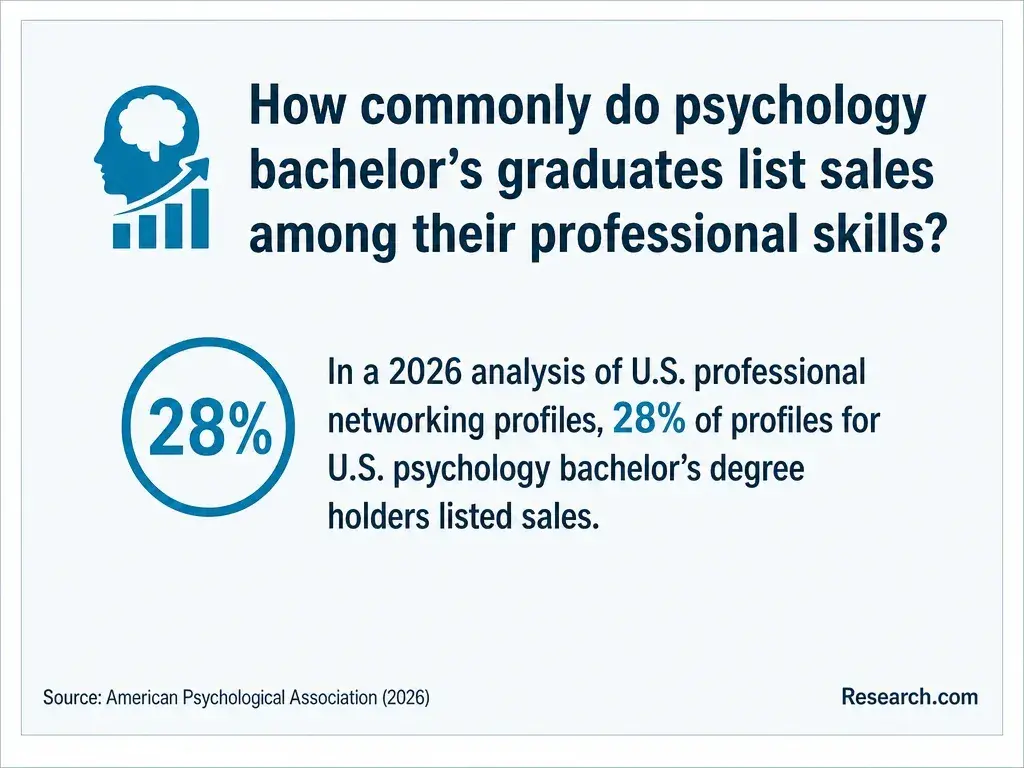
A psychology BA studies behavior through scientific methods rather than training students to deliver mental-health treatment. For resettlement staff, its strongest uses are understanding development and stress responses, evaluating claims about interventions, communicating without making diagnostic assumptions, and improving nonclinical services.
Start with the work you want to do next. If an internal coordinator role requires a bachelor's degree, completing one may remove a hiring barrier. If you already hold a bachelor's and need stronger referral practices, a second degree may have limited value compared with agency training, mentorship, or a relevant certificate.
When comparing online psychology degree curricula, look for methods and community-relevant electives rather than relying on a program's mental-health language alone.
Which mental health skills transfer to refugee resettlement careers?
Experienced staff may already bring trust-building, interpreter coordination, documentation, and knowledge of local services. Psychology study can help them explain and evaluate those practices, but classroom knowledge must be matched to supervised responsibilities.
The comparison below separates useful skills from clinical tasks a BA does not authorize. Use it to identify a course or workplace experience that would close a real gap.
| Resettlement task | Useful psychology preparation | Evidence of readiness and boundary |
| Discussing support needs | Development, cultural psychology, and attentive communication | Demonstrate respectful conversations and appropriate referrals; do not infer a diagnosis from a client's history. |
| Connecting clients with services | Knowledge of stress, help-seeking, and service barriers | Maintain an accurate referral directory and follow agency protocols; do not present a referral as treatment. |
| Improving a program | Research methods, statistics, and evidence appraisal | Produce an approved, privacy-conscious service summary; do not access client records without authorization. |
Some staff also encounter substance-use concerns. Recovery-focused roles and qualifications are worth comparing separately: outreach and referral differ from credential-regulated counseling, and state rules vary.
What degree requirements prepare students for refugee resettlement work?
Most psychology BAs combine general education, psychology foundations, statistics, research methods, advanced coursework, and electives. A useful degree plan makes room for cultural and developmental psychology while preserving rigorous methods training. If you may later apply to graduate school, ask whether your planned courses meet that program's specific prerequisites.
Returning students should request an official audit showing which prior courses satisfy general education, major, prerequisite, and residency requirements. An accepted statistics credit, for example, may not satisfy the psychology major's methods sequence.
Ask when required courses run and whether the school will approve a project or internship based at your current agency; employment alone does not establish academic credit or permission to use client information.
Speed matters less than fit. Even when comparing three-year forensic psychology bachelor's routes, resettlement staff should check remaining requirements and whether a justice-focused curriculum actually supports their service goals.
Online study can reduce commuting, but it does not automatically accommodate an unpredictable caseload. The useful comparison is how each program schedules learning, supervision, and any applied work, not simply where lectures appear.
| Feature | Online BA | Campus BA |
| Weekly schedule | May offer recorded lessons but still require live meetings and fixed deadlines | Usually has scheduled classes and travel time |
| Applied experience | May require the student to arrange an approved local site | May offer nearby partners, subject to availability and approval |
| Research access | Remote projects may be available; confirm faculty supervision | May make in-person labs easier to access |
Ask for sample course schedules, placement rules, and leave policies before committing. If planning an intensive online psychology degree, check whether compressed terms leave enough time for full-time client work and careful research assignments.
Common core subjects include introductory, developmental, social, and biological psychology, plus statistics and research methods. Offerings vary by school. For resettlement work, cultural psychology, health psychology, community psychology, and courses examining mental health as an academic subject may be especially relevant when available.
Methods courses deserve attention: staff who can distinguish a useful service measure from a misleading one can contribute to grant reporting and program improvement. An elective about psychological disorders does not teach a student to assess clients clinically.
Likewise, forensic psychology admissions and education planning is relevant mainly if your target work specifically involves justice-system partnerships; the label alone is not preparation for resettlement support.
First-year applicants generally submit prior school records; transfer applicants should expect college transcripts and a separate credit evaluation. Schools may differ on GPA thresholds, admission to the major, and whether prior statistics or psychology courses meet major requirements. Ask the institution, not a prospective employer, to confirm academic equivalencies.
For an accurate completion decision, send transcripts for every prior college and request a written degree audit. Check how it treats associate-degree coursework, quarter credits, older courses, and credits that count only as electives.
Then compare the remaining sequence with your work schedule and budget. Guides to online psychology education on a budget can help identify programs to investigate, but only each school can confirm your admission, transfer credit, and actual charges.
Completion time depends on credits that apply to the degree, course availability, and how many courses you can manage alongside resettlement work. Compare total remaining tuition and mandatory fees, not just a per-credit price. Include books, technology, possible placement travel, and earnings lost if you reduce work hours.
Ask the financial-aid office whether your planned course load qualifies for aid and whether your employer offers education assistance. If your goal is specifically substance-use services, information on grants for substance abuse counseling bachelor's study may help you compare funding routes.
Eligibility and program fit still require individual confirmation. Do not assume a shorter advertised timeline means fewer remaining requirements or a lower total cost.
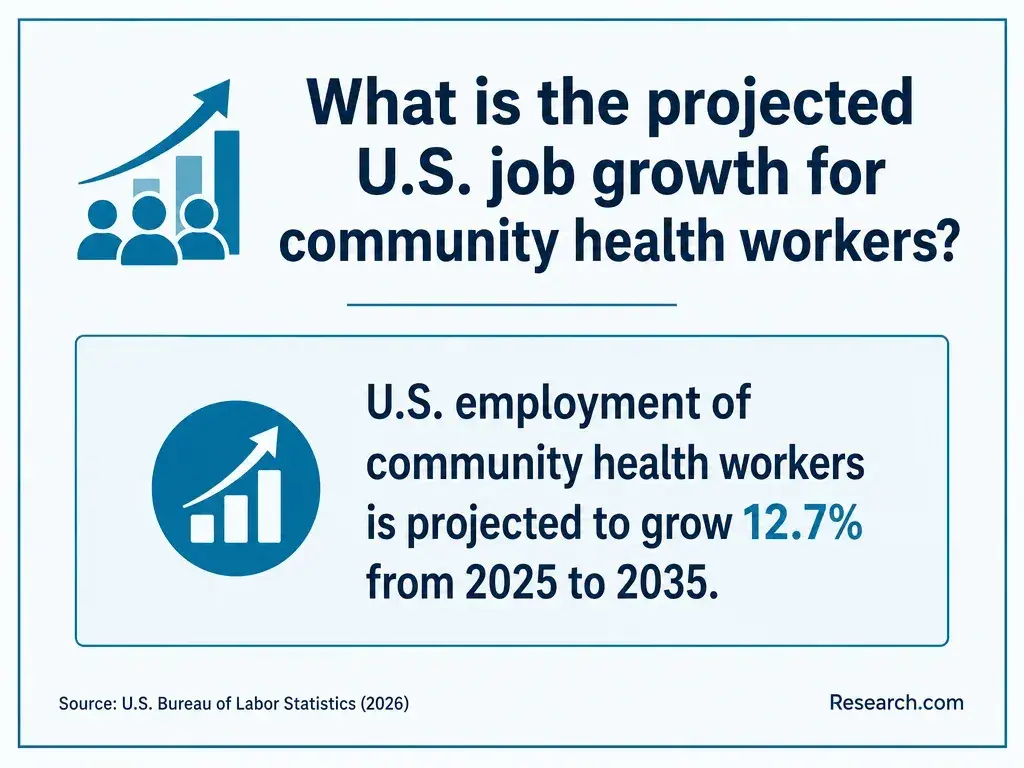
Depending on employer requirements and prior experience, graduates may pursue resettlement case coordination, community outreach, intake support, family-services coordination, volunteer training, or program-evaluation assistance. These jobs can involve referrals, partnerships, records, and follow-up, not independent psychotherapy.
A current employee may be better positioned for advancement by combining the degree with demonstrated agency results than by relying on the credential alone. For each target posting, compare the required degree with language skills, service-system knowledge, documentation, and experience.
If substance-use outreach is your main destination, planning affordable bachelor's-level substance abuse counseling study may offer a more focused comparison. Verify any state credential requirements before choosing that route.
There is no single salary or employment forecast for "psychology graduates in refugee resettlement." The U.S. Bureau of Labor Statistics category social and human service assistants is one possible benchmark for some support duties, but it also covers work outside refugee services. Its national median includes workers with different qualifications and experience; it is not a starting offer or an outcome attributable to a BA.
Use the latest occupation-specific Bureau of Labor Statistics wage and projection figures alongside local nonprofit postings, then compare jobs by duties rather than title alone. Funding cycles, geography, language requirements, and supervisory responsibility can affect a particular offer.
If your salary goal depends on becoming a therapist, comparing the cost and length of shorter counseling master's programs is more relevant than treating counselor wages as psychology BA outcomes.
Which credentials and program standards matter for mental health careers?
For a psychology BA, verify the institution's recognized institutional accreditation and the degree's actual requirements. Do not expect APA accreditation of a general undergraduate psychology major. A mental-health elective or concentration is not a clinical credential, and job titles involving counseling, social work, or psychological practice have distinct state-governed requirements.
If you want to provide therapy rather than coordinate services, identify the intended state license first. Then check that regulator's educational, supervised-practice, and examination rules against the specific professional program.
Accredited counseling study with accelerated schedules is one pathway to investigate, but program recognition, placement logistics, and state eligibility matter more than speed. For nonclinical advancement in resettlement, ask employers whether a BA, targeted training, or experience best meets the position's requirements.
Other Things You Should Know About Psychology Programs
Not automatically. Follow agency language-access policy, especially for sensitive or technical conversations. Being bilingual does not by itself establish interpreting competence or change a staff member's professional scope.
Check agency policy and instructor requirements first. Avoid identifiable details unless explicitly authorized; changing a name alone may not protect privacy.
Use supervision, workload boundaries, and available staff supports. A psychology course may improve understanding, but it does not replace an organization's responsibility to provide safe working practices.
It depends on the employer's policy. Ask which schools and courses qualify, when reimbursement is paid, and whether continued employment is required.
- DAPIP | Homepage - Office of Postsecondary Education (OPE) https://ope.ed.gov/dapip/
- Frequently Asked Questions - California Board of Psychology https://www.psychology.ca.gov/licensees/faq.shtml
- Refugee and migrant mental health | who.int https://www.who.int/news-room/fact-sheets/detail/refugee-and-migrant-mental-health
- Mental Health | Refugee Health Domestic Guidance https://www.cdc.gov/immigrant-refugee-health/hcp/domestic-guidance/mental-health.html
- Requirements Related to the Practice of Counseling - NCBI https://www.ncbi.nlm.nih.gov/books/NBK259170/
- Can I Become a Counselor With a Bachelor's Degree? | George Fox University https://www.georgefox.edu/counseling-programs/articles/without-bachelors.html
- Basic requirements | UC Admissions - University of California https://admission.universityofcalifornia.edu/admission-requirements/transfer-requirements/preparing-to-transfer/basic-requirements.html
- Careers in Psychology | Cal State LA https://www.calstatela.edu/nss/psychology/careers-psychology
- Psychology careers guide | apa.org https://www.apa.org/education-career/guide/careers
- Psychology Transfer Guide for Kalamazoo Valley Community College | ferris.edu https://transfer.ferris.edu/transfer-guides/kalamazoo-valley-community-college/psyc-bs-kvcc.htm