2027 Online MS in Psychology - Forensic Psychology for Family Support Workers: Compare Transferable Skills and Degree Requirements
Audited and Verified:
Our Editorial and Data Verification Process
Research.com uses government datasets, official education statistics and primary institutional information to support its career and degree guides. Our review process checks factual accuracy, occupational definitions, source dates and the requirements associated with the credentials discussed.
How This Article Was Fact-Checked
Our editorial team verifies salary estimates, employment projections, education requirements and program information against original data providers and official organizations. Salary figures are checked against the relevant occupational definitions and reporting periods. Information about licensure, accreditation and required in-person training is reviewed separately.
Fact-checked and verified on:

Co-Founder and Chief Data Scientist
Family support workers already navigate sensitive conversations, referrals, documentation, and sometimes court-connected services. An online MS in psychology with a forensic psychology concentration could deepen that work, but it may not be the fastest route to a promotion - or the right qualification for a licensed role. This guide compares the skills you bring with the degree requirements and explains what to check about admissions, scheduling, cost, and career outcomes before you enroll.
Key Things You Should Know
- Family support experience can strengthen an application and prepare you for victim services or justice-system coordination, but it does not replace a bachelor's degree or program-specific prerequisites.
- A forensic psychology MS is generally an academic or nonclinical specialization; it does not, by itself, qualify you to provide therapy, conduct independent forensic evaluations, or practice as a licensed psychologist.
- Compare the degree's total cost and required live or in-person work against the qualifications in actual job postings. For many support roles, targeted training or supervised experience may be more direct.
What is an online MS in Psychology with a forensic psychology concentration?
An online MS in psychology with a forensic psychology concentration is a graduate psychology degree focused on behavior in legal and justice-related settings. Coursework may examine research on eyewitness memory, trauma, violence risk, courts, corrections, and ethical decision-making. The concentration is part of the degree, not a separate professional license.
"Online" describes course delivery, not necessarily the entire student experience. Programs may require live discussions, group projects, a thesis or capstone, or approved field experience. Compare the actual degree title and delivery requirements - not just the concentration label - when evaluating psychology degree programs for online learning.
How does forensic psychology prepare family support workers for career advancement?
For a family support worker, the strongest potential benefit is a better-informed move toward specialized coordination, advocacy, training, or program evaluation in agencies serving families affected by courts or the justice system. Research training can help you assess whether a referral process is working; forensic coursework can help you understand the limits of psychological evidence without claiming authority to evaluate a client.
Match the degree to the next job you want. If postings emphasize program analysis or justice-system knowledge, the MS may add useful preparation. If they require clinical treatment or a professional license, a qualifying counseling or social-work pathway is more relevant; a shorter clinical mental health counseling master's cost guide can help frame that separate time-and-cost decision. If your agency mainly values experience, an internal project or supervisor-supported training may be enough.
What transferable skills do family support workers bring to forensic psychology?
Family support work offers relevant experience, especially when you can describe what you did, the boundaries you maintained, and the result you were responsible for. The comparison below separates transferable strengths from skills a graduate program may need to develop.
| Experience from family support work | Relevance to forensic psychology | Likely learning gap |
| Explaining services and coordinating referrals | Supports victim-services and multidisciplinary coordination roles | Justice-system procedures and the limits of each professional role |
| Documenting contacts and protecting confidentiality | Supports careful, accountable case or program records | Research-data governance and distinctions between service records and evidence |
| Working with families under stress | Supports respectful, developmentally aware communication | Critical appraisal of trauma research; clinical assessment remains outside this degree's authority |
Keep examples in applications free of identifiable client details. If your intended move is specifically into substance-use recovery support, compare the employer's credential requirements with an addiction recovery employment guide before assuming a forensic concentration is the best match.
Most master's applicants need a completed bachelor's degree. Beyond that baseline, requirements vary: a program may specify a GPA, psychology or statistics coursework, recommendations, a statement of purpose, or a résumé. Some accept applicants from social work, human services, criminal justice, and other majors; relevant employment can make an application stronger without automatically waiving a formal prerequisite.
Before applying, ask admissions staff which requirements are mandatory, whether missing courses can be completed before enrollment, and how the program evaluates professional experience. Request a written review of your transcript if your prior coursework is unusual. If you still need a bachelor's degree, assess that cost first; a guide to funding an online bachelor's in substance abuse counseling illustrates aid questions for one alternative undergraduate route, not funding guaranteed for this MS.
Common course areas include graduate research methods and statistics, psychology and law, psychopathology as an academic subject, ethics, and electives concerning victims, corrections, or family and juvenile systems. Programs differ in whether they require a thesis, applied capstone, or internship. A course on assessment teaches concepts; it does not authorize a student to administer restricted tests or issue independent clinical opinions.
Look for coursework that closes a gap you actually have. A worker seeking to evaluate family-service outcomes may benefit more from strong methods instruction than from several narrowly titled forensic electives. A worker seeking psychotherapy training should instead examine the clinical sequence, supervised practice, and credential fit of qualifying programs; counseling degree affordability and accreditation is a separate comparison, not evidence that the two curricula are interchangeable.
Completion time depends on required credits, course availability, enrollment pace, and any thesis or placement. An employed family support worker should build a schedule from the program's actual course rotation, then account for live meetings, project deadlines, and any fieldwork that must occur during agency hours. An advertised minimum completion time may not fit a working student's schedule.
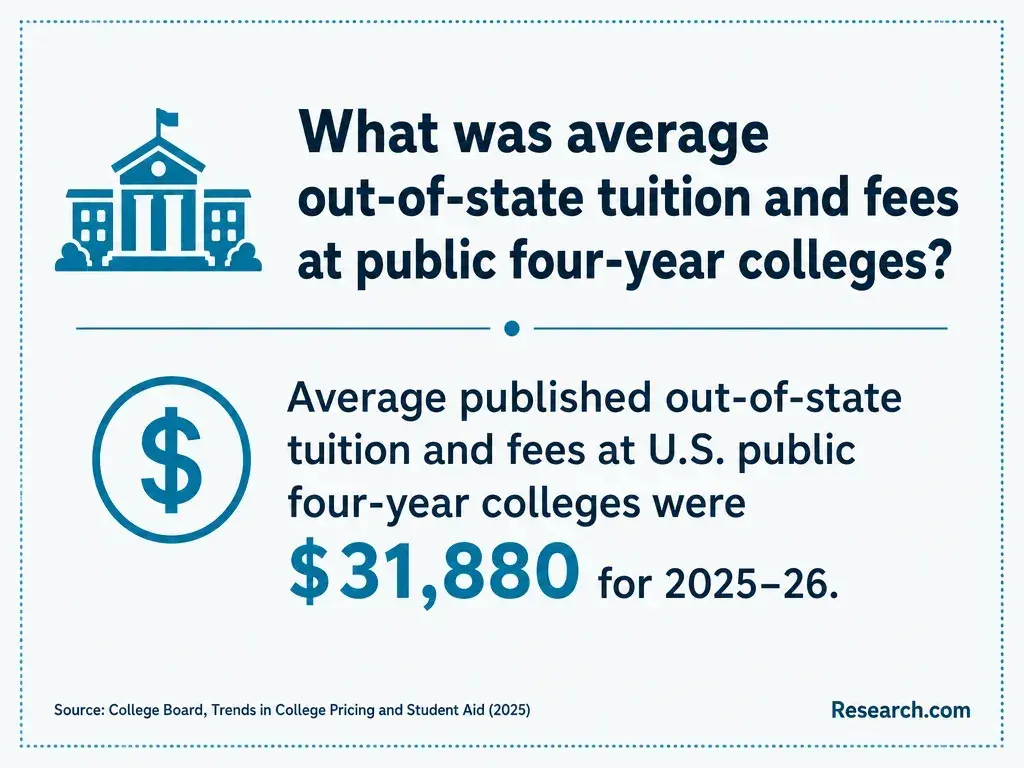
For cost, obtain the current tuition rate and multiply it by the required credits, then add mandatory fees, books, technology, travel, and any extra terms needed to finish a project. Ask whether employer education assistance applies and whether changing enrollment pace affects aid. Use lower-tuition psychology master's options as a starting point, but compare complete, program-specific budgets rather than tuition labels alone.
Online study can preserve a worker's location and employment; campus study may make scheduled faculty meetings and local connections easier. Neither format guarantees a suitable placement or research mentor. The important distinction is how each program delivers its required work.
| Decision factor | Online program | Campus-based program |
| Weekly schedule | May combine recorded coursework with mandatory live sessions | Usually has scheduled travel and class time |
| Applied work | May require the student to locate an approved local site | May offer local partnerships; availability still needs confirmation |
| Faculty access | Depends on remote advising and project arrangements | May allow in-person meetings; supervision is not automatic |
Ask for a sample weekly timetable and placement policy before choosing. If you are comparing online options because you ultimately want counseling licensure, online mental health counseling master's timelines address a different training pathway whose supervised requirements can affect scheduling.
No: a forensic psychology concentration within a general psychology MS does not itself qualify a graduate for psychologist licensure, independent forensic assessment, or psychotherapy. Licensure requirements depend on the profession and state; psychologist licensure generally involves doctoral-level professional training and additional jurisdiction-specific requirements. An employer may also impose its own qualifications for nonclinical justice-system work.
If your goal is treatment, identify the exact license and state first, then ask the relevant board whether a proposed program meets its educational rules. Do not infer eligibility from a psychology course title or an institution's accreditation. When comparing a counseling route, comparing accredited counseling degree completion times
Potential directions include victim-services coordination, family or court-service program support, corrections-related program administration, and research or evaluation support. These are possibilities, not jobs reserved for - or guaranteed by - the degree. Employers may prioritize agency experience, a social-work credential, research skills, or a different qualification.
Salary comparisons require the same care. The US Bureau of Labor Statistics reports wages by occupation, not by forensic psychology master's concentration; a support worker's pay and a program manager's pay should not be treated as one graduate outcome. For a useful estimate, collect local postings for your target title, note their degree and experience requirements, and compare their advertised ranges with your current compensation and total education cost. A discussion of forensic psychology graduate career value and qualifications
How can students choose an accredited online forensic psychology program?
Start by verifying the institution's recognized institutional accreditation and the precise name of the MS and concentration. Do not assume APA accredits a general, nonclinical psychology master's program or that institutional accreditation establishes licensure eligibility.
Then compare current catalogs and written answers from program staff on prerequisites, required credits, course rotation, live sessions, campus visits, capstone or placement approval, supervision, and the full price at your likely pace. Ask career services for outcomes relevant to employed human-services students, including how outcomes were collected. A comparison focused on choosing forensic psychology study by cost and entry criteria can organize the shortlist; the deciding evidence is whether a program's requirements and graduates' roles fit your specific next step.
Other Things You Should Know About Psychology
Only with the required agency and university permissions. Confidentiality rules, data-use restrictions, and possible research review still apply; removing names alone may not be enough.
Follow your employer's policy and any applicable legal instructions. Reporting facts you observed at work is different from offering an independent psychological evaluation or expert opinion.
Possibly, but the receiving doctoral program decides. Ask about its transfer-credit limits and course-equivalency rules before enrolling in an MS for that purpose.
Describe your responsibilities and judgment without identifying families, quoting private records, or implying you performed clinical duties outside your role.
- Cost of Attendance (Budget) | 2025-2026 Federal Student Aid Handbook https://fsapartners.ed.gov/knowledge-center/fsa-handbook/2025-2026/vol3/ch2-cost-attendance-budget
- Frequently Asked Questions - California Board of Psychology https://www.psychology.ca.gov/licensees/faq.shtml
- Types of Financial Aid: Grants, Work-Study, and Loans | studentaid.gov https://studentaid.gov/understand-aid/types
- DAPIP | Homepage - Office of Postsecondary Education (OPE) https://ope.ed.gov/dapip/
- What Type of Psychology Degree Do I Need to Become a Forensic Psychologist? | Palo Alto University https://paloaltou.edu/resources/business-of-practice-blog/what-type-of-psychology-degree-do-i-need-to-become-a-forensic-psychologist
- Application Deadlines, Requirements, and Guidelines | nyu.edu https://as.nyu.edu/departments/psychology/graduate/ma-application-info.html
- Forensic Psychology, MS - ASU degree programs https://degrees.asu.edu/masters-phd/major/ASU00/ASFPSYMS/forensic-psychology-ms
- Regional vs. National Accreditation: Which is Better? | Drexel University Online https://www.online.drexel.edu/news/national-vs-regional-accreditation.aspx
- How to Become a Forensic Psychologist in California (2026) | Touro University Worldwide https://www.tuw.edu/psychology/how-to-become-a-forensic-psychologist-in-california/
- Graduate Academic Requirements | John Jay College of Criminal Justice https://www.jjay.cuny.edu/admissions/graduate-admissions/apply/graduate-academic-requirements