
2027 Online BA in Psychology - Mental Health After an Unfinished Biology Degree: Compare Transfer Credit and Remaining Coursework
Audited and Verified:
Our Editorial and Data Verification Process
Research.com uses government datasets, official education statistics and primary institutional information to support its career and degree guides. Our review process checks factual accuracy, occupational definitions, source dates and the requirements associated with the credentials discussed.
How This Article Was Fact-Checked
Our editorial team verifies salary estimates, employment projections, education requirements and program information against original data providers and official organizations. Salary figures are checked against the relevant occupational definitions and reporting periods. Information about licensure, accreditation and required in-person training is reviewed separately.
Fact-checked and verified on:

Co-Founder and Chief Data Scientist
An unfinished biology degree can be a strong starting point for an online psychology BA, but transferred credits do not necessarily shorten the psychology major. If you are returning to college with mental health work in mind, the useful comparison is not how many credits a school accepts; it is which requirements those credits satisfy and what you must still complete.
This guide shows how to read a transfer evaluation, compare remaining coursework and costs, and decide whether the BA fits your intended role or is only one step toward it.
Key Things You Should Know
- Biology credits may satisfy science, mathematics, statistics, or general education requirements, but the receiving school decides whether they meet psychology-major requirements.
- Compare written degree audits by remaining required coursework, course sequence, residency rules, and total cost—not by the number of credits accepted alone.
- A psychology BA with mental health coursework can prepare you for some nonclinical support roles; it does not, by itself, qualify you to diagnose or provide psychotherapy.
How can an online psychology BA apply credits from an unfinished biology degree?
You do not need to finish the biology degree before requesting a transfer evaluation. The receiving institution reviews coursework on your official transcript, then determines both whether credit is accepted and where it applies. Admission, transfer acceptance, admission to the psychology major, and satisfaction of graduation requirements are separate decisions.
This comparison shows why two schools can accept the same biology courses yet leave you with different amounts of work. The examples are possibilities, not guaranteed equivalencies.
| Previous coursework | Possible application | What to verify |
| Biology and laboratory courses | Natural science or general education requirements; sometimes psychology-related electives | Whether laboratory credit and science requirements are both satisfied |
| Calculus or mathematics | Quantitative general education or elective credit | Whether the psychology major specifically requires statistics instead |
| Statistics | General education, a major prerequisite, or a major requirement | Whether the course covered the required methods and earns a written equivalency |
| Writing and other general education | General education requirements | Minimum grades, distribution rules, and any remaining upper-division requirements |
Before comparing budget-conscious psychology program comparisons, obtain an evaluation that shows credits applied to requirements—not merely a transfer-credit total. An apparently inexpensive program may cost more to finish if it requires you to repeat courses or take more credits there.
Use this sequence to get an audit you can act on:
- Send official transcripts from every college attended and retain syllabi for statistics, research, or other courses whose equivalency may be disputed.
- Ask the registrar or transfer-credit office for the initial evaluation, then ask a psychology adviser which credits satisfy the major and whether substitutions are possible.
- Request a written degree audit showing unmet requirements, minimum grades, upper-division coursework, and credits that must be earned at the new institution.
- Resolve appeals and substitution requests before relying on an estimated graduation date or cost.
Check quarter-to-semester conversions and any course-recency or repeat-course rules. Only the receiving institution can approve equivalencies, substitutions, and the final graduation audit.
What coursework remains after transferring biology credits into an online psychology degree?
Most returning biology students should expect to complete psychology courses even if much of their science and general education work transfers. An audit should separate remaining introductory prerequisites, psychology-major courses, electives, general education, and institutional residency credits. A course can count as an elective without replacing a required course.
Common gaps include introductory psychology, research methods, psychology-specific statistics, developmental and social psychology, and an upper-division seminar or capstone. Biology may provide a foundation for behavioral neuroscience or health psychology, but a human biology course does not automatically replace a psychology course covering behavior and research. If your previous statistics class seems equivalent, a syllabus is especially useful: the title alone may not show whether it meets the major's requirement.
For a mental health interest, compare whether abnormal psychology, psychology of addiction, health psychology, and community-oriented courses are required or merely available. Online addiction counseling coursework and admissions are a separate comparison if your actual goal is substance-use services; similar course names do not mean the two degrees meet the same credential requirements.
Ask the adviser to map prerequisites against upcoming course offerings. A missing methods course that is offered infrequently can affect completion time more than a larger number of freely selectable electives.
Is an online psychology BA suitable for a mental health career?
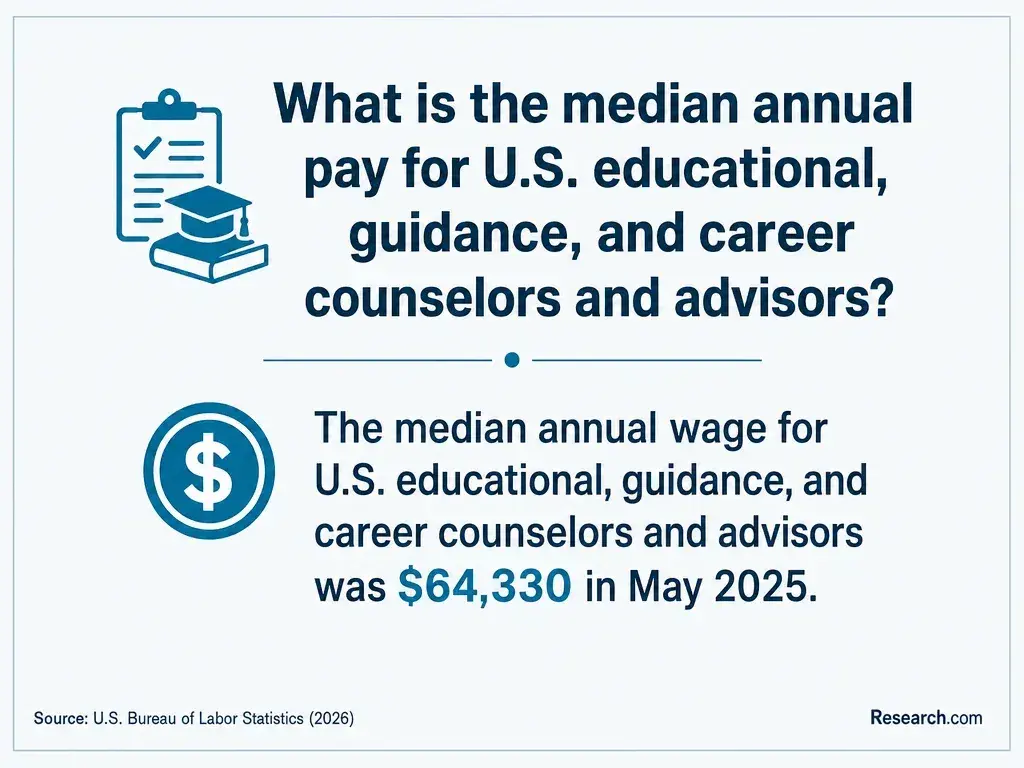
It can be suitable if you want a broad bachelor's degree and plan to pursue nonclinical behavioral health support, outreach, service coordination, or later professional training. Your biology background may be useful for understanding health research and communicating with health-service teams. The BA adds knowledge of behavior, development, research evidence, and service contexts; neither background substitutes for supervised clinical training.
If you already have substantial college credit, finishing a psychology BA may be an efficient route to a bachelor's credential. If your goal is specifically substance-use counseling, compare it with substance abuse counseling bachelor's affordability and duration, then check your state's credential rules. A more specialized program may fit that goal better, but its title alone does not establish certification eligibility.
For a planned career change, look beyond courses. Ask whether the program helps online students find approved nonclinical placements, research projects, or local community partners. Supervised experience with documentation, referrals, and professional boundaries may help demonstrate readiness for support work; it is not a clinical practicum.
The degree requirements may be similar, but access to courses and experience can differ. Online lectures may be asynchronous while exams, group projects, research meetings, or an internship require scheduled participation. Campus study may make in-person faculty contact and local placements easier; online study may let a returning student remain employed and use opportunities near home.
Ask each program which required courses are offered online, how often they run, whether any campus visits are required, and who arranges and approves local experiences. If you are considering later specialized study, comparisons of forensic psychology master's programs by study length concern a different degree level; do not use a graduate program's advertised pace to estimate your BA timeline.
Some are, but online delivery itself is not an accreditation status. Verify the institution's current accreditation through the accreditor or the U.S. Department of Education's accreditation records, and confirm that the specific online BA is offered by that institution. Institutional accreditation matters for considerations such as federal aid eligibility and how other schools review credits, although it does not guarantee that another school will accept a particular course.
Do not expect APA accreditation for a general psychology BA: APA's professional accreditation does not cover ordinary undergraduate psychology majors. If your longer-term goal is licensed counseling, you will need to assess the relevant graduate program and state rules separately, including mental health counseling program charges beyond tuition when planning that later step. Accreditation of your BA institution is not approval for a future professional license.
Transfer applicants generally need an application and official transcripts from every institution attended. Schools may also set minimum grades or academic-standing rules, and the psychology major may have requirements distinct from university admission. Check the policy for applicants with incomplete degrees rather than assuming you need a completed biology credential.
Ask admissions whether your record qualifies you to enroll, but direct course-equivalency questions to the transfer office and major-requirement questions to the psychology department. If you eventually consider graduate study, review that program's prerequisites separately. For example, online forensic psychology tuition, admissions, and outcomes involve graduate-level comparisons and should not be mistaken for online BA admission standards.
Your remaining time depends on the approved audit, course availability, enrollment pace, and any residency requirement—not on the number of credits the school initially says it will accept. Compare schools using the same intended course load and a term-by-term plan. A required course offered only in certain terms may delay graduation even when few credits remain.
For cost, request an estimate for the remaining credits at each school, including mandatory fees, books, technology, and any approved placement expenses. Then check how your planned enrollment affects aid eligibility and satisfactory academic progress. Do not assume every accepted transfer credit lowers tuition: the decisive figure is what you must still take and pay for.
If you also hope to complete graduate study quickly, one-year graduate forensic psychology program planning is a separate future calculation. It cannot erase BA prerequisites or establish that a graduate degree will qualify you for clinical practice.
A psychology BA generally combines introductory study with courses in research and statistics, development, social behavior, cognition, biological foundations, and upper-division electives. For this transfer decision, distinguish required courses from optional mental health subjects and check whether the program formally awards a concentration. An elective in psychopathology does not create a separate credential.
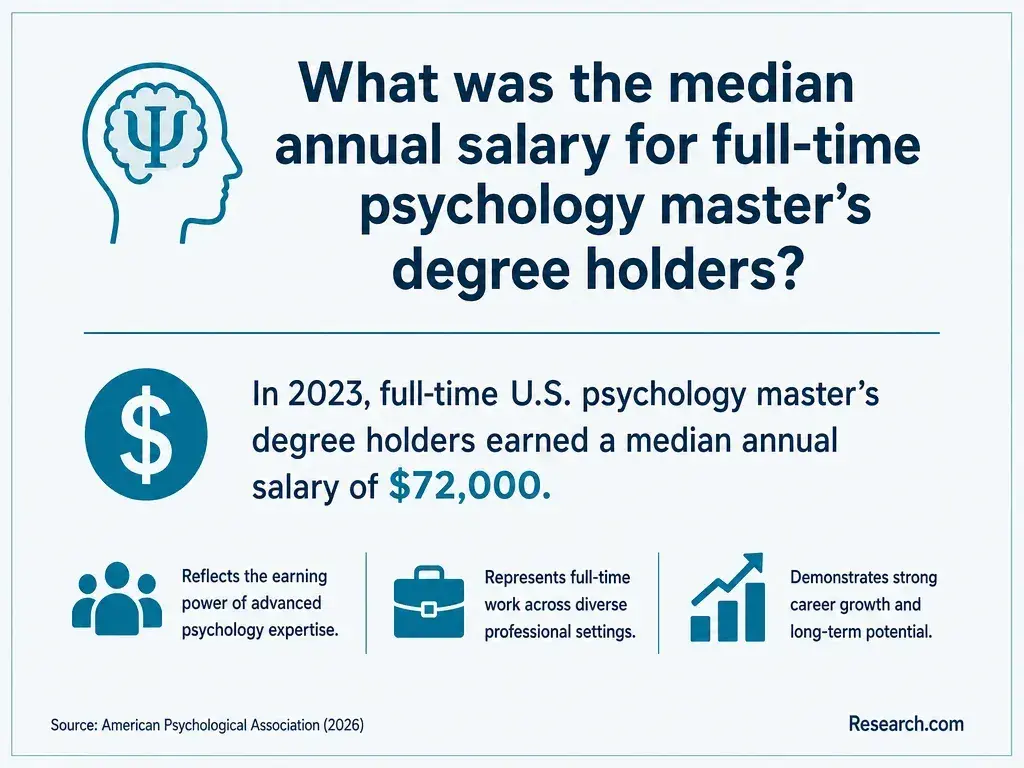
Prioritize research methods and statistics if you may apply to graduate study or research-support roles. Your biology coursework may help with scientific reading, but psychology methods introduce distinct questions about measuring behavior, evaluating evidence, and protecting participants. Later psychology master's programs with intensive pacing may leave less room to repair undergraduate preparation; verify any intended program's prerequisites before selecting your remaining BA electives.
Depending on the employer, prior experience, and local requirements, graduates may compete for nonclinical roles such as behavioral-health support staff, intake coordinator, community outreach worker, research assistant, or human-services program assistant. Duties might include scheduling and documenting services, explaining referral options, supporting approved activities, or collecting research data under supervision. Job titles vary, so read the duties and credential requirements rather than assuming a psychology BA confers eligibility.
For a biology-to-psychology career change, a supervised project or relevant employment may be more persuasive than a mental health elective alone. Seek experience that demonstrates careful documentation, respectful communication, basic data handling, and appropriate referral boundaries. If a target role requires a graduate credential, compare the full pathway—including prices for online psychology master's degrees—rather than treating the BA as the final cost. A general psychology master's is not interchangeable with a licensure-qualifying counseling or social work degree.
Does a psychology BA qualify you for licensure or mental health certification?
No psychology BA, including one with mental health or addiction coursework, independently authorizes diagnosis, psychotherapy, or practice as a licensed psychologist or counselor. Those paths require occupation-specific education and other steps set by the relevant state board. Some support or recovery roles have separate state or employer certification rules; a BA may help academically without automatically meeting them.
Start with the exact job title and state where you intend to work. Ask the responsible licensing board or certifying body which degrees, courses, supervised experience, and examinations it requires. If licensed counseling is your goal, compare clinical counseling degree formats and completion estimates against those rules before choosing BA electives or budgeting for graduate school.
Other Things You Should Know About Psychology
Usually, the awarded credential names the completed degree, not the unfinished major. Your transcripts will still document your biology coursework. Confirm the diploma and transcript conventions with the receiving school.
No. The new school may calculate its own GPA using only coursework taken there, but your earlier grades remain on prior transcripts and may be reviewed for admission or later applications.
Possibly. Obtain written preapproval first: the course must be transferable, satisfy the intended requirement, and comply with the university's residency and concurrent-enrollment rules.
Only if the school offers an applicable prior-learning or experiential-credit process and approves your evidence. Employment alone does not replace a required psychology course or an approved academic placement.
- Resources for Transfer Students | studentaid.gov https://studentaid.gov/resources/transfer-students
- Psychology Program FAQs | University of La Verne https://health.laverne.edu/psychology/faq/
- Psychology AA & AS | Otero College https://otero.edu/catalog/degrees-certificates/psychology-aa-as/
- Bachelor of Arts in Psychology - Online Program | CSULB CPaCE https://www.cpace.csulb.edu/courses/bachelor-of-arts-in-psychology
- Psychology and Neuroscience, Undergraduate Programs | Boston College https://www.bc.edu/bc-web/academics/sites/university-catalog/undergraduate/mcas/psychology.html
- How Long Is a Psychology Degree? Timeline and Career Paths | Winston-Salem State University https://ramsonline.wssu.edu/blog/how-long-does-it-take-to-get-a-psychology-degree/
- Transfer Credit Regulations | policy.wright.edu https://policy.wright.edu/policy/3215-transfer-credit-regulations
- Psychology - UOnline - The University of Utah https://online.utah.edu/ug-programs/psychology/index.php
- Majors | Department of Psychological Sciences - UConn https://psychology.uconn.edu/undergraduate/majors/
- Courses - Psychology - Virginia Commonwealth University https://psychology.vcu.edu/undergraduate/courses/


