2027 Choosing an Online BA in Psychology - Mental Health for a Future Public Health Graduate Application: Prerequisites to Compare
Audited and Verified:
Our Editorial and Data Verification Process
Research.com uses government datasets, official education statistics and primary institutional information to support its career and degree guides. Our review process checks factual accuracy, occupational definitions, source dates and the requirements associated with the credentials discussed.
How This Article Was Fact-Checked
Our editorial team verifies salary estimates, employment projections, education requirements and program information against original data providers and official organizations. Salary figures are checked against the relevant occupational definitions and reporting periods. Information about licensure, accreditation and required in-person training is reviewed separately.
Fact-checked and verified on:

Co-Founder and Chief Data Scientist
An online BA in psychology with a mental health focus can be a strong foundation for public health graduate study - but the concentration name alone will not tell you whether it meets your target program's expectations.
If you hope to study mental health prevention, community programs, or population health, the consequential choices are statistics, research methods, relevant science or policy courses, and opportunities to work with communities and data. This guide shows you how to compare those elements with actual graduate requirements before committing to a bachelor's program.
Key Things You Should Know
- Many MPH programs consider applicants from varied majors; a psychology BA can provide relevant preparation, but each graduate program sets its own prerequisites.
- Compare statistics, research methods, biological and social determinants of health, and applied experience - not just the number of mental health electives.
- A bachelor's degree commonly requires about 120 semester credits, but transfer-credit applicability, course sequencing, and placement obligations determine your remaining time and cost.
What Is an Online BA in Psychology With a Mental Health Focus?
It is an undergraduate psychology degree delivered primarily online, with coursework emphasizing topics such as psychopathology, health psychology, addiction, or mental health services. "Mental health focus" might mean a formally designated concentration, a group of electives, or simply a program's description. Check the catalog to see which it is; an elective cluster does not necessarily appear as a credential on your transcript.
For a future public health applicant, the BA's value lies in understanding behavior, research evidence, and the social context of mental health. Public health usually asks a different scale of question than clinical practice: not only why an individual may experience distress, but how communities can prevent harm, improve access to services, and evaluate outcomes.
When reviewing psychology program admissions and curriculum comparisons, prioritize courses and experiences that bridge those two scales.
A psychology BA is one possible route, not a required preliminary degree for every Master of Public Health (MPH) program. An undergraduate major in public health, sociology, biology, or another field may fit better if its courses more directly match your intended graduate concentration.
What Public Health Graduate Prerequisites Can a Psychology Bachelor's Degree Fulfill?
There is no universal MPH prerequisite list. Many programs accept a bachelor's degree in any major, while particular concentrations or schools specify coursework, quantitative preparation, experience, or minimum grades. Admission eligibility also differs from competitiveness: meeting the stated minimum does not demonstrate that you can handle epidemiology or biostatistics.
The table separates preparation a psychology BA may provide from gaps worth checking in each target program's current admissions instructions.
| Graduate-study need | Potential psychology BA preparation | What to verify |
| Quantitative work | Statistics and research methods | Whether the MPH accepts the statistics course, requires a particular grade, or recommends additional math |
| Population-health research | Study design, measurement, and interpretation of evidence | Whether prior epidemiology is required, recommended, or taught after admission |
| Health context | Health psychology, behavioral health, and lifespan development | Whether the intended concentration expects biology, another science, or prior health coursework |
| Community and systems perspective | Social psychology, cultural psychology, and community-based projects | Whether the program values relevant service, policy, or evaluation experience |
Request written clarification from each graduate admissions office about ambiguous course equivalencies, including whether a psychology statistics course meets its rule. Compare the response with a proposed BA degree plan: a suitable course is useful only if you can enroll in it before the graduate application deadline.
If your goal is specifically public health, do not substitute a general psychology master's without comparing its training and cost; affordable distance learning in graduate psychology addresses a different degree path, not an MPH prerequisite.
How Do You Choose an Accredited Online Psychology Bachelor's Program?
First, confirm the university's institutional accreditation through the accreditor and the school's current disclosures. This matters for degree recognition and is distinct from professional accreditation: the American Psychological Association does not accredit general psychology bachelor's programs. Accreditation alone also does not establish that a program offers the courses you need for a particular MPH.
Compare schools against a short list of intended graduate programs rather than an abstract idea of a "good" psychology degree. Ask for the current catalog, a sample term-by-term plan, and written answers about upper-level statistics, research supervision, public health electives, and any required visits or placements.
Then compare those academic answers with budget-conscious psychology program comparisons; the lowest advertised tuition is not necessarily the lowest cost of completing your required coursework.
If you are transferring, obtain an official degree audit showing where credits apply. Credits accepted as electives may leave statistics, research methods, major requirements, or university residency requirements unfinished. For an MPH-focused decision, also ask whether graduates can obtain substantive faculty recommendations through online research or project work.
Statistics and research methods deserve priority because graduate public health work depends on interpreting studies, evaluating programs, and recognizing uncertainty. Health psychology, social psychology, and cultural psychology can then connect individual behavior with prevention, service access, and social conditions. Abnormal psychology supplies vocabulary about mental disorders, but it does not replace population-level or quantitative training.
A strong elective choice depends on your target concentration. For mental health policy or community prevention, consider courses in public health, sociology, health disparities, or program evaluation if available.
For epidemiology or quantitatively intensive study, ask whether you can add more statistics or relevant science. A supervised project that analyzes appropriately authorized, non-identifiable program information may demonstrate more useful research judgment than another survey course; confirm faculty approval and data permissions before starting.
If your actual goal is to provide substance-use counseling rather than study prevention or recovery systems, compare choosing an addiction counseling degree route with your state's credential rules. Academic coursework about addiction is not itself authorization to counsel clients.
Online and campus programs can teach comparable psychology concepts, but delivery mode does not establish equivalent access to research teams, community partners, or faculty feedback. Examine the actual online course list and ask how students complete methods assignments, collaborate on projects, meet mentors, and secure recommendations. An online student may need to arrange a local, approved opportunity rather than rely on a campus laboratory.
"Online" also does not necessarily mean self-paced. Live seminars, group meetings, proctored exams, and supervised placements may have fixed times or locations. Ask about these commitments before choosing a course load, particularly if you work or have caregiving responsibilities.
Do not infer undergraduate flexibility from another online credential's marketing: one-year forensic psychology master's workload and outcomes concern a distinct graduate pathway, not the scheduling or MPH preparation of a psychology BA.
Requirements vary by school and by applicant type. First-year applicants typically document secondary-school completion; transfer applicants generally submit transcripts from prior colleges. A school may admit you to the university before separately admitting you to the psychology major, so confirm both decisions and any major-entry conditions.
If you have prior credits, ask which courses satisfy general education, psychology, statistics, and research-methods requirements - not merely how many credits the school accepts. Request evaluation early enough to appeal an equivalency or adjust your schedule. Graduate admissions rules are a separate decision: for example, forensic psychology program costs and entry requirements should not be mistaken for the entry requirements of an undergraduate BA or a future MPH.
A bachelor's program commonly totals about 120 semester credits, but your completion time depends on credits that satisfy specific requirements, enrollment pace, prerequisite order, and when required courses run. A transfer student with many accepted credits can still face extra terms if statistics must precede research methods or an upper-level course is offered infrequently.
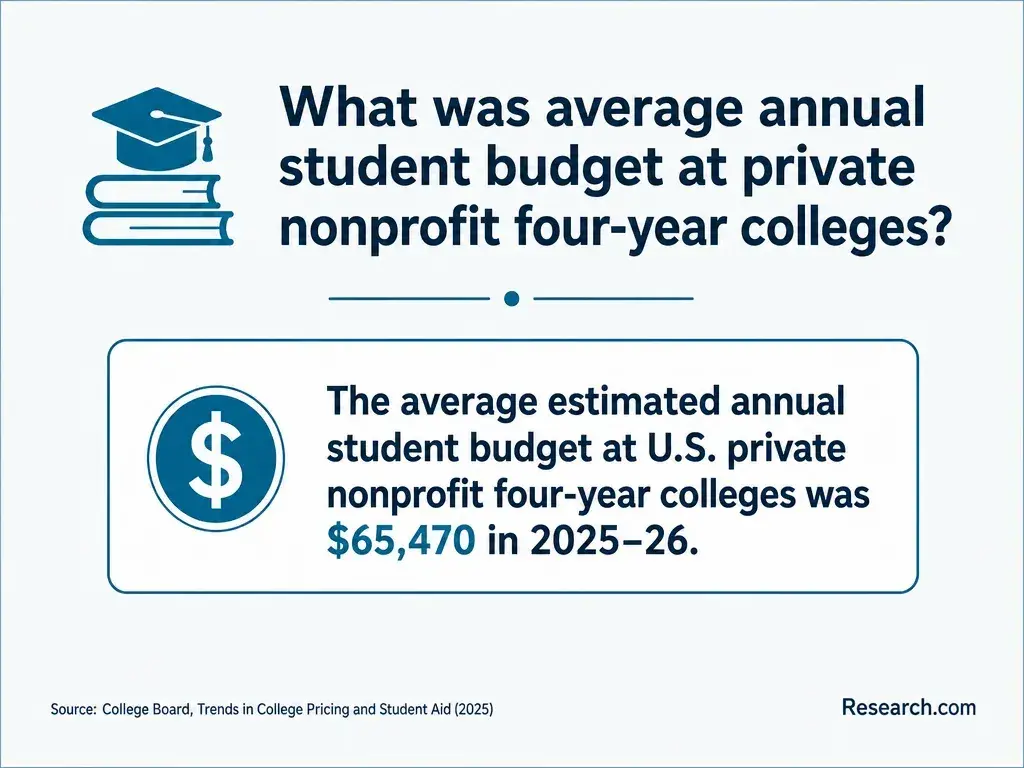
For a meaningful cost comparison, obtain a personalized degree audit and calculate the remaining required credits using the school's applicable tuition and fee schedule. Include course materials, technology or exam charges, and any travel or reduced work hours associated with an applied experience.
Ask financial aid staff how your enrollment pace affects eligibility; do not assume a shorter advertised timeline produces a lower net cost. Finding psychology colleges that consider prior credits is a starting point, but only the receiving institution can determine how your coursework applies.
Relevant nonclinical work can include community outreach, behavioral-health program support, research assistance, service coordination, and health education support. Duties and hiring standards vary by employer. An outreach worker might help people find services and document referrals; a research assistant might recruit participants under an approved protocol and help maintain data quality. Neither role is equivalent to diagnosing or treating a mental health condition.
For future public health applications, choose experience that shows what you learned about a population, a service gap, or responsible evaluation - not simply a job title that includes "mental health." A position with a community organization may be especially valuable if it offers supervision, ethical data practices, and a specific contribution you can describe. If recovery services interest you, examine addiction recovery career paths alongside local employer and credential requirements.
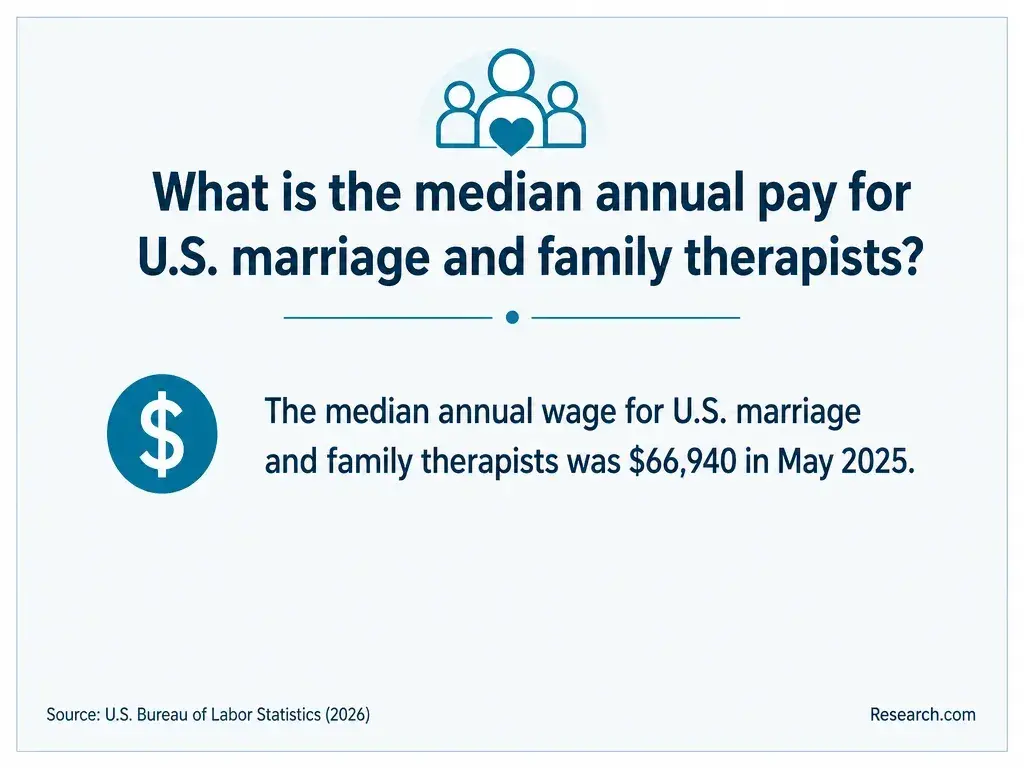
There is no single salary or job-growth figure for "psychology BA graduates." The U.S. Bureau of Labor Statistics reports by occupation, and psychology graduates enter jobs with different duties, locations, experience requirements, and pay.
To estimate your prospects, identify the specific role you could seek - such as social and human service assistant - then check its latest Occupational Outlook Handbook wage, projection period, and typical entry requirements against local postings. An occupation-wide median is not an entry-level offer or a program outcome.
The distinction becomes more important when comparing a bachelor's-entry support role with licensed counseling. Earnings reported for counselors include workers who have met different educational and credential requirements; they should not be used to project a new psychology BA graduate's pay.
If counseling is your eventual aim, compare the additional training and employment timeline in clinical counseling master's time-to-degree and salary outlook rather than treating those jobs as immediate BA outcomes.
Does a Psychology Bachelor's Degree Qualify You for Mental Health Licensure?
No. A psychology BA, including one with a mental health concentration, does not by itself qualify someone to practice as a licensed psychologist or independently provide psychotherapy, diagnosis, or psychological assessment. Licensed clinical roles generally require additional qualifying education and other jurisdiction-specific steps. Requirements differ among psychologists, counselors, social workers, and substance-use professionals.
This distinction should shape the undergraduate choice. If you want an MPH and population-level mental health work, prioritize preparation in research, prevention, and community systems.
If you want to provide therapy, identify the intended license and state board rules before selecting graduate training; a public health degree is not automatically a substitute for a qualifying clinical degree. When comparing that alternative, evaluating the net cost of counseling education must include the program's licensure fit and supervised-practice obligations, not tuition alone.
Other Things You Should Know About Psychology
No. An application service may collect and process materials, but each graduate program decides whether your courses and qualifications meet its requirements.
Follow each program's instructions. Choose people who can give specific examples of your research, quantitative work, community engagement, or professional judgment rather than relying on a recommender's title alone.
Yes, when it gives you a credible understanding of community needs and responsibilities. Describe your actual duties, supervision, and learning without presenting observation or referral work as clinical practice.
Policies vary by program and can change. Check the admissions page for your intended entry term before registering for a test.
- Internship Opportunities at the San Francisco Department of Public Health | SF.gov https://www.sf.gov/internship-opportunities-sf-public-health
- About Mental Health | cdc.gov https://www.cdc.gov/mental-health/about/index.html
- Mental Health and Mental Disorders - Healthy People 2030 https://odphp.health.gov/healthypeople/objectives-and-data/browse-objectives/mental-health-and-mental-disorders
- The social determinants of mental health and disorder - PMC https://pmc.ncbi.nlm.nih.gov/articles/PMC10786006/
- Mental health | who.int https://www.who.int/news-room/fact-sheets/detail/mental-health-strengthening-our-response
- Social and Behavioral Sciences Concentration, (MPH) | memphis.edu https://catalog.memphis.edu/preview_program.php
- Master of Science in Public Health | osu.edu https://cph.osu.edu/doc/academic-miscellaneous/public-health-degree-recommended-preparation/view
- Psychology | American River College https://arc.losrios.edu/academics/programs-majors/psychology
- college of arts & sciences psychology | Trends and Issues in Higher Ed https://www.washington.edu/students/crscat/psych.html
- BA-BS/MPH 5-year Program for Yale College Students https://ysph.yale.edu/school-of-public-health/graduate-programs/mph-joint-degree/5-year-ba-bs-mph/