2027 Online BA in Psychology - Addictions for Psychology of Substance Use and Aging: Which Courses Should You Look For?
Audited and Verified:
Our Editorial and Data Verification Process
Research.com uses government datasets, official education statistics and primary institutional information to support its career and degree guides. Our review process checks factual accuracy, occupational definitions, source dates and the requirements associated with the credentials discussed.
How This Article Was Fact-Checked
Our editorial team verifies salary estimates, employment projections, education requirements and program information against original data providers and official organizations. Salary figures are checked against the relevant occupational definitions and reporting periods. Information about licensure, accreditation and required in-person training is reviewed separately.
Fact-checked and verified on:

Co-Founder and Chief Data Scientist
An addictions-focused psychology degree can cover substance use without explaining how it affects older adults. That gap matters if you hope to study later-life recovery, support community services, or prepare for graduate research.
This guide is for prospective and returning undergraduates comparing online BA programs. It identifies the courses and supervised experiences worth prioritizing, explains what a concentration does, and does not, qualify you to do, and shows how to check whether an appealing curriculum is actually available on a workable schedule.
Key Things You Should Know
- Prioritize the combination of addiction science, adult development or gerontology, and statistics and research methods; an addictions elective alone does not cover substance use and aging.
- Check course descriptions and rotation schedules for older-adult topics, then look for an approved research or community project that connects the subjects.
- An online psychology BA can support nonclinical work or further study, but it does not independently qualify you to diagnose, provide therapy, or practice as a licensed addiction counselor.
What Is an Online Bachelor's Degree in Psychology Focused on Substance Use and Aging?
Usually, this is a general psychology BA whose electives, concentration, or applied project let students examine substance use across the adult lifespan.
Addictions refers to the study of substance-use patterns, risk, prevention, treatment systems, and recovery; aging adds changes in health, cognition, relationships, and access to services in later life. A school may offer an addictions concentration without an aging track, or relevant courses without awarding either specialization.
The distinction matters on a résumé and in graduate applications: a course selection is not the same as an officially recorded concentration. Compare the actual major requirements and available electives, not just degree titles.
Broader online psychology degree program comparisons can help you identify candidates, but the catalog and department must confirm whether both subjects can fit into one degree plan.
Which Courses Should You Look For in Substance Use and Aging Psychology Programs?
The strongest course combination explains substance use, explains later-life development, and teaches you to evaluate evidence about their intersection. The table distinguishes essential foundations from useful options; course titles and availability vary by school:
| Course area | What it contributes to this focus |
| Substance use or addiction psychology | Scientific models of use and recovery, prevention, and the organization of support and treatment services. |
| Adult development or gerontology | Later-life cognitive, social, and physical changes; age-related diversity rather than a single picture of "older adults." |
| Statistics and research methods | Study design, sampling, uncertainty, and the ability to distinguish associations from causal claims. |
| Health psychology or behavioral health | Chronic conditions, pain, health behavior, and the context in which substance-use concerns may arise. |
| Psychopathology and social or cultural psychology | Co-occurring concerns, stigma, social support, and unequal access to care, studied without conferring diagnostic authority. |
| Ethics, capstone, or approved applied research | Participant protection, respectful communication, and an opportunity to integrate the subjects in a bounded project. |
Prioritize methods over an extra narrowly named elective if research or graduate study is your aim. A student who can assess how a study recruited older adults, measured substance use, and handled confounding has a stronger foundation than one who has only encountered the topic in lectures.
If your goal is a state-regulated counseling credential instead, compare the psychology curriculum with addiction counseling education options online and check your state's educational rules.
Ask an advisor which courses are required, which are electives, how often each is offered, and whether prerequisites affect your sequence. An aging elective offered irregularly may not fit your graduation plan.
For a capstone, a literature review or analysis of appropriately available data can be more feasible than seeking access to confidential client records; any participant contact or agency data use needs the required permissions and oversight.
What Careers Can an Online Psychology Degree Prepare You For?
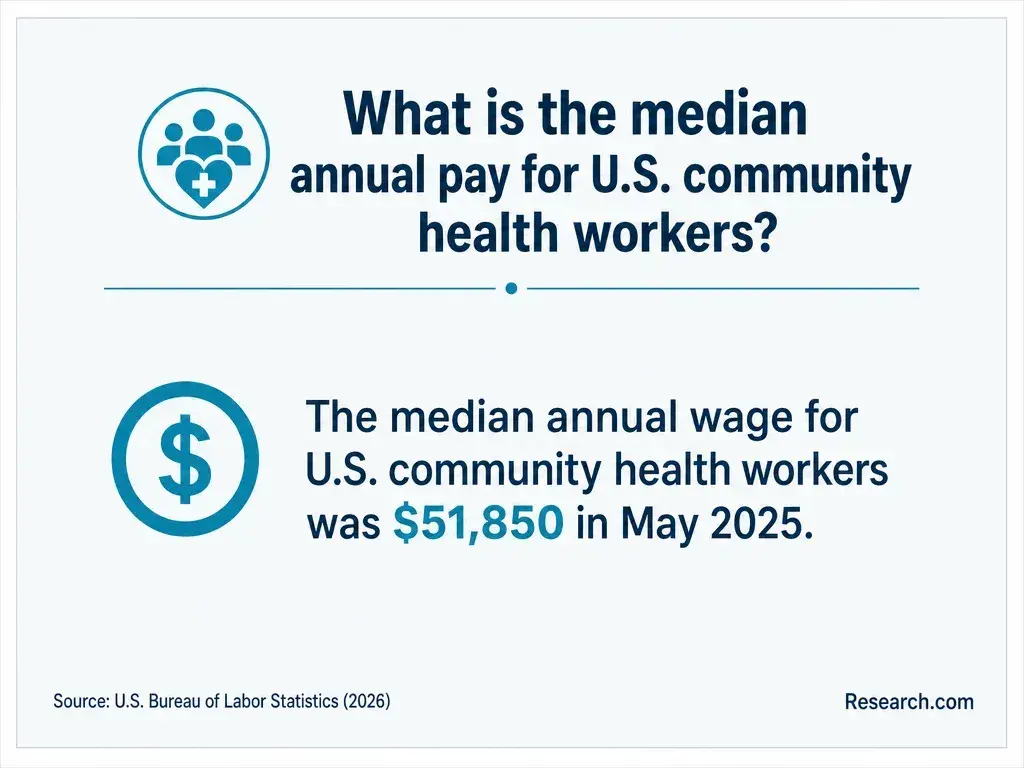
For an early-career student, relevant possibilities include community outreach, recovery-service coordination, older-adult program support, research assistance, and human-services intake or referral work. Duties and entry requirements differ by employer and state.
Coursework can help you understand the population; supervised experience demonstrates whether you can document accurately, communicate respectfully, protect privacy, and stay within a nonclinical role.
If you already work in a community organization, an approved project on service access or program evaluation may build on your experience more directly than another elective.
Someone seeking a different specialty should compare its actual job requirements rather than assume all psychology concentrations lead to similar roles; forensic psychology graduate occupations and salary considerations, for example, concern a distinct field and degree pathway, not expected earnings from this BA.
Do not treat an occupation-wide salary figure as a forecast for program graduates. Compare local postings for the precise support or research role you want, including required credentials, experience, and whether an older-adult service setting is available.
Check the institution's recognized accreditation and confirm that the online BA is an authorized offering of that institution. Also check any applicable state authorization for enrollment where you live.
Institutional accreditation matters for educational quality oversight and can affect credit transfer or eligibility for federal student aid; it does not certify that a particular addictions or aging elective is offered.
Do not look for APA accreditation as a requirement for a general psychology BA: APA accreditation applies to specified professional psychology training programs, not ordinary undergraduate psychology majors.
The same scope distinction matters when reading guides to accredited forensic psychology study and career preparation; accreditation of a school, recognition of a specific program, and eligibility for a profession are separate questions.
No, not by itself. Studying addiction, aging, psychopathology, or counseling theories in a BA does not authorize diagnosis, psychotherapy, independent psychological assessment, or use of a protected professional title.
Requirements for addiction counselors also vary by state and may involve specified education, supervised experience, and examinations.
Choose the next credential based on the work you intend to perform. Research on substance use and aging may call for stronger methods preparation or graduate research training.
Providing therapy calls for a qualifying professional pathway and jurisdiction-specific licensure steps; clinical mental health master's programs by study pace offer a different kind of comparison, but an accelerated schedule does not replace checking the program's licensure alignment and placement requirements.
First-year applicants generally follow the university's undergraduate admission process. Transfer and returning students should ask for an evaluation showing not only which credits are accepted, but which satisfy psychology, statistics, methods, and general-education requirements.
The institution decides equivalencies; an accepted statistics course may still need a separate major-requirement review.
An undergraduate BA does not normally require a previous psychology degree. That differs from evaluating specialized graduate options, where prerequisites and admissions expectations can be more restrictive; intensive forensic psychology master's admissions and study plans illustrate a separate degree-level decision.
For this BA, request a written degree audit before assuming prior coursework will shorten the route to the addiction and aging electives you want.
Completion time depends on remaining degree requirements, transfer-credit application, enrollment pace, prerequisite order, and elective rotation - not simply whether classes are online.
A returning student might have enough general-education credit yet still need a sequence that begins with statistics or research methods before a capstone.
Ask for a term-by-term plan showing when both addiction and aging courses will run. Compare any accelerated claim with your ability to complete research assignments and, if relevant, approved fieldwork; even guides to intensive online forensic psychology bachelor's study address a different specialization and cannot establish your completion date.
Working students should check live meetings, group-work deadlines, and leave policies rather than equating "online" with self-paced.
Compare the price of the remaining degree, not just an advertised tuition rate. Request a personalized estimate covering applicable tuition, mandatory fees, books or software, and any travel or unpaid time associated with an approved experience.
An extra term caused by an unavailable aging elective can change the comparison between schools.
Ask the financial-aid office how your enrollment plan affects aid eligibility and whether a change in pace could affect satisfactory academic progress. Guidance on financial aid for substance abuse counseling bachelor's degrees provides a related starting point, but the award offer and policies for your chosen psychology BA control your actual costs.
Compare a full degree with targeted coursework or employer-supported training if you already have a bachelor's degree and need only a specific skill.
Either format can teach the scientific foundations. The consequential differences for this topic are access to the same relevant electives, faculty guidance on aging-related research, and realistic opportunities for approved experience with older-adult services.
An online student may complete coursework remotely while a community placement or research collaboration has fixed meeting times or local-site requirements.
Campus access may simplify participation in a research group; online delivery may reduce commuting but not placement travel. Compare the complete cost and schedule of each option, especially if a more career-specific route is under consideration.
Resources on lower-cost addiction counseling bachelor's career preparation concern a related educational goal, not proof that the cheapest online psychology option has the courses or experience you need.
How Can You Choose a Reputable Online Psychology Program?
Shortlist programs only after comparing their published catalogs with a prospective degree audit. Then obtain answers from the psychology department - not just admissions - about course content, rotation, research supervision, and who approves community-based work.
A useful final check is to request these specific confirmations before enrolling:
- Identify whether addictions is an official concentration, an elective group, or simply marketing language, and whether aging coursework is available to online students.
- Confirm that statistics and methods precede any capstone and that a proposed substance-use-and-aging topic can receive appropriate faculty supervision.
- Ask how online students obtain approved nonclinical research or community experience, including scheduling, site approval, privacy rules, and possible travel.
- Get a written estimate of remaining requirements, expected course availability, and total charges under your intended enrollment pace.
If graduate study is a possible next step, check that future program's actual prerequisites rather than building your BA around an assumed shortcut. Even online forensic psychology master's graduation planning concerns a different specialty; its timeline should not determine which aging and addiction research courses you take now.
Choose the program that can document a coherent course sequence and feasible experience, not merely the most appealing concentration label.
Other Things You Should Know About Psychology
No. Relevant adult-development coursework and a well-supported project may meet your academic goal. A minor is useful if its additional requirements fit your schedule and you want the credential recorded separately.
No. Lived experience can inform someone's perspective, but academic study, respectful practice, supervision, and the qualifications required for a specific role remain important.
Possibly. Confirm that the dataset permits your intended use and that your instructor approves the question and methods. "Public" does not mean every analysis is appropriate or that small groups cannot be identifiable.
No. Researchers and service organizations may use different age thresholds or eligibility rules. Check each study's definition before comparing findings or applying them to a community program.
- Polypharmacy - StatPearls - NCBI Bookshelf - NIH https://www.ncbi.nlm.nih.gov/books/NBK532953/
- As You Age: You and Your Medicines | fda.gov https://www.fda.gov/drugs/information-consumers-and-patients-drugs/you-age-you-and-your-medicines
- Treatment of Substance Use Disorders | cdc.gov https://www.cdc.gov/overdose-prevention/treatment/index.html
- Co-Occurring Disorders and Other Health Conditions | samhsa.gov https://www.samhsa.gov/substance-use/treatment/co-occurring-disorders
- How to Become an Addiction Counselor: 5 Key Steps (2026) | Touro University Worldwide https://www.tuw.edu/health/how-to-become-an-addiction-counselor/
- CE Corner: Treating substance misuse in older adults | apa.org https://www.apa.org/monitor/2025/01/substance-misuse-older-adults
- Online Bachelor's Degree in Psychology in Addictions | Purdue Global https://www.purdueglobal.edu/degree-programs/psychology/bachelor-psychology-addictions/
- Substance Use Among Older Adults - CADER https://caderonline.bu.edu/offering/substance-use-among-older-adults/
- How Do Social Work Field Placements Work? | Virginia Commonwealth University https://onlinesocialwork.vcu.edu/blog/social-work-field-placement/
- Applied Psychology: Addictions Studies, B.S. - CPS, CPSO | University of New Hampshire https://www.unh.edu/program/bachelor-science/applied-psychology-addictions-studies