2027 Online BA in Psychology - Mental Health: Keeping Broad Psychology Electives Within a Mental Health Focus
Audited and Verified:
Our Editorial and Data Verification Process
Research.com uses government datasets, official education statistics and primary institutional information to support its career and degree guides. Our review process checks factual accuracy, occupational definitions, source dates and the requirements associated with the credentials discussed.
How This Article Was Fact-Checked
Our editorial team verifies salary estimates, employment projections, education requirements and program information against original data providers and official organizations. Salary figures are checked against the relevant occupational definitions and reporting periods. Information about licensure, accreditation and required in-person training is reviewed separately.
Fact-checked and verified on:

Co-Founder and Chief Data Scientist
A mental health focus can give an online psychology BA direction, but filling every elective slot with disorder-focused courses may leave gaps in research, development, and social psychology. For prospective and returning students, the decision is how to build a coherent course plan without sacrificing the breadth that makes psychology useful across support roles and future graduate pathways.
This guide explains which electives complement mental health coursework, how to check that they count toward graduation, and what the degree can - and cannot - prepare you to do.
Key Things You Should Know
- Keep the required psychology core intact, then pair mental health electives with methods, development, and social or cultural psychology; an elective does not create a formal concentration.
- Many US bachelor's degrees require about 120 semester credits, but accepted transfer credits may not satisfy psychology requirements. Obtain a degree audit before committing to an elective plan.
- A psychology BA can support applications for nonclinical service roles or further study; it does not, by itself, qualify you to diagnose conditions or provide psychotherapy.
What Is an Online BA in Psychology With a Mental Health Focus?
It is a bachelor of arts degree built around general psychology, with some coursework directed toward mental health. That direction might be an officially named concentration, a group of recommended courses, or electives a student chooses independently. Those arrangements are not interchangeable: only the institution can say what designation, if any, will appear on an academic record.
The most useful focus combines knowledge of mental health with knowledge of how psychological evidence is produced and how people function across settings. A course on psychopathology, for example, becomes more useful alongside research methods, lifespan development, and social psychology. If your interest is specifically substance use, online undergraduate addiction psychology program comparisons can help you distinguish a named focus from a general psychology major with related electives.
Is an Online Psychology Bachelor's Degree Accredited?
Accreditation applies to the institution and, in some fields, to a particular professional program; online delivery does not create a separate accreditation category for the BA. Check the school's current institutional accreditation with its accreditor and confirm that the accreditation covers the institution awarding the degree. Then verify the exact online degree and any advertised mental health concentration in the university catalog.
Do not expect APA accreditation of a general undergraduate psychology major: APA accreditation covers specified professional psychology training programs, not ordinary psychology BAs. Institutional accreditation also does not establish eligibility for counselor licensure. An online psychology degree selection guide can help you organize comparisons, but confirm accreditation and program details with the responsible institutions before enrolling.
Can You Become a Mental Health Counselor With a Psychology Bachelor's Degree?
Not through the BA alone. Licensed mental health counseling generally requires a qualifying graduate degree and state-specific supervised experience, examinations, and other requirements. The applicable state licensing board - not the title of an undergraduate concentration - determines eligibility. A psychology BA may provide academic preparation for applying to graduate study, but applicants should check each graduate program's prerequisites.
If counseling is your definite goal, compare the full pathway rather than treating the BA as the final qualification. mental health counseling graduate costs and career outcomes are relevant because graduate tuition and required supervised training can materially change the decision. If your goal is service coordination rather than therapy, a nonclinical role or a more directly aligned undergraduate program may be a better fit.
Programs commonly combine general education with introductory psychology, statistics, research methods, and upper-level psychology. Depending on the catalog, relevant courses may cover psychopathology, health psychology, development, social psychology, substance use, or community mental health. Course titles and requirements vary; a class about counseling theories is academic study, not supervised training to practice counseling.
Check prerequisites and the term in which each course is offered before choosing electives. Research methods may depend on statistics, while an advanced mental health seminar may require earlier psychology coursework. If substance-use counseling is your specific destination, compare the BA's coursework with online study options for addiction counseling and your state's credential rules; related subject matter alone may not meet a credential's educational requirements.
The strongest plan uses electives to answer different questions about the same goal: What do people experience, what shapes those experiences, and how can we judge whether a service helps? The table shows complementary areas rather than a prescribed course list. Availability and credit toward the major depend on the school.
| Elective area | Contribution to a mental health focus | Gap it helps prevent |
| Developmental psychology | Places behavior and support needs in a lifespan context | Applying adult-centered assumptions to children or older adults |
| Social or cultural psychology | Examines relationships, stigma, groups, and context | Explaining distress only as an individual trait |
| Research methods or measurement | Builds skill in evaluating studies and service claims | Confusing a screening result or correlation with a diagnosis or cause |
| Health, community, or substance-use psychology | Connects psychological knowledge to prevention and support systems | Studying disorders without understanding service settings |
Start with your target role or graduate program, identify its required knowledge, and use remaining electives to fill gaps - not to collect similar-sounding course titles. Someone interested in addiction recovery workforce opportunities, for instance, may benefit from substance-use coursework alongside development, research literacy, and supervised nonclinical experience. Confirm with an advisor which choices satisfy major requirements, free electives, and any formal concentration.
The relevant difference is access to learning and experience, not an assumption that one format teaches different psychology. The comparison below identifies practical obligations to check before choosing a format.
| Decision factor | Online BA | Campus BA |
| Course schedule | May include asynchronous work, scheduled meetings, or both | Usually includes scheduled on-site classes |
| Research access | May require remote coordination or separate arrangements for hands-on work | May make in-person lab participation easier |
| Applied experience | Local site approval and supervision may be necessary | Campus partnerships may be available, but placements still require approval |
Ask for actual class meeting times, group-project expectations, research opportunities, and any campus visits or placement hours. Online undergraduate flexibility should not be inferred from condensed online psychology master's study: graduate programs have different schedules and purposes. Choose the format that permits both completion of the curriculum and credible experience for your next step.
Requirements vary by institution and by whether you apply as a first-year or transfer student. Schools may request prior transcripts and other materials specified in their admissions policy. Admission to the university does not necessarily mean admission to the major or acceptance of every prior psychology course as a major requirement.
For transfer students, the decisive document is an approved degree audit showing where each accepted credit applies. Ask the transfer office and psychology department to review statistics, research methods, general education, upper-level requirements, and credits that must be completed at the awarding institution.
That review matters especially when considering online forensic psychology bachelor's programs in three years or less: an advertised completion window may not fit your transferred coursework or desired mental health electives.
Many US bachelor's degrees require about 120 semester credits, but your remaining credits - not the headline length of an online program - determine your likely timeline. Course sequencing, transfer-credit application, enrollment pace, and availability of preferred electives all matter. A faster schedule may leave less room for a supervised project or for prerequisites needed by a future graduate program.
To estimate cost, request a term-by-term degree plan and the school's current tuition and fee schedule. Account for the credits you must actually take, required fees, books, technology, and any travel or unpaid placement time. Compare aid and employer assistance against the full plan, not a per-credit figure alone.
The sequencing principle also applies to later study: forensic psychology master's course sequencing for faster completion illustrates why a graduate timeline should be evaluated separately rather than added to an optimistic BA estimate.
Potential nonclinical openings include behavioral-health program support, intake or referral coordination, community outreach, research assistance, and human-services roles. Employers may also require experience, training, a background check, or a role-specific credential. Duties can involve documentation and connecting people with services, but the BA does not authorize independent diagnosis, psychological assessment, or psychotherapy.
Use job postings to test whether your electives match actual tasks. For example, a research-support posting may value statistics and careful data handling more than another disorder-focused course; a community role may value accessible communication and knowledge of referral pathways. Do not use earning potential after a master's in forensic psychology as a proxy for BA-level opportunities: the degree level, occupation, and qualifications differ.
What Are the Salaries and Job Outlook for Psychology Graduates?
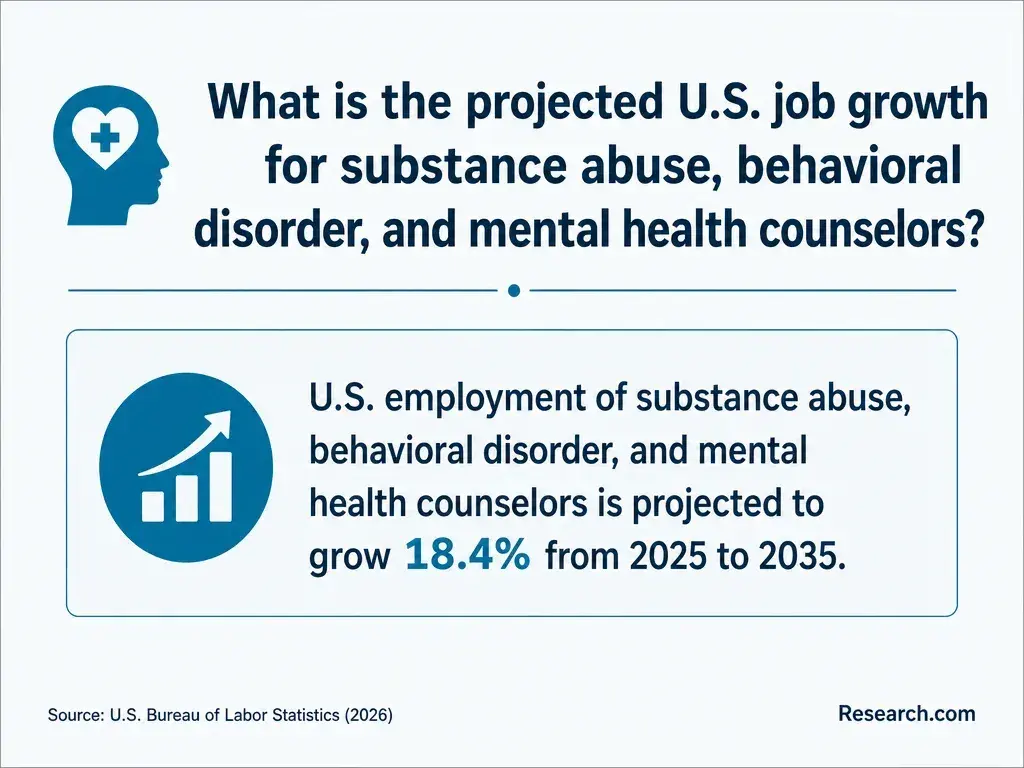
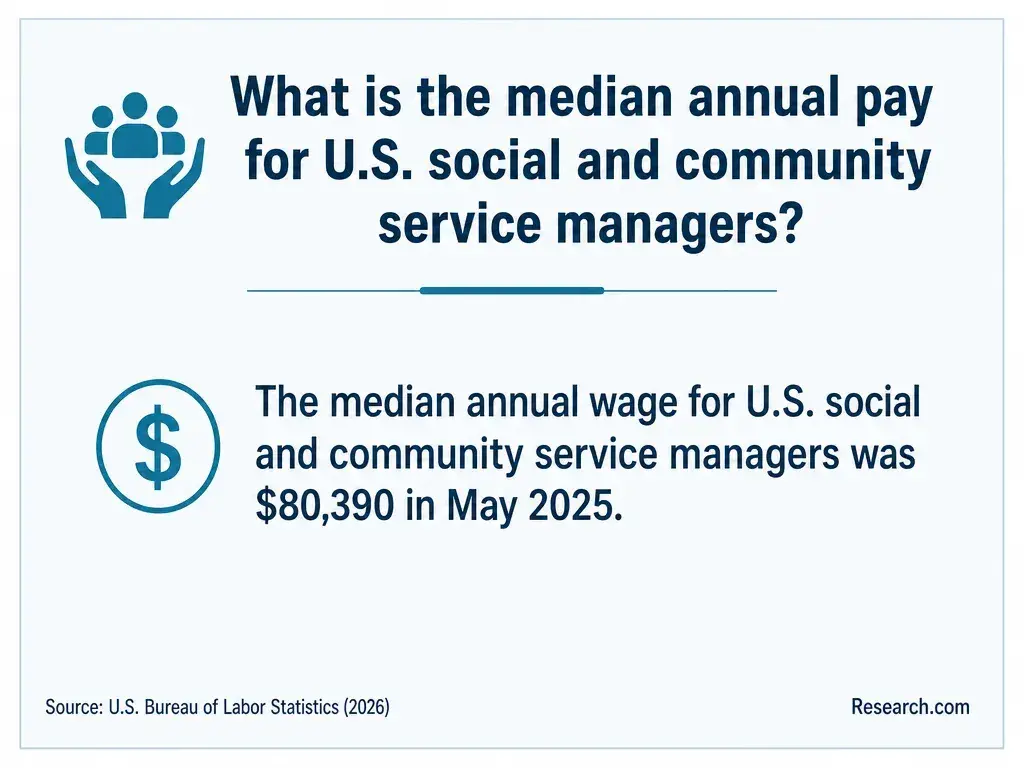
There is no single salary or job-growth figure for "mental health psychology BA graduates." US Bureau of Labor Statistics figures describe occupations, not outcomes guaranteed by a major. To make a useful comparison, identify a job title you could plausibly enter, check its current Occupational Outlook Handbook wage and projection period, then read the stated entry requirements and duties. Licensed counseling statistics should not be treated as BA-level earnings.
Return on investment depends on the role you can pursue, local pay, prior experience, remaining tuition, and whether you plan to fund further education. For a student committed specifically to substance-use services, low-cost substance use counseling undergraduate degree pathways provide another cost comparison - but verify that any program meets the requirements for your intended job or state credential before treating a lower price as better value.
Other Things You Should Know About Psychology
Usually not unless the institution awards an official concentration or other designation. Ask the registrar what appears on the diploma and transcript.
Check your target role or graduate prerequisites first. If you lack methods preparation, statistics may add a capability that another overlapping survey course will not.
Only if the program approves it under its project or placement rules. Obtain site and faculty approval before using workplace information, and protect client confidentiality.
Often, if the replacement courses fit the degree audit and are available in time. Have an advisor check prerequisites and graduation requirements before dropping a planned course.
- Requirements Related to the Practice of Counseling - NCBI https://www.ncbi.nlm.nih.gov/books/NBK259170/
- Cost of Attendance (Budget) | 2026-2027 Federal Student Aid Handbook https://fsapartners.ed.gov/knowledge-center/fsa-handbook/2026-2027/vol3/ch2-cost-attendance-budget
- Course Descriptions - FSU Department of Psychology https://psychology.fsu.edu/undergraduate/programs/course-descriptions
- Career Pathways in Psychological & Brain Sciences | Information Technology Services https://artsandsciences.louisville.edu/psychological-and-brain-sciences/career-pathways
- Psychology Curriculum | randolphcollege.edu https://www.randolphcollege.edu/psychology/curriculum/
- Psychology | Academic Catalog | The University of Chicago http://collegecatalog.uchicago.edu/thecollege/psychology/
- Pursuing a Career in Clinical or Counseling Psychology | apa.org https://www.apa.org/education-career/guide/subfields/clinical/education-training
- Program: Psychology, B.A. - Undergraduate Record https://records.ureg.virginia.edu/preview_program.php
- Psychology Requirements | Rutgers University https://psych.rutgers.edu/academics/undergraduate/major
- What Degree Do I Need to Become a Counselor or Therapist? | Palo Alto University https://paloaltou.edu/resources/blog/what-degree-do-i-need-become-counselor-or-therapist