2027 How to Become a Teacher in Idaho – What Degree Do You Need to Be a Teacher?

Co-Founder and Chief Data Scientist
Choosing a teaching career in Idaho means making several connected decisions: what grade level or subject to teach, which degree or preparation program to complete, how to meet Idaho certification rules, and whether a traditional, online, or alternative route is the best fit. The process is structured because public school teachers must show both subject knowledge and classroom readiness before they receive an Idaho teaching certificate.
This guide explains how to become a teacher in Idaho from the first education requirement through licensure, renewal, alternative certification, and career advancement. It is designed for first-time college students, career changers, out-of-state teachers, substitute teachers, and current educators considering a new endorsement or advanced role.
Idaho’s labor market also gives prospective teachers a reason to plan carefully. According to the Idaho Department of Labor, elementary school teachers are projected to see 14.5% job growth and secondary school teachers are projected to see 15.8% growth through 2032. If you are comparing preparation options, a strong starting point is reviewing accredited pathways such as online elementary education degree programs that align with Idaho certification expectations.
Quick Answer: How do you become a teacher in Idaho?
To become a public school teacher in Idaho, you generally need to earn a bachelor’s degree, complete a state-approved teacher preparation program, finish supervised student teaching, pass the required Praxis exams, clear a fingerprint-based background check, and apply for an Idaho teaching certificate. Career changers and candidates with a non-education bachelor’s degree may qualify for alternative authorization or post-baccalaureate pathways, depending on their background and the hiring needs of Idaho schools.
| Step | What you need to do | Why it matters |
| 1. Choose a teaching area | Decide whether you want to teach elementary, secondary, special education, STEM, kindergarten, or another subject or grade band. | Your choice affects the degree plan, Praxis exams, endorsements, and student teaching placement you need. |
| 2. Complete an approved program | Earn a bachelor’s degree and complete a state-approved educator preparation program, or pursue an approved alternative route. | Idaho uses approved preparation to verify that candidates have training in instruction, assessment, classroom management, and student learning. |
| 3. Pass required exams | Complete the Praxis exams required for your grade level or subject area. | Exam results help document content knowledge and professional readiness. |
| 4. Complete background checks | Submit fingerprints and meet criminal background requirements. | Schools must verify candidate suitability for working with students. |
| 5. Apply for certification | Submit transcripts, exam scores, preparation documentation, and other required materials. | Certification authorizes you to teach in Idaho public schools. |
| 6. Renew and keep learning | Complete professional development and continuing education needed for renewal. | Idaho educators must maintain their license and stay current with instructional standards. |
How to Become a Teacher in Idaho Table of Contents
- Idaho education job outlook and teaching landscape
- Education requirements for Idaho teachers
- Idaho teacher licensure, exams, renewal, and reciprocity
- Alternative certification pathways in Idaho
- Support resources for new Idaho teachers
- Trends and policy updates affecting Idaho educators
- Should you go back to school for a teaching degree?
- Financial aid and scholarship options for aspiring Idaho teachers
- Strengthening STEM teaching credentials in Idaho
- Transitioning into school librarianship in Idaho
- Kindergarten teacher requirements in Idaho
- Top education programs in Idaho for 2027
- Online teacher preparation and career flexibility
- Certification challenges to plan for
- Becoming a substitute teacher in Idaho
- High-opportunity subject areas and grade levels
- Special education teacher certification in Idaho
- Private school teacher requirements in Idaho
- Teacher career growth and advancement in Idaho
Overview of the Education Industry in Idaho
Idaho’s education sector includes traditional public schools, charter schools, virtual schools, private schools, early childhood programs, and district-level support roles. For aspiring teachers, the most important takeaway is that hiring demand is not the same across all subjects, locations, and grade levels. Rural districts, high-need subjects, and specialized services can have different staffing needs than larger urban districts.
According to a recent report, teacher employment in Idaho is projected to grow by 14% through 2032. Demand may be stronger in hard-to-staff areas such as mathematics, science, and special education, where schools often need candidates with specific endorsements and classroom-ready skills.
What Idaho’s school enrollment trends mean for future teachers
Enrollment patterns can influence where teaching jobs appear. According to the Idaho State Board of Education, during the 2025-26 school year, traditional public school districts reported 268,282 students, down from 271,562 in spring 2024-25. Charter schools increased to 42,017 students from 41,698 in the prior year. Virtual schools and online charters also grew in selected cases, including Gem Prep: Online, which increased from 381 to 440 students, and Pathways In Education, which rose from 53 to 193 students.
For teacher candidates, this does not mean online schools are replacing traditional classrooms. It does mean flexibility matters. Candidates who are comfortable with learning management systems, digital instruction, hybrid lesson design, and remote student support may have more options than candidates who prepare only for a conventional classroom environment.
Salaries for Teachers in Idaho
Teacher pay in Idaho depends on district salary schedules, location, years of experience, education level, assignment type, and available benefits. According to a recent report, average teacher salary figures in Idaho generally fell between $17,830 to $61,513 per year. These figures should be treated as a broad range rather than a guarantee of what a new teacher will earn.
Many districts use step-and-lane salary structures, so pay often rises as teachers gain experience, earn additional credits, or complete graduate degrees. Compensation may also include health insurance, retirement contributions, paid leave, and other benefits. In some rural or difficult-to-staff communities, districts may use compensation or incentives to attract qualified applicants, but candidates should verify offers directly with each district.
| Salary factor | How it can affect earnings | What to check before accepting a role |
| District salary schedule | Districts may set different starting salaries and advancement steps. | Ask for the current salary schedule and where your education and experience place you. |
| Education level | Advanced degrees such as a master’s or Ph.D. may qualify teachers for higher salary lanes. | Confirm whether the district recognizes your graduate credits or degree. |
| Subject or assignment | High-need roles may have stronger hiring demand. | Ask whether the district offers stipends, bonuses, or additional duties tied to the position. |
| Location | Rural, suburban, and urban districts may differ in pay and cost of living. | Compare salary with housing, commuting, and local living costs. |
| Benefits | Benefits can significantly affect total compensation. | Review health coverage, retirement, leave, and professional development support. |
How to Become a Teacher in Idaho: Educational Requirements
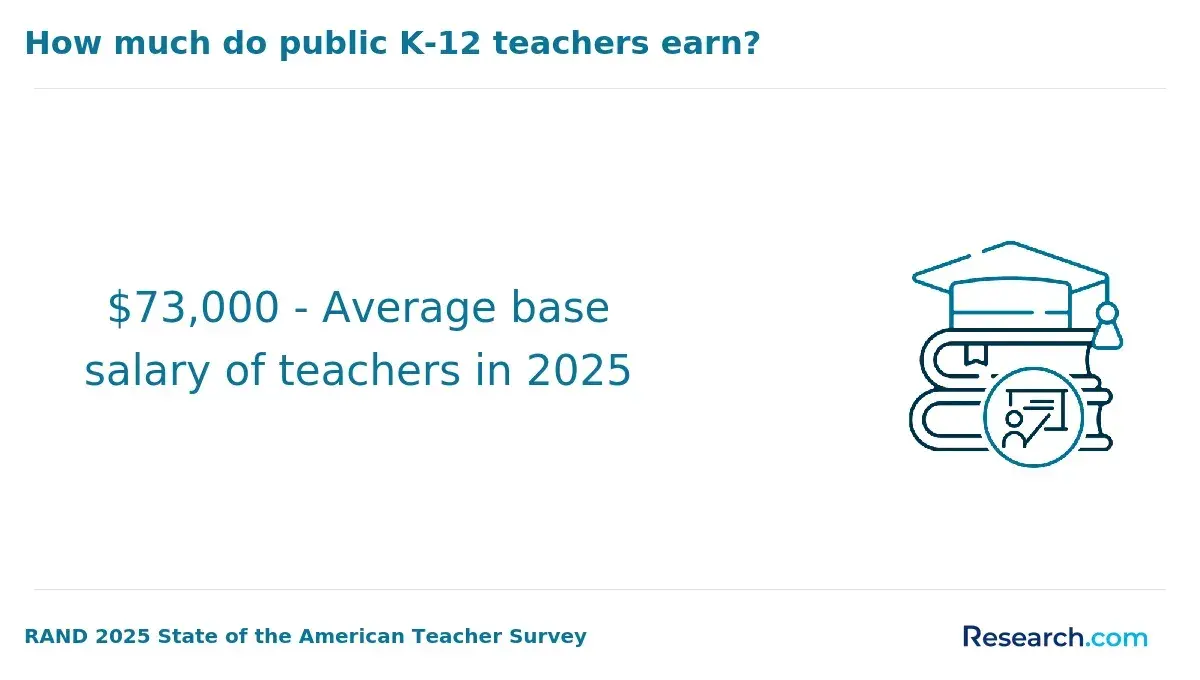
The standard Idaho teacher pathway combines academic study, professional preparation, field experience, testing, and state review. According to a recent report, the most common education level among teachers is a bachelor’s degree, held by 64% of educators. A master’s degree follows at 15%, while an associate degree accounts for 10% of educators.
Before applying for certification, candidates should confirm that their program is approved for the grade level and subject endorsement they want. A degree alone may not be enough if it does not include the required educator preparation components.
Bachelor’s Degree
Most Idaho teacher candidates begin by completing a bachelor’s degree from an accredited institution. The degree should connect to the intended teaching assignment, such as elementary education, secondary education, early childhood education, special education, mathematics, science, English, or another approved content area.
The degree title may vary. Some students complete a Bachelor of Education, while others earn a Bachelor of Science or Bachelor of Arts with an education major, teaching emphasis, or certification track. Candidates who major outside education may still be able to qualify, but they must meet Idaho Department of Education certification rules and usually complete an approved preparation route.
Teacher Preparation Program
Idaho teacher candidates must complete a state-approved teacher preparation program. These programs train candidates in lesson design, assessment, classroom management, instructional methods, student learning needs, and professional ethics.
Preparation programs typically include education coursework and supervised field experiences. They are also relevant for candidates comparing full certification with Idaho substitute teacher requirements, because the expectations for day-to-day substitute approval and full teacher licensure are not the same.
Student Teaching Experience
Student teaching is the bridge between coursework and independent classroom practice. During this supervised placement, candidates work with experienced teachers, plan and deliver lessons, assess student learning, and learn how classroom routines operate in real school settings.
This experience is especially important because teaching requires judgment that cannot be developed through coursework alone. Candidates learn how to adjust instruction, manage behavior, communicate with families, support diverse learners, and respond when a lesson does not go as planned.
Application for Licensure
After completing the required education and preparation steps, candidates can apply for an Idaho teaching certificate. The application normally includes official transcripts, proof of program completion, required Praxis scores, background check documentation, and any endorsement-specific materials.
Because Praxis requirements vary by teaching field, candidates should identify the correct exams early. Waiting until the end of a program to schedule exams can delay certification, hiring, or student teaching completion.
How to Become a Teacher in Idaho: Licensure Application and Renewal
Idaho teacher licensure involves multiple checkpoints: exams, clinical experience, background clearance, certification review, and ongoing professional development. There are approximately 28,000 certified educators in Idaho (Idaho Ed News, 2022a). The exact requirements may differ by certificate type, endorsement, and whether the candidate was prepared in Idaho, another state, or another country.
| Licensure requirement | What it involves | Practical planning tip |
| Praxis exams | Candidates must pass required exams for their grade level, subject, or professional area. | Confirm the correct Praxis codes before registering so you do not take the wrong exam. |
| Clinical hours | Teacher candidates complete supervised classroom experience, usually through student teaching. | Ask your program how placements are assigned and whether travel is required. |
| Background check | Fingerprinting and criminal background review help ensure student safety. | Start early because processing times can affect hiring timelines. |
| Certification application | Candidates submit transcripts, test scores, preparation verification, and other required records. | Keep digital and paper copies of every document submitted. |
| Renewal | Teachers complete ongoing professional development and renew their teaching license every five years by meeting required continuing education hours. | Track professional development throughout the renewal cycle instead of waiting until the final year. |
National and State Licensing Exams
Idaho uses Praxis exams to evaluate whether candidates have the required knowledge for the teaching role they want. Some candidates may need Praxis Core exams to demonstrate reading, writing, and mathematics skills. Others must complete subject-specific Praxis II exams tied to their endorsement area.
Clinical Hours
Clinical experience gives teacher candidates supervised practice in actual classrooms. These hours usually occur through student teaching or structured field placements under the guidance of a mentor teacher. They help candidates apply instructional strategies, manage classroom routines, and learn how to support students in real time.
Background Checks
Idaho requires teacher candidates to complete fingerprinting and a background check. This step is central to student safety and is required before educators can work in many school settings. Candidates with questions about prior legal issues should seek guidance early rather than waiting until the final application stage.
Continuing Education
Certification is not a one-time task. Idaho teachers must continue learning through professional development, coursework, workshops, or other approved activities. Renewal requirements may vary based on license type, endorsement, or professional situation, so educators should track their hours and confirm current rules before the renewal deadline.
License Reciprocity
Teachers licensed in another state may be able to pursue Idaho certification through reciprocity, but reciprocity does not always mean automatic approval. Idaho may require proof of a valid out-of-state license, documentation of experience, Praxis scores, background clearance, and evidence that the candidate meets Idaho standards.
Additional Requirements for Out-of-State and International Teachers
Out-of-state teachers should make sure their current license is active and in good standing before applying in Idaho. They may need to submit teaching experience records, transcripts, test scores, and other documents showing that their preparation meets Idaho expectations.
International teachers face additional steps. They may need to satisfy immigration and visa requirements, have foreign credentials evaluated for U.S. equivalency through organizations such as the National Association of Credential Evaluation Services (NACES), and demonstrate English language proficiency through exams such as the TOEFL or IELTS.
Navigating Alternative Certification Pathways in Idaho
Alternative certification can help Idaho schools hire qualified candidates who did not complete a traditional undergraduate education major. These routes are most relevant for career changers, professionals with strong subject knowledge, paraprofessionals, retired military personnel, and candidates willing to teach in hard-to-fill roles while completing required preparation.
| Pathway | Best for | Key consideration |
| Post-baccalaureate preparation | Adults who already hold a bachelor’s degree and want to complete teacher preparation without earning a second full undergraduate degree. | Check whether the program leads to the exact endorsement you need. |
| Emergency certification | Schools facing staffing shortages in specific subjects or geographic areas. | This is usually tied to district need and may not be a long-term substitute for full preparation. |
| Alternative Authorization – Teacher to New | Qualified candidates who can begin teaching while completing requirements. | Candidates should understand the timeline, supervision expectations, and coursework obligations before accepting a position. |
Alternative routes can be practical, but they require careful planning. Candidates should ask whether the pathway results in full certification, how long they have to complete requirements, what support the district provides, and what happens if they change districts. For a deeper comparison of the types of teaching certificates in Idaho, review pathways based on prior education, work background, and certification goals.
What support resources are available for new teachers in Idaho?
New teachers often need support with classroom management, lesson pacing, family communication, grading, student behavior, and district expectations. Idaho districts and professional organizations may provide several forms of early-career support.
- Mentorship programs: Many districts pair beginning teachers with experienced educators who can help with planning, classroom routines, and professional adjustment.
- Professional development workshops: Training sessions may cover assessment, lesson planning, instructional technology, classroom management, and communication with students and families.
- Online learning platforms: Webinars, self-paced modules, and digital training resources can help teachers build skills while balancing classroom responsibilities.
- Networking events and conferences: Organizations such as the Idaho Education Association (IEA) provide opportunities to meet other educators, discuss teaching challenges, and learn about instructional trends.
New teachers should not wait until they are struggling to seek support. Asking for a mentor, observing experienced teachers, and documenting professional development from the first year can make licensure renewal and classroom improvement easier.
What are the emerging trends and policy updates shaping teaching careers in Idaho?
Idaho educators are working in a school environment shaped by digital learning, changing enrollment patterns, accountability expectations, and evolving professional development needs. Technology integration and digital literacy are increasingly important, especially as virtual and online charter enrollment grows in selected schools. Evaluation systems and instructional standards may also influence how teachers document effectiveness and choose professional learning.
Subject-specific preparation remains important. For example, teachers planning to specialize in English should understand both content standards and instructional strategies for reading, writing, language development, and assessment. Candidates can explore a focused pathway through this guide on how to become an english teacher in Idaho.
Should I consider going back to school for a teaching degree?
Going back to school can make sense if you want to enter teaching from another career, add an endorsement, move into leadership, or meet updated certification requirements. It may not be necessary if you already hold a valid license and only need professional development or a targeted endorsement.
| Going back to school may be worth it if... | You may need a different option if... |
| You have a bachelor’s degree but no teacher preparation. | You only need a short professional development course for renewal. |
| You want to move into special education, STEM, administration, or another specialized role. | You are not ready to commit time to student teaching, fieldwork, or exams. |
| Your current credentials do not match Idaho certification requirements. | The program is not approved or does not lead to the endorsement you need. |
| You want a structured path with advising, placements, and certification support. | You need an employer-based alternative authorization route instead of a full degree program. |
Before enrolling, compare program approval status, transfer credit policies, field placement requirements, tuition, exam support, and whether the program is designed for Idaho certification. For broader planning, review this resource on going back to school to be a teacher.
What financial aid and scholarship options are available for aspiring teachers in Idaho?
Teacher preparation can be expensive, so candidates should compare total cost, not just tuition. Fees, textbooks, testing costs, background checks, transportation to field placements, and unpaid student teaching time can all affect affordability.
- State-specific scholarships and grants: Idaho students may qualify for state-sponsored financial aid, including the Idaho State Scholarship, when enrolled in eligible programs. Candidates should verify current eligibility rules with their institution and the state.
- TEACH Grant: The Teacher Education Assistance for College and Higher Education (TEACH) Grant is a federal program that helps students pay for college in exchange for a service commitment in a high-need field or low-income school. Students should understand the service obligation before accepting the grant.
- Federal loan forgiveness: Public Service Loan Forgiveness (PSLF) may help qualifying teachers who work for eligible public schools or nonprofit organizations, make qualifying federal loan payments, and meet program rules over 10 years.
- Field-specific scholarships: Students preparing for shortage areas such as STEM may find targeted support, including opportunities connected to the Idaho STEM Action Center.
- University-based aid: Boise State University, Idaho State University, and the University of Idaho may offer scholarships for education majors. Awards may be need-based, merit-based, or tied to a specific teaching field.
- Flexible and accelerated options: Some students reduce costs by using transfer credits, attending part time, or choosing accelerated bachelor's degree online programs that shorten the time to completion. Always confirm that an online program meets Idaho certification expectations.
How can I enhance my STEM teaching credentials in Idaho?
STEM teachers need both content knowledge and the ability to make complex concepts accessible to students. Candidates interested in mathematics, science, technology, or engineering-related teaching should look for programs with strong subject coursework, hands-on learning, and opportunities to practice inquiry-based instruction.
If mathematics is your target area, it can be useful to understand how to get a degree in mathematics and how subject preparation connects to teacher endorsement requirements. STEM candidates should also seek professional networks, workshops, and district initiatives that support lab-based learning, data literacy, and classroom technology use.
How can I transition into a career as a school librarian in Idaho?
School librarians support reading development, research skills, digital literacy, information access, and curriculum collaboration. This can be a strong pathway for educators who want to remain in schools while moving into a role that combines instruction, technology, and resource management.
Prospective school librarians should review certification requirements, field experience expectations, and technology competencies. For a focused credential pathway, use this guide on how to be a school librarian in Idaho.
What are the kindergarten teacher requirements in Idaho?
Kindergarten teachers need preparation in early childhood development, early literacy, classroom routines, play-based learning, assessment of young children, and family communication. Candidates typically complete an education degree with early learning coursework and field experience in settings serving young learners.
Because kindergarten classrooms require developmentally appropriate instruction, candidates should look closely at programs that include child psychology, early childhood methods, and supervised practice with kindergarten-age students. For a step-by-step pathway, review kindergarten teacher requirements in Idaho.
List of Top Education Programs in Idaho for 2027
Teaching can offer meaningful work, community impact, and multiple paths for advancement, but candidates should choose preparation programs based on fit rather than name recognition alone. Based on a recent survey, 17.81% of teachers indicated that they are slightly satisfied and 34.83% are somewhat satisfied with their jobs as a teacher (Idaho Education News, 2022b).
The following Idaho programs represent different entry points into teacher preparation, including elementary education, secondary education, early childhood education, and transfer-oriented associate study. When comparing programs, verify current tuition, accreditation, endorsement alignment, student teaching requirements, and certification outcomes.
| Program | Best fit | Key details |
| Boise State University, Bachelor of Arts in Elementary Education | Students preparing for elementary classroom teaching through a traditional four-year route. | Program Length: 4 years; Tracks/Concentrations: None; Cost per Credit: $214.50; Required Credits to Graduate: 128 credits; Accreditation: Northwest Commission on Colleges and Universities (NWCCU). |
| Idaho State University, Bachelor of Science in Secondary Education | Future middle school or high school teachers who want subject-area preparation and pedagogy. | Program Length: 4 years; Tracks/Concentrations: None; Cost per Credit: N/A; Required Credits to Graduate: 128 credits; Accreditation: Northwest Commission on Colleges and Universities (NWCCU). Students comparing teaching fields may also review early childhood education courses. |
| University of Idaho, Bachelor of Science in Early Childhood Development and Education | Students interested in working with children from birth through age eight. | Program Length: 4 years; Tracks/Concentrations: None; Cost per Credit: Information not available; Required Credits to Graduate: 126; Accreditation: Council for the Accreditation of Educator Preparation (CAEP). This pathway may interest students comparing a bachelor’s level child development degree. |
| Northwest Nazarene University, Bachelor of Arts in Elementary Education | Students seeking elementary education preparation with classroom theory and field experiences. | Program Length: 4 years; Tracks/Concentrations: Elementary Education; Cost per Credit: $695; Required Credits to Graduate: 128 credits; Accreditation: Council for the Accreditation of Educator Preparation (CAEP). |
| College of Southern Idaho, Associate of Arts in Education | Students who want a lower-division education pathway before transferring to a four-year institution. | Program length: 2 years; Tracks/concentrations: None; Credits required: 60 credits; Cost per credit: $190 (in-state) or $560 (out-of-state); Accreditation: Northwest Commission on Colleges and Universities (NWCCU). |
How to compare Idaho teacher preparation programs
- Confirm accreditation and approval: Institutional accreditation matters, but teacher preparation approval is also essential for certification.
- Match the program to your endorsement: Elementary, secondary, early childhood, special education, and STEM pathways have different requirements.
- Ask about student teaching placements: Find out where placements occur, how they are assigned, and whether you can complete them near your home.
- Calculate the full cost: Include tuition, fees, books, exams, background checks, transportation, and possible lost income during student teaching.
- Review transfer credit rules: Associate degree students and returning adults should ask how many credits will apply to the final degree.
- Check support for licensure exams: Strong programs usually provide advising, test preparation resources, and clear timelines for Praxis requirements.
Can online teacher preparation programs boost career flexibility in Idaho?
Online teacher preparation can be useful for working adults, rural students, paraprofessionals, and career changers who need flexible coursework. However, “online” does not mean entirely remote. Teacher candidates usually still need in-person field experiences, student teaching, background checks, and local school placements.
The best online route is one that clearly explains how coursework, Praxis preparation, clinical placements, and Idaho certification requirements fit together. For a focused overview, see this guide on how to become a teacher online in Idaho.
What challenges might impact my teacher certification process in Idaho?
Certification delays often come from preventable issues: incomplete transcripts, wrong Praxis exams, late background checks, missing program verification, or assuming that an out-of-state or online program automatically meets Idaho requirements. Candidates should build a document checklist before applying and keep copies of every submission.
Another common challenge is timing. Exam schedules, score reporting, fingerprint processing, and student teaching placement calendars may not align with district hiring windows. To reduce delays, review the full teacher certification requirements in Idaho before your final year of preparation.
How can I become a substitute teacher in Idaho?
Substitute teaching can be a practical way to gain classroom experience, build district relationships, and confirm whether teaching is the right career path. Requirements are different from full teacher licensure and may vary by district.
Prospective substitutes should expect background checks, district onboarding, possible training modules, and local approval steps. Some candidates use substitute teaching while completing a degree, Praxis exams, or alternative certification. For detailed district and state considerations, review the Idaho substitute teacher requirements.
What specific subject areas or grade levels offer the most opportunities for teachers in Idaho?
Idaho teaching opportunities can vary by district, but several areas are often worth watching: elementary education, secondary math, science, special education, and roles in rural or hard-to-staff schools. Elementary school teachers have a projected job growth rate of 14.5% through 2032, making elementary education a notable option for candidates who enjoy working across multiple subjects with younger students.
If elementary education is your goal, learn the specific degree, preparation, and certification pathway through this guide on how to become an elementary school teacher in Idaho. Candidates should also check individual district postings because local demand can change faster than statewide projections.
What are the career growth and advancement opportunities for teachers in Idaho?
Teaching can lead to several advancement routes in Idaho. Some teachers remain in the classroom and add endorsements, while others move into leadership, curriculum, policy, or higher education. The best path depends on whether you want to teach students directly, coach other educators, manage programs, or influence school systems.
| Advancement path | What the role involves | Typical preparation to consider |
| Educational leadership | Principals, assistant principals, and district administrators manage schools, supervise staff, and guide instructional priorities. | A master's degree in educational leadership or administration is commonly required. |
| Specialized teaching | Teachers may focus on special education, ESL, gifted education, or another high-need specialty. | Additional endorsements, graduate coursework, or a master's degree may be useful. |
| Curriculum and instructional coordination | These professionals design curriculum, support teachers, analyze instruction, and help improve academic programs. | Advanced study in curriculum, instruction, assessment, or educational leadership can help. |
| Higher education teaching | Experienced educators may teach future teachers at colleges or universities. | A master's or doctoral degree is often needed, depending on the institution and role. |
| Education policy and advocacy | Teachers may work with agencies, nonprofits, or government groups to shape education programs and legislation. | Graduate study in education policy, administration, or related fields may support the transition. |
Teachers who want to move into advanced roles should compare graduate programs carefully. A program that supports classroom leadership may differ from one designed for administration, policy, or specialized instruction. If advancement is your next step, explore masters in education programs and related career outcomes.
How can I pursue special education teacher certification in Idaho?
Special education teachers need preparation in individualized education plans, behavior supports, disability categories, inclusion strategies, assessment, collaboration, and legal responsibilities. Candidates should choose programs that include special education coursework and supervised practice with students who have diverse learning needs.
Because special education requirements may include endorsement-specific exams or field experiences, candidates should confirm the exact pathway before enrolling. For a detailed route, review special education teacher certification in Idaho.
What are the private school teacher requirements in Idaho?
Private schools in Idaho may set hiring standards that differ from public school certification rules. Some schools prefer or require state certification, while others may place more weight on subject expertise, professional experience, religious mission alignment, or prior classroom work.
Candidates should contact each private school directly and ask about degree requirements, certification expectations, background checks, professional development, and teaching experience. For more details on this route, review private school teacher requirements in Idaho.
Obtaining a Teaching License in Idaho
The strongest Idaho teacher candidates choose a preparation route that matches their intended classroom role, certification requirements, financial situation, and long-term career goals. Traditional campus programs, elementary education degree online options, post-baccalaureate routes, and alternative authorization pathways can all make sense in different circumstances.
Teaching is not the only way to work in education. If you are interested in schools, learning, and student success but are unsure about classroom teaching, compare related careers in education other than teaching, including curriculum, policy, academic advising, instructional design, and student support roles.
Common mistakes to avoid when becoming a teacher in Idaho
- Choosing a program without checking approval: Accreditation matters, but teacher preparation approval and endorsement alignment are critical for licensure.
- Taking the wrong Praxis exam: Exam requirements depend on subject and grade level. Confirm codes before registering.
- Focusing only on tuition: Add fees, books, exams, transportation, and student teaching costs to estimate the real price.
- Assuming online means fully remote: Most online teacher preparation programs still require in-person fieldwork and student teaching.
- Waiting too long to complete background checks: Fingerprinting and clearance timelines can affect placement and hiring.
- Ignoring district differences: Salary, benefits, mentoring, and hiring needs vary by district.
- Assuming salary outcomes are guaranteed: Published ranges and averages do not replace an actual district salary placement.
Questions to ask before enrolling in an Idaho teacher preparation program
- Is this program approved for Idaho teacher certification?
- Which endorsement or grade level will I be eligible for after completion?
- What Praxis exams will I need, and when should I take them?
- Where will student teaching take place, and who arranges the placement?
- How many credits can I transfer into the program?
- What is the total estimated cost, including fees and testing?
- Does the program support online, hybrid, part-time, or accelerated study?
- What licensure support does the school provide after graduation?
- How do graduates typically perform in certification and hiring?
- Will this program still meet my needs if I move districts or change teaching fields?
Key Insights
- Idaho has a structured certification process: Most candidates need a bachelor’s degree, approved teacher preparation, student teaching, Praxis exams, a background check, and a completed licensure application.
- Job outlook is positive but not uniform: Idaho projects 14.5% growth for elementary school teachers and 15.8% growth for secondary school teachers through 2032, but opportunities vary by subject, district, and location.
- Alternative routes can work for career changers: Post-baccalaureate programs, emergency certifications, and Alternative Authorization – Teacher to New may help qualified candidates enter teaching without a traditional undergraduate education major.
- Salary depends heavily on district rules: Reported Idaho teacher salary figures range from approximately $17,830 to $61,513 per year, but actual pay depends on placement, education, experience, benefits, and district salary schedules.
- Program choice affects licensure speed: The wrong program, missing field experience, or incorrect Praxis exam can delay certification.
- Online preparation can increase flexibility: Online coursework may help working adults and rural students, but candidates should still expect in-person clinical requirements.
- Renewal requires ongoing development: Idaho teachers must continue professional learning and renew their teaching license every five years by completing required continuing education hours.
- Advanced credentials can expand options: Teachers may move into special education, STEM, leadership, curriculum design, higher education, policy, or school library roles with the right preparation.
- Affordability requires full-cost comparison: Scholarships, grants, transfer credits, PSLF eligibility, accelerated study, and university aid can all affect return on investment.
- Idaho’s cost of living should be part of the decision: Teacher salaries should be compared with local expenses, especially since the cost of living in Idaho is six percent higher than the national average.
References:
- Ash, A. M. (2025, September 24). Teachers Who Collaborate, Learn at Work Are More Satisfied. Gallup.
- O*NET OnLine. (n.d.). Idaho Employment trends: 25-2058.00 Special education teachers, secondary school. O*NET OnLine.
- Projections Central (n.d.). Labor Market Projections. Projections Central
- Suppe, R. (2025, November 12). K-12 public school enrollment trending down for second consecutive year. Idaho Education News
- Zippia. (2025, January 8). Teacher Demographics and Statistics [2023]: Number Of Teachers In The US. Zippia.
Related Articles for Nearby States
- 2027 How to Become a Teacher in Montana – What Degree Do You Need to Be a Teacher?
- 2027 How to Become a Teacher in Washington – What Degree Do You Need to Be a Teacher in Washington?
- 2027 How to Become a Teacher in Oregon – What Degree Do You Need to Be a Teacher?
- 2027 How to Become a Teacher in Nevada – What Degree Do You Need to Be a Teacher?
- 2027 How to Become a Teacher in Utah – What Degree Do You Need to Be a Teacher
- 2027 How to Become a Teacher in Wyoming – What Degree Do You Need to Be a Teacher
- 2027 How to Become a Teacher in California – What Degree Do You Need to Be a Teacher?
- 2027 How to Become a Teacher in Colorado – What Degree Do You Need to Be a Teacher?
- 2027 How to Become a Teacher in Arizona – What Degree Do You Need to Be a Teacher?
- 2027 How to Become a Teacher in New Mexico – What Degree Do You Need to Be a Teacher?
Other Things You Should Know About Becoming a Teacher in Idaho
Yes. Idaho requires teacher candidates to submit to a state and federal criminal history background check with fingerprinting before licensure is issued. The check is processed through the Idaho Department of Education, and any disqualifying criminal history can delay or block certification.
Aspiring teachers in Idaho must pass the Praxis Core exams for basic skills and the Praxis II exams specific to their subject area or grade level.
After completing the educational requirements and passing the necessary exams, you can apply for a teaching license in Idaho by submitting your transcripts, exam scores, and a background check to the Idaho Department of Education.
Idaho requires prospective teachers to have completed specific coursework related to the subject they intend to teach. For example, secondary education professionals must typically have a major in their subject area alongside teacher preparation courses to meet state licensure requirements.
Yes, Idaho offers alternative certification pathways, including post-baccalaureate programs and alternative educator preparation certificate programs, for those who have a bachelor’s degree in a field other than education.
To renew your teaching license in Idaho, you need to complete six semester credits of coursework related to teaching or your subject area within the renewal period. You must also submit your renewal application and pay the required fee to the State Department of Education.