2027 Online BA in Psychology - Mental Health for Volunteer Coordinators: Compare Transferable Skills and Degree Requirements
Audited and Verified:
Our Editorial and Data Verification Process
Research.com uses government datasets, official education statistics and primary institutional information to support its career and degree guides. Our review process checks factual accuracy, occupational definitions, source dates and the requirements associated with the credentials discussed.
How This Article Was Fact-Checked
Our editorial team verifies salary estimates, employment projections, education requirements and program information against original data providers and official organizations. Salary figures are checked against the relevant occupational definitions and reporting periods. Information about licensure, accreditation and required in-person training is reviewed separately.
Fact-checked and verified on:

Co-Founder and Chief Data Scientist
Coordinating mental health volunteers already calls for judgment, communication, training, and careful referral practices. An online BA in psychology can deepen those skills, but it may also require substantial coursework that does not directly advance your next job goal. This guide compares what you likely know from community work with what a psychology degree teaches, then explains transfer credits, online requirements, costs, career options, and clinical boundaries. Use it to decide whether a full bachelor's degree, targeted training, or a different professional pathway is the better investment.
Key Things You Should Know
- Volunteer coordination experience can demonstrate training, outreach, documentation, and partnership skills; a psychology BA adds systematic study of behavior, research methods, and statistics rather than clinical authority.
- A US psychology bachelor's degree commonly requires about 120 semester credits overall, but accepted transfer credits do not necessarily satisfy psychology-major or residency requirements.
- Choose the degree for a defined advancement goal. A general psychology BA does not qualify its holder to diagnose conditions or provide psychotherapy; those goals require a separate, jurisdiction-specific professional pathway.
What Is an Online BA in Psychology for Mental Health Volunteer Coordinators?
It is a bachelor of arts degree in psychological science delivered primarily online - not usually a degree specifically for volunteer coordinators. It can help a coordinator explain behavior, assess evidence, and improve nonclinical support programs. A BA may include more room for humanities or social-science electives than a BS, but the actual major requirements matter more than the letters on the diploma.
If your organization focuses on substance-use recovery, compare the required courses with distance learning bachelor's degrees in addiction psychology. A program's addiction or mental-health label does not establish a formal concentration, counselor credential, or placement opportunity; confirm each feature in its catalog.
The best fit is a coordinator who needs a bachelor's credential for advancement, wants stronger research and program-evaluation skills, or plans to meet prerequisites for later study. If the immediate goal is better volunteer onboarding or safer referrals, employer-supported training may be faster and less expensive.
How Does Psychology Training Support Mental Health Volunteer Coordination?
Your existing work may already include recruiting volunteers, setting role boundaries, coordinating schedules, communicating with community partners, and documenting service activity. Psychology coursework adds a framework for understanding motivation, development, social behavior, and the limitations of evidence. Neither experience nor coursework alone substitutes for an organization's safeguarding policies or clinical supervision.
The comparison below separates skills you may already use from knowledge a degree could add. Use it to identify gaps rather than assuming every coordination task requires more formal education.
| Coordination task | Transferable experience | Potential psychology contribution |
| Volunteer recruitment and retention | Interviewing, onboarding, feedback, and scheduling | Evaluating motivation and training approaches without stereotyping volunteers |
| Support and referral | Listening, explaining services, and following escalation procedures | Understanding stress, development, and why referral boundaries matter |
| Program improvement | Tracking attendance and operational problems | Designing appropriate measures and interpreting results without claiming causation |
For a recovery-services role, compare degree study with the more occupation-specific substance use counseling program pathways; state credential rules, not overlapping course titles, determine whether counseling is an option. For your present role, an achievable applied assignment might be an approved review of volunteer-training completion and anonymous feedback - not an analysis of identifiable client histories.
What Are the Requirements for an Online Psychology Bachelor's Degree?
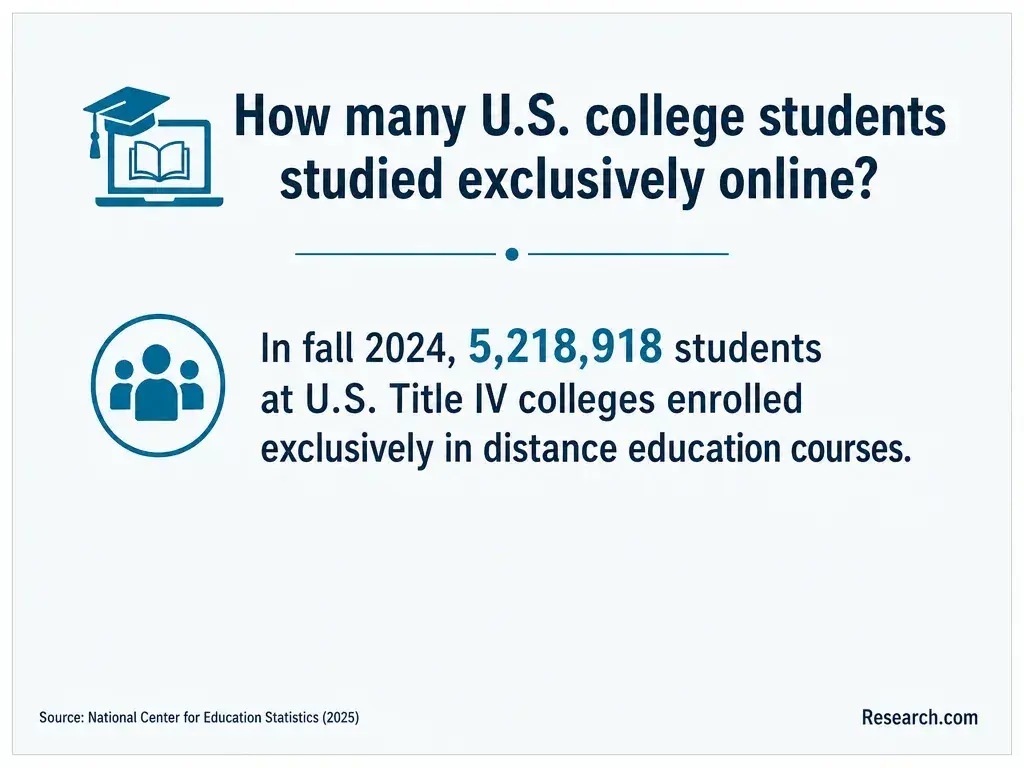
Most US bachelor's programs combine general education, psychology-major courses, electives, and a minimum total credit requirement, commonly around 120 semester credits. Programs may also specify a minimum grade in the major, upper-division coursework, a capstone, or credits earned at the awarding institution. These are graduation requirements, not promises about how much prior study will count.
For a returning coordinator, the crucial distinction is credit accepted versus requirement satisfied. An old statistics course might transfer as elective credit without meeting the psychology major's methods prerequisite. Ask the receiving school for a written degree audit showing where each course applies, which psychology courses remain, and whether their sequence is available online. Psychology transfer eligibility and degree planning is a useful comparison starting point, but the institution makes the final equivalency decision.
If you hope to use work at your nonprofit for an internship or capstone, obtain academic approval before counting on it. Your employer's willingness to host a project does not establish that its supervision, duties, or data access meet course requirements.
An online BA can be the same institutionally awarded degree as its campus counterpart, but verify that the institution holds recognized accreditation and that the credential and transcript match what you expect. Institutional accreditation is not proof of equivalent scheduling, research access, internship support, or career outcomes. The American Psychological Association does not accredit general psychology bachelor's programs.
Compare the catalog, accreditation record, course rotation, faculty access, academic support, and any required live meetings or campus visits. If a forensic-themed option appeals because you coordinate volunteers in victim services, forensic psychology study choices and employment preparation can inform that comparison. A forensic label is not evidence of legal authority or clinical qualification.
Ask whether online students have the same access to relevant electives, supervised nonclinical projects, library resources, and career advising. "Online" describes delivery; it does not guarantee an asynchronous schedule or an approved placement near home.
Common major courses include introductory psychology, statistics, research methods, developmental psychology, social psychology, and biological or cognitive foundations. Offerings vary: a course on psychopathology studies evidence about mental disorders, while community psychology or health psychology may be especially relevant to outreach and prevention. None trains an undergraduate to diagnose clients.
For volunteer coordination, prioritize a sequence that connects methods and statistics to community-facing electives. Methods can help you distinguish a useful training metric from a misleading one; developmental and social psychology can improve how you adapt communication for different volunteers and communities. Check prerequisites and term-by-term availability before selecting electives.
Forensic coursework may be useful in a victim-services or justice-system setting, but it is not a necessary specialization for most mental health volunteer coordinators. Even planning a forensic psychology master's in less than two years should begin with the intended job's requirements, not an assumption that a specialized degree grants investigative or assessment authority.
First-year applicants generally submit evidence of secondary-school completion; transfer applicants typically provide transcripts from every previously attended college. Institutions may also set GPA, prerequisite, or English-proficiency requirements. Admission to the university, admission to the major, and approval of transferred courses can be separate decisions.
Before applying, request both the admissions checklist and the psychology major's transfer-equivalency process. If you have an associate degree, ask which general-education requirements it fulfills and whether statistics must be taken again. Volunteer leadership can strengthen an application where experience is considered, but it does not automatically waive coursework.
Financial preparation should happen alongside admission planning, particularly if you are comparing a psychology major with addiction-focused study. Undergraduate addiction counseling grants and scholarships describes funding avenues to investigate; eligibility and award availability must be confirmed with each school and aid provider.
Time to completion depends on credits that apply to the degree, course sequencing, enrollment pace, and whether required courses are offered when you need them. A student starting without college credit should plan for a substantially different schedule from a coordinator with an approved transfer audit. Part-time study may better fit nonprofit work, but it can extend the period during which tuition rates or employer-support policies change.
Compare each school's written estimate of remaining credits with its per-credit tuition, mandatory fees, books, technology costs, and any travel or unpaid placement expenses. Ask whether a capstone can be completed through an approved project at your current organization. If speed drives the decision, planning a shorter undergraduate forensic psychology degree illustrates why advertised timelines should be checked against your own transfer evaluation - even if forensic study is not your best curricular fit.
Calculate the likely return against a specific opportunity: a documented promotion requirement, a job posting requiring a bachelor's degree, or prerequisites for further study. If none applies, price a short course or employer training before committing to a full degree.
A psychology BA may help an experienced coordinator compete for nonclinical program coordinator, outreach, volunteer-management, intake-support, or human-services roles. Experience with staffing, partnerships, accessible training, and referral procedures often remains as important as the major. Employers may require a particular degree, background check, software skill, or experience serving a specific population.
The comparison below focuses on plausible next steps, not jobs automatically awarded with a BA.
| Target role | Most relevant evidence | Qualification boundary |
| Senior volunteer or community program coordinator | Recruitment results, training materials, partnerships, and budget responsibility | A degree may help where required, but management experience can be decisive |
| Human-services or behavioral-health support worker | Documented referral, intake-support, and service-navigation experience | Duties and required credentials vary by employer and state |
| Program-evaluation assistant | Statistics, ethical data handling, and a supervised evaluation project | A portfolio demonstrates methods skills, not clinical assessment authority |
If your actual target is psychotherapy rather than program leadership, investigate qualifying graduate routes and comparing accredited counseling degree completion times. Counseling-program fieldwork, supervision, and state eligibility matter more than how quickly the coursework is advertised to finish.
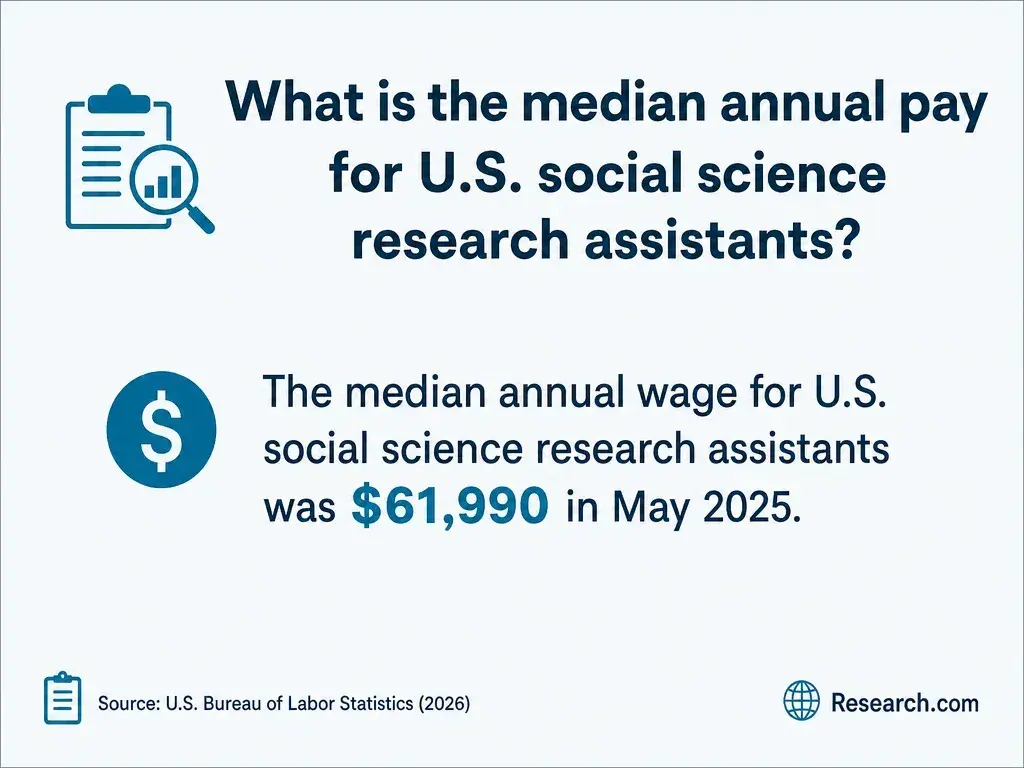
There is no single salary or growth rate for psychology BA graduates or mental health volunteer coordinators. The US Bureau of Labor Statistics reported a May 2023 median annual wage of $41,410 for social and human service assistants, an occupation that includes some support and service-coordination work. It is an occupation-wide midpoint, not an expected salary for a BA holder or a direct measure of volunteer-manager pay; location, employer, duties, and experience matter.
Use the current BLS outlook and local job postings for the specific title and duties you want, then compare their education requirements with your present qualifications. A move into licensed counseling has a different labor market and a longer qualification pathway. If that is your goal, evaluate clinical mental health master's tuition and career value separately rather than treating counselor pay as the return on a psychology BA.
Does a Psychology Bachelor's Degree Lead to Mental Health Licensure?
No. A psychology BA, including one with mental-health electives, does not by itself authorize psychotherapy, diagnosis, independent psychological assessment, or use of a protected clinical title. Licensed counseling, clinical social work, and psychology follow different qualifying education, supervised-practice, examination, and state-board rules.
For volunteer coordination, the practical boundary is to train volunteers to follow their approved role, recognize when to escalate concerns, and use established referral and emergency procedures - not to act as clinicians. If licensure is your long-term objective, identify the state and license first, then check its educational rules before choosing undergraduate electives or graduate programs. When weighing graduate options, comparing tuition assistance for mental health counseling study should include placement and supervision costs as well as tuition. A lower-priced degree is not useful for licensure if it fails the applicable requirements.
Other Things You Should Know About Psychology
Yes, when a school considers experience. Describe concrete responsibilities - such as onboarding, training, partnerships, and referral procedures - without presenting volunteer work as clinical practice.
Use materials you are authorized to share, such as a training outline or a blank evaluation template. Remove identifying information and obtain organizational permission; changing names alone may not make a client example safe to publish.
Choose training tied to your actual duties, such as the organization's safeguarding, referral, accessibility, or volunteer-supervision procedures. Confirm whether an employer requires a particular course rather than assuming any certificate will count.
Ask for required live-session times, group-work expectations, exam windows, and capstone meetings for your likely course sequence. Compare those commitments with peak recruitment periods and evening or weekend volunteer shifts.
- Behavioral Health - Think Cultural Health - HHS.gov https://thinkculturalhealth.hhs.gov/education/behavioral-health
- Requirements Related to the Practice of Counseling - NCBI https://www.ncbi.nlm.nih.gov/books/NBK259170/
- Learning to Be Employable Through Volunteering - PMC - NIH https://pmc.ncbi.nlm.nih.gov/articles/PMC7956941/
- How to Become a Licensed Psychological Associate | Texas Behavioral Health Executive Council https://bhec.texas.gov/texas-state-board-of-examiners-of-psychologists/applying-for-a-psychology-license/how-to-become-a-licensed-psychological-associate/
- Differences Between BA and BS in Psychology | ASU Online https://asuonline.asu.edu/newsroom/online-learning-tips/online-psychology-degree-bachelor-arts-or-bachelor-science/
- Why APA Accreditation Matters https://accreditation.apa.org/why-accreditation-matters
- Psychology | Transfer Admissions & Engagement | AAS Pathways https://transfer.appstate.edu/node/613
- Bachelor of Arts in Psychology - Online Program | CSULB CPaCE https://www.cpace.csulb.edu/courses/bachelor-of-arts-in-psychology
- Online Bachelor's Degree in Psychology | Purdue Global https://www.purdueglobal.edu/degree-programs/psychology/bachelor-degree-psychology-online/
- BA vs. BS in psychology: key differences explained | Capella University https://www.capella.edu/blog/psychology/ba-vs-bs-in-psychology-key-differences-explained/