
2027 Choosing an Online BA in Psychology - Mental Health Around A Need to Avoid Mandatory Daytime Meetings
Audited and Verified:
Our Editorial and Data Verification Process
Research.com uses government datasets, official education statistics and primary institutional information to support its career and degree guides. Our review process checks factual accuracy, occupational definitions, source dates and the requirements associated with the credentials discussed.
How This Article Was Fact-Checked
Our editorial team verifies salary estimates, employment projections, education requirements and program information against original data providers and official organizations. Salary figures are checked against the relevant occupational definitions and reporting periods. Information about licensure, accreditation and required in-person training is reviewed separately.
Fact-checked and verified on:

Co-Founder and Chief Data Scientist
An online psychology BA may fit around a job or caregiving responsibilities, but "online" does not mean "no daytime meetings." A required video class, group project, or agency placement can make an otherwise appealing program impossible to complete.
This guide is for prospective students who want to study mental health without committing to mandatory daytime sessions. It explains how to verify a program's actual schedule, compare its academic and financial fit, and distinguish bachelor's-level opportunities from careers that require clinical training and licensure.
Key Things You Should Know
- Choose by required participation, not the "online" label: request written confirmation about live classes, exams, group work, and any placement hours before enrolling.
- A psychology bachelor's degree commonly takes about four years of full-time study. Transfer credits may shorten that timeline only if they satisfy specific degree requirements.
- A mental health focus can prepare you for nonclinical support work or further study, but a psychology BA alone does not qualify you to diagnose conditions or provide psychotherapy.
What is an online bachelor's degree in psychology focused on mental health?
It is an undergraduate psychology degree that combines the field's scientific foundations with coursework about mental disorders, development, health, or behavioral-health services. The credential may be a BA in psychology with a formally named concentration, or a general BA whose electives allow a mental health emphasis. Check the transcript designation: several relevant electives do not necessarily constitute an official concentration.
The distinction matters if you are choosing between broad psychology study and preparation for a particular support role. A psychology BA leaves room for research methods and varied graduate-school prerequisites; a more occupation-specific program may devote more coursework to service delivery.
If your goal is substance-use recovery support, compare the curriculum and your state's credential rules before choosing an addiction counseling degree route. Neither degree title alone establishes permission to counsel clients.
How can you choose an accredited online psychology bachelor's program?
First, confirm that the institution holds accreditation recognized by the U.S. Department of Education or the Council for Higher Education Accreditation, and verify that the accreditation applies to the institution offering the degree.
Institutional accreditation is relevant to academic quality review, credit-transfer decisions, and federal aid eligibility; it does not prove that every course is asynchronous or that graduates qualify for licensure. APA does not accredit general undergraduate psychology majors.
Then compare the current catalog, the psychology major's requirements, the online course schedule, and policies for your intended entry term. Look for statistics and research methods, access to advising and tutoring outside business hours, a clear way to resolve scheduling conflicts, and evidence that required courses are offered often enough to finish at your planned pace. An online psychology degree selection guide can help build a shortlist, but each school must confirm its own policies.
Ask an advisor and the psychology department the same scheduling questions in writing. A general admissions representative may know the online format without knowing whether a particular capstone instructor requires weekday attendance.
Can an online psychology degree be completed without mandatory daytime meetings?
Some programs may allow it, but only if every required component has a workable schedule. "Asynchronous" usually means students can access lessons without joining a class at a fixed time; it does not mean there are no deadlines, collaborative tasks, supervised experiences, or scheduled exams. Policies can also differ by course section and instructor.
The following comparison shows where a daytime obligation can appear even when a degree is advertised as online.
| Requirement | Possible schedule conflict | Evidence to request |
| Required courses | Live lectures, presentations, or attendance checks | Recent syllabi and the upcoming section schedule |
| Exams and group work | Short testing windows or meetings arranged with classmates | Exam-window rules and group-project alternatives |
| Internship or capstone | Daytime site hours, faculty meetings, or presentations | Catalog requirements and written placement policies |
| Campus obligations | Orientation, residency, or proctored assessment | Degree-wide attendance and travel requirements |
For a working parent, a course with flexible lectures but unpredictable group meetings may be less manageable than a scheduled evening class. Before paying a deposit, describe your available hours and ask whether an entire approved path through the major, including alternatives if a section fills, fits them.
Compare that answer with fast-paced psychology degree formats cautiously. Shorter terms can increase weekly workload without eliminating fixed-time obligations.
Expect introductory psychology, research methods, statistics, and coursework in areas such as development, social psychology, biological psychology, and abnormal psychology. Mental health options might address addiction, health psychology, trauma, or community services. Exact requirements and whether those options are available online depend on the school and catalog year.
Methods and statistics deserve particular attention: they help you assess claims about treatments and services rather than treating a course about disorders as clinical training.
If future graduate study is possible, compare your target programs' prerequisites with the BA course sequence. Faster pathways through graduate psychology coursework are not a substitute for missing undergraduate preparation or proof that later programs will accept particular credits.
Ask when required methods courses run and whether their projects involve scheduled research-team meetings. Coursework can teach ethical handling of participant information; access to client records or permission to conduct research requires separate authorization.
First-time applicants generally submit evidence of prior secondary education and meet the institution's undergraduate admission rules. Transfer applicants generally provide transcripts from every college attended.
Some schools admit students directly to the major; others require a later declaration or additional prerequisites. Confirm the rule for the specific online BA rather than assuming admission to the university guarantees a seat in every psychology course.
If you have prior college study, request a degree audit showing not just accepted credits but which credits satisfy general education, psychology, statistics, research methods, electives, and any campus-residency requirement. A transferred course that counts as an elective may leave a required methods course unfinished.
For help estimating remaining coursework after transferring into psychology, use program comparisons as a starting point; only the receiving institution can approve your individual evaluation.
Keep course descriptions or syllabi for potential equivalency reviews. Request the audit early enough to check whether a prerequisite is offered at times you can attend.
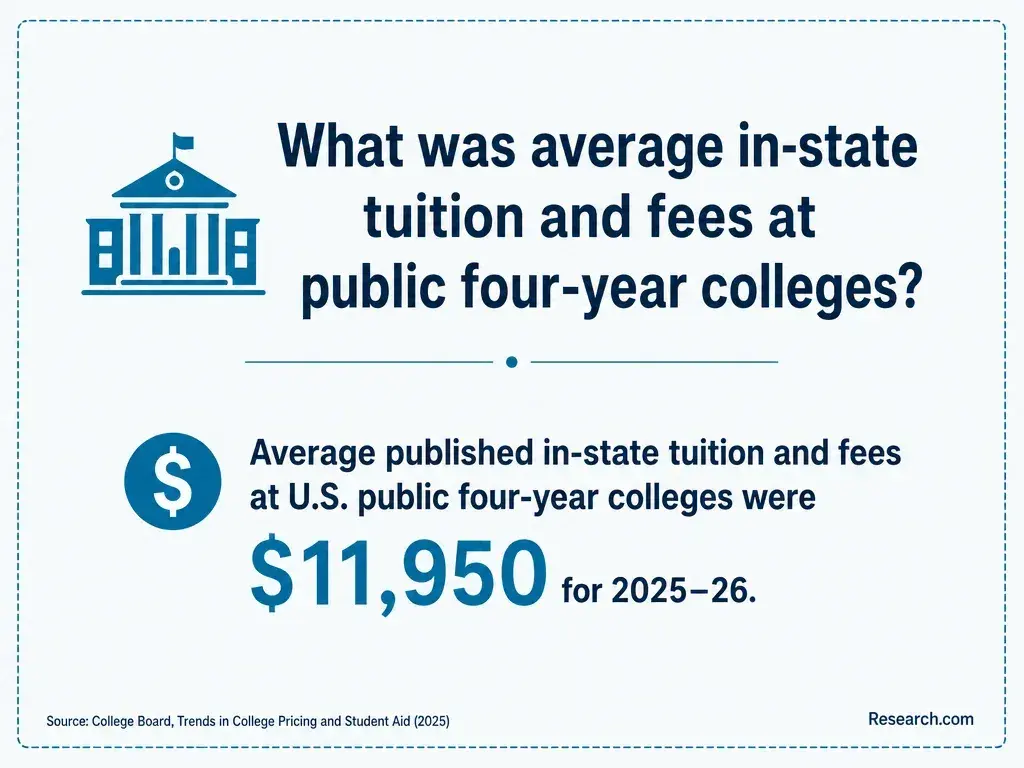
A bachelor's degree commonly represents about four years of full-time study, but your completion date depends on accepted credits, the requirements those credits fulfill, course availability, and how many classes you can manage alongside work or caregiving. A part-time schedule may protect your household routine while extending the period over which you pay fees and remain enrolled.
Request an individualized term-by-term plan and a written cost estimate based on your remaining requirements. Compare tuition and mandatory fees with books, technology, exam-proctoring charges, and any travel or unpaid placement costs.
Also ask how changing course loads affects aid eligibility and whether employer tuition assistance is available to you. If you are considering a substance-use-focused alternative, online substance use counseling bachelor's aid resources offer questions to investigate, not a promise of funding for a psychology BA.
Do not calculate savings from an advertised transfer-credit maximum. The useful comparison is each school's confirmed remaining credits, required terms, and total charges for your degree plan.
A graduate may seek nonclinical work in human services, behavioral-health outreach, intake, referrals, program support, or research assistance. Actual eligibility depends on the employer, prior experience, and any state rules attached to the job title.
For someone already working in a community organization, the degree may strengthen research literacy and service coordination more directly than it creates an entirely new occupation.
Read postings by duties, not just titles. A support role might involve documenting contacts and connecting people with services; a licensed role involving diagnosis or psychotherapy requires a different qualification. Seek supervised projects or employment that demonstrates careful documentation, privacy practices, culturally responsive communication, and appropriate referral boundaries.
If a posting uses a specialized title, check its requirements rather than assuming psychology coursework is enough. This is especially important when understanding pay and entry requirements in forensic psychology careers, where support work and licensed evaluation are distinct.
There is no single reliable salary for "a psychology BA graduate in mental health." Pay attaches to a defined occupation, location, employer, experience level, and sometimes a required credential.
U.S. Bureau of Labor Statistics occupational medians describe everyone employed in a category, not new graduates of a particular online program. A counselor wage, for example, should not be presented as the expected pay for a BA graduate who is not qualified for that counselor role.
For a useful comparison, identify two or three jobs you could actually apply for, check their stated pay ranges and requirements in your area, and compare those opportunities with the full cost of finishing the degree.
If graduate study is essential to your target job, include that additional expense when assessing the BA's return. Economical routes to graduate psychology study may help frame the comparison, but a lower-priced general psychology master's is not necessarily a licensure pathway.
A psychology BA, including one with a mental health concentration, does not by itself authorize psychotherapy, independent diagnosis, psychological assessment, or use of a protected clinical title. Requirements depend on the profession and state. Paths to licensed counseling, clinical social work, and psychologist practice involve distinct qualifying education and additional requirements that may include supervised experience and examinations.
If licensure is your goal, start with the state board's rules for the specific license and work backward to an eligible degree. Check how the proposed graduate program meets those rules, including any applicable professional accreditation and placement requirements.
For example, accelerated counseling study and accreditation requirements merit separate review from the accreditation of an undergraduate psychology institution. Online classes do not eliminate supervised clinical training requirements.
What graduate degrees and certifications can follow an online psychology bachelor's degree?
For nonclinical research or applied work, a psychology master's may be relevant if its methods, faculty interests, and projects match your goal. For therapy, investigate qualifying graduate programs in counseling or social work; for psychologist licensure, investigate the applicable doctoral pathway.
Admission prerequisites, professional recognition, supervised training, and state eligibility vary. A general psychology master's is not interchangeable with a qualifying counseling degree.
State-recognized peer-support or addiction credentials may offer a more direct route to a specific support role than another degree, but eligibility and permitted duties must be checked locally.
If considering shorter graduate counseling programs by cost and duration, verify required live sessions and placement hours as carefully as you did for the BA. A program can fit your academic interests yet conflict with the daytime availability you need to preserve.
Other Things You Should Know About Psychology Programs
They may. Schools and instructors can require posts or other activity by specific deadlines even when no live class meets. Check each syllabus and the institution's participation policy.
Possibly. Ask the school whether it can enroll students where you live and whether any local placement or exam restrictions apply. Enrollment permission does not establish eligibility for a state professional license.
They can. Contact the school's disability services office about the accommodation process before enrollment. An accommodation request should be evaluated individually; do not assume it automatically removes an essential program requirement.
Ask about part-time study, section changes, leave policies, and whether required courses will be offered again soon. Confirm the financial-aid and degree-progress consequences before dropping or postponing a course.
- Cost of Attendance (Budget) | 2025-2026 Federal Student Aid Handbook https://fsapartners.ed.gov/knowledge-center/fsa-handbook/2025-2026/vol3/ch2-cost-attendance-budget
- Credit for Prior Learning: Future Students | Dawson Community College https://www.dawson.edu/future-students/credit-for-prior-learning.html
- Online Bachelor's Degree in Psychology | Purdue Global https://www.purdueglobal.edu/degree-programs/psychology/bachelor-degree-psychology-online/
- Career Pathways in Psychological & Brain Sciences | Information Technology Services https://artsandsciences.louisville.edu/psychological-and-brain-sciences/career-pathways
- Credit for Prior Learning | maricopa.edu https://www.maricopa.edu/students/transfer-credit-credit-prior-learning/credit-prior-learning
- Psychology careers guide | apa.org https://www.apa.org/education-career/guide/careers
- Online Bachelor's in Psychology | University of Kansas https://online.ku.edu/undergraduate-programs/online-bachelors-psychology
- Asynchronous vs. Synchronous Learning | Brookline College https://www.brooklinecollege.edu/blog/asynchronous-vs-synchronous-learning-whats-the-difference-and-which-is-right-for-you/
- Accommodations Policy and Guidance | berkeley.edu https://dsp.berkeley.edu/students/accommodations-policy-and-guidance


