2027 Choosing an Online BA in Psychology - Addictions Around Seasonal Mandatory Overtime
Audited and Verified:
Our Editorial and Data Verification Process
Research.com uses government datasets, official education statistics and primary institutional information to support its career and degree guides. Our review process checks factual accuracy, occupational definitions, source dates and the requirements associated with the credentials discussed.
How This Article Was Fact-Checked
Our editorial team verifies salary estimates, employment projections, education requirements and program information against original data providers and official organizations. Salary figures are checked against the relevant occupational definitions and reporting periods. Information about licensure, accreditation and required in-person training is reviewed separately.
Fact-checked and verified on:

Co-Founder and Chief Data Scientist
Seasonal mandatory overtime can turn an apparently flexible online degree into an unworkable commitment. If you work in addiction services—or hope to enter the field—choosing a BA in psychology requires more than finding recorded lectures. You need to know when classes meet, whether fieldwork can fit your shifts, and whether the degree advances your intended role.
This guide explains how to compare programs against your busiest workweeks, what an addictions focus can prepare you to do, and when a different credential may be the more direct choice.
Key Things You Should Know
- Choose for your busiest overtime period, not your average week: confirm live sessions, assignment deadlines, group work, and any placement hours before enrolling.
- An accredited online psychology BA can provide addictions-related knowledge, but the degree or concentration alone does not authorize addiction counseling or psychotherapy.
- Compare the full cost and remaining coursework with your target job's state credential rules; a shorter, approved training route may be a better fit than a full BA.
What Is an Online BA in Psychology With an Addictions Focus?
It is a bachelor of arts degree built around psychology courses, with additional study of substance use, behavior change, prevention, recovery, or service systems. "Addictions focus" might mean a formally named concentration, a certificate earned alongside the degree, or simply a set of electives. Those distinctions matter: a course selection does not necessarily appear as a credential on your transcript.
For someone facing predictable overtime seasons, the program's delivery rules matter as much as its name. Recorded lectures may still come with fixed weekly deadlines, live discussions, group projects, or locally arranged fieldwork. Ask for a sample course schedule from the addictions sequence, not just a description of the university's online platform.
A BA makes sense if you need a bachelor's degree for advancement and want broad preparation that can also support later study. If your goal is a specific addiction-services credential, first compare its required education with economical online psychology program choices; the least expensive degree is not a bargain if it does not satisfy that credential's rules.
Is an Online Psychology Degree Accredited for Addiction Counseling Careers?
Start by verifying the institution's recognized institutional accreditation. Then check a separate question: whether the specific coursework meets the education rules for the addiction counseling credential in the state where you intend to work. Institutional accreditation does not, by itself, establish counselor eligibility, and the American Psychological Association does not accredit general psychology BA programs.
Some states specify addiction-related courses, supervised practice, examinations, or an approved training program. Others distinguish entry-level credentials from independent or clinical practice. Request the state board's or certifying body's written requirements, then ask the school to map its courses to them. Get clarification about whether online courses and any field placement are accepted; do not rely on a program title as proof.
If your actual goal is licensed mental health counseling rather than a bachelor's-level addiction-services role, a qualifying graduate program is a separate decision. Compare the educational and placement requirements alongside tuition-conscious mental health counseling degree choices. Neither an undergraduate addictions focus nor a low tuition quote substitutes for checking the relevant state license rules.
What Careers Can You Pursue With an Online Addictions Psychology Degree?
A psychology BA can support applications for nonclinical addiction services work, especially when paired with relevant employment, volunteering, or supervised experience. Employers set their own hiring requirements, and protected duties or titles depend on state rules. The comparison below separates plausible responsibilities from work that requires additional authority:
| Role to investigate | Typical work | Qualification to verify |
| Recovery-support worker | Offer practical support, connect people with resources, and document contacts | Employer training and any state peer or recovery-support credential |
| Intake or service coordinator | Gather administrative information, arrange referrals, and coordinate appointments | Employer experience requirements and limits on screening or clinical decisions |
| Prevention program assistant | Help deliver approved outreach and track program activities | Population-specific training, safeguarding rules, and program requirements |
| Addiction counselor | Provide services within a credential-defined scope | State-required education, supervised experience, examination, and authorization |
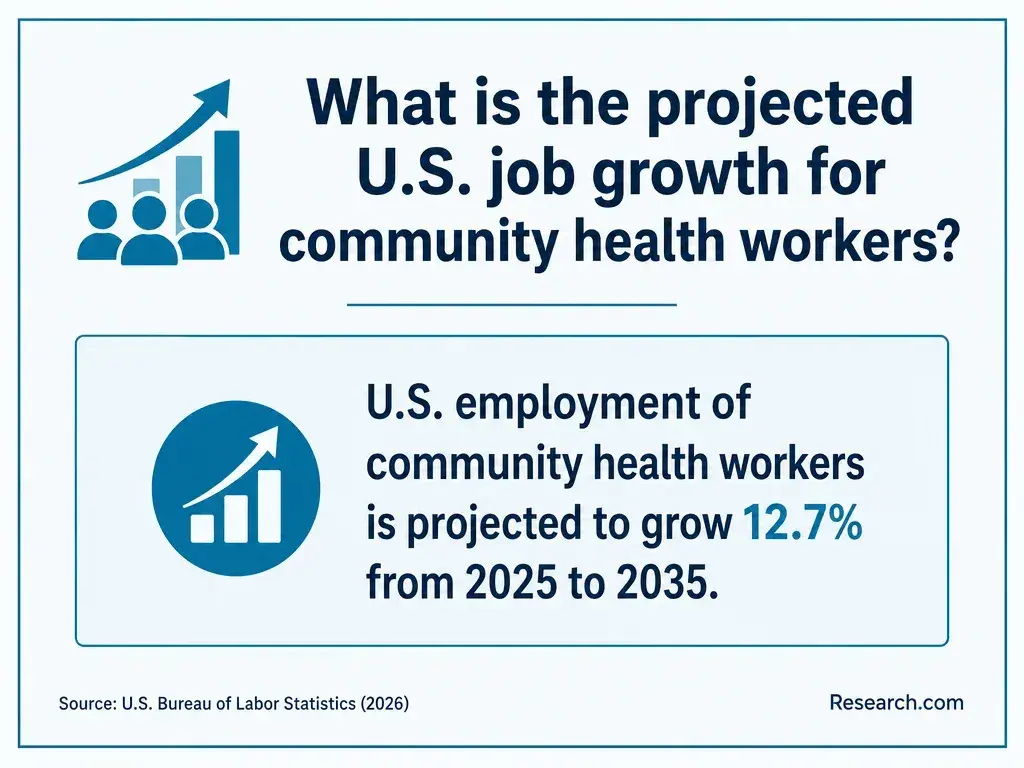
If you already work in a treatment organization, documented experience with referrals, records, and respectful client communication may be more immediately useful than the concentration label. Ask your supervisor which openings require a BA and which require a separate credential. Published Bureau of Labor Statistics wages for substance abuse, behavioral disorder, and mental health counselors describe a broad occupation—not the expected pay of BA graduates or a particular employer's support staff.
A different interest, such as justice-system support, calls for a different job comparison. Forensic psychology master's intensive study options may be academically relevant to that direction, but an accelerated forensic degree does not grant investigative, clinical, or legal authority.
Expect a psychology foundation—such as research methods, statistics, development, and social or biological psychology—alongside whatever addiction-related courses the institution actually offers. Useful specialization topics include substance-use science, prevention, recovery systems, ethics, and cultural responsiveness. A course about diagnosis or treatment teaches about practice; it does not qualify an undergraduate to diagnose or deliver therapy.
Look closely at how the curriculum assesses applied skills. A supervised, nonclinical project evaluating publicly available prevention materials may fit a rotating work schedule better than a placement requiring daytime attendance. Neither replaces license-supervised counseling hours. If the program advertises an internship, ask whether it is required, who finds the site, when supervision occurs, and whether your current workplace could be approved.
Choose courses for the role you actually want. Addiction-service coordination benefits from referral systems, documentation, and research literacy; justice-related work may call for other preparation. Even under-two-year forensic psychology graduate program options should not be mistaken for a quicker version of addiction counselor training. A specialized title is no substitute for matching coursework to the target credential or job.
Requirements depend on whether you are entering college or transferring. Schools may request prior transcripts and proof that you meet their undergraduate admission standards; admission to the university, acceptance into the major, and approval of transfer courses can be separate decisions. Ask for the requirements that apply to your entry term rather than assuming every online cohort follows the same rules.
For a returning student, the crucial document is a degree audit showing which previous courses satisfy general education, psychology, statistics, research-methods, and residency requirements. Credits accepted by the university may count only as electives. Before committing to an enrollment date during peak work season, ask when the audit will be final and which required courses are offered in later terms.
Moving existing credits into psychology study can reduce repeated coursework, but only the receiving institution can approve equivalencies. Submit syllabi when a statistics or methods course needs review, and get any substitution decision in writing.
Your remaining requirements—not the word "online"—determine the timeline. Accepted transfer credits, prerequisite order, course availability, and the number of courses you can sustain during overtime all matter. A student who pauses during an annual surge may finish more reliably than one who repeatedly withdraws from an overloaded schedule.
Request a term-by-term plan that places statistics and research methods in their required order and identifies courses offered only at certain times. Ask whether you can take a lighter term, pause without losing your catalog requirements, or return after a leave; confirm the academic and financial-aid consequences of each choice. If fieldwork is required, schedule it around the site's actual operating hours, not the flexibility of your lecture videos.
An accelerated MA psychology study pathway is a later, separate option—not a way to bypass remaining BA requirements or automatically qualify for counseling work. Speed helps only when the resulting degree fits the intended role.
Without a named school and an approved credit evaluation, no responsible total price can be quoted. Compare the tuition charged for your remaining credits, mandatory online and course fees, books or software, and any travel or unpaid time associated with fieldwork. A low per-credit rate can be offset by credits that fail to satisfy major requirements.
Seasonal overtime creates a particular trade-off: slowing down may increase the time before you can use the degree, while an overloaded term can put paid work, grades, and financial-aid eligibility at risk. Ask the financial-aid office how your proposed course load affects aid and whether a planned pause changes eligibility. If your employer offers education assistance, verify eligible programs and repayment conditions before including it in your budget.
For help identifying possible funding sources, review reducing undergraduate substance abuse counseling tuition through aid. Confirm every award's eligibility and renewal terms with the responsible aid provider; potential aid is not a guaranteed discount.
A psychology BA can be an academic step toward a licensed profession, but it does not itself grant a license to practice psychology, diagnose conditions, or provide psychotherapy. Addiction counselor credentials vary by state and level; licensed mental health counselors generally follow a distinct qualifying graduate, supervised-practice, and examination pathway. A nonclinical psychology master's degree is not automatically interchangeable with that pathway either.
Work backward from the exact title you want to hold and the state in which you plan to practice. Check the regulator's required degree type, courses, supervised hours, and examination, then ask a prospective school for written evidence of how its program addresses those requirements. "Prepares students for careers in addiction" is not a licensure determination.
If graduate counseling is your goal, shortening the path through a clinical counseling master's may be worth investigating. Check licensure alignment and placement scheduling before valuing an accelerated timeline, particularly if mandatory overtime could conflict with supervised training.
Possible routes include state-recognized addiction counselor credentials and, for eligible applicants, peer or recovery support certifications. They are not interchangeable. Counselor credentials may require specified coursework, supervised experience, and an exam; peer credentials may have different training and eligibility rules. A psychology BA may help satisfy an education requirement, but it does not automatically confer either credential.
Before selecting a program, identify the credential accepted for the job you want and obtain its requirements directly from the state authority or certifying organization. Ask which courses count, whether supervised hours can be earned through your current employer, who may supervise them, and whether hours worked before registration count. Do not assume that ordinary overtime hours become qualifying supervised experience.
More education is not always the direct solution. Economical routes to graduate psychology study may suit a later research or nonclinical goal, but a general psychology master's may not satisfy an addiction counselor certification rule. Compare the credential's required training before paying for another degree.
How Does Seasonal Mandatory Overtime Affect Addiction Services Careers?
Addiction services operate across settings with different staffing demands. A residential program, outpatient office, prevention organization, and administrative support team may offer very different schedules. Do not assume that a future addiction-services job will have the same overtime pattern as your current one—or that earning a BA will remove overtime obligations.
Mandatory overtime matters in two decisions at once: whether you can finish the degree and whether the target role offers the working pattern you want. Compare advertised hours with actual coverage expectations. In an interview, ask how far ahead seasonal schedules are set, whether evening or weekend coverage is required, and how the employer handles training and supervision when shifts expand.
For school, make a calendar of your busiest recurring weeks and place every fixed commitment on it: live classes, exams, group meetings, and fieldwork. Ask admissions and the placement coordinator what happens if an employer changes your shift with little notice.
If a required placement cannot be completed safely and consistently during your overtime season, consider a different start term, a slower course load, or a program with an approved alternative schedule. Flexibility is a verified policy and workable timetable, not a synonym for online.
Finally, weighing tuition against substance abuse counseling career outcomes requires more than comparing advertised pay with a degree price. Include the time needed for any credential, the jobs actually available to you, and whether their schedules improve on your current one.
Other Things You Should Know About Psychology
Yes. Give the advisor the weeks and hours you typically cannot control, and request sample schedules and attendance policies for required courses. Ask the placement coordinator separately about fieldwork.
Possibly, but only if the academic program approves the site, duties, supervision, and learning objectives. Employment alone does not establish internship credit or qualifying credential hours.
Not necessarily. Ask whether it is an officially awarded concentration, where it appears in academic records, and which courses are required to complete it.
Contact your instructor and advisor promptly. Check the school's deadline, incomplete, withdrawal, and leave policies before making a change, including any effect on aid and your planned completion date.
- Fact Sheet #71: Internship Programs Under The Fair Labor Standards Act | U.S. Department of Labor https://www.dol.gov/agencies/whd/fact-sheets/71-flsa-internships
- Student support in higher education: campus service... - PMC https://pmc.ncbi.nlm.nih.gov/articles/PMC9834745/
- Online Bachelor's Degree in Psychology | OU Online https://online.ou.edu/program/ba-in-psychology/
- Applied Psychology: Addictions Studies, B.S. - CPS, CPSO | University of New Hampshire https://www.unh.edu/program/bachelor-science/applied-psychology-addictions-studies
- Online Psychology B.A. or B.S. Degree Completion Program | gsu.edu https://online.gsu.edu/program/psychology-ba-or-bs-completion-program/
- Addictions and Substance Use Disorders | maricopa.edu https://www.maricopa.edu/degrees-certificates/behavioral-science-human-services/addictions-substance-use-disorders-3302-aas
- Online Bachelor's Degree in Psychology in Addictions | Purdue Global https://www.purdueglobal.edu/degree-programs/psychology/bachelor-psychology-addictions/
- Transfer Admission Requirements | umn.edu https://admissions.tc.umn.edu/admissions/transfer-admission/transfer-admission-requirements
- Earn Your B.S. in Addiction Studies Online | SUNY Empire https://sunyempire.edu/academics/undergraduate-academics/addiction-studies.html
- College Employment and Student Performance | Penn Wharton Budget Model https://budgetmodel.wharton.upenn.edu/p/2021-10-04-college-employment-and-student-performance/