2027 Online BA in Psychology - Mental Health for Personal Care Assistants: What to Check Before Changing Careers
Audited and Verified:
Our Editorial and Data Verification Process
Research.com uses government datasets, official education statistics and primary institutional information to support its career and degree guides. Our review process checks factual accuracy, occupational definitions, source dates and the requirements associated with the credentials discussed.
How This Article Was Fact-Checked
Our editorial team verifies salary estimates, employment projections, education requirements and program information against original data providers and official organizations. Salary figures are checked against the relevant occupational definitions and reporting periods. Information about licensure, accreditation and required in-person training is reviewed separately.
Fact-checked and verified on:

Co-Founder and Chief Data Scientist
Personal care assistants already know how much attentive support can matter to someone's well-being. Moving into mental health work, though, may require different skills, credentials, and boundaries. An online BA in psychology can build useful knowledge while you keep working, but it is not a shortcut to becoming a therapist.
This guide helps you identify realistic next roles, compare a degree with more direct alternatives, and check the schedule, cost, and career requirements before committing.
Key Things You Should Know
- A psychology BA can support a move into nonclinical mental health services, but it does not authorize diagnosis or psychotherapy; check the requirements of the specific job you want.
- A bachelor's degree commonly involves about 120 semester credits. Your remaining time and cost depend on an official evaluation of prior credits, not the number a school initially says it will accept.
- Before enrolling, verify institutional accreditation, required live or in-person activities, total remaining charges, and whether a shorter credential or supervised support role would meet your goal.
What Can an Online BA in Psychology Do for Personal Care Assistants?
Personal care work develops skills that mental health employers value: respectful communication, observation, reliable documentation, and support for people with varied needs. A psychology BA adds a different layer, knowledge of behavior and development, research literacy, and an understanding of how mental health services are studied and organized.
The degree is most useful if your target job expects a bachelor's degree or if you want to prepare for later professional study. It does not replace training in crisis procedures, referrals, confidentiality, or an employer's service model. Your care experience may help you compete for support roles, but it should be presented as experience in assistance and observation, not clinical assessment or treatment.
If your immediate goal is recovery-oriented support rather than a degree-required position, investigate local hiring rules and working in substance use recovery support before paying for a full BA. Employer training or a state-recognized credential may be more direct.
Is an Online Psychology Bachelor's Degree Accredited?
An online BA can be offered by an accredited institution, but accreditation belongs to the institution unless a relevant program-specific accreditor also covers the particular program. The American Psychological Association does not accredit general psychology bachelor's programs. Claims that a BA is "APA-accredited" warrant scrutiny.
Check the school's current institutional accreditation in the U.S. Department of Education's accreditation database, then confirm that the online psychology BA - not merely another campus program - is offered by that institution. Ask whether a mental health focus is an official concentration, a set of electives, or simply a marketing description. These distinctions matter when comparing addiction psychology bachelor's curriculum options; neither accreditation nor a concentration creates a counseling license.
If you plan to pursue graduate training, ask prospective graduate programs whether they accept the degree and whether its courses meet their prerequisites. Institutional accreditation is important, but it is not proof of eligibility for a particular graduate program or state credential.
What Mental Health Careers Can You Pursue With a Psychology BA?
Look for roles whose duties build on your care experience without requiring independent clinical practice. Job titles vary by employer and state, so read the responsibilities and minimum qualifications rather than relying on the title alone. This comparison separates plausible support work from roles requiring substantially more education.
| Role or pathway | Typical work | What to verify |
| Behavioral health or residential support staff | Daily support, observation, documentation, and escalation under workplace procedures | Required experience, safety training, shifts, and supervision |
| Intake or service coordinator | Gathering information, scheduling, referrals, and follow-up | Whether the job requires a BA, case-management experience, or another credential |
| Recovery or peer-support worker | Nonclinical encouragement, resource navigation, and recovery support | State certification rules and any required lived experience |
| Licensed counselor or psychologist | Regulated assessment or treatment within the applicable license | Qualifying graduate education, supervised practice, examinations, and state rules |
An application is stronger when it connects your care work to a job's actual tasks: accurate records, accessible communication, coordination with supervisors, and knowing when to refer a concern. If a posting describes forensic evaluation or expert testimony, it is not an entry-level extension of personal care work. Even pay comparisons across forensic psychology-related careers need to be read alongside each role's distinct qualifications.
Online study may make it easier to retain your care shifts and income, particularly when coursework is asynchronous. It does not necessarily remove scheduled classes, group meetings, exams, internships, or campus visits. Campus study may offer easier access to in-person faculty meetings and local activities, but travel and fixed class times can conflict with client schedules.
Compare the actual weekly timetable, not just the delivery label. Ask when courses are offered, whether required classes have live sessions, how often students must visit a site, and what happens if a work shift changes. If speed matters, comparing fast-paced psychology degree formats can clarify the trade-off: shorter courses may leave less room for unpredictable caregiving work, even when the courses are online.
Expect general education alongside psychology coursework, although requirements differ by school. For a personal care assistant moving toward mental health services, developmental psychology, social psychology, abnormal psychology, statistics, and research methods are particularly useful. Developmental and social courses can deepen your understanding of clients' contexts; methods courses help you assess claims about interventions rather than relying on appealing anecdotes.
Some programs offer mental health or addiction electives, an official concentration, or a supervised nonclinical experience. Check what is required, what is offered regularly online, and whether an applied experience can be scheduled around work. If graduate study might follow, compare the BA's statistics, methods, and writing preparation with the prerequisites of your intended program. Advice on choosing a fast-track psychology master's program is relevant only after you establish that the master's degree serves your specific career goal; a general psychology master's is not automatically clinical training.
Schools commonly request evidence of secondary-school completion or previous college work; transfer applicants generally submit college transcripts. Policies for grades, prior credits, and admission to the major vary. Personal care experience can strengthen your explanation of your goals, but it does not automatically substitute for academic requirements.
If you have attended college, request a written degree audit showing which credits satisfy general education, psychology requirements, electives, and any credits that must be earned at the new school. "Credits accepted" and "requirements completed" are different outcomes. Ask an admissions or transfer adviser to identify missing statistics or methods courses before you choose a start date.
If your eventual aim is counseling, check graduate admission requirements separately from BA admission. Accelerated master's study in clinical mental health counseling may have its own prerequisites and scheduling demands; admission to an undergraduate psychology program establishes neither admission to that program nor license eligibility.
A traditional full-time bachelor's route is often described as four years, but that is a poor personal estimate if you have prior credits or need to study around paid care shifts. Completion depends on how many credits meet degree requirements, your course load, prerequisites, and how often required courses run.
Ask the school for a term-by-term plan at a pace you can maintain during busy work periods. Include statistics before any course that requires it, and account for any approved internship or capstone. An advertised accelerated course length does not settle the time to graduation. Likewise, shorter graduate degree timelines in forensic psychology describe a separate, specialized pathway - not a way to skip bachelor's requirements or qualify for mental health treatment work.
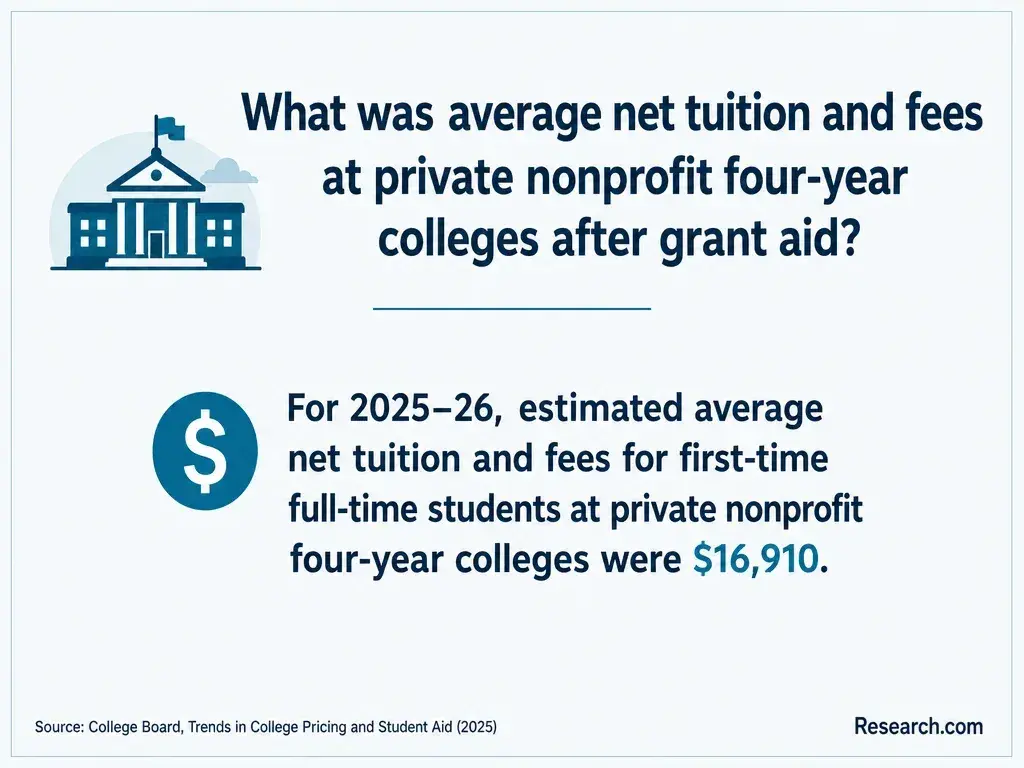
There is no reliable single price for an online BA. Compare the tuition charged for your remaining credits, mandatory online and technology fees, books or software, possible placement travel, and the income you might lose by reducing shifts. A lower per-credit price may not produce a lower total bill if fewer of your existing credits apply to the degree.
Request a written estimate based on your degree audit and intended enrollment pace. Ask the financial aid office how that pace affects aid eligibility and whether employer tuition assistance has grade, reimbursement, or continued-employment conditions. For an overview of the federal aid application and related funding questions, see FAFSA for online substance use counseling undergraduates; confirm the aid rules and program eligibility that apply to your own school.
A psychology BA, including one focused on mental health, does not authorize psychotherapy, diagnosis, or independent psychological assessment. Licensed psychologist roles generally require doctoral-level professional preparation and additional state requirements. Licensed professional counseling and clinical social work follow different qualifying graduate-degree and supervised-practice pathways; a general psychology BA or MS is not interchangeable with either professional degree.
Not every relevant credential requires advanced psychology education. Peer-support and addiction-service certifications may instead specify training, supervised experience, examinations, or other state-defined conditions. Start with the state regulator or certifying body for the exact title you want, then ask a prospective school how its curriculum aligns with those rules.
If you want to provide therapy, compare qualifying programs and their full costs - not just a psychology BA's mental health electives. Mental health counseling degree fees and aid planning can help frame that later financial decision, but the state licensing board determines whether a program meets its educational criteria.
What Salary and Job Outlook Can Psychology Graduates Expect?
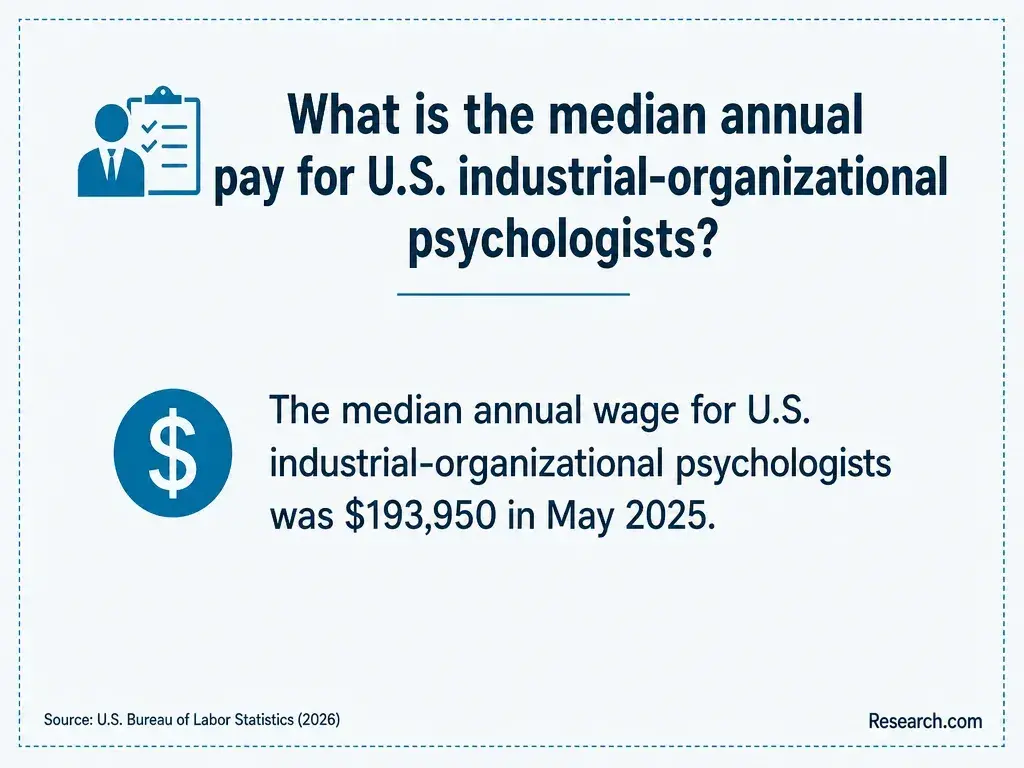
There is no single "psychology BA salary." Pay depends on the occupation, location, employer, shifts, experience, and credentials. The U.S. Bureau of Labor Statistics reports wages and employment projections by occupation, not by undergraduate major, so a psychologist's wage is not an appropriate earnings estimate for a new BA graduate.
For a useful comparison, identify two or three jobs you would actually apply for - such as residential support staff or social and human service assistant - and check their current local postings against the matching Bureau of Labor Statistics occupational descriptions. Compare required credentials and typical duties as carefully as wages. Some support jobs may be reachable through experience and targeted training without a BA; others may use a bachelor's degree as a hiring threshold.
If a later graduate degree is part of your plan, include its cost and the time spent qualifying before assuming a higher-paying role will offset your investment. Affordable distance learning in graduate psychology may reduce education costs, but a nonclinical master's does not itself grant a clinical license or guarantee a salary increase.
Other Things You Should Know About Psychology
Possibly, but only if the degree program approves the site, supervisor, duties, and learning objectives. Your existing job does not count automatically.
Do not use identifiable client information without the required permissions. Ask your instructor and employer about confidentiality rules; a skills-focused description of your responsibilities is usually safer than a client case account.
That depends on your relationship and workplace policies. If you want schedule adjustments or tuition assistance, ask about the conditions first and explain how your studies support your current work.
Name the target role and give concrete examples of relevant work, such as documentation, coordinated support, and appropriate escalation. Describe your psychology education accurately without claiming clinical skills you have not been trained or authorized to use.
- Cost of Attendance (Budget) | 2025-2026 Federal Student Aid Handbook https://fsapartners.ed.gov/knowledge-center/fsa-handbook/2025-2026/vol3/ch2-cost-attendance-budget
- NYS Mental Health Counseling: License Requirements | nysed.gov https://www.op.nysed.gov/professions/mental-health-counselors/license-requirements
- Health Workforce Projections | hrsa.gov https://bhw.hrsa.gov/data-research/projecting-health-workforce-supply-demand
- Patton Psychology Training Frequently Asked Questions (FAQ) | ca.gov https://www.dsh.ca.gov/Patton/Internships_Training/FAQ_Psychology_Training.html
- Undergraduate and Graduate Tuition and Fees | Purdue Global https://www.purdueglobal.edu/tuition-financial-aid/undergraduate-graduate-tuition-and-fees/
- Psychology Jobs: What Can You Do With a Bachelor's Degree? | Southwest Minnesota State University https://online.smsu.edu/resources/article/psychology-jobs-career-opportunities-with-a-bachelor-of-arts/
- Differences Between Mental Health Technicians and Counselors | University of Western States https://www.uws.edu/blog/mental-health-technicians-counselors-differences/
- Practicum and Internship - Psychology Resources - UO Blogs https://blogs.uoregon.edu/psychologyresources/human-subjects-pool/practicum-and-internship/
- Transfer Credits & Military Affiliations | Norwich University https://online.norwich.edu/online/military/transfer-credits-military-affiliations
- Internships at APA https://www.apa.org/about/apa-jobs/internships