2027 Online MS in Psychology - Forensic Psychology Admissions with English Composition Credit from Another Institution: What to Ask Before Applying
Audited and Verified:
Our Editorial and Data Verification Process
Research.com uses government datasets, official education statistics and primary institutional information to support its career and degree guides. Our review process checks factual accuracy, occupational definitions, source dates and the requirements associated with the credentials discussed.
How This Article Was Fact-Checked
Our editorial team verifies salary estimates, employment projections, education requirements and program information against original data providers and official organizations. Salary figures are checked against the relevant occupational definitions and reporting periods. Information about licensure, accreditation and required in-person training is reviewed separately.
Fact-checked and verified on:

Co-Founder and Chief Data Scientist
Before applying to an online MS in psychology with a forensic psychology concentration, it's essential to determine if your English composition course matters for graduate admission and if the program will recognize it if it does. This guide separates undergraduate credit transfer from graduate prerequisite review, identifies the records and questions that can resolve uncertainty, and puts the answer in context with program fit, cost, and career goals.
The aim is to help you avoid an unnecessary repeat course or an application based on an unconfirmed assumption.
Key Things You Should Know
- English composition credit on a bachelor's transcript does not automatically prove that a graduate program's writing prerequisite is satisfied; ask whether admissions requires the original institution's transcript or a course review.
- Confirm two separate decisions: whether your completed bachelor's degree meets the admission requirement and whether the specific composition course meets any stated prerequisite.
- Get an answer for your intended entry term before paying an application fee or repeating coursework; a forensic psychology concentration does not itself qualify you for clinical licensure.
What Is an Online MS in Psychology With a Forensic Psychology Concentration?
It is a graduate psychology degree with focused study of behavior and research in legal or justice-related settings. Depending on the school, forensic psychology may be a formally designated concentration or simply a group of electives. The distinction matters if you want the specialization recorded on your transcript.
These programs can serve applicants interested in research, victim services, corrections support, or justice-system administration. They are not interchangeable with professional training in clinical psychology or criminal investigation. If you have not yet completed a bachelor's degree, shorter routes through forensic psychology bachelor's coursework address a different admissions stage; confirm any undergraduate transfer credits with the degree-granting college.
Can a Master's in Forensic Psychology Lead to Licensure?
Do not assume it can. A nonclinical MS in psychology with a forensic concentration generally should be evaluated as academic preparation unless the program identifies a particular license, jurisdiction, and educational pathway it is designed to satisfy. Studying assessment, psychopathology, or the courts does not authorize diagnosis, psychotherapy, independent forensic evaluations, or use of a protected psychologist title.
If your goal is counseling, compare the actual licensure-track curriculum, supervised practice requirements, and state board rules before enrolling. Resources on accelerated clinical counseling degrees and study length can help frame that separate option, but a faster timeline does not replace board approval or required supervised experience.
What Admissions Requirements Apply to Online Forensic Psychology Programs?
Requirements vary by institution. Start with the current catalog and admissions instructions for the exact MS and entry term. A completed bachelor's degree is usually the central credential; schools may also review GPA, psychology and statistics preparation, recommendations, a statement of purpose, and writing ability. A criminal justice, humanities, or other non-psychology major is not necessarily disqualifying, but it may leave specific psychology or methods gaps.
Ask admissions to distinguish a required prerequisite from a recommended course and to explain any waiver, conditional-admission, or post-admission completion policy. Applicants still finishing a bachelor's degree should resolve that requirement first; information about shorter routes to an online psychology major concerns undergraduate completion, not automatic eligibility for a particular MS.
Possibly - but first establish whether English composition is an MS admission requirement at all. Many graduate applications assess writing through completed degrees, statements, or prior academic work rather than a separately specified composition course. If the program does require one, its admissions office - not the college that awarded your bachelor's degree - must determine what documentation and equivalency it will accept.
A course shown as transfer credit on your bachelor's transcript may have counted toward that degree without displaying its original title, grade, or syllabus. Send the graduate admissions team a concise question identifying both institutions, the original course, when you took it, and how it appears on your bachelor's transcript. Ask specifically whether the original transcript is required, whether quarter credits or pass/fail grading affect review, and who can provide a written determination.
Keep the answer with your application records.
If you are considering more undergraduate coursework for reasons beyond this prerequisite, compare the cost with your actual goal. For example, planning affordable bachelor's-level substance abuse counseling study is relevant only if you still need an undergraduate pathway or want that distinct field - not as a substitute for confirming a graduate program's composition policy.
Check the institution's accreditation through its stated accreditor and the U.S. Department of Education's accreditation database, then confirm that the online MS is awarded by that institution. Institution-level accreditation is distinct from approval for a particular professional license. The American Psychological Association does not accredit general, nonclinical psychology master's programs simply because they offer forensic coursework.
When comparing schools, ask whether the degree is classified as psychology, whether the forensic concentration is officially recorded, and whether any claimed professional recognition applies to this exact program. The same accreditation check is useful when comparing affordable psychology colleges online, but low tuition or institutional accreditation alone cannot establish graduate licensure eligibility.
Look beyond the concentration name. A useful course plan might combine research methods, statistics, ethics, and psychological science with courses on behavior in legal settings, victimization, corrections, or the limits of forensic assessment. Schools differ in whether they require a thesis, capstone, internship, or electives; request the actual degree map rather than assuming an advertised topic is required.
For an applicant worried about English composition credit, graduate writing demands are a separate consideration. Ask whether students produce research reviews, case analyses, or a capstone and what writing support is available. If speed matters, compare faster pathways through graduate psychology coursework against the time you need to build research and writing skills - not just the advertised completion date.
Completion time depends on required credits, course availability, enrollment pace, and any capstone or approved field experience. Obtain a term-by-term plan for your intended start date. Then request a written estimate covering tuition, mandatory fees, materials, and any travel or placement expenses; a per-credit rate alone is not the total price.
If the school says you must complete English composition before admission, ask whether it accepts an appropriately approved course elsewhere and whether waiting for that course changes your start term or aid eligibility. Under-two-year forensic psychology graduate program options are worth comparing only after confirming that your prerequisites are cleared and that the proposed course sequence is available to you.
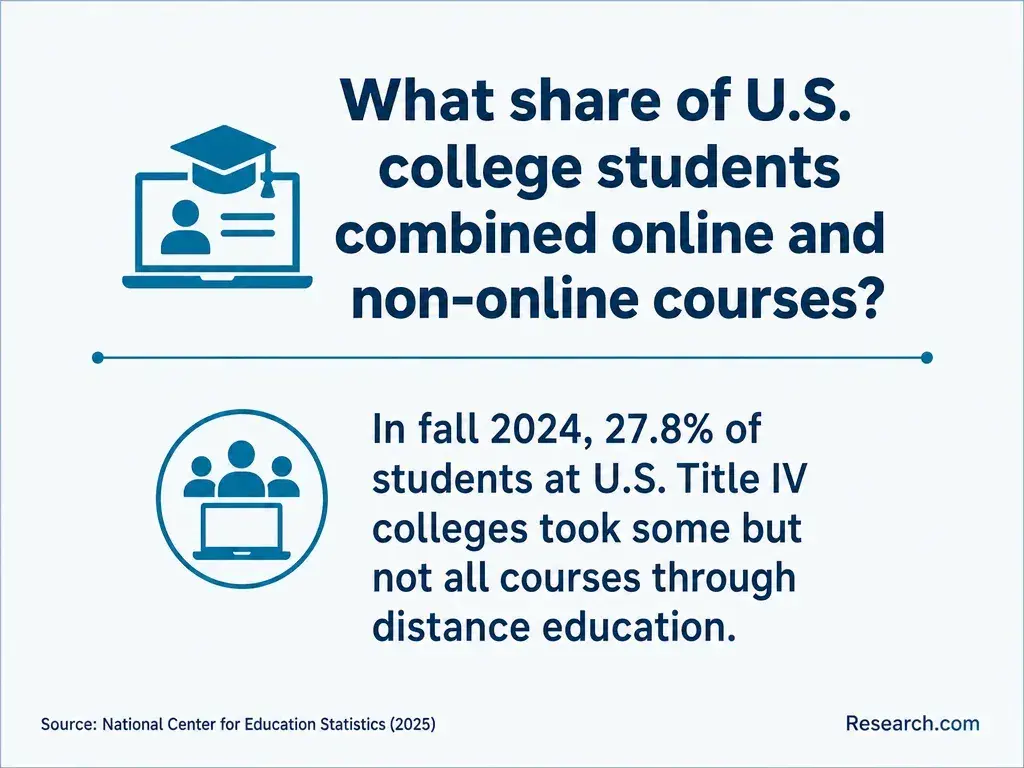
Online delivery can remove a commute, but it does not guarantee an asynchronous schedule or eliminate in-person obligations. Ask each program about live meetings, exam times, group work, faculty access, research supervision, and whether a capstone or placement can be completed where you live. Campus study may offer easier access to local research teams or agency relationships; online study may better fit someone already employed in a justice or community-service setting.
Compare the full schedule and total charges, not format labels. Lists of affordable distance learning in graduate psychology can suggest schools to investigate, but only the program can confirm its current fees, required visits, and availability in your state.
Possible nonclinical directions include victim-services coordination, corrections or reentry program support, justice-related research assistance, and program evaluation. Hiring depends on the employer's stated qualifications, your prior experience, and demonstrated skills - not the concentration name alone. Public agencies may also impose civil-service rules, background checks, or role-specific training.
For a more direct community-support route, compare the duties and credentials associated with jobs supporting addiction recovery. Some support roles may value relevant experience more than a forensic MS; counseling and other regulated positions have separate requirements. Ask prospective employers which qualifications they actually use to screen applicants before committing to the degree.
What Salaries and Job Outlook Can Forensic Psychology Graduates Expect?
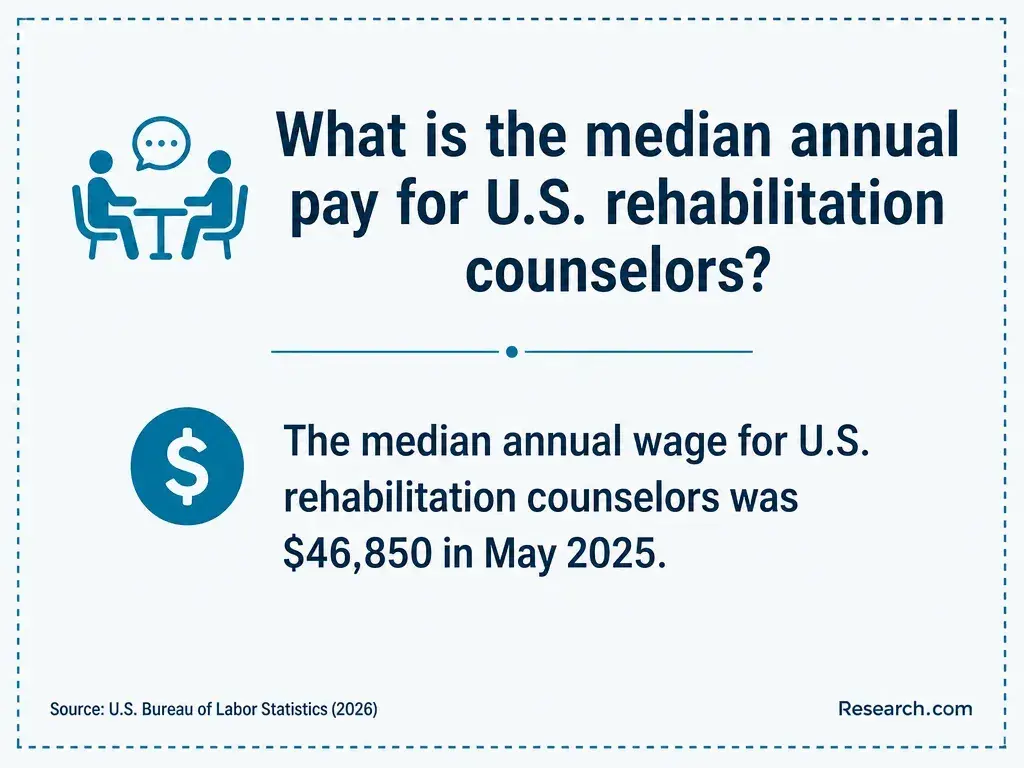
There is no single reliable salary or job-growth figure for "forensic psychology MS graduates": that is a degree category, not a defined occupation. U.S. Bureau of Labor Statistics pay and projection figures describe occupations with different duties and entry requirements. In particular, psychologist figures should not be presented as expected earnings for graduates of a nonclinical MS.
For a useful return-on-investment comparison, identify the exact jobs you could pursue now and after graduation, check current local postings and applicable public-sector pay schedules, and weigh any likely change against total program cost and foregone earnings. Guides to forensic psychology master's degree career return considerations can generate job titles to investigate, but verify each title's education, experience, and licensing requirements independently.
Other Things You Should Know About Psychology
Ask the graduate admissions office whether unofficial records are acceptable for initial review and when official transcripts must arrive. Do not assume an application is complete because the transferred course appears on another transcript.
Usually, use the statement to explain your academic interests and program fit. Provide course details through the application or an admissions inquiry unless the school specifically asks you to address prerequisites in the statement.
Only if the program permits an experience-based waiver or alternative. Ask what evidence it requires; relevant work does not automatically replace coursework in psychology, statistics, or research methods.
Request a written clarification from the office authorized to make graduate prerequisite decisions. Include the course documentation and your intended entry term so the final answer addresses your specific application.
- Transfer Dispute - Texas Higher Education Coordinating Board https://www.highered.texas.gov/transfer-dispute/
- Master's Degree - Forensic Psychology - On Campus | Monroe University https://www.monroeu.edu/academics/king-graduate-school/masters-forensic-psychology
- Preliminary Transfer Credit Evaluation | Adelphi Accepted https://www.adelphi.edu/accepted/transfer/preliminary-transfer-credit-evaluation/
- Forensic Psychology, MS - ASU degree programs https://degrees.asu.edu/masters-phd/major/ASU00/ASFPSYMS/forensic-psychology-ms
- English Composition Pathway - Writing Center - UC Davis https://writingcenter.ucdavis.edu/english-composition-pathway
- Do I Need a Degree in Psychology to Apply to Graduate School? | William James College https://www.williamjames.edu/news/do-i-need-a-degree-in-psychology-to-apply.html
- Transfer credit policies - Office of Admissions https://admit.washington.edu/apply/transfer/policies/
- Transfer Credit Evaluations | University of New Haven https://www.newhaven.edu/admissions/undergraduate/transfer-students/credits.php
- Questions About the English Requirement - Princeton HPA https://hpa.princeton.edu/faqs/academics-faq/english-requirements
- How Do Transfer Credits Work When You Go Back to School? | Whitworth Online https://online.whitworth.edu/news-articles/how-do-transfer-credits-work-when-you-go-back-to-school/