2027 Choosing an Online BA in Psychology - Addictions for a Future Human Services Graduate Application: Prerequisites to Compare
Audited and Verified:
Our Editorial and Data Verification Process
Research.com uses government datasets, official education statistics and primary institutional information to support its career and degree guides. Our review process checks factual accuracy, occupational definitions, source dates and the requirements associated with the credentials discussed.
How This Article Was Fact-Checked
Our editorial team verifies salary estimates, employment projections, education requirements and program information against original data providers and official organizations. Salary figures are checked against the relevant occupational definitions and reporting periods. Information about licensure, accreditation and required in-person training is reviewed separately.
Fact-checked and verified on:

Co-Founder and Chief Data Scientist
An online BA in psychology with an addictions focus can be a useful first step toward human services graduate study, but the concentration name does not tell you whether you will meet a particular program's prerequisites. If you are choosing a bachelor's program with an MS, MA, or other human services degree in mind, compare required courses, research preparation, applied experience, and total cost against the graduate programs you might actually apply to.
This guide shows you what to check before enrolling and where another undergraduate route could serve your goal better.
Key Things You Should Know
- Start with the intended graduate program's published prerequisites: an addictions concentration cannot replace a required statistics, research methods, or human services course.
- Compare the bachelor's degree audit with graduate admissions rules, including how each school treats transfer courses and supervised experience; admission eligibility is not the same as a competitive application.
- A typical bachelor's degree requires about 120 semester credits and often takes four years of full-time study, but accepted credits, course sequencing, and placement schedules determine your actual timeline.
What Is an Online BA in Psychology With an Addictions Focus?
It is a bachelor of arts degree that combines a psychology major with coursework on substance use, prevention, recovery, or related behavior. The "focus" might be an officially recorded concentration, a minor, or simply a group of electives. Ask what appears on the transcript; these arrangements do not carry identical requirements or recognition.
For a future human services applicant, the value lies in the combination of broad psychological science and relevant service-system knowledge, not in the label alone. Compare addiction psychology BA and BS degree options by their required courses and available experiences. A broader psychology BA with well-chosen electives may prepare you better than a named addictions track that leaves little room for a needed prerequisite.
Is an Online Addictions Psychology Bachelor's Degree Accredited?
Check the institution's accreditation and confirm that it covers the school awarding the online degree. Then verify that the degree and concentration are actually offered to online students. Institutional accreditation matters for degree recognition and may affect credit transfer and financial-aid eligibility, but it does not certify that a concentration meets a graduate program's admissions rules.
Do not look for APA accreditation of a general psychology BA: APA accreditation applies to specified professional psychology programs and training, not ordinary undergraduate majors.
If your eventual goal is licensed counseling, the professional program you enter later warrants a separate review of accreditation and state requirements. Guidance on accelerated counseling study and accreditation requirements concerns that later decision, not a credential conferred by this BA.
How Can This Bachelor's Degree Prepare You for a Human Services Graduate Program?
The answer depends on which graduate program you mean. A human services master's may emphasize program administration, advocacy, or service delivery.
An MS or MA in psychology may emphasize research; counseling and social work degrees have distinct professional-training expectations. Request admissions requirements from several realistic target programs before treating any undergraduate course as essential.
Use three separate tests:
- Eligibility: Will the degree and completed courses satisfy formal admissions requirements?
- Competitiveness: Can you show strong writing, quantitative work, references, and relevant experience?
- Readiness: Have you practiced evaluating evidence and working within appropriate service boundaries?
An addictions course may strengthen the last two without satisfying a formally required methods course.
If your target is clinical mental health counseling, compare its admissions and professional-training rules directly rather than assuming a human services or psychology graduate degree is interchangeable.
Faster clinical mental health counseling graduate pathways are worth considering only after confirming their fit with the state where you intend to practice. A relevant BA can support an application; it does not itself provide treatment qualifications.
Look beyond course titles to required content, sequencing, and whether courses can be taken online in the terms you need.
The comparison below separates preparation that often matters for graduate study from coursework that gives the degree its addictions emphasis; neither column represents a universal admissions checklist.
| Course area | Why it matters for the graduate plan | What to verify |
| Statistics and research methods | Supports evidence appraisal and may satisfy named prerequisites | Required level, separate courses, and transfer equivalencies |
| Developmental, social, and abnormal psychology | Provides context for behavior and service needs | Which subjects target programs require or recommend |
| Addictions, health, and cultural context | Builds subject knowledge for prevention and recovery settings | Whether these are required, electives, or an official concentration |
| Writing, evaluation, or capstone | Can produce evidence of graduate-level readiness | Faculty feedback, project scope, and access for online students |
Prioritize statistics and methods if graduate prerequisites or research readiness are your concern. An accelerated MA psychology study pathway is a different next step from human services graduate study; its shortened schedule does not remove the need to check its own entry requirements.
Undergraduate coursework about addiction treatment, meanwhile, is academic preparation rather than permission to deliver it.
Requirements differ for first-year and transfer applicants. Schools may request secondary-school or prior-college transcripts and set separate rules for admission to the institution, entry to the major, and acceptance of transfer credits.
Before applying, ask for a written degree evaluation showing not only which credits are accepted, but which satisfy general education, psychology, concentration, and residency requirements.
That distinction matters if you are comparing faster degrees in adjacent subjects. A fast-track bachelor's study in forensic psychology may use different electives or course sequences; a shorter advertised timeline does not establish that it will meet your human services graduate prerequisites.
Send prospective graduate admissions offices the relevant course descriptions when an equivalency is uncertain, and obtain the undergraduate school's degree audit before relying on a transfer estimate.
A conventional full-time path is about four years, but transfer credit, part-time enrollment, prerequisite sequencing, and when required courses run can change that substantially. For your graduate-school plan, finishing early is less useful if it prevents you from taking statistics, obtaining a strong academic reference, or completing meaningful applied work.
Ask for a term-by-term plan that identifies the earliest available offering of each required course and any fixed meeting times, campus visits, or placement hours. Compare choosing an accelerated psychology degree route against those obligations, rather than assuming "online" or "accelerated" means every requirement can be completed on your own schedule.
Calculate the cost of the credits you still need, not just the advertised tuition rate. Include mandatory fees, books or software, possible travel, and expenses associated with unpaid applied work. A cheaper per-credit program can cost more overall if fewer of your prior courses satisfy its degree requirements or if limited course availability adds terms.
Request an individualized degree audit and cost estimate before accepting an offer. For aid planning, FAFSA for online substance use counseling undergraduates is a related starting point, but confirm aid eligibility, enrollment conditions, and the actual award with your school. Budget separately for the intended graduate degree; undergraduate affordability alone does not make the complete pathway affordable.
Neither format is inherently better for human services graduate admission. Online study can reduce commuting and widen access to suitable courses. Campus study may make certain faculty projects or local agency connections easier to find.
The decisive comparison is whether you can obtain rigorous methods instruction, useful feedback and recommendations, and approved experience in the format you can sustain.
Ask online programs how students meet faculty, whether research or capstone supervision is available remotely, and who arranges and approves any local placement. Compare the full cost of both formats, including travel and foregone work time.
Lists of affordable online psychology degree programs are a starting point, not a substitute for your remaining-credit calculation. Online coursework can be asynchronous even when projects, meetings, or field hours are not.
Potential nonclinical roles include human services assistant, intake or referral coordinator, community outreach worker, and research support staff. Employers may seek additional experience, training, or a jurisdiction-specific credential. In these jobs, documented communication, accurate records, respectful referrals, and evidence-handling skills can matter more than the concentration title.
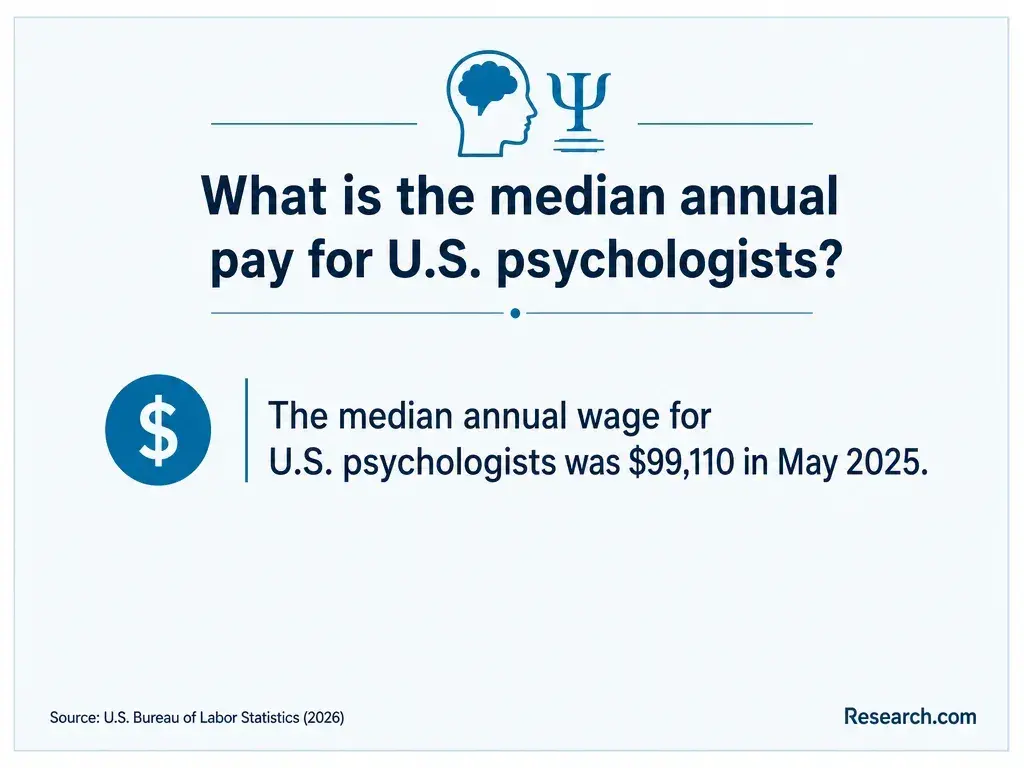
For pay comparisons, consult the US Bureau of Labor Statistics Occupational Outlook Handbook entry for the specific occupation you are considering, then check local postings. An occupation-wide median is not a salary promised to psychology graduates, and a counseling wage figure is particularly misleading if you do not qualify for counseling jobs.
Likewise, evaluating twelve-month forensic psychology master's routes addresses a different specialization; another degree's speed or advertised outcomes should not drive a decision about human services work.
What Licenses and Certifications Require Graduate-Level Education?
Independent clinical counseling and clinical social work generally require an appropriate graduate professional degree plus jurisdiction-specific supervised experience, examinations, and other conditions.
Becoming a licensed psychologist ordinarily involves doctoral-level professional preparation. A psychology BA, including an addictions concentration, does not by itself authorize psychotherapy, diagnosis, or independent psychological assessment.
Addiction-counselor and peer-support credentials are less uniform: some state-defined levels may be accessible without a graduate degree, while others require one or impose additional education and supervision rules. Check the state regulator's requirements for the exact title and duties you want.
If counseling is the eventual goal, compare the full pathway and mental health counseling education costs after aid before paying extra for a bachelor's concentration that does not fulfill a required professional-training step.
Other Things You Should Know About Psychology Programs
Yes. Save syllabi for statistics, methods, and other possible prerequisites. They can help an admissions office assess content when a course title alone does not establish equivalency.
It can inform your motivation and perspective, but it does not replace formal prerequisites. Describe what you learned without feeling obliged to disclose private health information.
Choose someone who can describe your academic work, research reasoning, or relevant supervised service responsibilities. Follow each target program's rules about acceptable recommenders.
Yes, but revisit prerequisites early. An elective plan suited to human services may need adjustment if you later pursue research psychology, social work, or counseling.
- Rule 3357:15-13-25 | Transfer and articulation. - Ohio Laws https://codes.ohio.gov/ohio-administrative-code/rule-3357:15-13-25
- Cost of Attendance (Budget) | 2025-2026 Federal Student Aid Handbook https://fsapartners.ed.gov/knowledge-center/fsa-handbook/2025-2026/vol3/ch2-cost-attendance-budget
- Bachelor of Arts Psychology Online or On Campus | University at Albany https://www.albany.edu/psychology/programs/ba-psychology
- Tuition and Fees - Undergraduate Programs - University Cashier https://cashier.unc.edu/tuition-fees/undergraduate-programs/
- Prerequisites & Requirements | roguecc.edu https://www.roguecc.edu/degrees-and-programs/degrees-and-certificates/social-and-behavioral-science-education-pathway/human-services/prerequisites-and-requirements.php
- Online Bachelor's Degree in Psychology in Addictions | Purdue Global https://www.purdueglobal.edu/degree-programs/psychology/bachelor-psychology-addictions/
- Do I Need a Degree in Psychology to Apply to Graduate School? | William James College https://www.williamjames.edu/news/do-i-need-a-degree-in-psychology-to-apply.html
- M.A. Counseling Psychology Program in Chicago, Illinois | The Chicago School https://www.thechicagoschool.edu/programs/psychology/counseling-psychology/ma/
- Online Master's in Counseling FAQs | Northwestern University https://counseling.northwestern.edu/counseling/faq/
- Applied Psychology: Addictions Studies, B.S. - CPS, CPSO | University of New Hampshire https://www.unh.edu/program/bachelor-science/applied-psychology-addictions-studies