2027 Choosing an Online BA in Psychology - Addictions Around A Screen Reader Accommodation
Audited and Verified:
Our Editorial and Data Verification Process
Research.com uses government datasets, official education statistics and primary institutional information to support its career and degree guides. Our review process checks factual accuracy, occupational definitions, source dates and the requirements associated with the credentials discussed.
How This Article Was Fact-Checked
Our editorial team verifies salary estimates, employment projections, education requirements and program information against original data providers and official organizations. Salary figures are checked against the relevant occupational definitions and reporting periods. Information about licensure, accreditation and required in-person training is reviewed separately.
Fact-checked and verified on:

Co-Founder and Chief Data Scientist
An online psychology degree is only a workable choice if its courses, assessments, and required experiences are accessible with your screen reader. An addictions focus adds another decision: whether the curriculum supports your intended recovery-service role or simply teaches you about addiction. This guide is for prospective US students comparing online BA programs. It explains how to test accessibility before enrolling, distinguish a concentration from a counseling credential, and weigh transfer credit, time, cost, and career options without relying on a program's marketing claims.
Key Things You Should Know
- Request a screen reader walkthrough of the actual learning platform, an addictions course, and its assessments before committing; a general accessibility statement cannot establish that every course works.
- A psychology BA with an addictions focus teaches relevant subject matter but does not, by itself, authorize addiction counseling; check the credential rules for your state and target job.
- Many bachelor's degrees are structured around 120 semester credits, but accepted transfer credits, major requirements, course availability, and accessible fieldwork determine your remaining time and cost.
What Is an Online BA in Psychology With an Addictions Focus?
It is a bachelor of arts degree in psychology with coursework related to substance use, prevention, recovery, or behavioral health. "Addictions focus" might mean an officially recorded concentration, a certificate, or simply a selection of electives. Ask what appears on the transcript and how many relevant courses are guaranteed to be offered online.
The strongest fit is a student who wants broad psychological-science training alongside preparation for nonclinical support work or further study. Compare the required courses - not just the concentration name - when comparing accredited addiction psychology BA pathways. If your sole goal is a particular counseling credential, first establish whether its required education must come from a different type of program.
Is an Online Psychology Bachelor's Degree Accredited and Transferable?
Check the institution's current accreditation with its recognized institutional accreditor and confirm that it covers the school awarding the online degree. Do not look for APA accreditation of a general psychology BA: APA accreditation applies to specified professional psychology programs and training, not undergraduate psychology majors. Institutional accreditation also does not prove that an addictions focus meets a state's counselor-credential requirements.
Transferability is a separate decision made by the receiving institution. A school may accept a course as elective credit without applying it to statistics, research methods, or the psychology major. Request a written degree audit showing accepted credits, requirement-by-requirement application, remaining residency credits, and any substitutions needing approval. For students returning with prior coursework, comparing transfer-friendly psychology degree programs is a starting point, not a substitute for an individual evaluation.
Does an Online Psychology Degree Qualify You for Addiction Counseling?
Not by itself. Studying addiction in a BA does not grant permission to diagnose substance use disorders, provide psychotherapy, or use a protected counseling title. Addiction-counselor credentials vary by state and job level; requirements may include specified coursework, supervised experience, an examination, and an application to a licensing or certification authority.
Before choosing a degree, find the exact job title you want in your state's rules. Ask the relevant board whether the BA's courses count toward its education requirements, and obtain an answer about supervised-hour rules and permissible duties. If your goal is licensed mental health counseling rather than recovery support, compare the qualifying graduate route separately; accelerated accredited clinical mental health counseling programs are not interchangeable with an undergraduate addictions focus. Faster coursework does not remove required supervised training.
Look for a foundation in psychological science, statistics, research methods, and ethics, followed by courses examining substance use, behavior change, prevention, and recovery systems. An abnormal psychology or counseling-theories course can help you understand the literature; it does not train you to assess or treat clients independently.
The distinction that matters is depth versus label. A program with several sequenced addictions courses and a supervised, nonclinical project offers different preparation from one with a single elective. When reviewing online college pathways for psychology majors, inspect sample syllabi and the course rotation. Ask whether statistics software, charts, video demonstrations, and any fieldwork documentation are usable with your assistive technology.
A useful accommodation plan covers the entire course workflow: finding materials, reading them in the intended order, participating in discussions, completing timed assessments, and receiving feedback. Accessibility of the learning platform alone does not establish accessibility of third-party textbooks, statistics tools, embedded quizzes, or placement paperwork. Ask the disability-services office and program staff to demonstrate a representative course using the screen reader and browser you use.
These checks expose problems early enough for the school to address them:
- Navigate a syllabus, assignment, discussion, and quiz using only the keyboard and screen reader; check headings, form labels, focus order, and time-limit controls.
- Request sample readings and data assignments; determine whether PDFs have usable text and structure and whether charts, tables, and videos have accessible equivalents.
- Ask who resolves inaccessible publisher materials, how quickly alternatives are supplied, and how accommodations extend to exams, group work, and any placement site.
Contact disability services before enrollment to discuss the school's process for arranging individual accommodations. The institution remains responsible for addressing access barriers; an accommodation should not depend on you inventing a workaround for every course. If graduate study is likely, apply the same test to future options, including accelerated MA psychology study pathways: a compressed schedule leaves less time to resolve inaccessible materials.
Requirements depend on whether you are applying as a first-year or transfer student. Schools commonly review prior transcripts and may have separate rules for entry to the psychology major. Ask admissions which documents are required, then ask the psychology department and registrar how prior psychology, statistics, and methods courses will apply. An admission offer is not a completed degree audit.
If you expect to pursue graduate study, preserve course descriptions and syllabi and check the prospective graduate program's prerequisites before selecting BA electives. Even programs marketed by duration, such as twelve-month forensic psychology graduate study pathways, may differ in admissions requirements and research preparation. Their subject matter and speed do not make them addiction-counseling qualifications.
A conventional bachelor's plan is often built around 120 semester credits and four years of full-time study. Your timeline instead depends on the approved transfer audit, enrollment pace, prerequisites, and when required courses run. Online delivery does not mean every course is asynchronous or available every term.
Ask for a term-by-term plan that identifies live meetings, proctored exams, group projects, and any on-site experience. Confirm that accessible materials can be provided when each course begins. Published lists of undergraduate forensic psychology programs by completion time illustrate why advertised speed needs scrutiny: another concentration's accelerated schedule does not establish how quickly you can complete an addictions-focused BA.
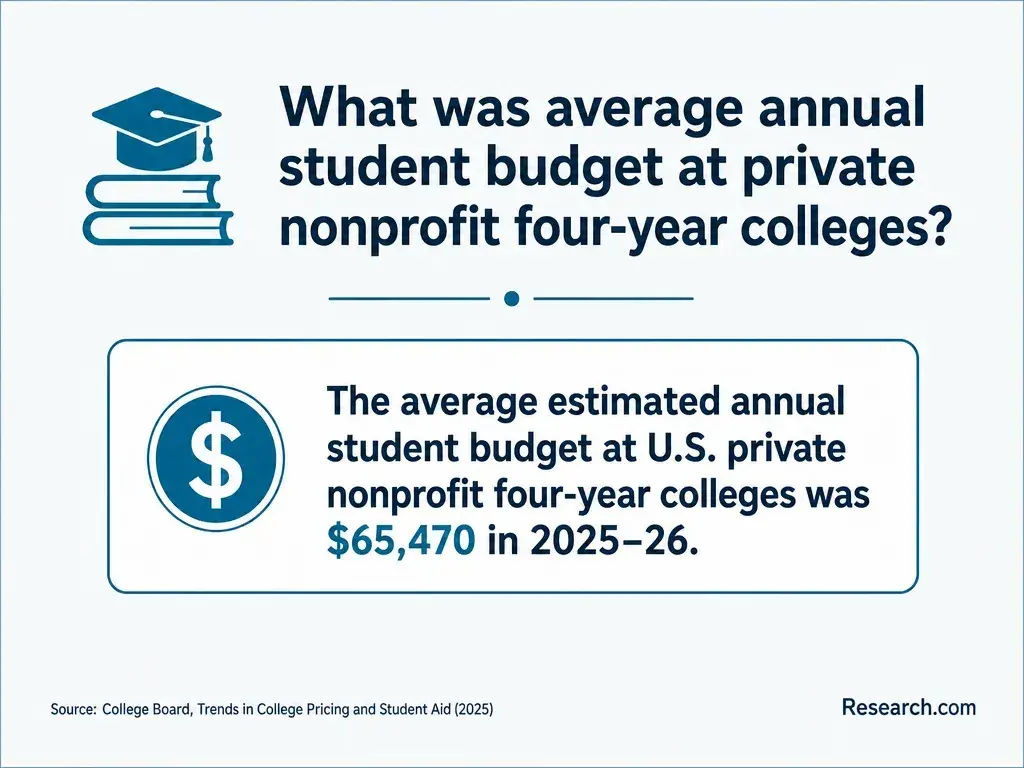
Calculate cost from the credits you still need to complete, not the advertised price of one course. Obtain the school's current tuition and mandatory-fee schedule, then account for textbooks, software, technology requirements, and possible travel or unpaid fieldwork. Ask financial aid how your intended enrollment pace affects eligibility; ask the program whether a lighter load changes course sequencing.
An accessibility barrier can also carry a time cost if a required assignment or course cannot be completed as scheduled. Before paying a deposit, request both a degree audit and a written explanation of how inaccessible required materials will be resolved. Use budget-conscious psychology program comparisons to identify candidates, then compare personalized remaining costs rather than headline tuition alone.
Possible nonclinical roles include recovery-service support, outreach, intake coordination, referral assistance, and program support. Actual duties depend on the employer, setting, experience, and state rules; a BA does not make a graduate eligible for every job with "counselor" in its title. Look for supervised experience in respectful communication, documentation, confidentiality, and referral boundaries. For a screen reader user, ask whether the employer's record systems and any required mobile tools are accessible before accepting a placement.
If a specific state-recognized substance-use counseling role is the goal, compare the BA against programs designed around that credential's educational requirements. The substance abuse counseling undergraduate education investment is worth evaluating only after the state board confirms which coursework counts. For some support roles, targeted training and supervised experience may be a more direct route than another degree.
What Salary and Job Outlook Can Psychology Graduates Expect?
There is no reliable single salary for graduates of an addictions-focused psychology BA. For a target occupation, consult the US Bureau of Labor Statistics Occupational Outlook Handbook's current wage and employment projections, then check local job postings for the duties and credentials attached to that title. An occupation-wide median includes workers with different education and experience; it is not a starting offer or a degree-specific outcome.
Compare potential earnings with your remaining education cost and the qualifications needed for the work you actually want. If that work requires a counseling master's, include its additional tuition, time, and supervised-training obligations; planning the time and cost of a counseling master's helps frame that separate decision. A BA is a sensible investment only if its accessible curriculum and likely opportunities justify its cost for your goal.
Other Things You Should Know About Psychology
You can discuss it if it helps tell your story, but you do not need to make it the focus of an academic application. Contact disability services separately about the school's accommodation process.
Ask for a guest demonstration or representative course materials. Access to a full live course may not be available, but sample assignments and platform walkthroughs can reveal important barriers.
Notify the instructor and disability-services office promptly, identify the specific barrier, and request an accessible version or equivalent access. Ask how the school will keep you on schedule while it resolves the issue.
Not necessarily. Employers and state credentialing bodies may value different combinations of education, training, and supervised experience. Compare the requirements of the specific role before paying for a concentration.
- Screen Reader Testing | illinois.gov https://doit.illinois.gov/initiatives/accessibility/testing/screen-reader-testing.html
- Enforcement Guidance on Reasonable Accommodation and Undue Hardship under the ADA https://www.eeoc.gov/laws/guidance/enforcement-guidance-reasonable-accommodation-and-undue-hardship-under-ada
- ADA Requirements: Testing Accommodations https://www.ada.gov/resources/testing-accommodations/
- Transfer credit policies - Office of Admissions https://admit.washington.edu/apply/transfer/policies/
- Field Placement & Career Accommodations and Resources | Student Disability Center https://accessibility.colostate.edu/disabilitycenter/internship-career-accommodations-and-resources/
- Online Psychology Degrees | Bachelor's (BA) Programs https://www.snhu.edu/online-degrees/bachelors/ba-in-psychology
- Online Bachelor's Degree in Psychology in Addictions | Purdue Global https://www.purdueglobal.edu/degree-programs/psychology/bachelor-psychology-addictions/
- Applied Psychology: Addictions Studies, B.S. - CPS, CPSO | University of New Hampshire https://www.unh.edu/program/bachelor-science/applied-psychology-addictions-studies
- Internships, Externships, Practicum, and Fieldwork - Center for Disability Services - The University of Utah https://disability.utah.edu/accommodations-services/fieldwork.php
- Addiction Studies vs Substance Abuse Counseling 2026 | substanceabusecounselor.org https://substanceabusecounselor.org/blog/addiction-studies-vs-substance-abuse-counseling-degree/