2027 Online BA in Psychology - Mental Health: Choosing a Degree for Community Work Before Graduate Counseling Study
Audited and Verified:
Our Editorial and Data Verification Process
Research.com uses government datasets, official education statistics and primary institutional information to support its career and degree guides. Our review process checks factual accuracy, occupational definitions, source dates and the requirements associated with the credentials discussed.
How This Article Was Fact-Checked
Our editorial team verifies salary estimates, employment projections, education requirements and program information against original data providers and official organizations. Salary figures are checked against the relevant occupational definitions and reporting periods. Information about licensure, accreditation and required in-person training is reviewed separately.
Fact-checked and verified on:

Co-Founder and Chief Data Scientist
An online psychology BA can help you enter community-serving mental health work before applying to a graduate counseling program - but the degree's name alone will not tell you whether it offers useful field experience or meets your future school's prerequisites. If you hope to support clients now and pursue counseling later, you need to judge both steps.
This guide explains what to look for in the curriculum, how to test a program's fit with entry-level jobs and graduate admissions, and when a different undergraduate path may serve you better.
Key Things You Should Know
- An online psychology BA is academic preparation for community support work, not a qualification to diagnose conditions or provide psychotherapy.
- Many bachelor's programs require about 120 semester credits; the credits you still need, placement requirements, and tuition rate matter more than an advertised completion time.
- Before enrolling, compare specific counseling programs' prerequisites with the BA's courses and confirm that you can obtain supervised, nonclinical experience locally.
What Is an Online Bachelor's Degree in Psychology for Mental Health Work?
It is an undergraduate psychology degree delivered primarily online, sometimes with electives or a formal concentration in mental health. Students study behavior, development, research, and mental-health topics; the degree does not train them to practice therapy. Check the transcript and catalog to learn whether "mental health" is an official concentration or simply a selection of electives.
For community work, the strongest fit combines psychological science with knowledge of service systems and opportunities to practice nonclinical skills: explaining resources, making referrals, documenting work appropriately, and communicating across cultures. An agency placement can be valuable, but only if the school permits it, the site agrees to supervise it, and the duties remain within an undergraduate student's role.
If your immediate goal is specifically substance-use counseling, compare the psychology BA with an addiction counseling degree comparison resource. A more targeted program may align better with a state credential, but its title alone does not establish eligibility; check the state's rules.
Can an Online Psychology Bachelor's Prepare You for Graduate Counseling Study?
A psychology BA can provide relevant preparation and may satisfy the bachelor's-degree requirement for counseling master's admission. It does not guarantee admission, replace graduate clinical training, or necessarily satisfy every prerequisite. Counseling programs set their own admissions rules; states set requirements for the eventual professional license.
The distinction matters when comparing educational routes. The following options serve different purposes even when their courses cover mental health.
| Path | Best use before counseling study | Limit to check |
| Psychology BA | Build research literacy and broad knowledge of behavior while seeking community experience | Applied placements and counseling-specific electives may be limited |
| BSW or human services bachelor's | Prepare for agency work through a more service-focused curriculum | Coursework may not match a particular counseling program's psychology preferences |
| Nonclinical psychology master's | Pursue advanced psychology study for a separate academic or career goal | Usually does not replace a qualifying counseling master's |
Request admissions requirements from counseling programs you could realistically attend, then compare them with the BA's course sequence. Ask about statistics, research methods, developmental and abnormal psychology, experience expectations, and any minimum grades. A useful application also shows what you learned through appropriately supervised community work. If you later consider accelerated psychology master's study for working adults, first establish whether that degree advances your goal; speed cannot substitute for a counseling program that meets applicable licensure requirements.
What Careers Can You Start With a Bachelor's in Psychology and Mental Health?
A psychology BA may help you compete for nonclinical community-service jobs, particularly when paired with relevant employment, volunteering, language skills, or an approved placement. Hiring requirements vary by employer and state. Read job postings for actual duties rather than assuming that a mental-health-related title describes an entry-level role.
These examples distinguish work a bachelor's applicant might pursue from responsibilities reserved for trained or credentialed professionals.
| Potential role | Typical contribution | What to verify |
| Community outreach worker | Share resources, build partnerships, and help people access services | Travel, language, and local-community experience requirements |
| Intake or service coordinator | Gather permitted information, schedule services, and manage referrals | Documentation training and limits on clinical screening |
| Recovery-support worker | Provide support within a defined, supervised service model | Whether peer status, state certification, or lived experience is required |
| Program assistant | Support outreach records, reporting, and service evaluation | Data-handling skills and confidentiality rules |
If recovery work appeals to you, examine recovery services employment pathways alongside local postings. Peer support, care coordination, and substance-use counseling can have different credential and supervision requirements. None of these entry-level routes should be mistaken for independent psychotherapy.
Online delivery does not make a degree unaccredited. Verify that the institution holds accreditation recognized by the U.S. Department of Education or the Council for Higher Education Accreditation, and confirm that it applies to the school awarding your degree. Employers and graduate programs may also examine the courses, experience, and skills behind the credential.
Do not look for APA accreditation as a test of a general psychology BA: APA professional accreditation applies to covered doctoral programs and training sites, not ordinary undergraduate psychology majors. For your longer-term plan, investigate the recognition and state licensure fit of each prospective graduate counseling program separately. A guide to online forensic psychology degree selection concerns a different specialization; its program labels should not be treated as evidence that a mental-health BA or a future counseling degree meets your requirements.
Before committing, ask the undergraduate school for its official degree name, accreditation information, course catalog, placement policy, and graduate-school advising resources. Ask prospective counseling schools whether they accept that institution's degree and whether any particular courses are required.
Expect general education alongside psychology courses such as introductory psychology, developmental and social psychology, statistics, and research methods. Mental-health-oriented options may cover psychopathology, health psychology, addiction, or community interventions. Course names and availability differ by school; an elective about counseling is not supervised counseling training.
For this goal, favor a sequence that teaches you to interpret evidence before making claims about a community program's effectiveness. Pair methods and statistics with developmental or cultural coursework, then seek an approved applied project or placement. A modest, authorized task - such as summarizing published evidence for an outreach team - can demonstrate more relevant judgment than an unapproved project using client records.
If your target is a state-recognized substance-use counseling route rather than broad preparation for a counseling master's, compare inexpensive undergraduate substance use counseling degree choices against the state's actual education and supervised-experience rules. The least expensive relevant coursework is not necessarily the shortest route to a credential.
First-year applicants generally apply to the institution with secondary-school records; transfer applicants submit records from prior colleges. Schools may have separate requirements for entry to the psychology major, including prerequisite courses or academic-standing rules. Admission to the university does not establish that you can immediately take every major course.
Returning students should obtain a written degree audit before relying on a completion estimate. Accepted transfer credit may count only as an elective, leaving statistics, research methods, general education, or residency requirements unfinished. Ask the registrar or transfer-credit office to assess prior work and the psychology department to confirm how it applies to the major. Comparing psychology programs that accept transfer credits is a starting point, not a substitute for your individual evaluation.
Also ask when required courses are offered. A prerequisite available only in certain terms can delay both graduation and your planned counseling application.
Many bachelor's degrees require about 120 semester credits, but your remaining timeline depends on approved transfer work, enrollment pace, prerequisite sequencing, and course availability. An internship or capstone may add scheduling constraints even when lectures are asynchronous. Request a term-by-term plan showing when you could finish every requirement - not just the credits needed for graduation.
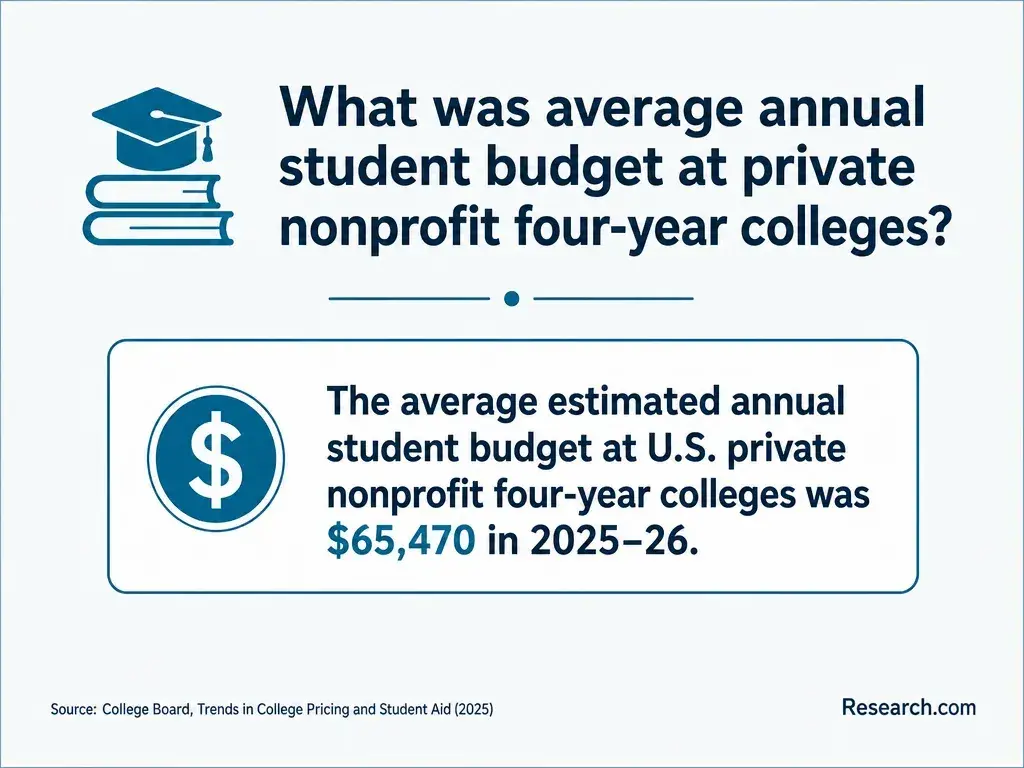
Compare total remaining cost rather than a single tuition rate. Include required fees, books or software, travel to a placement, and earnings you might give up to complete it. If counseling study is the destination, the BA is only one part of the education budget. Use evaluating the net cost of counseling education to frame that later expense, then request current charges and aid estimates directly from each school.
A lower-cost BA is especially attractive if it supplies your target graduate prerequisites and access to experience. Paying extra for a mental-health label is harder to justify if the added courses do neither.
The central difference is how you access instruction, faculty, peers, and applied opportunities - not the academic scope of a psychology BA. Online courses may be asynchronous, but scheduled discussions, group work, exams, research meetings, and local placements can still require fixed hours. Campus study can make in-person collaboration easier, while online study may let you remain employed near a community organization.
Ask both types of program who arranges placements, what supervisors must provide, whether your current workplace can be considered, and whether any campus visits are required. Do not assume an existing nonprofit job automatically earns academic credit: the school must approve the learning objectives and supervision.
Online programs at other degree levels may advertise very short timelines. For example, information about the costs of one-year forensic psychology master's pathways describes a different academic and career decision. It cannot establish either how quickly you can finish a BA or whether an online degree prepares you for counseling licensure.
You generally do not need a psychologist or counselor license merely to hold a psychology BA or apply for a nonclinical community role. A particular job, however, may require a background check, employer training, or a state-recognized credential - especially in peer support or addiction services. Verify the job's duties and the responsible state authority's rules before treating the BA as sufficient.
Providing psychotherapy, diagnosing conditions, or independently performing restricted assessments is a different pathway. Professional counseling typically requires an appropriate graduate degree followed by jurisdiction-specific supervised practice, examination, and licensure steps. Even shorter graduate degree timelines in forensic psychology do not turn a nonclinical psychology degree into a counseling qualification.
What Are the Salary and Job Outlook for Mental Health Careers?
Use occupation-specific U.S. Bureau of Labor Statistics data, not a claimed salary for "psychology BA graduates." Community outreach, social and human service assistance, and licensed mental health counseling describe different work and may have different typical entry requirements. An occupation-wide median also includes experienced workers and cannot predict an individual starting offer.
For a realistic local comparison, collect postings for the entry-level roles you would pursue after the BA and record their pay ranges, required credentials, schedules, and advancement conditions. Then compare them with the additional cost and time of a qualifying counseling master's. Published pay comparisons across forensic psychology-related careers concern other occupations; they are not an earnings forecast for community mental health work or a reason to choose an unrelated specialization.
If you already work at a community organization, also ask whether the BA changes your eligibility for specific internal roles. That answer may be more useful than a national wage figure when deciding whether to enroll.
Other Things You Should Know About Psychology
Not necessarily. Relevant, supervised community work during that period can strengthen your application. Check each program's policies on older prerequisites and recommendations.
Usually not for counseling master's admission unless a specific program says otherwise. Research methods and a well-explained applied or research experience can still show how you evaluate evidence.
Often, if the program accepts professional references. Choose someone who can describe your responsibilities, judgment, and boundaries; check whether academic references are also required.
It can be valuable where communities and employers need that language. Represent your proficiency accurately, and do not substitute informal bilingual help for a qualified interpreter when one is required.
- Cost of Attendance (Budget) | 2026-2027 Federal Student Aid Handbook https://fsapartners.ed.gov/knowledge-center/fsa-handbook/2026-2027/vol3/ch2-cost-attendance-budget
- Requirements Related to the Practice of Counseling - NCBI https://www.ncbi.nlm.nih.gov/books/NBK259170/
- Internships and Experiential Learning | Virginia Commonwealth University https://wilder.vcu.edu/student-support-resources/internships-and-experiential-learning-/
- Social Work vs Psychology Degree: Choose Your Path | Missouri Baptist University (Mobap) https://www.mobap.edu/news/social-work-vs-psychology-degree-which-path-fits-your-goals/
- Best Practices | Field Study - UC Irvine https://fieldstudy.soceco.uci.edu/pages/best-practices
- Online Psychology B.A. or B.S. Degree Completion Program | gsu.edu https://online.gsu.edu/program/psychology-ba-or-bs-completion-program/
- What Degree Do I Need to Become a Counselor? | University of Bridgeport https://www.bridgeport.edu/news/degree-needed-to-be-a-counselor/
- Psychology careers guide | apa.org https://www.apa.org/education-career/guide/careers
- Counseling/Clinical Psychology Concentration | Methodist University https://online.methodist.edu/programs/bs-psychology/counseling-clinical-psychology-concentration/
- M.S. in Counseling Curriculum | Nova Southeastern University https://psychology.nova.edu/degrees/masters/counseling/curriculum.html