2027 Online BA in Psychology - Addictions vs. a BA in General Psychology: Compare Curriculum, Cost, and Career Fit
Audited and Verified:
Our Editorial and Data Verification Process
Research.com uses government datasets, official education statistics and primary institutional information to support its career and degree guides. Our review process checks factual accuracy, occupational definitions, source dates and the requirements associated with the credentials discussed.
How This Article Was Fact-Checked
Our editorial team verifies salary estimates, employment projections, education requirements and program information against original data providers and official organizations. Salary figures are checked against the relevant occupational definitions and reporting periods. Information about licensure, accreditation and required in-person training is reviewed separately.
Fact-checked and verified on:

Co-Founder and Chief Data Scientist
An addictions focus can make a psychology BA more relevant to recovery services, but it does not automatically qualify a graduate to counsel people with substance use disorders. A general psychology BA offers more room to explore research and other careers, though students may need to seek out addiction-related electives and experience. For prospective online students - especially those transferring credits or balancing school with work - this comparison explains the curriculum, full cost, practical requirements, and credential checks that should determine which path is worth pursuing.
Key Things You Should Know
- Choose an addictions focus for sustained study of substance use and recovery; choose general psychology if elective flexibility and preparation for several possible paths matter more.
- Many bachelor's degrees require about 120 semester credits, but transferred credits, required courses, and scheduling - not the concentration's name - determine remaining time and cost.
- Neither BA alone authorizes independent addiction counseling, psychotherapy, or diagnosis. Check the target state's credential rules before treating specialized coursework as career qualification.
What is the difference between an online BA in psychology - addictions and general psychology?
Both are undergraduate psychology degrees. A general psychology BA usually combines foundational psychology, statistics, research methods, and electives across subfields. An addictions-focused BA typically retains much of that foundation while directing some upper-level credits toward substance use, prevention, recovery, or behavioral-health systems. Depending on the school, "addictions" may be a formal concentration, a track, or simply a suggested group of electives; those labels are not interchangeable.
The key trade-off is structured relevance versus flexibility. A student committed to addiction-related support work may value a coherent sequence of courses. Someone considering research, human resources, graduate psychology study, or several human-services fields may prefer a general major with carefully chosen electives. When reviewing addiction psychology degree options for undergraduate students, compare degree audits rather than relying on program titles.
Neither option is a professional counseling degree by default. If a school describes its graduates as prepared for a credential, ask for the specific state credential, the requirements its courses meet, and what additional supervised experience or examination remains.
Which curriculum better prepares students for addiction and behavioral health careers?
For entry-level recovery-service, outreach, or intake work, an addictions curriculum may provide more immediately relevant language and context: substance use across the lifespan, stigma, treatment systems, and recovery resources. Its advantage is strongest when students can also obtain approved, supervised experience with documentation, referral practices, confidentiality, and respectful client interaction.
A general psychology BA can be just as sensible if its electives cover substance use and the student can gain comparable experience. It may be stronger for a student who wants deeper statistics or research preparation, particularly if the addictions track replaces methods electives with narrowly applied courses. Compare the actual credit requirements, not assumed strengths of either title.
For a student whose specific goal is a state-regulated substance use counseling role, a purpose-built counseling or human-services program might be more direct. Compare the credential alignment and total expense of that route with bachelor's-level substance use counseling tuition and career value. Coursework about addiction can inform support work; it does not turn an undergraduate placement into supervised clinical counseling training.
How much do online psychology bachelor's degrees cost, and how long do they take?
There is no reliable single price for either pathway. Schools may charge by credit or term, apply different rates to online students, and add technology, course, or graduation fees. Many bachelor's programs require about 120 semester credits and are designed around roughly four years of full-time study from entry, but an individual student's timeline depends on accepted credits, course sequencing, and enrollment pace.
The following comparison shows what to include in each school's own estimate. An advertised per-credit rate is not a complete degree price.
| Cost or time factor | Why the two pathways might differ |
| Credits remaining | An addictions track may require courses that a transfer student has not taken, even when general psychology credits transfer. |
| Tuition and fees | Compare the rate applied to remaining credits, mandatory fees, books, and any residency or campus-visit costs. |
| Course availability | Specialized courses offered less often can delay completion, even when the total credit requirement is unchanged. |
| Applied experience | A required placement can involve travel, screening costs, or reduced paid-work hours. |
Ask each school for a written degree audit and a term-by-term plan. Then price only the credits still needed, including prerequisites and likely fees. If the goal eventually requires a qualifying graduate counseling degree, include that later education in the decision; mental health counseling tuition fees and financial aid are a separate financial question, not part of the BA's advertised price.
Course names vary by institution, and a concentration does not replace the need to evaluate the psychology core. The comparison below describes common curricular emphases, not requirements at every school.
| Curriculum area | General psychology BA | Psychology BA with addictions focus |
| Shared foundation | Psychological science, development, social or biological psychology, statistics, and research methods | Often a similar foundation; check whether methods and statistics remain required |
| Upper-level study | Electives may span cognition, personality, health, community psychology, or other areas | More prescribed study of substance use, addiction, recovery, prevention, or service systems |
| Applied or research work | May offer a research project, internship, or capstone | May offer a relevant project or placement, but neither placement nor supervision is universal |
For either degree, look for instruction on interpreting research evidence and protecting confidential information. An addictions course that discusses screening or treatment is not permission to administer restricted assessments or provide therapy. If the student's interests are shifting toward justice-system work instead, comparing faster forensic psychology undergraduate options may reveal a different elective trade-off; a fast completion claim still needs to be tested against the student's transfer audit.
Online delivery changes access and scheduling, not the academic meaning of a psychology BA. Asynchronous lectures can help students who work or care for family members, but group projects, exams, faculty meetings, and agency placements may still have fixed times. A campus program may make in-person research labs or local partnerships easier to access; an online program can be a better fit when it offers comparable support and feasible local opportunities.
Ask whether required courses are asynchronous, whether any visits are mandatory, and who arranges and approves an internship near the student's home. Also compare access to faculty research, career advising, and outcome information. The same questions apply when examining online forensic psychology programs and graduate outcomes: a specialized online label does not establish placement access or prove that graduates enter a particular job.
Start by confirming that the institution holds accreditation recognized by the U.S. Department of Education. Check the accreditor's directory, the school's current status, and whether accreditation covers the institution awarding the online degree. This matters for academic quality oversight and can affect aid and future credit evaluation, though another school still decides what it will accept.
Do not expect an ordinary psychology BA to carry American Psychological Association program accreditation. APA accreditation applies to specified professional psychology doctoral programs and related training, not general undergraduate psychology majors. Likewise, an attractive specialization title does not establish professional-program recognition: forensic psychology master's intensive study options, for example, should not be mistaken for an accredited addiction-counselor training pathway. For a regulated goal, ask the relevant state authority which educational standards apply.
First-year applicants commonly submit a secondary-school record or equivalent; transfer applicants generally submit transcripts from previous colleges. A school may have additional eligibility rules, but entry to the institution, admission to a major, and approval of transfer courses are separate decisions. Some programs introduce psychology, statistics, and research methods after enrollment rather than requiring them for admission.
Transfer students should request an evaluation showing whether each accepted course satisfies general education, a psychology core requirement, an addictions requirement, or only a free elective. Ask when remaining required courses are offered and whether a course substitution is possible. For students planning a later professional degree, compare that degree's admissions prerequisites separately; clinical counseling master's course sequencing can shape preparation, but undergraduate admission does not establish future graduate eligibility.
Both pathways can support applications for nonclinical positions, subject to employer qualifications and experience. The addictions focus may make it easier to explain an interest in recovery-service settings; the general BA may be easier to pair with research, administrative, or broader human-services experience. Job duties - not the degree label - determine whether a position requires a credential.
This table separates plausible work settings from professional authority. It describes possibilities, not jobs guaranteed to graduates.
| Target role | Relevant BA preparation | Additional consideration |
| Recovery-support or outreach worker | Addiction and community-service knowledge; communication skills | Employer training or a state peer credential may be required |
| Intake or service coordinator | Documentation, referral, and confidentiality awareness | Employers may prefer direct service experience |
| Research or program assistant | Methods, statistics, and clear reporting | Demonstrable research or data experience may matter more than the concentration |
| Addiction counselor or therapist | Relevant undergraduate study may help | Separate state-specific education, supervision, examination, or licensure rules apply |
Review actual vacancies and comparing recovery support occupations before choosing electives. If current work already provides an entry route, targeted training or a state-recognized credential may be more efficient than a second bachelor's degree.
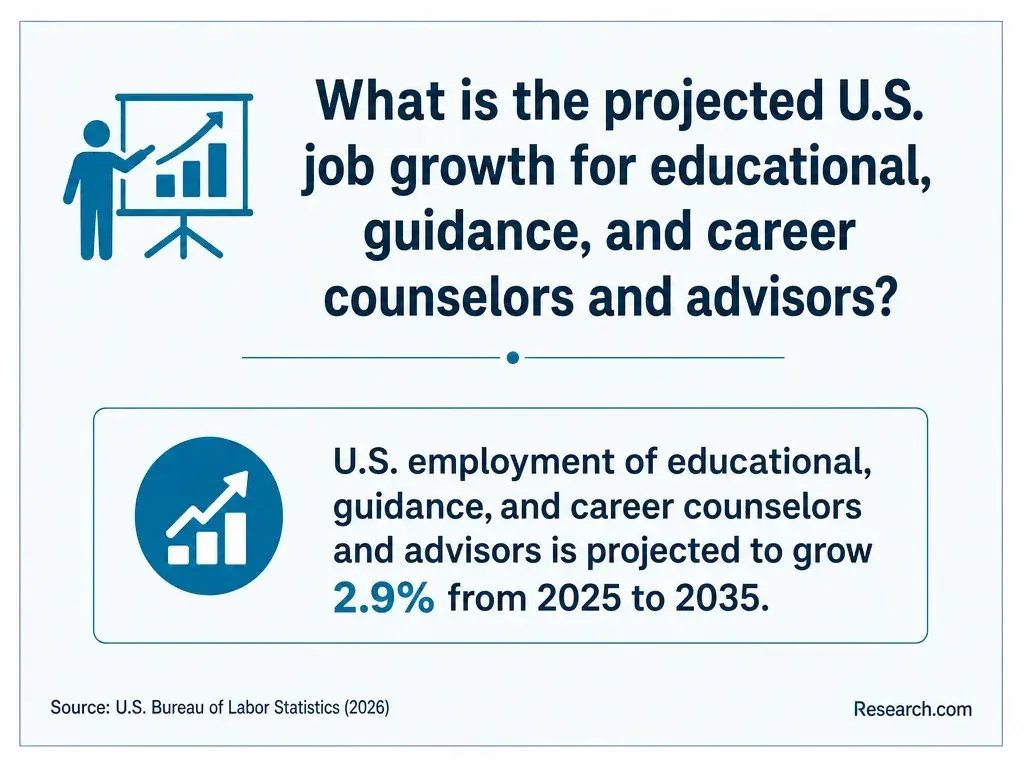
There is no single salary or growth rate for graduates of either BA. Pay depends on the occupation, employer, location, responsibilities, and required credentials. The U.S. Bureau of Labor Statistics groups substance abuse, behavioral disorder, and mental health counselors in one occupation, but that group includes workers with different educational and licensing requirements. Its occupation-wide median should not be presented as the starting pay of an addictions-BA graduate.
The Bureau of Labor Statistics projects growth for that counselor occupation over its published projection period, which signals demand for the occupation - not automatic access to its positions. For a useful earnings comparison, identify local vacancies a BA holder could actually qualify for, record their posted pay and credential requirements, and compare those opportunities with the remaining cost of each degree. If graduate education is likely, comparing prices for online psychology master's degrees can help model future spending, but a general psychology master's does not automatically qualify someone for counseling licensure.
What licenses and certifications are needed for addiction-related careers?
Requirements depend on the state, job title, and duties. A nonclinical outreach position may rely on employer training; a peer-support role may call for a state-recognized peer credential. Substance use disorder counselors can face specified coursework, supervised experience, examinations, background checks, and continuing education. Independent psychotherapy generally follows a distinct licensed-profession pathway. An addictions concentration alone meets none of these requirements automatically.
Before enrolling, identify the exact job title sought and check the state board or credentialing authority's published rules. Ask the school to document which requirements its courses meet, whether its placement counts toward any required supervision, and what remains after graduation. If the goal is licensed mental health counseling rather than addiction-related support work, compare qualifying professional programs and their supervised-training schedules; accredited clinical counseling timelines for working students address a different credential pathway from the BA.
Other Things You Should Know About Psychology
Possibly. Ask an advisor for a revised degree audit first: specialized courses may have prerequisites or limited availability, which could change your graduation date.
That depends on the school. Confirm whether it is a formal concentration and where it appears - on the diploma, transcript, or neither - before relying on the label.
Yes, if you meet that program's requirements. Check its expectations for statistics, research methods, experience, and recommendations rather than assuming either BA has a universal advantage.
Compare the target job's requirements with shorter options first, such as prerequisite courses, approved credential training, or a qualifying graduate program. A second BA is worthwhile only if its specific requirements fill a gap those routes cannot.
- Requirements Related to the Practice of Counseling - NCBI https://www.ncbi.nlm.nih.gov/books/NBK259170/
- Cost of Attendance (Budget) | 2026-2027 Federal Student Aid Handbook https://fsapartners.ed.gov/knowledge-center/fsa-handbook/2026-2027/vol3/ch2-cost-attendance-budget
- Frequently Asked Questions for Mental Health Counselors | nysed.gov https://www.op.nysed.gov/professions/mental-health-counselors/faqs-education-requirements
- Colorado Transfer https://cdhe.colorado.gov/students/attending-college/colorado-transfer
- Online Psychology Degrees | Bachelor's (BA) Programs https://www.snhu.edu/online-degrees/bachelors/ba-in-psychology
- Career Pathways in Psychological & Brain Sciences | Information Technology Services https://artsandsciences.louisville.edu/psychological-and-brain-sciences/career-pathways
- Applied Psychology: Addictions Studies, B.S. - CPS, CPSO | University of New Hampshire https://www.unh.edu/program/bachelor-science/applied-psychology-addictions-studies
- BA vs. BS in psychology: key differences explained | Capella University https://www.capella.edu/blog/psychology/ba-vs-bs-in-psychology-key-differences-explained/
- Career Outcomes - Psychology Major https://www.scranton.edu/academics/cas/psychology/professional-outcomes/careers-with-bachelors-degree.shtml
- Psychology careers guide | apa.org https://www.apa.org/education-career/guide/careers