2027 Online BA in Psychology - General Psychology for Insurance Agents: Compare Prerequisites, Workload, and Career Fit
Audited and Verified:
Our Editorial and Data Verification Process
Research.com uses government datasets, official education statistics and primary institutional information to support its career and degree guides. Our review process checks factual accuracy, occupational definitions, source dates and the requirements associated with the credentials discussed.
How This Article Was Fact-Checked
Our editorial team verifies salary estimates, employment projections, education requirements and program information against original data providers and official organizations. Salary figures are checked against the relevant occupational definitions and reporting periods. Information about licensure, accreditation and required in-person training is reviewed separately.
Fact-checked and verified on:

Co-Founder and Chief Data Scientist
If you already sell insurance, an online BA in general psychology may strengthen your understanding of decision-making and your ability to evaluate evidence. But it is not an insurance credential, and earning it while meeting sales targets takes time and money.
This guide compares admission requirements, coursework, online scheduling, and career uses so you can decide whether a degree supports your next role—or whether licensing, employer training, or a shorter course is the better investment.
Key Things You Should Know
- A general psychology BA can support insurance work involving communication, research, and customer behavior, but it does not replace a state insurance license or qualify you for clinical practice.
- Compare accepted transfer credit with credit that actually satisfies major requirements; an online program can still require scheduled meetings, group work, or a supervised project.
- The U.S. Bureau of Labor Statistics reports a May 2024 median annual wage of $60,370 for insurance sales agents. That occupation-wide figure is not the expected pay increase from earning a psychology BA.
What Is an Online BA in General Psychology for Insurance Agents?
It is a broad undergraduate psychology degree delivered primarily online, not a degree that trains or licenses insurance agents. Students study behavior and psychological research while completing general education requirements. An agent might apply that learning when explaining choices clearly, examining customer feedback, or evaluating a training initiative—not when diagnosing a customer or making unsupported claims about why someone buys a policy.
"General psychology" usually means breadth rather than a formally awarded specialty. If your interest is specifically recovery services rather than insurance, compare addiction psychology BA and BS degree options before assuming a general major will provide the coursework you want.
Is a Psychology Bachelor's Degree Useful for Insurance Careers?
It can be useful when your target job rewards analytical writing, evidence evaluation, customer research, or training design. Your existing insurance experience remains the stronger evidence that you can handle products, compliance, and clients. The comparison below separates goals for which a degree may add value from goals with a more direct route:
| Goal | Likely value of a psychology BA | More direct preparation to consider |
| Improve performance as a licensed agent | Potentially useful for communication and research literacy; not essential | Product training, compliance education, and coached sales practice |
| Move into customer insights or training | Useful if paired with work samples and relevant experience | Data, survey-design, or instructional-design training |
| Move into claims or underwriting | May satisfy a degree preference, depending on the employer | Claims, underwriting, policy, and analytical experience |
| Leave insurance for counseling | Academic foundation only; not a practice qualification | A qualifying graduate pathway and required supervised training |
If the intended move is into substance use services, lower-tuition bachelor's pathways in substance use counseling may be more relevant than a general psychology BA. Check the target state's credential rules before choosing either route.
What Accreditation Should an Online Psychology Bachelor's Program Have?
Verify that the institution holds recognized institutional accreditation, that it awards the advertised BA, and that the accreditation covers the institution offering the online program. Check the accreditor through the U.S. Department of Education or the Council for Higher Education Accreditation, then confirm the school's current status directly. Accreditation supports an initial quality check; it does not guarantee that another school will accept credits or that an employer will hire a graduate.
Do not expect American Psychological Association accreditation for a general psychology BA: APA's professional accreditation does not cover ordinary undergraduate psychology majors. The same distinction matters if a program advertises a specialized subject. When choosing forensic psychology study by cost and entry criteria, check the actual degree and institution rather than treating "forensic" as an accreditation or professional credential.
Requirements depend on whether you enter as a first-year or transfer student. Schools commonly request prior transcripts and evidence that you meet their general undergraduate admission standard; some require prerequisites before upper-level psychology or research-methods courses. Insurance employment does not normally substitute for academic prerequisites.
For a returning agent, the consequential question is not just how many credits are transferred, but where they apply. Ask admissions for a written degree audit showing general education, psychology major, elective, and remaining residency requirements. Ask the department separately whether previous statistics or research courses satisfy its sequence. Compare that audit when considering accelerated undergraduate psychology program choices; a fast course calendar cannot recover credits that do not fulfill graduation requirements.
Expect introductory psychology, statistics, research methods, and upper-level work that may cover cognition, development, social behavior, personality, and biological or mental health topics. Exact requirements and electives vary. For insurance work, statistics and methods can help you question whether a survey represents customers; social and cognitive psychology can help you examine communication without turning research findings into stereotypes about individual clients.
Choose electives against a specific goal. Organizational psychology may suit training or employee development, while writing, data analysis, and business electives may better support customer insights work. If the goal has changed to becoming a counselor, compare the eventual qualifying graduate program's prerequisites instead of assuming a psychology elective provides clinical training; accelerated online master's preparation in mental health counseling is a separate educational decision.
Online and campus students may study similar subject matter, but the weekly obligations can differ. An asynchronous lecture lets an agent work around appointments; it does not make a statistics deadline, group project, live research meeting, or proctored exam optional. Campus classes impose travel and meeting times but may make it easier to build faculty relationships or join research activities.
Before enrolling, request a sample course schedule and ask whether required classes, exams, projects, internships, or residencies have fixed times or locations. This matters especially if you may later pursue a different professional degree: accredited clinical counseling program timeline comparisons involve different supervised-training obligations and should not be used as a model for a general psychology BA.
Many U.S. bachelor's degrees require roughly 120 semester credits, but your remaining credits, course sequence, transfer evaluation, and enrollment pace determine completion time. An agent taking fewer courses during a busy sales season may finish later than a program's advertised schedule. Ask whether every required course runs often enough to support your proposed pace.
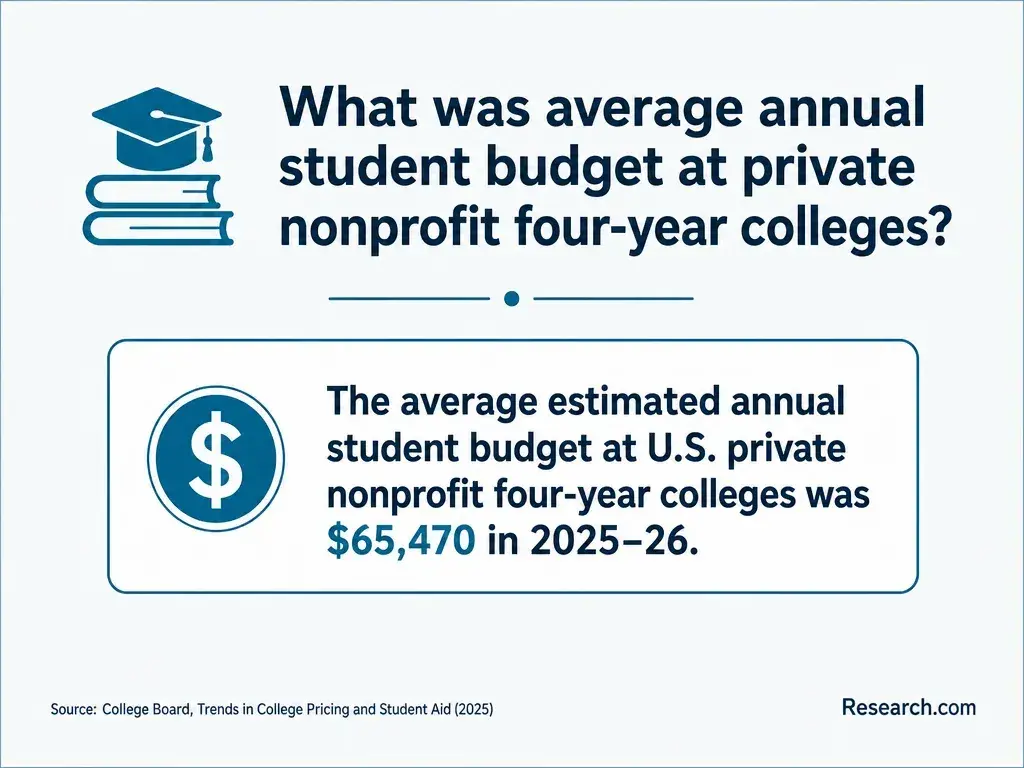
For a meaningful cost comparison, obtain each school's price per credit and mandatory fees, then apply them to the credits in your degree audit. Include books, technology, any travel, and the income or time you may give up to study. Compare the net cost after any confirmed employer assistance, not an advertised minimum tuition figure. Cost-focused comparisons of psychology degrees can help you identify schools to investigate, but only an individualized audit and current tuition schedule can establish your likely cost.
An experienced agent can seek roles in account management, sales training, customer experience, or market research support when their work history and technical skills match the posting. Claims adjuster, underwriting, and fraud-investigation openings may also be worth exploring, but each has distinct policy, analytical, legal, or investigative requirements. A BA may meet an employer's degree preference; it does not establish eligibility for a particular position.
Build evidence for the target role before assuming the degree will produce a promotion. For example, an agent pursuing training work could document an approved training project and its evaluation method without exposing customer information. Someone considering fraud work should study actual special-investigation job descriptions first: accelerated forensic psychology graduate completion routes are not a substitute for the insurance, investigative, and regulatory experience an employer may require.
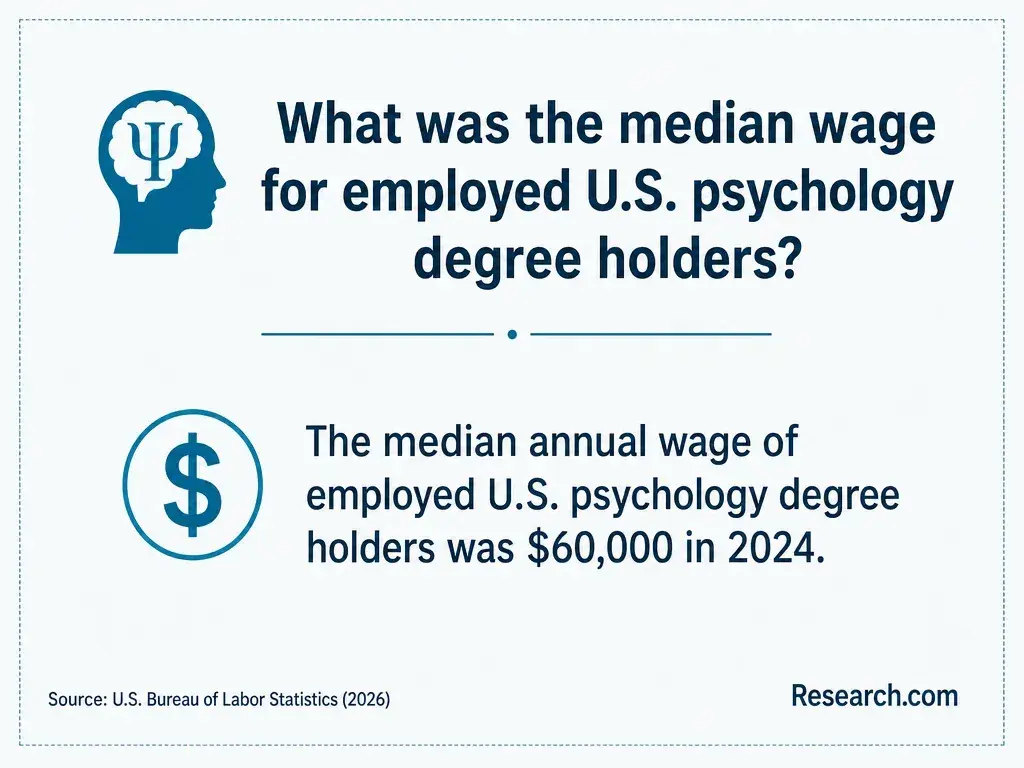
The Bureau of Labor Statistics Occupational Outlook Handbook reports a May 2024 median annual wage of $60,370 for insurance sales agents. This is an occupation-wide median, not a starting salary or a measure of what psychology graduates earn. An agent's pay can also reflect commissions, products, location, employer, and experience, so compare an offer's base pay and compensation terms rather than using the median as a forecast.
Outlook and pay also change with the occupation you choose: sales-agent figures should not be applied to underwriting, claims, or counseling jobs. If your objective is to leave insurance for mental health work, compare that occupation's entry requirements and training costs separately; a tuition-conscious shorter mental health counseling master's study addresses a different career investment, not an expected return on an insurance agent's psychology BA.
Does a Psychology BA Lead to Licensure or Professional Certification?
No. A general psychology BA does not confer an insurance producer license, a professional psychology license, or authority to diagnose or provide therapy. Insurance producer licensing is governed by state rules; the required education, examination, and continuing education depend on the state and lines of authority. Employer-sponsored designations and other insurance credentials have separate requirements.
If you want to practice counseling, evaluate programs against the licensing board's educational and supervised-experience rules in the state where you intend to work. A BA can be preparation for applying, but it is not the qualifying professional degree. When reviewing counseling degree affordability and accreditation, verify the credential pathway before comparing prices. For an agent staying in insurance, the more immediate check is whether a targeted license, designation, or employer course serves the intended job better.
Other Things You Should Know About Psychology
Possibly. Ask HR whether psychology qualifies under the tuition-assistance policy, whether approval is needed before enrollment, and whether grades, continued employment, or repayment conditions apply. Get the terms in writing.
Do not use them without employer authorization and any required school approval. Removing names may not resolve privacy or contractual obligations. A public dataset or a clearly labeled hypothetical example is often safer.
If you already hold a bachelor's degree and only need behavioral-science coursework, a minor or selected courses may cost less time than another BA. Check whether your school offers the option and whether it meets your goal.
Ask for recent course schedules, the frequency of required classes, exam arrangements, and leave policies. Compare those details with your busiest work periods rather than relying on the word "flexible."
- Get a Resident Insurance Agent License | georgia.gov https://oci.georgia.gov/get-resident-insurance-agent-license
- Cost of Attendance (Budget) | 2025-2026 Federal Student Aid Handbook https://fsapartners.ed.gov/knowledge-center/fsa-handbook/2025-2026/vol3/ch2-cost-attendance-budget
- How to become an insurance agent or adjuster | Texas Department of Insurance https://www.tdi.texas.gov/tips/be-an-agent.html
- Maximize Your College Transfer Credits | Explore 4 Ways | UMass Global https://www.umassglobal.edu/blog-news/4-ways-transfer-students-can-maximize-college-credits-prior-experience
- Credit for Prior Learning | University of Arizona Catalog https://catalog.arizona.edu/policy/courses-credit/credit/credit-prior-learning
- Bachelor of Arts in Psychology - Degree Completion | Notre Dame de Namur University https://www.ndnu.edu/psychology/ba-completion-psychology.html
- Employer Tuition Reimbursement: How It Works and How to Pay for College | Winston-Salem State University https://ramsonline.wssu.edu/blog/employer-education-benefits/
- Online Psychology Degree Illinois - BA Psychology Online | AU https://online.aurora.edu/online-degrees/ba-bachelors-psychology/
- Teach Online: Calculating Time on Task | SUNY Online Teaching https://online.suny.edu/onlineteaching/page/timeontask/
- College Credit for Your Work and Life Experience | University of Phoenix https://www.phoenix.edu/tuition-financial-aid/prior-learning-assessment.html