2027 Online BA in Psychology - Mental Health for School-Based Resource Referral: Which Courses Should You Look For?
Audited and Verified:
Our Editorial and Data Verification Process
Research.com uses government datasets, official education statistics and primary institutional information to support its career and degree guides. Our review process checks factual accuracy, occupational definitions, source dates and the requirements associated with the credentials discussed.
How This Article Was Fact-Checked
Our editorial team verifies salary estimates, employment projections, education requirements and program information against original data providers and official organizations. Salary figures are checked against the relevant occupational definitions and reporting periods. Information about licensure, accreditation and required in-person training is reviewed separately.
Fact-checked and verified on:

Co-Founder and Chief Data Scientist
Helping a student or family find mental health support takes more than knowing the names of local providers. School-based referral work also requires an understanding of child development, service access, privacy, and when a concern must be escalated to a qualified professional.
If you are considering an online BA in psychology for this work, the course list matters more than a mental-health label on the degree. This guide identifies the most useful coursework and applied experience, explains the limits of a bachelor's degree, and shows you what to verify before enrolling.
Key Things You Should Know
- Prioritize child and adolescent development, mental health and service systems, cultural responsiveness, research methods, and ethics; look for supervised practice applying them to referrals.
- A psychology BA can prepare you for nonclinical support and coordination, but it does not authorize diagnosis, therapy, or independent school counseling.
- Compare the full degree plan and local placement requirements, not just the "online" label: a typical full-time bachelor's route takes about four years, while transfer credit and scheduling can change the timeline.
What is an online bachelor's degree in psychology for school-based mental health referral?
It is usually a general psychology BA whose courses and experiences can support nonclinical resource referral: recognizing that a student or family may need help, explaining available services, connecting them with the appropriate school or community contact, and documenting the handoff within the worker's assigned role. "School-based mental health referral" is generally a career goal, not a standardized BA credential or a promise of a particular school job.
School procedures govern who may receive a concern, contact families, make an outside referral, or respond to an urgent safety issue. A psychology graduate might assist a school team or community partner, but a licensed school counselor, social worker, psychologist, nurse, or administrator may hold responsibility for decisions the graduate cannot make independently.
If your goal is substance-use treatment rather than resource navigation, compare the distinct academic routes into addiction counseling and your state's credential rules.
What courses should an online psychology bachelor's program include?
The strongest course mix teaches you to understand young people and navigate services without confusing academic knowledge with clinical authority. Course names vary; compare syllabi and degree audits rather than assuming a concentration includes every subject below.
| Course area | Value for referral work | Important limit |
| Child and adolescent development | Places behavior and help-seeking in developmental and family context. | Developmental knowledge does not establish an individual diagnosis. |
| Psychopathology or abnormal psychology | Builds literacy about symptoms, risk factors, and treatment systems. | Studying disorders does not qualify a student to assess or treat them. |
| Community psychology, public health, or human services | Explains prevention, access barriers, and coordination across agencies. | Service availability and eligibility remain local. |
| Multicultural psychology and disability studies | Supports respectful communication and accessible referrals. | One course cannot substitute for community knowledge or language access. |
| Research methods and statistics | Helps students evaluate evidence and interpret service data cautiously. | Referral counts alone cannot establish whether a service worked. |
| Ethics, education policy, or child welfare | Introduces confidentiality, professional boundaries, and safeguarding. | School policy and applicable law determine actual duties. |
Start with introductory psychology and research foundations, then take developmental and mental-health coursework before an applied project or approved placement.
If electives are limited, favor a course on school and community service systems over a therapy-techniques elective for a referral-focused goal. A more specialized substance-use degree may be appropriate for a different target role, but compare its curriculum and total expense with inexpensive undergraduate substance use counseling degree choices before changing majors.
Is an online psychology bachelor's degree accredited and accepted for licensure?
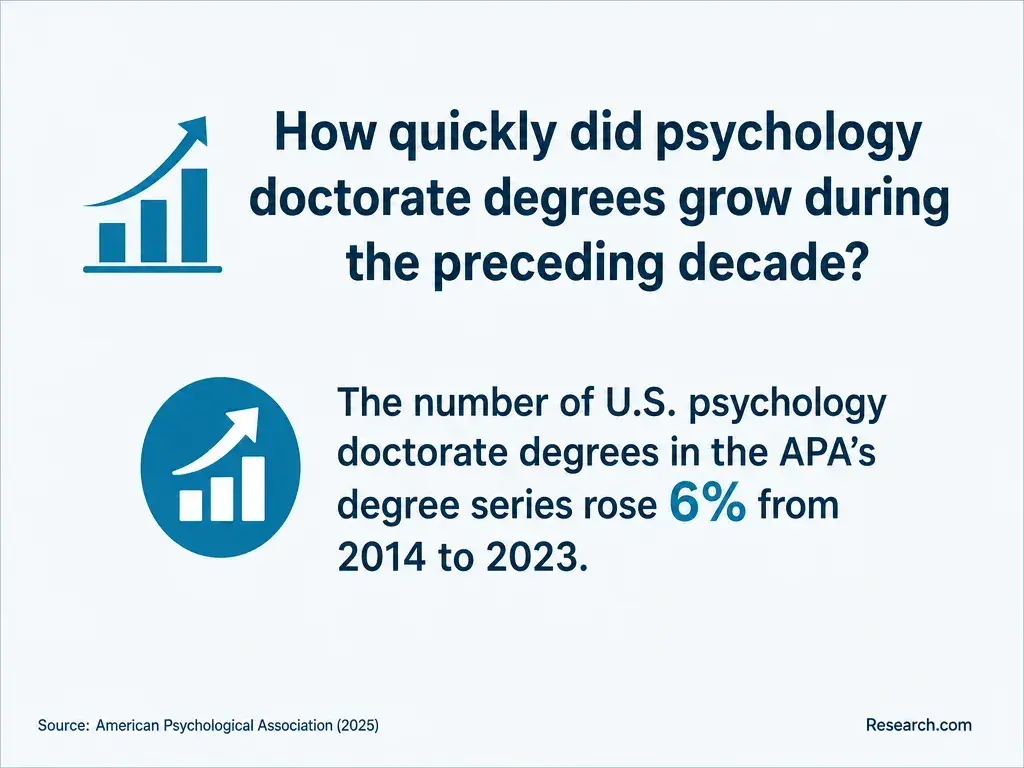
Check the institution's accreditation and confirm it applies to the school awarding the online BA. Accreditation can matter for credit recognition, financial aid, and later applications, but it does not establish that this BA qualifies someone for a licensed mental health occupation. The American Psychological Association does not accredit general psychology bachelor's programs.
A BA alone does not qualify its holder for psychologist, licensed counselor, clinical social worker, or school psychologist licensure. Requirements depend on the profession and state and generally involve a qualifying graduate program plus additional supervised training or examinations.
Even shorter accredited clinical mental health counseling study plans need to be evaluated against the intended state's rules; an accelerated label cannot establish licensure eligibility. Ask a prospective BA program which graduate prerequisites its courses satisfy, then confirm that answer with the graduate programs you may eventually apply to.
Courses provide the framework; supervised, nonclinical work tests whether you can use it. A useful internship, service-learning assignment, or capstone might involve mapping community resources, checking eligibility and accessibility information, observing an approved intake process, or developing a referral-directory maintenance plan. None of these tasks requires a student to diagnose a child or access identifiable records without authorization.
To judge an applied opportunity, follow a referral from first concern to documented handoff while respecting the site's procedures:
- Identify who is authorized to receive concerns and decide whether an issue needs urgent escalation.
- Check each resource's age range, cost, location, language access, eligibility, and referral method.
- Confirm what information may be shared, with whom, and under which consent or school-policy rules.
- Ask a supervisor how the team confirms a connection was offered without treating a referral as proof of treatment or improvement.
Ask whether the online program helps arrange and supervise such work locally, or leaves students to find a site. A fast-paced master's study in psychology option is not a substitute for these practical checks if the immediate goal is competent, supervised referral support.
Potential nonclinical roles include school or community-program assistant, family resource navigator, youth-program coordinator, and human-services intake or referral assistant. Actual job titles and eligibility differ: some school districts require a particular education credential, language ability, background clearance, or experience working with minors. Others reserve referral decisions for licensed staff and hire bachelor's graduates to support outreach and coordination.
Read postings for duties, not just titles. A role centered on maintaining resource information, arranging connections, and following an approved escalation procedure fits this preparation better than one requiring counseling or independent assessment. If your target has moved toward justice-system research or forensic practice, short-duration online forensic psychology graduate options represent a different pathway; their subject matter does not confer school-referral or clinical authority.
First-year applicants generally apply to the institution with secondary-school records; transfer applicants provide records from prior colleges. A school may also set major-entry, minimum-grade, or prerequisite rules. Admissions eligibility is separate from whether prior credits fulfill psychology, statistics, general education, or graduation requirements.
If you already have college credit, request a written degree audit showing what remains, when the needed courses run, and whether the internship or capstone has prerequisites. This matters especially if you are comparing a general psychology route with a specialty degree: forensic psychology bachelor's completion planning illustrates how a program's required sequence - not merely accepted transfer credits - can control time to graduation.
A traditional full-time bachelor's plan is commonly designed around four academic years. Your remaining time depends on accepted credits that apply to the degree, course sequencing, enrollment pace, and any scheduled placement. Online study does not automatically make a field experience available at night or on weekends.
Compare a school-specific estimate of remaining tuition and mandatory fees with books, technology, background checks, travel, and possible unpaid placement time. Do not calculate affordability from advertised tuition per credit alone. Grants and loans have different repayment consequences; grants versus loans for substance abuse counseling bachelor's students provides a related financing comparison, though aid eligibility and award amounts must be checked for your own program.
Online lectures may reduce travel and make the academic portion easier to fit around work, but live meetings, group assignments, and supervised school-hours placements can still constrain your schedule. Campus-based programs may make it simpler to build local faculty and agency relationships; an online program can be equally useful if it offers accessible advising, research supervision, and a workable local placement process.
Compare the required - not merely advertised - format of upper-level courses and experiential learning. Request a sample term schedule and ask who approves a placement near you. If price is the deciding factor, compare the complete degree plans alongside psychology degree options with lower tuition; the least expensive listed tuition may not produce the lowest remaining cost or a feasible referral-focused experience.
There is no single salary for "school-based mental health referral," because it describes a function rather than one standardized occupation. The U.S. Bureau of Labor Statistics' social and human service assistants category is a useful comparison for some nonclinical support jobs, but its occupation-wide median is not the expected pay of psychology BA graduates or of school employees specifically.
School-district pay schedules, part-time or academic-year contracts, experience, and local funding can change the comparison substantially.
For a realistic estimate, match your target posting's duties and required credentials to its published pay range, then account for hours and benefits. If your longer-term plan requires a counseling master's, compare that potential change in role with the cost of paying for an online mental health counseling degree; do not assume higher future pay will offset additional education costs.
What job outlook and graduate pathways follow a psychology bachelor's degree?
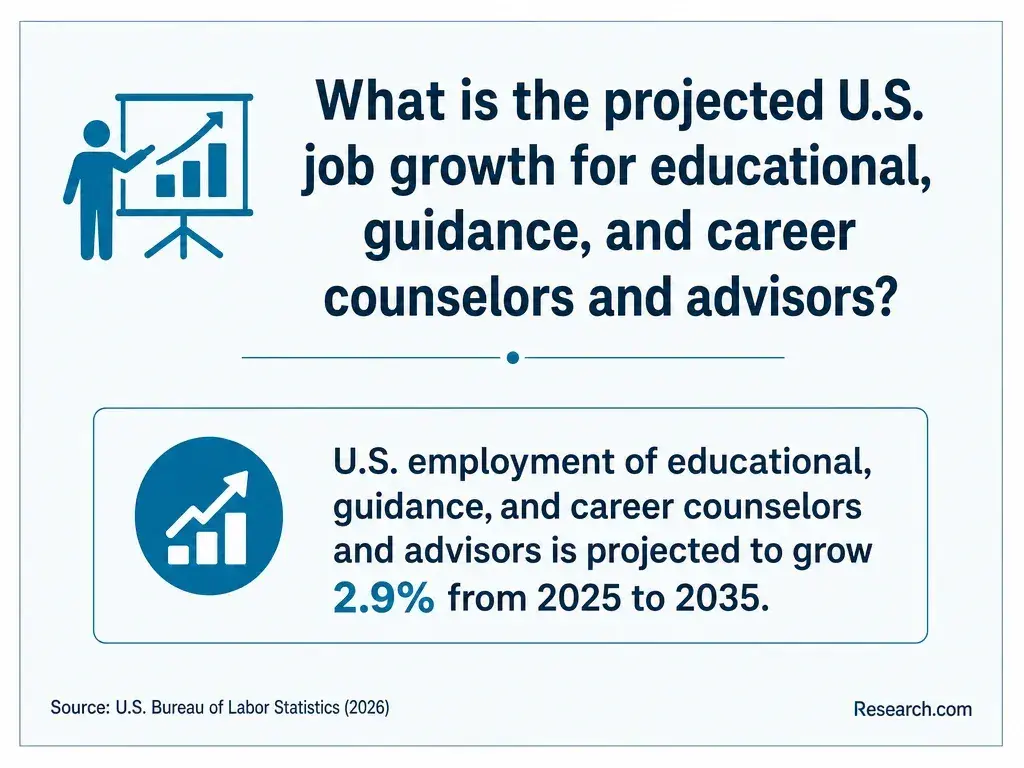
Demand for support services does not translate into guaranteed openings in a particular district. Use Bureau of Labor Statistics projections for a closely matched occupation as broad labor-market context, then inspect local school and agency postings for the credentials, schedules, and tasks actually available. Referral experience may support applications to coordination roles, but documented work with families, community partners, and confidential processes often matters alongside coursework.
For advancement, choose the graduate route by the job you want: counseling, social work, and school psychology are distinct professional pathways, while a general psychology master's may emphasize research or nonclinical study.
If licensed counseling is the goal, investigate state requirements and supervised-training arrangements before comparing shorter routes through mental health counseling graduate study. If referral coordination is the goal instead, a suitable bachelor's degree plus relevant supervised experience - or targeted training for someone who already holds a degree - may be more direct.
Other Things You Should Know About Psychology
Not independently. A tool's use, interpretation, and follow-up depend on its instructions, school policy, and the user's qualifications. A student can learn about screening in class without becoming qualified to administer restricted assessments.
It should clearly distinguish verified details from unconfirmed ones. Service capacity and eligibility change; assign responsibility for checking entries and avoid promising families an appointment.
Only with the required site permission and appropriate privacy protections. For coursework or a portfolio, a resource map or hypothetical workflow is often safer than identifiable case material.
Check language access before making a handoff, including how the provider handles interpretation and written information. Follow the school's procedures rather than relying on a child to interpret sensitive information.
- FERPA | Protecting Student Privacy - Department of Education https://studentprivacy.ed.gov/ferpa
- Screening and Referral Care Delivery Services and Unmet Health-Related Social Needs: A Systematic Review | cdc.gov https://www.cdc.gov/pcd/issues/2021/20_0569.htm
- Considerations for privacy and confidentiality in adolescent health care service delivery - PMC https://pmc.ncbi.nlm.nih.gov/articles/PMC10186092/
- CLAS Standards - Think Cultural Health - HHS.gov https://thinkculturalhealth.hhs.gov/clas/standards
- Areas of Licensure | NC DPI https://www.dpi.nc.gov/educators/educators-licensure/areas-licensure
- Online Bachelor of Science in Psychology | ASU Online https://asuonline.asu.edu/online-degree-programs/undergraduate/bachelor-science-psychology/