2027 Choosing an Online BA in Psychology - Addictions for a Future Developmental Psychology Graduate Application: Prerequisites to Compare
Audited and Verified:
Our Editorial and Data Verification Process
Research.com uses government datasets, official education statistics and primary institutional information to support its career and degree guides. Our review process checks factual accuracy, occupational definitions, source dates and the requirements associated with the credentials discussed.
How This Article Was Fact-Checked
Our editorial team verifies salary estimates, employment projections, education requirements and program information against original data providers and official organizations. Salary figures are checked against the relevant occupational definitions and reporting periods. Information about licensure, accreditation and required in-person training is reviewed separately.
Fact-checked and verified on:

Co-Founder and Chief Data Scientist
An addictions-focused online psychology BA can be a starting point for developmental psychology graduate study - but the concentration name will not determine whether you are prepared. Graduate programs may care more about your statistics and research training, lifespan-development coursework, and evidence that you can investigate a question responsibly. This guide is for prospective and returning undergraduates choosing a program with that future application in mind.
It shows what to compare now, what to confirm with prospective graduate programs, and when a different undergraduate route would serve the goal better.
Key Things You Should Know
- Prioritize statistics, research methods, lifespan development, and access to supervised research; addictions electives are most valuable when they connect to a clear developmental question.
- Compare each target graduate program's stated prerequisites separately from competitive advantages such as a thesis or strong research recommendation; neither is universally required.
- For a conventional 120-credit bachelor's degree, course placement matters as much as the credit total: electives that displace methods or development courses can create prerequisite gaps.
What is an online BA in psychology with an addictions focus?
It is a psychology bachelor's degree delivered primarily online with coursework related to substance use, prevention, recovery, or behavioral health. "Addictions focus" might mean an officially designated concentration, a minor, or simply a group of electives. Check the catalog and transcript designation rather than assuming the label represents a separate credential.
The combination can suit a student interested in how substance use relates to adolescent development, family environments, emerging adulthood, or aging. It is less direct if the student wants to study developmental psychology broadly and the addictions requirements leave little room for developmental courses or research.
A student weighing other specialties can use guidance on comparing forensic psychology curricula and career fit as a reminder to judge any concentration by its courses and intended next step - not its title.
Online describes delivery, not the entire learning experience. Courses may be asynchronous while research meetings, group work, exams, or placements have fixed times or locations. Ask about those obligations before treating an online BA as compatible with a particular work schedule.
Can an online psychology bachelor's prepare you for a developmental psychology graduate program?
Yes. A developmental psychology master's or research-oriented doctoral program can consider an online BA when the institution and coursework meet its admissions policies. Delivery mode alone does not establish either eligibility or competitiveness. The stronger question is whether the degree gives you the academic foundation, research experience, and faculty relationships needed for your intended programs.
An addictions interest can become a coherent graduate direction - for example, studying developmental changes in risk, protective relationships, or recovery support. That connection is strongest when backed by developmental theory and sound research methods, rather than treatment-oriented electives alone. Ask prospective graduate programs whether they expect prior work with a particular age group or research method.
Some applicants pursue a research-oriented master's before a doctorate to strengthen preparation; others apply directly from a bachelor's degree. A master's is not a universal doctoral prerequisite. Options for faster pathways through graduate psychology coursework should be assessed for research access and faculty fit, not speed alone.
What prerequisites should you compare for developmental psychology graduate applications?
Start with the admissions pages of graduate programs you would realistically consider. Record what each requires, what it recommends, and what its faculty or application guidance suggests would make a candidate competitive. Requirements vary by degree level and institution, and a course with a similar title may not automatically count as equivalent.
This comparison identifies the undergraduate evidence worth protecting when you choose an addictions-focused curriculum.
| Area to compare | Why it matters for developmental study | Potential gap in an addictions-focused BA |
| Psychology foundation | Supports advanced theory and interpretation of behavioral evidence | Specialty electives may narrow coverage of core psychology |
| Statistics and research methods | Supports study design, data interpretation, and critical reading | A single introductory course may offer limited practice |
| Lifespan or age-specific development | Establishes the theoretical basis for developmental questions | Addictions courses may discuss age without teaching developmental theory |
| Research experience and writing | Can demonstrate readiness and support an informed recommendation | Online students may need to seek a project or mentor deliberately |
| Additional program-specific coursework | May include biological, cognitive, social, or advanced quantitative study | Elective space may already be committed to the concentration |
Request syllabi when a course's equivalence is uncertain, and ask the graduate admissions office - not only undergraduate advising - whether a planned course satisfies its requirement. If your interests have shifted to a different field, a specialty graduate degree such as one-year forensic psychology study and career outcomes is a separate decision; it is not a substitute for developmental prerequisites.
Check that the degree-awarding institution holds recognized institutional accreditation, then confirm the graduate programs' policies on acceptable degrees and prerequisite courses. Graduate schools decide admission individually; accreditation does not guarantee that a particular transcript meets their requirements.
Do not look for APA accreditation of a general psychology BA. APA accreditation applies to specified professional psychology training programs, not undergraduate psychology majors. Professional counseling follows different program-recognition and licensure rules; an accredited mental health counseling program cost guide addresses a distinct educational pathway, not an accreditation standard an undergraduate psychology degree must meet.
Before enrolling, verify the institution's current accreditation status, the exact degree awarded, and whether the transcript distinguishes online study or the addictions focus. For any target graduate program, ask directly about online coursework, transfer prerequisites, and any minimum grade or course-recency policy.
For this goal, build the schedule from developmental graduate preparation outward. Protect room for statistics, research methods, lifespan development, and relevant advanced psychology courses before adding specialty electives. An addictions course becomes especially useful when it examines developmentally meaningful questions through research evidence rather than presenting service practices as research training.
A strong plan may pair adolescent or adult development with coursework on substance use, social influences, biological foundations, or prevention. If available, an upper-level methods course, supervised research project, or thesis can provide stronger evidence of readiness than another survey elective.
Research with minors or sensitive substance-use information also requires appropriate faculty oversight, permissions, privacy safeguards, and, where applicable, institutional review; enrolling in a course does not grant access to client records.
Sequence matters. Check prerequisites for advanced methods and development courses before choosing a shortened schedule. Even accelerated undergraduate forensic psychology study, if considered as an alternative specialty, should be judged by whether its timetable leaves space for the developmental and research courses your target programs value.
Requirements depend on whether you are entering as a first-year student, transferring, or returning with prior college work. Schools commonly request academic records and may set separate conditions for admission to the institution and declaration of the psychology major. The university's admissions office can confirm entry requirements; the department and registrar can clarify major eligibility and credit application.
For transfer students, accepted credit is not the same as a satisfied prerequisite. A previous statistics class might count toward total credits but not the psychology major's methods sequence. Obtain a written degree audit showing general education, major, elective, and remaining residency requirements before committing. Guidance on psychology major credit portability can help frame questions, but only the receiving institution can evaluate your courses.
If graduate study is the goal, preserve syllabi for statistics, methods, and developmental courses. They may help a future graduate program assess content when course titles differ.
A conventional full-time bachelor's plan is often built around roughly four academic years and 120 semester credits, but an individual completion plan depends on accepted credits, course sequencing, enrollment pace, and institutional requirements. Online availability does not mean every required advanced course runs every term. Compare fast-track bachelor's study in psychology against the time needed to gain research experience and obtain a substantive faculty recommendation.
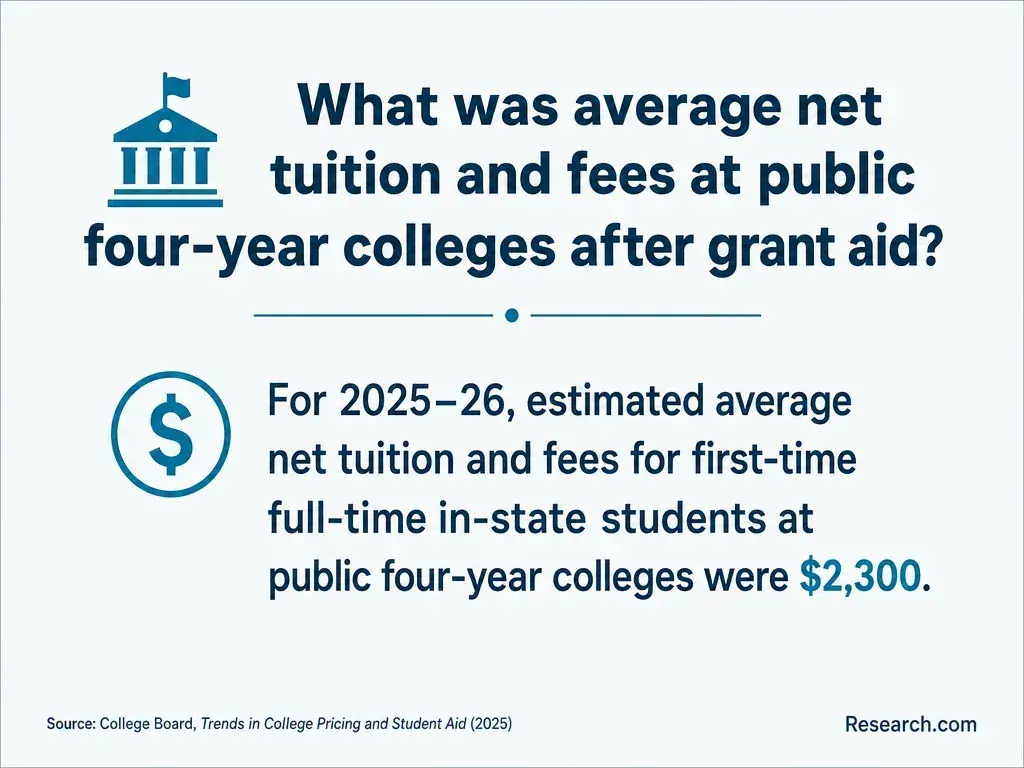
For cost, request a term-by-term estimate based on credits still required, not the advertised per-credit rate alone. Include mandatory fees, books or software, possible campus visits, and any unpaid research or placement time. Ask when required courses are offered and whether a slower pace changes aid eligibility. An inexpensive concentration can cost more overall if it adds courses or delays graduation without improving graduate readiness.
A BA may support applications for nonclinical roles in research assistance, community outreach, program support, recovery services, or service coordination. Actual eligibility depends on the employer, duties, experience, and any state credential rules. For a future developmental researcher, work that involves ethical data handling, participant coordination, or programs serving a defined age group may offer more relevant preparation than a job selected solely for its addictions title.
Compare the work itself: a research assistant might help manage approved study procedures, while a recovery-support worker might assist with referrals and practical support. Neither role automatically permits diagnosis or therapy. Specialties lead to different employment questions; graduate forensic psychology job options and qualifications, for example, should not be treated as likely outcomes of an undergraduate addictions focus.
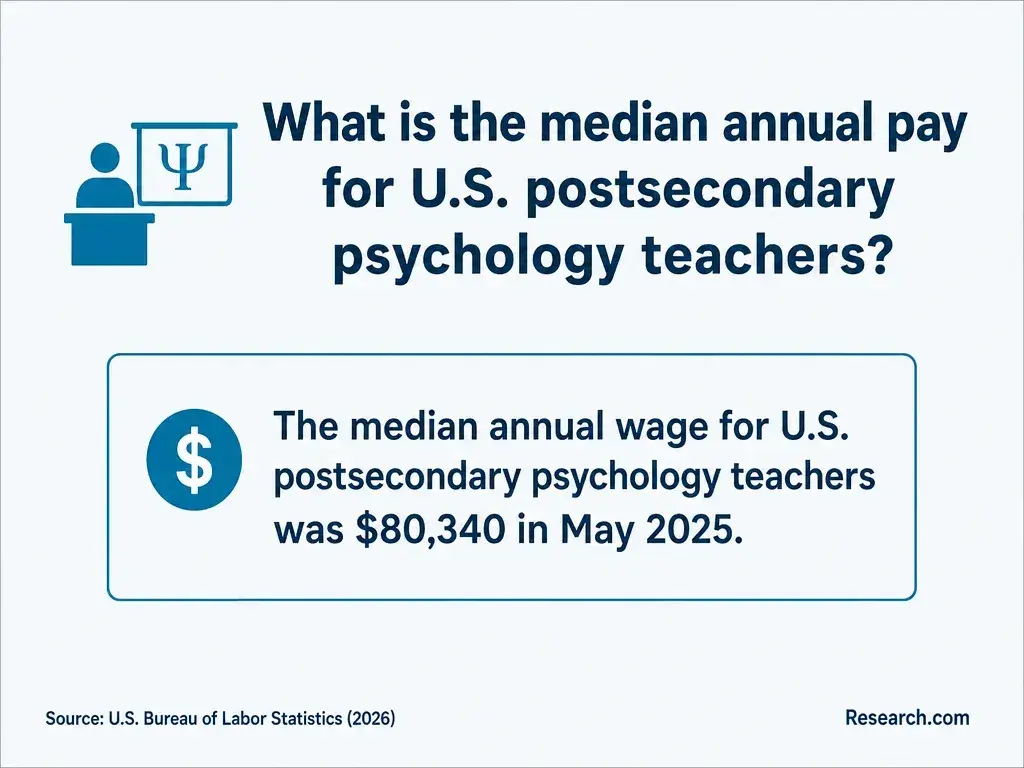
There is no single reliable salary or growth figure for "psychology BA graduates." Published occupational wages describe people working in a defined occupation, often with different degrees and levels of experience. Before using a US Bureau of Labor Statistics wage or employment projection, match its occupation definition and typical entry requirements to the specific job you want; a counselor occupation requiring further education is not a bachelor's-level salary forecast.
For this reader, the financial comparison also includes what happens after the BA: potential graduate tuition, research funding, time out of full-time work, and whether the intended career actually requires another degree. If the goal changes from developmental research to licensed counseling, tuition-conscious shorter mental health counseling master's study involves a different cost and credential calculation.
Do not use its advertised career outcomes as a return-on-investment estimate for this BA.
Do psychology careers require licensure or professional certification?
Research and many nonclinical support jobs do not require psychologist licensure, though employers may specify training or experience. Providing psychotherapy, independently diagnosing conditions, or using a protected professional title generally requires a qualifying professional pathway and compliance with state rules. Addiction counselor and peer-support credentials also vary by state and role; an addictions-focused BA alone does not establish eligibility.
Developmental psychology graduate study may be research-oriented rather than license-qualifying. If your ultimate goal is clinical work with children or families, identify the exact occupation and state before choosing graduate training. For example, accelerated counseling study and accreditation requirements concern a professional pathway separate from a nonclinical developmental psychology degree.
Confirm educational standards, supervised practice, examinations, and permitted duties with the relevant licensing board.
Other Things You Should Know About Psychology
No. Developmental psychology can examine change across the lifespan, including adolescence, adulthood, and aging. Check faculty interests if you hope to study a particular stage.
Potentially, if the program accepts academic writing samples and the work demonstrates a clear question, sound evidence, and your own contribution. Remove confidential information and follow any project or site restrictions before sharing it.
Not necessarily. Programs set their own grade policies and assess applications differently. Check stated minimums, then ask whether stronger subsequent quantitative work can demonstrate preparation.
Yes, when you explain your responsibilities and how they shaped a specific research interest. It can add context and support a recommendation, but it does not automatically replace a required course or research experience.
- Programmatic Accrediting Agencies | ed.gov http://www.ed.gov/laws-and-policy/higher-education-laws-and-policy/college-accreditation/programmatic-accrediting-agencies
- How to Finish Your Degree Online | University of North Carolina Wilmington https://flex-online.uncw.edu/blog/online-degree-completion/
- Accelerated (4+1 or 3+1) MA in Psychology Research Methods | virginia.edu https://psychology.as.virginia.edu/accelerated-41-or-31-ma-psychology-research-methods
- Mason Online Psychology (BS/BA) https://psychology.gmu.edu/undergraduate-programs/online-degree-completion
- Applicant Qualifications, Admissions Criteria, and Acceptance Rates | ucsd.edu https://psychology.ucsd.edu/undergraduate-program/undergraduate-resources/graduate-career-resources/applying-grad-school/acceptance-criteria.html
- FAQ for Applicants | Psychology Graduate Program https://grad.psychology.fas.harvard.edu/faq-applicants
- APA-Accredited Programs https://accreditation.apa.org/accredited-programs
- Datapoint: Admission criteria for graduate psychology programs are changing | apa.org https://www.apa.org/monitor/2024/06/admission-criteria-graduate-psychology-programs
- Considering Graduate School | Department of Psychology | Illinois State https://psychology.illinoisstate.edu/academics/undergraduate-advising/considering-graduate-school/
- Admission Requirements - SDSU Psychology Department https://psychology.sdsu.edu/graduate/masters-programs/prospective-students/applications/