2027 Online BA in Psychology - Addictions for Psychiatric Aides: Compare Prerequisites, Workload, and Career Fit
Audited and Verified:
Our Editorial and Data Verification Process
Research.com uses government datasets, official education statistics and primary institutional information to support its career and degree guides. Our review process checks factual accuracy, occupational definitions, source dates and the requirements associated with the credentials discussed.
How This Article Was Fact-Checked
Our editorial team verifies salary estimates, employment projections, education requirements and program information against original data providers and official organizations. Salary figures are checked against the relevant occupational definitions and reporting periods. Information about licensure, accreditation and required in-person training is reviewed separately.
Fact-checked and verified on:

Co-Founder and Chief Data Scientist
If you already work as a psychiatric aide, an online psychology BA with an addictions focus may deepen your understanding of patients and recovery - but it is not usually required to enter aide work. The decision is whether the degree fits your schedule, budget, and next career goal better than shorter training or supervised experience.
This guide compares admissions requirements, coursework, online workload, and career boundaries so you can judge what the degree would add to the skills you use on the job.
Key Things You Should Know
- Psychiatric aide jobs generally emphasize employer training and supervised care; a psychology BA is better evaluated as preparation for broader responsibilities or further study, not as an entry requirement.
- A bachelor's degree commonly requires about 120 semester credits; transfer evaluation and required courses - not the word "online" - determine an individual aide's remaining workload.
- An addictions focus teaches about substance use and recovery but does not qualify its holder to diagnose, provide therapy, or practice as an addiction counselor.
What Is an Online Bachelor's Degree in Psychology With an Addictions Focus?
It is an undergraduate psychology degree delivered primarily online, with additional study of substance use, addiction, prevention, or recovery. "Focus" can mean an officially recorded concentration, a minor, or simply a selection of electives; those are not interchangeable. Ask whether the specialization appears on the transcript and how many addiction-specific courses are guaranteed to be available online.
For a psychiatric aide, the value is a broader framework for understanding behavior and evaluating evidence - not a new clinical scope of practice. A bachelor's-level addiction psychology program guide can help identify options, but each school's current catalog must establish its actual degree name and requirements.
What Prerequisites Are Needed for an Online Psychology Bachelor's Degree?
For first-year admission, schools commonly consider a high school diploma or equivalent and their general undergraduate application requirements. Transfer applicants must also provide prior college transcripts. Some institutions admit students to the university before separately admitting them to the psychology major; others require introductory psychology, statistics, a minimum grade, or a specified number of credits before upper-level courses.
Working aides should distinguish admission prerequisites from graduation requirements. Prior health-care or human-services study may transfer as credit without replacing psychology methods, statistics, or addiction electives. Request a written degree audit showing how each accepted course applies, plus any remaining residency requirement. If you are comparing specializations rather than committed to addictions, choosing forensic psychology study by cost and entry criteria illustrates why admission and curriculum questions must be checked for the specific track.
How Does an Addictions Psychology Degree Prepare Students for Psychiatric Aide Careers?
Psychiatric aides generally assist patients with daily activities, observe and report changes, help maintain a safe environment, and work under clinical supervision. Experience in these tasks already gives an employed aide practical knowledge that a degree cannot replace. Psychology coursework can add a clearer understanding of learning, motivation, co-occurring concerns, stigma, and the limits of research claims.
The strongest career fit is for an aide who wants to communicate more effectively with a care team, move toward a qualified support or coordination role, or prepare academically for later study. Demonstrable workplace skills - accurate documentation, respectful interaction, de-escalation within training, and prompt escalation of safety concerns - still matter. Readers considering a move out of aide work can compare recovery services employment pathways; job titles and credential rules differ from those for psychiatric aides.
Expect a psychology core that may include introductory psychology, developmental and abnormal psychology, statistics, and research methods. Addiction-related study may cover substance-use science, prevention, recovery systems, and social or family contexts. A BA also includes general education and electives. Course titles alone do not show whether a program provides substantial addiction depth or prepares students for a particular credential.
For an aide, methods and statistics are especially useful for distinguishing evidence about an intervention from a persuasive anecdote; ethics coursework helps clarify confidentiality and professional boundaries. Check the catalog's course sequence before enrolling: an infrequently offered prerequisite can delay completion even when every class is online. If your longer-term interest shifts toward forensic research instead, choosing a shorter forensic psychology graduate pathway involves different preparation and should not dictate an aide-focused BA schedule without a specific graduate goal.
Online study can eliminate a commute, but asynchronous lectures do not guarantee self-paced deadlines. Campus study may make face-to-face faculty contact easier, while either format can offer meaningful advising and applied learning. The comparison that matters to a shift-working aide is when attendance, group work, exams, and any placement actually occur.
This table separates delivery features from assumptions about convenience; confirm each item with the program rather than relying on its "online" label.
| Feature | Online program | Campus program |
| Class meetings | May be asynchronous or require live sessions | Usually tied to scheduled classroom meetings |
| Applied experience | May require an approved local site and supervisor | May offer nearby site connections, with similar approval rules |
| Shift-work fit | No commute, but fixed deadlines can still conflict | Commute and class times may constrain scheduling |
Ask specifically about required campus visits, exam windows, and whether current aide employment could meet any applied-learning requirement; never assume it will. The same format distinction matters if you later compare graduate options, including comparing one-year forensic psychology master's formats, which should be treated as a separate decision rather than an aide qualification.
A conventional full-time bachelor's pathway is about four academic years, but an aide's remaining time depends on accepted transfer credits, the number that satisfy degree requirements, course availability, and feasible enrollment alongside shifts. Part-time study can make weekly work manageable while extending the calendar time. Accelerated terms may shorten the calendar without reducing the total work.
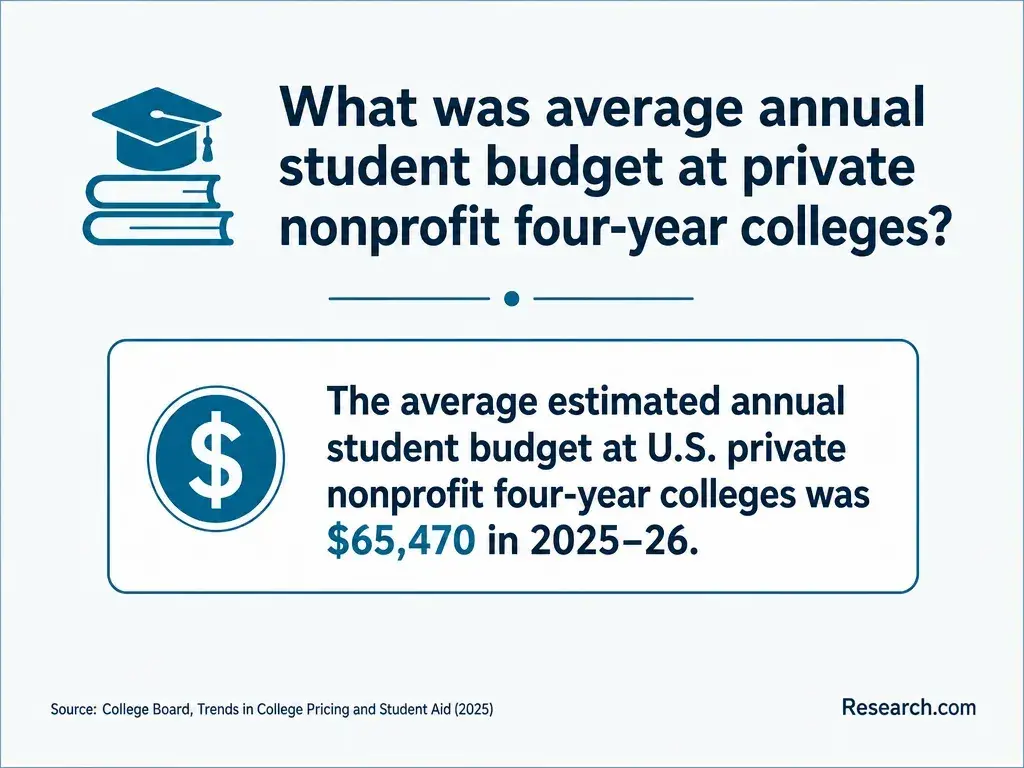
Compare schools using a written estimate of remaining required credits multiplied by the applicable tuition rate, then add mandatory fees, books, technology, and any travel or unpaid placement costs. Request the estimate after a transfer evaluation, not before. Also ask your employer about education assistance and check financial-aid eligibility for your planned course load. Aides weighing a different specialization can examine shorter forensic psychology BA and BS timelines, but an advertised completion period is not a personalized graduation date.
Verify the institution's accreditation through the accreditor's directory and confirm that the accreditation covers the institution awarding the online degree. Then check the school catalog for the exact psychology major and addictions concentration. Institutional accreditation supports a basic quality check; it does not establish that a concentration meets any state's counselor-licensing rules.
Do not reject a BA because it lacks American Psychological Association accreditation: APA accreditation does not apply to general undergraduate psychology majors. If your goal changes to licensed counseling, evaluate the applicable professional program and state requirements separately. That distinction also matters when researching funding options for accredited mental health counseling programs, which concern a different educational pathway.
Psychiatric aide requirements depend on the employer and state. Employers commonly provide job-specific training and may require background checks or training in safety procedures; some positions specify a credential. Check the actual job posting and your state's rules before paying for a certificate. A psychology BA or addictions concentration does not itself create a psychiatric aide license.
Keep aide duties distinct from addiction counseling. Providing a referral or reporting an observation under supervision is not diagnosing a substance-use disorder or delivering treatment. If your goal is a licensed counseling role, identify the state board's qualifying degree, supervised-experience, and examination requirements first. A clinical mental health counseling master's pacing guide may help with planning that separate route, but a shorter program is useful only if it meets the relevant rules.
The U.S. Bureau of Labor Statistics groups psychiatric aides with psychiatric technicians in its Occupational Outlook Handbook, while describing different typical preparation for the two jobs. That combined occupational wage or growth figure is not a salary forecast for an aide earning a psychology BA. When checking the latest BLS release, note its wage reference year and projection period, then compare local postings specifically titled "psychiatric aide" for pay, shifts, and required qualifications.
A degree makes the most financial sense when it supports a documented next step, not when its cost is justified by an assumed aide pay increase. Ask your employer whether the BA changes eligibility for a named position or pay grade. For a longer-term move into licensed care, compare the additional education and career requirements - not just salaries - using information such as clinical mental health master's tuition and career value.
How Can Students Choose a Reputable Online Psychology Program?
Start with your intended outcome: better performance in aide work, eligibility for a specific next job, or preparation for graduate study. Then compare only programs that can show how their requirements fit that outcome. Psychology degree options for distance learners can supply a starting shortlist, but published program descriptions should be checked against current catalogs and direct answers from admissions and advising staff.
Before committing, get answers to the questions most likely to change your decision:
- Which prior credits satisfy general education, psychology core, and addictions requirements on my written degree audit?
- Which courses require live attendance, fixed exam times, campus visits, or a separately approved placement?
- What is my estimated remaining cost at the course load I can sustain while working?
- What evidence shows graduates reach the specific jobs or further-study paths I am considering?
If your sole goal is to enter psychiatric aide work, compare employer training and direct applications before purchasing a BA. If the degree supports a clearly defined next step and its actual schedule and cost are workable, an addictions-focused psychology program can be a worthwhile academic investment.
Other Things You Should Know About Psychology
It may be more education than a particular aide opening requires. Compare local postings first; an associate degree can still be useful if its credits apply to a later bachelor's program.
Do not use identifiable patient information or workplace records without the required permissions. Ask your instructor and employer about acceptable, privacy-protective alternatives, such as a published case study.
Not necessarily. Check live-session times, exam windows, assignment deadlines, and the weekly reading load before choosing courses. Asynchronous delivery alone does not remove deadlines.
It can demonstrate relevant service experience, but programs assess their own prerequisites and selection criteria. Keep records of your responsibilities and supervision without retaining confidential patient information.
- Behavioral Health Career Descriptions | samhsa.gov https://www.samhsa.gov/about/careers/behavioral-health-workforce/careers-by-state/descriptions
- Full-time Study | HESC - NY. Gov https://hesc.ny.gov/dictionary/tap-coach/term/full-time-study
- General Schedule Qualification Policies | U.S. Office of Personnel Management https://www.opm.gov/policy-data-oversight/classification-qualifications/general-schedule-qualification-policies/
- Bachelor of Science in Psychology in Addictions | Purdue University Global Academic Catalog https://catalog.purdueglobal.edu/undergraduate/social-behavioral-sciences/psychology-addictions-bs/
- FAQs for Clinical Courses: Practicum, Internship, & Field Experience - Wake Forest Department of Counseling https://counseling.wfu.edu/faqs-for-clinical-courses-practicum-internship-field-experience/
- Courses, Course Enrollment and Fees - University Manual | Rhode Island Small Business Development Center https://web.uri.edu/manual/chapter-8/chapter-8-3/
- 7 Behavioral Health Jobs Herzing Can Help You Prepare For https://www.herzing.edu/blog/behavioral-health-jobs-herzing-can-help-prepare-for
- How Many Credits Do You Need to Graduate College? | snhu.edu https://www.snhu.edu/about-us/newsroom/education/how-many-credits-to-graduate-college
- Tuition and Costs | University of Tampa https://www.ut.edu/admissions/tuition-and-costs
- Costs and Payments | atlanticcape.edu https://atlanticcape.edu/one-stop/costs-payments.php