2027 Choosing an Online BA in Psychology - Mental Health Around Caring for a Child with Frequent Appointments
Audited and Verified:
Our Editorial and Data Verification Process
Research.com uses government datasets, official education statistics and primary institutional information to support its career and degree guides. Our review process checks factual accuracy, occupational definitions, source dates and the requirements associated with the credentials discussed.
How This Article Was Fact-Checked
Our editorial team verifies salary estimates, employment projections, education requirements and program information against original data providers and official organizations. Salary figures are checked against the relevant occupational definitions and reporting periods. Information about licensure, accreditation and required in-person training is reviewed separately.
Fact-checked and verified on:

Co-Founder and Chief Data Scientist
A child's recurring appointments can make a conventional class schedule unreliable, even when you are ready to study. An online BA in psychology may offer a workable route into mental-health-related support work, but "online" does not necessarily mean you can miss live sessions, move deadlines, or complete placements on your own schedule. This guide is for parents and caregivers weighing that degree against their available time, household budget, and career goals. It shows what to verify before enrolling - and when a different credential may be the more direct choice.
Key Things You Should Know
- Prioritize asynchronous coursework, published deadline and leave policies, and a workable plan for any live classes or placements; online delivery alone does not provide appointment-day flexibility.
- Check institutional accreditation and obtain a written degree audit before relying on transfer credits, a completion estimate, or a quoted tuition total.
- A psychology BA can support applications for nonclinical roles, but it does not qualify you to diagnose conditions or provide psychotherapy; a licensed career requires a separate, qualifying pathway.
What Is an Online BA in Psychology for Mental Health Support?
An online Bachelor of Arts in psychology studies behavior and mental processes through courses in psychological science, development, research, and statistics. "Mental health support" describes a possible interest or career direction, not a standard credential. Some schools offer a formally named concentration; others offer only relevant electives. Confirm which appears on the transcript and what the courses actually cover.
For a caregiver, the degree may be useful if you want broad preparation for community outreach, service coordination, or later graduate study. Learning about mental disorders and support systems can improve how you understand evidence and professional boundaries. It does not train you to treat a condition because you have encountered it in your family.
If your goal is specifically substance-use services, compare a broad psychology major with an addiction counseling degree comparison resource. Check your state's rules for the intended job: an addictions-focused course or degree name does not establish counseling eligibility.
Can an Online Psychology Degree Fit Life With Frequent Child Appointments?
Yes, if the program's actual obligations fit the appointment pattern. Recorded lectures help less than they seem if quizzes close during clinic hours, group meetings are fixed, or an internship requires daytime attendance. Even asynchronous courses usually have scheduled deadlines.
The following format differences matter more than an "online" label when appointments can shift without much notice.
| Program feature | Potential fit | Risk to check |
| Asynchronous courses | Lectures and independent work can often move around appointments | Weekly deadlines and timed exams may still be fixed |
| Live online courses | Predictable sessions may provide structure | Attendance rules may conflict with care needs |
| Accelerated terms | Fewer simultaneous courses may simplify planning | Less time to recover from an interrupted week |
| Internship or community project | Can build relevant nonclinical experience | Site hours, supervision, travel, and approval may be inflexible |
Ask for a recent syllabus for required courses, not just a delivery-mode description. Check whether instructors allow alternative exam times, how group work is scheduled, and what happens if your child's care requires a temporary pause. If faster completion appeals to you, assess speeding up an online psychology degree against your least predictable weeks - not your best ones. A steadier pace may protect both learning and household stability.
How Do You Choose an Accredited Online BA in Psychology?
Start with the institution's accreditation status and confirm that it covers the school awarding the degree. Then verify the exact BA, its online delivery, required courses, and any in-person obligations with the university. Institutional accreditation is important for evaluating a school, but it does not prove that a particular schedule is flexible or that graduates qualify for licensure. APA accreditation does not ordinarily apply to a general psychology BA.
Request a written degree audit showing how prior coursework applies to general education, the psychology major, prerequisites, and credits that must be earned at the new school. "Credits accepted" and "requirements satisfied" are different outcomes. Ask the psychology department whether statistics and research methods are offered often enough for your planned pace.
A specialization's name should not override those checks. If a school promotes a forensic option alongside mental-health coursework, use a forensic psychology program review before enrollment to examine the curriculum and outcomes; neither label confers clinical or investigative authority.
For someone whose caregiving has built communication and service-navigation skills, plausible targets include human-services assistant, outreach worker, intake coordinator, and some case-support roles. Work may involve explaining resources, documenting contacts, arranging referrals, or helping a supervised team track services. Employers may also require relevant experience, a driver's license, background checks, or another credential. A BA does not make every role accessible on graduation.
Compare jobs by schedule as well as title. A crisis-service position with rotating shifts may be a poorer fit than a daytime administrative support role, even if both are described as mental-health work. Ask employers about required hours, on-site coverage, training, and the boundary between support and clinical decisions.
For substance-use support roles, low-cost substance use counseling undergraduate degree pathways may be worth comparing with a general BA. Check the target employer's duties and your state's credential rules before assuming the more specialized degree is necessary - or sufficient.
Typical psychology majors combine introductory study with statistics, research methods, developmental and social psychology, and upper-level electives. Courses on psychopathology, health, or addiction may be available, but offerings and prerequisites vary. For mental-health support interests, research methods matter: they help you judge claims about interventions without mistaking a personal experience or a screening result for a diagnosis.
Look at sequencing rather than course titles alone. If statistics precedes research methods and a capstone follows both, missing one term's offering can delay completion. Ask whether projects require live team meetings, participant recruitment, or access to a site; do not assume family medical information can be used for coursework.
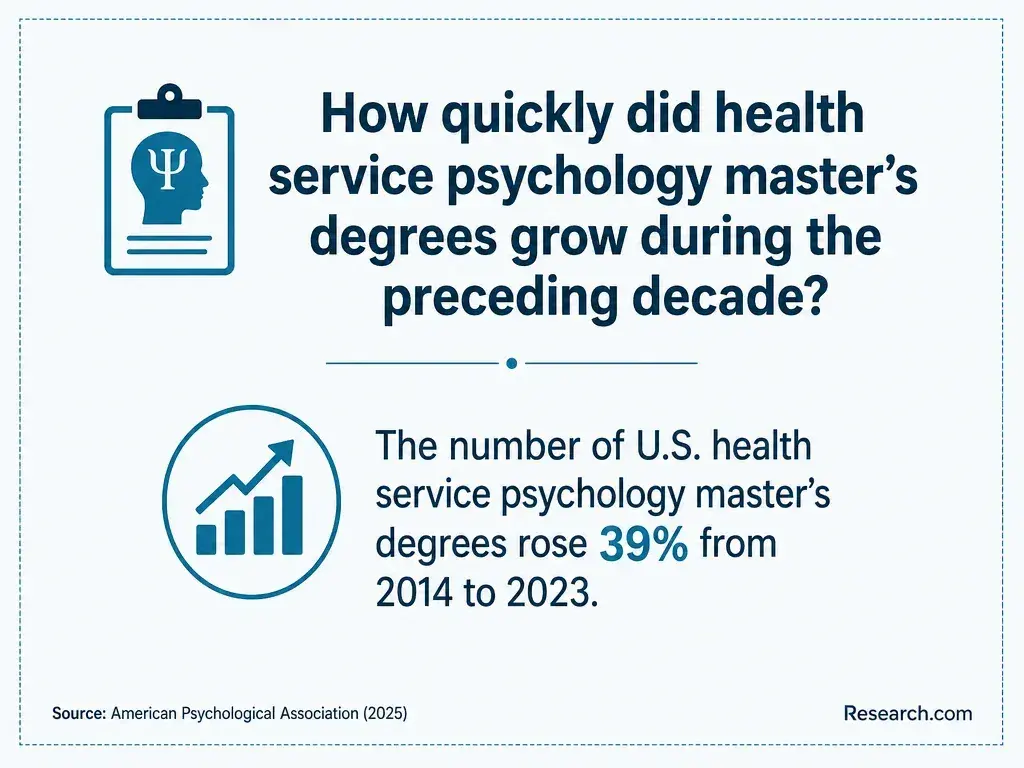
If graduate study is a possibility, keep the destination distinct. A nonclinical psychology master's can deepen research or applied study, while a qualifying counseling degree follows different requirements. Compare shorter online psychology master's timelines only after checking their prerequisites, purpose, and any required live or in-person work.
First-year applicants commonly need secondary-school records; transfer applicants generally submit records from prior colleges. Individual schools set their own admission, GPA, and documentation rules. Admission to the university may not mean that every previous psychology course applies to the major, so request a program-specific transfer evaluation.
If you already hold a bachelor's degree, pause before applying for another one. For a goal such as licensed counseling, the better question may be whether your existing degree and any needed prerequisites allow you to apply directly to an appropriate graduate program. Compare the cost and length of shorter counseling master's programs with the time and expense of a second BA. The graduate program - not a general assumption about psychology majors - decides admission eligibility.
Completion time depends on credits that satisfy degree requirements, course availability, and a pace you can maintain during appointment-heavy periods. A school's advertised fast track may assume continuous enrollment that is unrealistic for your household. Ask for a term-by-term plan based on your evaluated transcript and intended course load.
Compare the remaining cost to finish, not only the advertised price per credit. Include required fees, materials, technology, possible travel, and any placement expenses. A lower per-credit rate may not be cheaper if fewer prior courses satisfy requirements. Confirm how reducing your course load or taking leave could affect aid and satisfactory academic progress with the financial-aid office.
If you are considering a specialized substance-use degree, guidance on paying for a substance abuse counseling bachelor's degree can help frame funding questions. Verify eligibility and your own aid offer rather than treating a listed funding source as money already available.
A psychology BA can be preparation for later training, but it does not by itself qualify someone to practice psychotherapy, diagnose conditions, or work as a licensed psychologist. Licensed roles have occupation- and state-specific education, supervised-experience, examination, and application requirements. A mental-health concentration does not replace them.
If your intended work is therapy, identify the specific license and state first, then check the licensing board's rules and whether a proposed graduate program is designed to meet them. Shorter accredited clinical mental health counseling study plans may help you compare schedules, but a faster academic calendar cannot remove required training or supervision. If you want supportive, nonclinical work instead, a BA plus relevant supervised experience may be a more proportionate route.
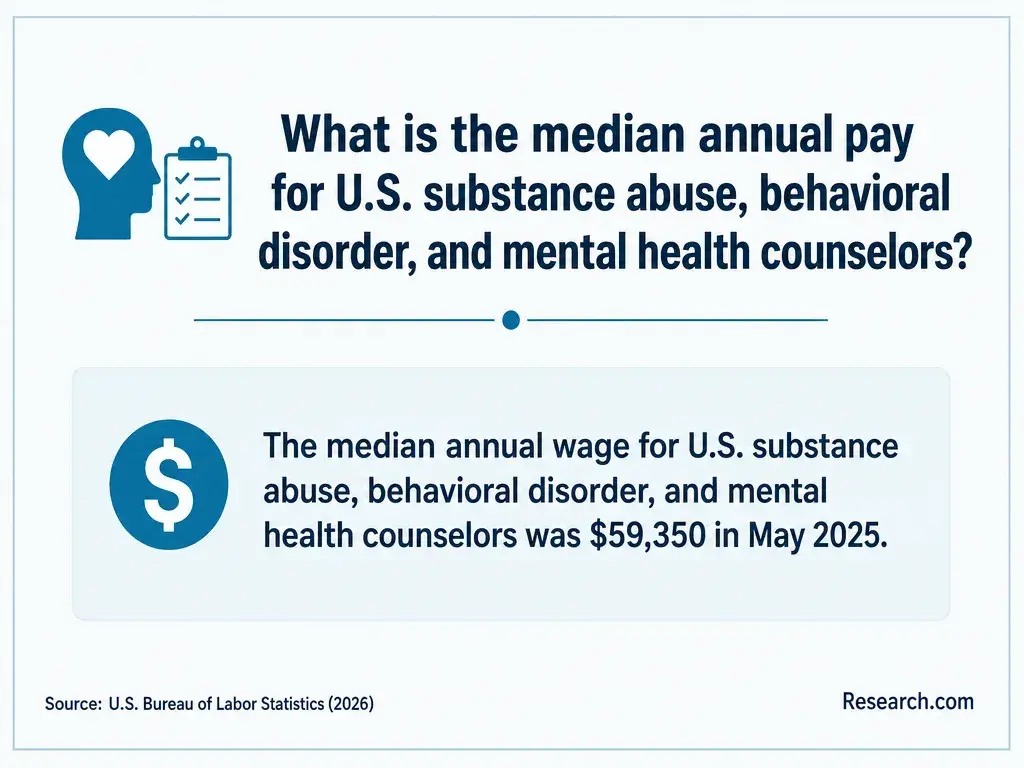
There is no single salary or job-growth figure for "psychology BA graduates." Labor-market figures describe occupations, not everyone holding a degree, and a support worker's pay should not be compared as though the worker already qualifies for a licensed counselor role. Use the U.S. Bureau of Labor Statistics' occupation-specific wage and employment projections for each job you would actually seek, then check local postings for pay, schedule, and credential requirements.
For your household, the useful comparison is likely to be take-home pay and workable hours against the degree's remaining cost and the experience needed to secure the job. If counseling is the long-term goal, include the later qualifying degree and supervision period in that calculation; comparing mental health counseling program costs is more informative than projecting a counselor's wage immediately after the BA.
How Do You Compare Online Psychology Programs for Adult Learners?
Compare finalists using the same questions and require written answers where a policy could change your graduation date or bill. A useful first step is to give each adviser a realistic appointment-heavy week, your prior transcript, and your intended pace. Then request a sample course schedule and degree audit rather than relying on "adult-friendly" marketing.
Before accepting an offer, resolve these decision-critical questions:
- Which required courses have live attendance, timed assessments, group meetings, campus visits, or fixed placement hours?
- What do the attendance, extension, withdrawal, and return-from-leave policies say for the term in which I would enroll?
- Which transferred courses satisfy specific requirements, and what is the resulting term-by-term completion plan?
- What would I owe at my planned pace, and how would a reduced load or leave affect my aid?
- What nonclinical experience and career support can I access without an inflexible placement?
Choose the program whose documented schedule and remaining cost work under ordinary disruptions, not only ideal conditions. If a later nonclinical graduate degree is part of your plan, consider tuition-focused psychology master's program choices separately; affordability at the BA level does not establish the cost or suitability of the next degree.
Other Things You Should Know About Psychology
Often, but plan for interruptions, unreliable connectivity, and privacy. Download permitted materials beforehand and save tasks requiring quiet concentration for another time.
Ask the instructor about participation and recording rules. Protect other students' privacy, and do not assume a class discussion is suitable for a child to hear.
You can discuss a general topic using published research, but avoid submitting identifiable records or treating a family experience as research data. Ask your instructor before proposing work involving people or private information.
You can ask about scheduling and leave policies without sharing your child's diagnosis. Disclose only what is necessary for a specific request, and ask which office handles it confidentially.
- Cost of Attendance (Budget) | 2025-2026 Federal Student Aid Handbook https://fsapartners.ed.gov/knowledge-center/fsa-handbook/2025-2026/vol3/ch2-cost-attendance-budget
- Accreditation in the U.S. | ed.gov http://www.ed.gov/laws-and-policy/higher-education-laws-and-policy/college-accreditation/accreditation-in-the-us
- Types of Financial Aid: Grants, Work-Study, and Loans | studentaid.gov https://studentaid.gov/understand-aid/types
- Attendance and Participation in Online Classes - Blogs@Baruch https://blogs.baruch.cuny.edu/ctl/attendance-and-participation-in-online-courses/
- Careers in Psychology | Cal State LA https://www.calstatela.edu/nss/psychology/careers-psychology
- Choosing a Program - APA Accreditation https://accreditation.apa.org/choosing-a-program
- 4 Flexible Ways to Earn a College Degree on Your Schedule | St. John's University https://www.stjohns.edu/news-media/johnnies-blog/4-flexible-ways-earn-college-degree-your-schedule-0
- How Do Transfer Credits Work When You Go Back to School? | Whitworth Online https://online.whitworth.edu/news-articles/how-do-transfer-credits-work-when-you-go-back-to-school/
- What's the Difference Between Asynchronous and Synchronous Learning? | Ohio State Online https://online.osu.edu/content-hub/blogs/whats-the-difference-between-asynchronous-and-synchronous-learning/
- Transfer Credit Evaluation - TXST Admissions https://www.admissions.txst.edu/future-students/transfer-credit-evaluation.html