2027 Online BA in Psychology - General Psychology Admissions with a Resume with Several Short-Term Jobs: What to Ask Before Applying
Audited and Verified:
Our Editorial and Data Verification Process
Research.com uses government datasets, official education statistics and primary institutional information to support its career and degree guides. Our review process checks factual accuracy, occupational definitions, source dates and the requirements associated with the credentials discussed.
How This Article Was Fact-Checked
Our editorial team verifies salary estimates, employment projections, education requirements and program information against original data providers and official organizations. Salary figures are checked against the relevant occupational definitions and reporting periods. Information about licensure, accreditation and required in-person training is reviewed separately.
Fact-checked and verified on:

Co-Founder and Chief Data Scientist
Several short-term jobs can make an online psychology application feel harder than it needs to be. If you are returning to school or changing careers, the important issue is whether a program reviews employment history - and, if it does, how you can explain yours accurately.
This guide separates admissions requirements from assumptions about a resume, then shows you what to ask about credit, scheduling, cost, and career fit before you apply. You can use those answers to decide whether a general psychology BA is a practical next step.
Key Things You Should Know
- Several short-term jobs do not create a universal barrier to an online psychology BA. Ask whether a resume is required and whether employment history affects admission or only helps reviewers understand your goals.
- For most applicants, academic eligibility matters more than job tenure. Institution admission, entry to the psychology major, and application of transfer credits are separate decisions.
- Before paying an application fee, request the remaining-credit requirements, an itemized cost estimate, and the actual schedule for any live classes or required experiences.
What Is an Online BA in General Psychology?
An online BA in general psychology is an undergraduate degree centered on psychological science rather than a single practice area. It commonly combines general education with psychology coursework in behavior, development, social processes, and research. A BA often leaves room for electives, but the balance of science, statistics, and applied work depends on the school - not the letters "BA" alone.
For someone whose jobs have changed frequently, a broad major can provide a way to build a coherent academic direction without pretending that every past position was psychology-related. Identify the skills you already use - such as communicating with customers, training coworkers, or documenting services - and compare them with the work you want to do next. If substance-use services are your specific goal, compare a general major with addiction psychology BA and BS degree options; neither route, by itself, authorizes counseling.
Is an Online Psychology Bachelor's Degree Accredited?
Accreditation applies first to the institution: verify that the college holds recognized institutional accreditation and that it awards the advertised online BA. The US Department of Education's accreditation database and the Council for Higher Education Accreditation's directory can help you check an institution's status; confirm details with the school as well. Ask whether the online program is offered by that same accredited institution, particularly when a website uses a separate brand or partner.
Do not expect an American Psychological Association accreditation label on a general psychology BA; APA accreditation covers specified professional psychology training, not general undergraduate majors. If a school advertises specialized recognition, ask exactly which program and credential it covers. This distinction matters when comparing accredited forensic psychology study and career preparation: institutional accreditation, a named specialization, and eligibility for a regulated profession are different claims.
What Are the Admission Requirements for an Online Psychology BA?
Requirements vary by school and by whether you apply as a first-year or transfer student. Colleges may request prior transcripts, an application, and evidence that you meet their academic standards; some ask for an essay or resume, while others do not. A previous non-psychology major or an uneven work history does not automatically disqualify you.
These decisions are easy to confuse. Understanding who makes each one helps you direct your questions to the right office.
| Decision | What it establishes | Usual authority |
| Institution admission | Whether you may enroll at the college | Admissions office |
| Psychology-major entry | Whether separate major requirements apply | Department or academic advising |
| Transfer-credit evaluation | Which prior courses are accepted and which degree requirements they satisfy | Registrar, transfer office, or department |
Ask admissions: "Is a resume required? If so, is it evaluated for admission, or used only for context?" If you have previous college work, send official transcripts for evaluation and request a degree audit that shows major requirements, general education, electives, and credits still to earn. If your target is specifically substance-use counseling, compare the BA's admission and credential pathway with low-cost substance use counseling undergraduate degree pathways before assuming the general major is the most direct option.
Usually, the answer depends on the application - not on a universal rule about job changes. If the school does not request a resume or employment history, your job tenure may have little bearing on its academic review. If it does review work experience, short stays can prompt questions about your circumstances or readiness to commit time to study, but they can also show relevant experience across settings.
Employment history is more useful when you connect it to a credible plan. A series of temporary assignments, seasonal roles, caregiving-related moves, or a career transition calls for a different explanation than repeated departures caused by an unresolved scheduling problem. Ask an admissions adviser whether there is space to explain context and whether that information is considered in a decision. If your end goal is a regulated addiction-counseling role, choosing an addiction counseling degree route and checking your state's credential rules matter more than making every earlier job look psychology-related.
Use accurate dates and job titles. Label temporary, contract, seasonal, or internship work when those descriptions are true; do not combine unrelated jobs into one position or hide an employer to create the appearance of a longer tenure. Give each role only the space its responsibilities warrant, emphasizing evidence relevant to study: documentation, data handling, communication, teamwork, or work with diverse communities.
If an application offers an optional explanation, keep it brief and forward-looking. For example: "Several roles were short-term assignments while I explored human-services work. They strengthened my interest in studying behavior and research methods; I have now arranged a work schedule that accommodates regular coursework." Change that wording to fit your facts. You need not disclose private health or family details to account for a gap.
Save a consistent timeline for later applications, too. If you may pursue forensic psychology graduate programs with shortened study plans, future reviewers may be more interested in what you learned from justice-related work, methods courses, or research than in a polished explanation of every job change.
Look for a foundation in introductory psychology, statistics, research methods, development, social psychology, and biological or cognitive processes. Schools may also offer electives in abnormal psychology, learning, personality, or applied settings. Course titles alone are not enough: compare syllabi and prerequisites, especially if a statistics or methods course must be completed before advanced work.
For a career changer, the most useful question is whether the curriculum fills a demonstrable gap. Statistics and research methods can help you evaluate claims and contribute to nonclinical projects; an elective about mental disorders does not qualify you to diagnose or treat them. If graduate study is a possibility, check prospective programs' prerequisites before selecting electives. The same check matters when evaluating shorter graduate psychology degree options: a faster later program will not compensate for missing preparation it requires at entry.
Your timeline and price depend on accepted prior coursework, how those credits apply to the degree, course availability, enrollment pace, and school-specific charges. A school can accept a course as elective credit without letting it satisfy a psychology requirement. Ask for a written degree audit and a term-by-term plan before relying on an advertised completion time.
For a meaningful cost comparison, request tuition by credit or term, mandatory fees, books or software costs, and any charges tied to an internship or campus visit. Multiply only after the school identifies the credits you still need; an advertised tuition rate is not your total degree cost. If you expect to keep working, account for reduced hours or unpaid experiential learning as well. A guide to planning a budget for an online psychology degree can help you organize those questions, but the school's individualized estimate should control your decision.
Online delivery can support strong academic learning, but the format alone does not establish equivalent experiences. Compare access to instructors, feedback on research writing, statistics support, collaboration, career services, and opportunities to work with a faculty member or approved community site. An asynchronous lecture may be flexible while a group project, research meeting, or placement is not.
Ask for a sample course schedule and identify every live-session or in-person obligation. If changing jobs has also meant unpredictable shifts, determine whether deadlines, leave policies, and course rotation fit your working life. Psychology degrees with condensed course schedules may shorten the calendar while increasing weekly demands; choose that pace only if you can sustain it through statistics and methods courses, not just introductory classes.
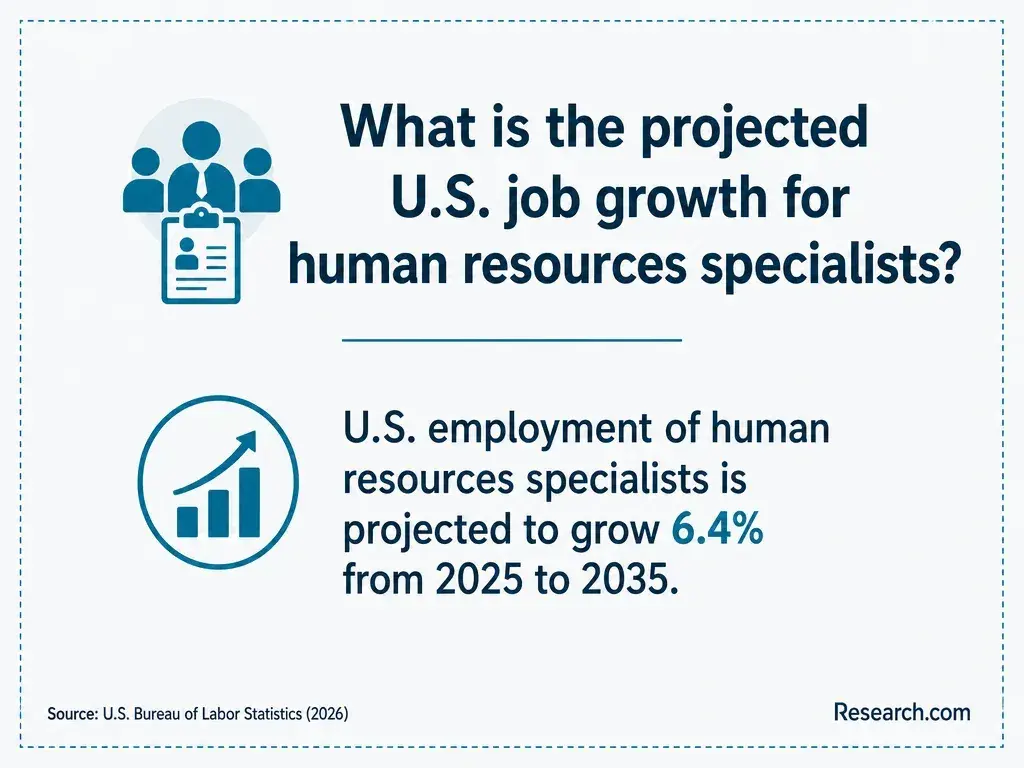
A general psychology BA can support applications to nonclinical roles such as research support, human-services program assistance, community outreach, intake coordination, and some human-resources positions. Employers may also require relevant experience, software skills, background checks, or additional credentials. Your prior short-term jobs can help if they demonstrate responsibilities the target role actually involves, rather than merely adding psychology language to your resume.
Before enrolling, read current postings in your area and note repeated requirements. If you want to support clients, seek supervised experience that teaches documentation, referrals, confidentiality, and professional boundaries. If you want to provide psychotherapy, a general BA is academic preparation, not the qualifying professional degree. Compare the later educational route - including a shorter clinical mental health counseling master's - against your state's licensing requirements rather than assuming a fast program automatically meets them.
What Salary and Licensing Limits Apply to Psychology Graduates?
There is no single salary for "a psychology BA graduate." Pay depends on the occupation, location, employer, duties, and experience. When comparing prospects, use the latest US Bureau of Labor Statistics wage information for a named occupation alongside local job postings; an occupation-wide median is not a predicted starting salary or an outcome for a particular college.
A BA in general psychology does not authorize independent diagnosis, psychotherapy, psychological assessment, or use of a protected professional title. Requirements for counseling and other regulated roles depend on the occupation and state, and can include a qualifying graduate degree, supervised experience, and examinations. If licensure is your objective, verify the applicable board's rules and the program's documented alignment before committing to further study. Even planning completion of accredited clinical counseling coursework is only part of that credential decision, not a substitute for checking all requirements.
Other Things You Should Know About Psychology
Follow the application instructions. An unsolicited resume may not be reviewed; ask admissions if you want to provide relevant work context.
Yes, if the school accepts professional references and that supervisor can give specific examples of your work. A detailed letter is more useful than one based mainly on job length.
No. Address a gap only when it helps clarify your preparation or the application asks about it. Focus the statement on your academic goals and readiness.
Generally, yes. Confirm the program's eligibility rules and whether its class schedule and any required experiences fit your current work commitments.
- College Credit for Military Experience | Transfer Credit Ohio https://transfercredit.ohio.gov/students/types-of-student/military/military
- Accreditation in the U.S. | ed.gov http://www.ed.gov/laws-and-policy/higher-education-laws-and-policy/college-accreditation/accreditation-in-the-us
- Types of Financial Aid: Grants, Work-Study, and Loans | studentaid.gov https://studentaid.gov/understand-aid/types
- Cost of Attendance (Budget) | 2025-2026 Federal Student Aid Handbook https://fsapartners.ed.gov/knowledge-center/fsa-handbook/2025-2026/vol3/ch2-cost-attendance-budget
- Explain a gap in employment | Get careers information and advice | National Careers Service https://nationalcareers.service.gov.uk/careers-advice/explain-gaps-in-work-history
- Cost of Attendance - Financial Aid and Scholarships | The University of Utah https://financialaid.utah.edu/tuition-and-fees/cost-of-attendance.php
- Choosing a Program | apa.org https://digital.apa.org/accred-mirr/accreditation.apa.org/choosing-a-program.html
- Bachelor of Arts in Psychology - Online Program | CSULB CPaCE https://www.cpace.csulb.edu/courses/bachelor-of-arts-in-psychology
- Counseling Psychology Admissions | Virginia Commonwealth University https://psychology.vcu.edu/graduate/phd-in-counseling-psychology/counseling-psychology-admissions/
- Minimum Standards and Expectations for Online Instruction | buffalo.edu https://socialwork.buffalo.edu/information-faculty-staff/part-time-faculty-resources/minimum-standards-and-expectations-for-online-instruction.html