2027 Online BA in Psychology - Mental Health for Work in Public Libraries with Social Service Partnerships: Compare Degree Fit and Hiring Requirements
Audited and Verified:
Our Editorial and Data Verification Process
Research.com uses government datasets, official education statistics and primary institutional information to support its career and degree guides. Our review process checks factual accuracy, occupational definitions, source dates and the requirements associated with the credentials discussed.
How This Article Was Fact-Checked
Our editorial team verifies salary estimates, employment projections, education requirements and program information against original data providers and official organizations. Salary figures are checked against the relevant occupational definitions and reporting periods. Information about licensure, accreditation and required in-person training is reviewed separately.
Fact-checked and verified on:

Co-Founder and Chief Data Scientist
Public libraries increasingly work with social-service partners to connect patrons with housing, benefits, and behavioral-health support. If you already work in a library or community organization, an online psychology BA may strengthen your knowledge, but it may not be the credential your target job requires.
This guide compares library and partner-agency roles, identifies where clinical licensing changes the pathway, and shows how to evaluate coursework, field experience, cost, and local job postings before committing to a degree.
Key Things You Should Know
- An online psychology BA can support nonclinical outreach, referral, and program work; it does not authorize therapy, diagnosis, or independent crisis treatment.
- Hiring requirements follow the position and employer. Library service roles, social-service coordination, licensed social work, and librarian positions can require different education and credentials.
- A bachelor's degree commonly requires about 120 semester credits, but transfer evaluations and approved field opportunities, not the online label alone, determine the time and cost of a useful pathway.
What is an online psychology bachelor's degree for mental health library work?
It is an undergraduate psychology degree completed primarily online and applied to work where a public library connects patrons with community services.
Students might study development, social behavior, mental health, research methods, and ethics. "Mental health" may describe an official concentration, a set of electives, or simply the student's career interest; check which one appears on the transcript.
Libraries generally provide access, information, space, and referrals, not mental health treatment. A psychology graduate might help explain available services, support accessible outreach, or evaluate a partnership's referral process within an approved nonclinical role.
An addictions focus can be relevant where partners offer recovery resources, but accredited college pathways in addiction psychology still need to be evaluated against the specific job and any state credential rules.
What jobs can psychology graduates pursue in public libraries and social services?
Start with your existing experience. Library staff may already know patron privacy practices and local referral resources; nonprofit workers may bring outreach or case-coordination skills. The degree is most useful when it fills a documented gap rather than replacing that experience.
The distinctions below help separate jobs located at a library from jobs employed by a partner agency. Titles and minimum qualifications vary locally.
| Role or arrangement | Typical nonclinical contribution | Qualification to check |
| Library assistant or outreach staff | Provide information, support programs, and connect patrons with approved resources | Library experience, civil-service rules, and employer education requirements |
| Partner-agency resource navigator | Help patrons understand service options and make referrals within agency policy | Human-services experience, documentation skills, and agency supervision |
| Social and human service assistant | Support service coordination and follow-up under appropriate supervision | Employer requirements, which may differ by service and setting |
| Licensed social worker or counselor assigned to a library | Provide services permitted by the license and employing agency | Qualifying professional education and state licensure |
| Professional librarian | Lead library services, collections, or programs | Often a library and information science master's degree for professional posts |
A library-hosted social worker is not necessarily a library employee. Read the posting for the employer of record, supervisor, funding arrangement, and duties. If your interest is specifically in substance-use services, addiction recovery career paths can help distinguish outreach and recovery support from counseling.
What education and licensing requirements apply to library-based mental health work?
The activity, not the building, determines the professional boundary. A psychology BA may prepare someone to communicate respectfully, share approved resources, and support referrals. It does not qualify the graduate to diagnose a patron, provide psychotherapy, independently assess suicide risk, or use a protected clinical title.
For a regulated position, verify the state board's education, supervised-practice, examination, and title rules. A library's social worker may need a social-work degree and license; a counselor generally needs a qualifying graduate pathway and license.
Comparing evaluating shorter mental health counseling graduate pathways is relevant only if counseling, not referral or outreach, is the intended job. A shorter advertised timeline does not waive state requirements.
Nonclinical staff still need clear protocols. Ask who responds to immediate safety concerns, what information may be recorded or shared, how consent works across agencies, and which safeguarding or mandated-reporting rules apply. Do not assume a library card record and a partner agency's client record can be used interchangeably.
Either format can teach psychology. For this career goal, the meaningful difference is access to supervised community experience, not whether lectures happen online. An online program may let a working library or nonprofit employee keep their job and propose a local placement. An on-campus program may offer easier access to nearby agency relationships and in-person mentoring.
Check whether classes are asynchronous, whether research meetings or exams occur at fixed times, and whether an internship requires daytime hours or campus visits. If you need to finish quickly, psychology degree completion through accelerated study is worth comparing, but faster courses do not necessarily make partner-approved fieldwork easier to schedule. Ask who finds the site, who approves it, and who supervises the work.
Choose courses by the tasks you hope to perform. Developmental psychology can improve age-appropriate communication; social and cultural psychology can inform inclusive outreach.
Abnormal psychology provides background about mental health without conferring clinical competence. Statistics and research methods help staff assess whether a program is reaching its intended audience without mistaking a referral count for evidence of improved health.
Useful complements may include community psychology, disability studies, public health, trauma-informed communication, or substance-use studies, where available. Addiction counseling degree curriculum choices become more relevant if the target is a substance-use counseling credential; a psychology elective alone is not a substitute for that credential's requirements.
For an applied assignment, a student could propose an accessible directory of partner services or a plan to evaluate program attendance using authorized, appropriately limited data. Obtain faculty and site approval before collecting patron information; do not assume an academic project permits access to confidential records.
Schools typically distinguish first-year applicants from transfer or degree-completion applicants. Expect the institution to specify prior-school transcripts, academic standing, application deadlines, and any separate rules for entry to the psychology major. A background in library work, social services, or another major does not automatically prevent admission.
Returning students should request a written degree audit showing which accepted credits satisfy general education, psychology, statistics, research methods, and residency requirements. Accepted credit is not the same as a completed major requirement.
If graduate study is a later possibility, check its prerequisites separately; intensive online graduate psychology study may have different admissions and scheduling demands from the BA. Do not choose undergraduate electives on the assumption that every master's program asks for the same preparation.
A bachelor's degree commonly totals about 120 semester credits. Starting from the beginning often means several years of study; a transfer student's remaining time depends on the approved audit, course sequencing, enrollment pace, and any residency requirement. Online delivery does not reduce the credits automatically.
Calculate cost from the remaining required credits, not an advertised per-credit rate alone. Include mandatory fees, books or software, technology needs, and any travel or lost work hours associated with field experience. Compare the school's actual aid offer and any verified employer tuition benefit before borrowing.
Comparing the financial value of addiction counseling bachelor's study may be useful if that is a genuine alternative career goal; compare total completion costs and credential fit, not tuition headlines.
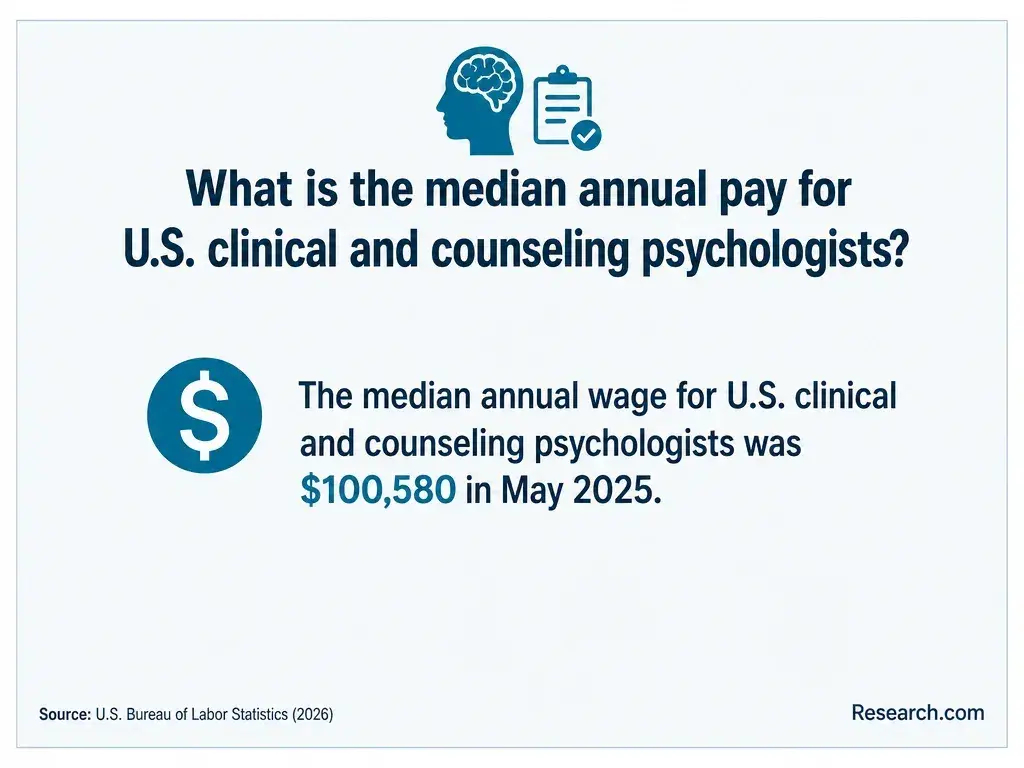
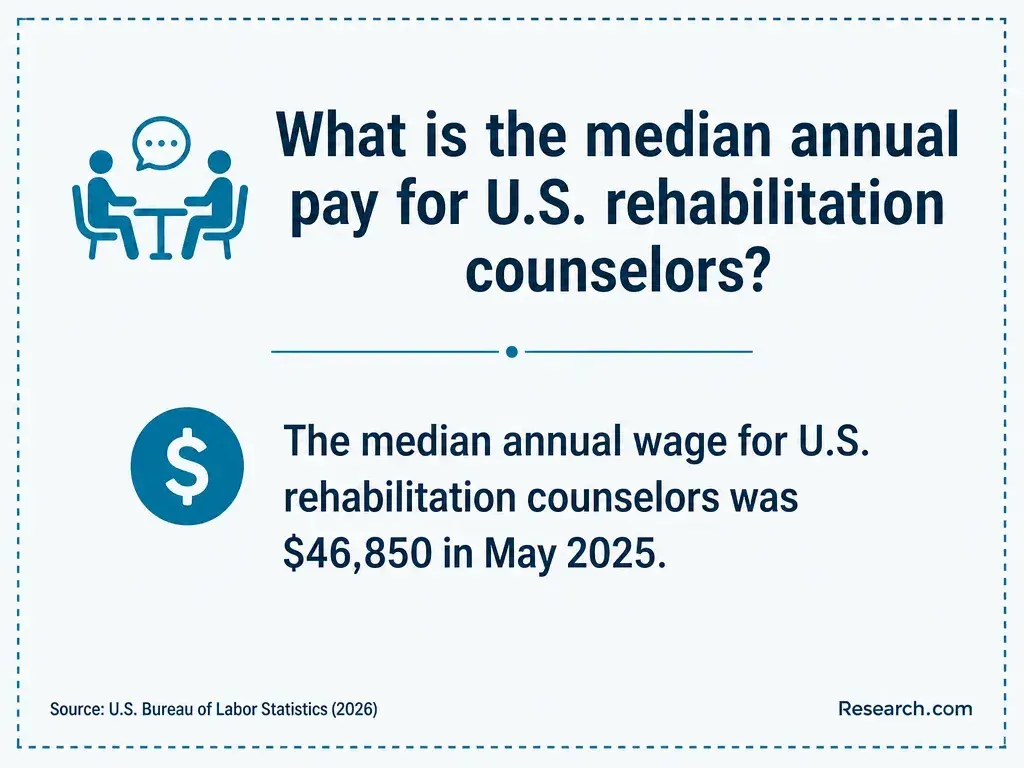
There is no reliable single "library mental health psychology BA" salary. A library assistant, social and human service assistant, professional librarian, and licensed clinician belong to different labor markets.
The U.S. Bureau of Labor Statistics Occupational Outlook Handbook provides occupation-level pay and employment projections, but those figures are not earnings promises for graduates or estimates for one library partnership.
For a useful comparison, match local postings to the closest BLS occupation, then check the posting's pay scale, hours, benefits, and required credential. Public-sector salary grades and grant-funded partner positions can differ substantially.
If the jobs you want require graduate education, compare the added cost with the actual qualifying pathway; low-cost master's degrees in psychology are not necessarily substitutes for licensed social-work or counseling programs.
For nonclinical library-facing work, training in mental health first aid, de-escalation, suicide-response referral procedures, accessibility, privacy, and local resource navigation may be more immediately useful than another degree. Confirm that training matches employer policy: a certificate in responding to a crisis does not authorize clinical assessment or treatment.
Peer-support and substance-use credentials can be valuable for particular partner-agency jobs, but state eligibility, lived-experience criteria, supervision, and permitted duties vary. If the desired position is licensed counseling, compare qualifying degrees and total expense rather than stacking unrelated certificates. Tuition-conscious mental health counseling degree choices should be checked against the intended state's licensing rules before enrollment.
How can students choose an accredited online psychology degree program?
Verify the institution's recognized institutional accreditation, then examine the actual BA: its official degree name, required courses, online schedule, transfer policy, advising, and approved field-experience options.
Do not look for American Psychological Association accreditation of a general psychology BA; APA accreditation applies to specified professional psychology training programs, not broad undergraduate majors.
Use recent local postings as the final test. Identify whether your preferred job requires a bachelor's degree, a library science master's, a social-work qualification, a license, or primarily relevant experience. Then ask each BA program whether it can support a supervised nonclinical project with a library or partner agency and whether that experience counts toward graduation.
If counseling is the longer-term goal, online mental health counseling master's timelines are a separate planning question; confirm licensure eligibility and placement logistics with the graduate program and state board.
Choose the BA when its remaining cost and coursework address a real hiring or advancement gap. If postings instead prioritize library experience, resource-navigation training, or a different professional credential, pursue that more direct route first.
Other Things You Should Know About Psychology Programs
Only with the required library and academic permissions. Use fictional scenarios or publicly available information unless you have authorization and a privacy-protective plan for real patron information.
Not automatically. The degree program must approve the site, duties, supervision, and learning objectives before you rely on the experience for credit.
Library leadership and the relevant partner agencies should define responsibilities together, including privacy, staff training, emergency escalation, and how referrals are handed off.
Describe your actual job title and duties instead. A psychology BA is an academic credential, not evidence that you hold a clinical license or provide treatment.
- Social Work vs Psychology Degree: Choose Your Path | Missouri Baptist University (Mobap) https://www.mobap.edu/news/social-work-vs-psychology-degree-which-path-fits-your-goals/
- Behavioral Health Career Descriptions | samhsa.gov https://www.samhsa.gov/about/careers/behavioral-health-workforce/careers-by-state/descriptions
- Library Jobs FAQ - State Library of North Carolina https://library.nc.gov/nc-libraries/current-library-jobs/library-jobs-faq
- Online Bachelor of Arts in Psychology (BA) - apu.apus.edu https://www.apu.apus.edu/online-bachelor-degrees/bachelor-of-arts-in-psychology/
- Library Social Work Fellowship | pitt.edu https://www.socialwork.pitt.edu/admissions/financial-aid/scholarships-fellowships/library-social-work-fellowship
- Online Bachelor's in Psychology | University of Kansas https://online.ku.edu/undergraduate-programs/online-bachelors-psychology
- Counseling and Mental Health, BA | West Virginia University https://www.wvu.edu/academics/programs/counseling-and-mental-health-ba/
- Civil Service FAQs | SIUE https://www.siue.edu/employment/CivilServiceFAQs.shtml