2027 Online BA in Psychology - Mental Health After an AA in Social Sciences: Compare Transfer Credit and Remaining Coursework

Co-Founder and Chief Data Scientist
An AA in Social Sciences may cover much of an online psychology BA's general education, but it may leave most of the psychology major unfinished. For transfer students interested in mental health, that difference determines the courses, time, and tuition still ahead.
This guide shows how to compare degree audits, identify likely coursework gaps, and evaluate whether a mental-health focus supports your career goal - without mistaking academic study for clinical training. Use it to ask each school for an individualized completion plan before enrolling.
Key Things You Should Know
- Accepted credit is not the same as completed requirements: in an illustrative 120-credit BA, 60 applicable AA credits leave 60 credits, but unmet major or residency rules can change the plan.
- Expect to check psychology prerequisites, statistics, research methods, upper-division courses, and any required mental-health electives against a written degree audit.
- A psychology BA can support nonclinical mental-health work or graduate-school preparation; it does not, by itself, qualify you to diagnose or provide psychotherapy.
How Does an Online BA in Psychology Build on an AA in Social Sciences?
An AA in Social Sciences commonly provides a foundation in writing, social systems, and general education. Depending on the transcript, it may also include introductory psychology, sociology, human development, or statistics. A psychology BA builds on that foundation through psychological science and research methods before allowing deeper study of topics such as psychopathology, health, or community mental-health services.
Check the exact credential name at each school. "Mental health" may be a formal concentration with prescribed courses, an informal group of electives, or simply a description of the program's interests. Those distinctions affect what appears on your transcript and which classes you must finish. If your longer-term interest is forensic work, compare the BA's actual preparation with the admission requirements of a later degree; a one-year forensic psychology master's pathway is a separate decision, not a reason to assume the BA must have a forensic label.
How Many Transfer Credits Apply Toward an Online Psychology Bachelor's Degree?
The useful transfer number is credits that satisfy the chosen BA, not just credits the university accepts. Schools may award elective credit for an AA course without treating it as equivalent to statistics, a psychology prerequisite, or an upper-division major course. An articulation agreement or associate-degree transfer policy can improve predictability, but the receiving institution has final authority over the degree audit.
This illustrative comparison shows why two offers of the same total credit can produce different remaining coursework. The figures are an example, not a prediction for any program.
| Illustrative 120-credit BA audit | School A | School B |
| AA credits accepted | 60 | 60 |
| How accepted courses apply | General education and several major prerequisites | General education and free electives |
| Important remaining work | Primarily upper-division psychology and BA requirements | Psychology prerequisites plus upper-division work |
Both schools show 60 accepted credits, yet School B may require a longer sequence if its prerequisites must precede advanced courses. Ask for a written, course-by-course audit showing general education, major, electives, minimum upper-division work, and credits that must be earned at the university. Then compare that audit - not the advertised transfer maximum - when comparing affordable psychology colleges online.
What Coursework Remains After Transferring an AA in Social Sciences?
After an AA, the biggest academic gap is often the psychology major rather than total credits. Requirements vary, but the audit may show introductory psychology or statistics as prerequisites, followed by research methods and advanced psychology courses. A mental-health focus may add specified electives in abnormal psychology, development, health, or related subjects; none of those courses constitutes clinical practice training.
This course map helps distinguish a subject you have studied from a requirement you have officially satisfied.
| Course area | What to check on the AA transcript | Possible remaining BA requirement |
| Statistics and methods | Course content, department, grade, and equivalency | Psychology statistics, research methods, or an approved substitute |
| Psychology breadth | Introductory and developmental or social-science courses | Specified psychology core and upper-division coursework |
| Mental-health focus | Relevant electives already taken | Required concentration courses, if a formal concentration exists |
| Degree-wide rules | General education and language or writing credits | Unmet BA, upper-division, capstone, or residency requirements |
Obtain syllabi for courses that might substitute for psychology requirements, especially statistics. Ask the psychology department who decides equivalency and how to appeal a denial. If graduate study is a possible next step, prioritize solid statistics and research preparation; online psychology master's completion planning should follow - not replace - checking each prospective graduate program's prerequisites.
Accreditation is assessed first at the institutional level. Confirm the university's current accreditation and that it covers the institution awarding the online degree. Also verify that the online program and any concentration are available to students in your state. An accredited university does not thereby guarantee that a particular transfer course will count toward its psychology major.
Do not look for APA accreditation as a seal required for a general psychology BA: APA accreditation applies to specified professional psychology training programs, not ordinary undergraduate majors. A program may advertise other recognition, but check what that recognition actually covers. The same distinction matters when comparing accredited forensic psychology degree programs; neither a specialty label nor institutional accreditation alone establishes clinical licensure eligibility.
Online transfer admission typically begins with an application and official transcripts from every college attended. A school may set minimum grades or GPA rules, while its psychology major or mental-health concentration may have additional entry or progression requirements. Being admitted to the university, being admitted to the major, and having courses approved as major equivalents are separate decisions.
Before paying an enrollment deposit, send admissions and transfer-credit staff your AA transcript and catalog information, and ask the psychology department to review disputed prerequisites. Confirm whether courses in progress can be evaluated provisionally and when the final audit becomes available. If you are comparing a general psychology BA with a specialty-specific bachelor's program, review admission rules alongside undergraduate forensic psychology programs by completion time; a faster advertised route is useful only if your AA courses fit its requirements.
A student whose AA satisfies roughly half of an illustrative 120-credit degree might plan around two academic years of full-time study. That is a planning example, not a completion promise. Statistics-to-methods sequencing, once-a-year advanced courses, transfer decisions, part-time enrollment, and university residency rules can extend the schedule even when many credits are accepted.
Request a term-by-term plan that names each remaining course and when it is offered. Check whether "online" classes are asynchronous, require live meetings or group work, or include an approved placement or campus visit. These details matter if employment or caregiving limits your available hours. If the eventual goal is counseling, compare the BA timeline separately from fast-track mental health counseling master's formats; graduate fieldwork and state licensing steps are not part of a shortened BA schedule.
Calculate cost from the remaining billable coursework, not the AA credits accepted. Request the current tuition rate and mandatory fees for your enrollment status, then price every course on the approved completion plan. Account for books, technology or proctoring charges, possible placement travel, and the cost of repeating a class that does not receive an approved equivalency.
Compare schools using the same assumptions: remaining credits, required terms, fees, and any employer assistance or financial aid for which you actually qualify. An appeal that converts an elective into a major requirement may save time even if it adds no accepted credits. If licensed counseling is the goal, include the subsequent qualifying graduate education in the decision; comparing mental health counseling program costs can help frame that separate expense. Ask each school's financial-aid office how your enrollment pace and transfer record affect aid eligibility.
A psychology BA can be relevant to nonclinical positions in community services, behavioral-health administration, research support, and human services. Examples include intake coordination, service navigation, program support, and research-assistant work. Actual entry requirements depend on the employer; some positions require experience, additional credentials, or a different degree, and duties involving clients must stay within the role's supervision and referral boundaries.
Use the remaining BA coursework to build evidence for a target job: research methods and careful data handling for research support, or supervised service experience and accurate documentation for coordination roles. If addiction recovery work is the goal, understanding career progression in addiction recovery is especially important because peer-support, recovery-support, and counseling roles can have different state credential requirements. An AA holder already eligible for a desired entry-level support job may be better served by relevant employment and targeted training than by a BA pursued solely for that job.
A psychology BA, including one with a mental-health concentration, does not by itself authorize independent psychotherapy, diagnosis, or practice as a licensed psychologist. Studying disorders and service systems is academic preparation, not completion of professional clinical training. Requirements for counselors, clinical social workers, psychologists, and other regulated professionals differ by state and occupation and generally involve a qualifying professional degree plus further supervised and examination requirements.
Work backward from the exact license and state where you intend to practice. Ask the licensing board which degree and program features satisfy its rules before choosing undergraduate electives. If counseling is the target, compare qualifying graduate programs, placements, and clinical counseling master's fees and graduation timelines. A psychology BA may prepare you to apply, but it does not replace that training or guarantee admission.
How Do Psychology BA Graduates Compare Salary and Job Outlook?
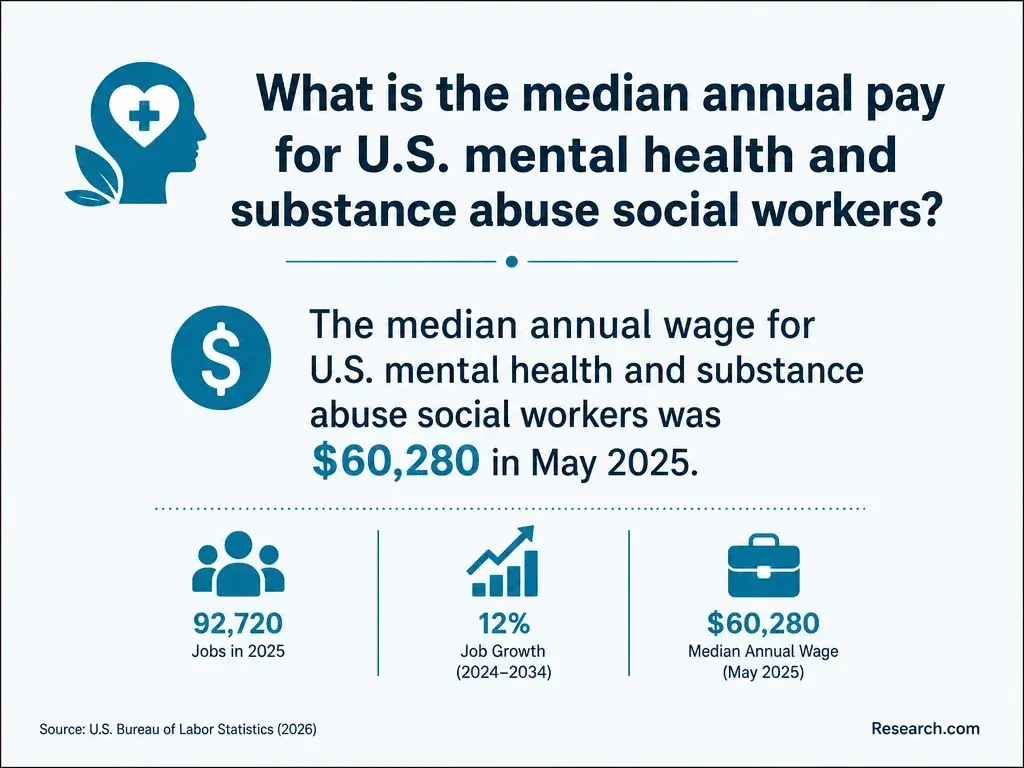
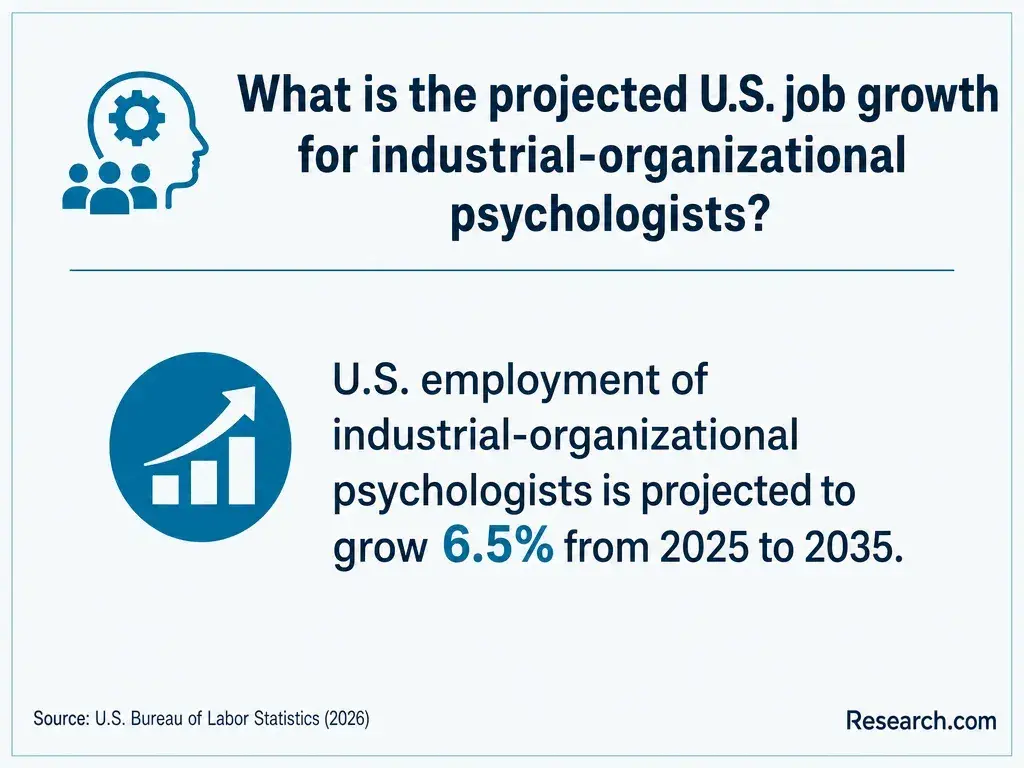
There is no single reliable "psychology BA salary": employers pay for specific occupations, locations, experience, and responsibilities, not the major alone. For a useful comparison, identify two or three jobs you would actually seek and check the latest U.S. Bureau of Labor Statistics Occupational Outlook Handbook wage and employment projections for the closest matching occupations. Its occupation-wide medians and projections are not starting salaries or placement outcomes for graduates of a particular online BA.
Compare those jobs' posted qualifications with your current AA and work history. If the BA opens positions you cannot currently pursue, weigh that potential benefit against the school-specific cost and completion time. If the desired advancement calls for graduate study instead, assess its separate expense using tuition-focused psychology master's program choices - and first confirm whether a psychology master's, rather than a qualifying clinical degree or work experience, is what the role requires.
Other Things You Should Know About Psychology
BA language rules vary by university. Ask whether your AA coursework meets the chosen school's language or cultural-studies requirement; do not assume the associate degree waives it.
Often, but policies differ by school and course. Ask whether the university limits the age of statistics or other prerequisite coursework and whether a syllabus can support an equivalency review.
Possibly, with advance approval. Get written confirmation that the exact course will satisfy the BA requirement and that taking it elsewhere will not conflict with residency or financial-aid rules.
Only if the university formally awards and records one under its policies. Ask how the concentration appears on the transcript or diploma before relying on the label.
- Cost of Attendance (Budget) | 2025-2026 Federal Student Aid Handbook https://fsapartners.ed.gov/knowledge-center/fsa-handbook/2025-2026/vol3/ch2-cost-attendance-budget
- NYS Mental Health Practitioners: FAQ Education Requirements | nysed.gov https://www.op.nysed.gov/professions/marriage-and-family-therapists/faqs-education-requirements
- .16 Graduation Requirements. | Library of Maryland Regulations https://regs.maryland.gov/us/md/exec/comar/13B.02.02.16
- A.A. Degree General Education Requirements | Seminole State College https://www.seminolestate.edu/become-a-student/what/aa-gened
- Academic Requirements • Psychology | SUNY Purchase https://www.purchase.edu/academics/psychology/requirements/
- Course Delivery Information | MSU Denver https://www.msudenver.edu/social-work/about/course-delivery-information/
- PSYCH-BA Program | York College Catalog - CUNY https://york-undergraduate.catalog.cuny.edu/programs/PSYCH-BA/requirements-pR2fi
- Community College to University Pathway | Mississippi's Institutions of Higher Learning https://www.mississippi.edu/student-parent-resources/community-college-university-pathway
- Courses | Counseling & Clinical Psychology | Columbia University https://www.tc.columbia.edu/counseling-and-clinical-psychology/courses/
- Program: Psychology (BA) | american.edu https://catalog.american.edu/preview_program.php