2027 Online BA in Psychology - General Psychology vs. a BA in Psychology with a Communication Minor: Compare Curriculum, Cost, and Career Fit
Audited and Verified:
Our Editorial and Data Verification Process
Research.com uses government datasets, official education statistics and primary institutional information to support its career and degree guides. Our review process checks factual accuracy, occupational definitions, source dates and the requirements associated with the credentials discussed.
How This Article Was Fact-Checked
Our editorial team verifies salary estimates, employment projections, education requirements and program information against original data providers and official organizations. Salary figures are checked against the relevant occupational definitions and reporting periods. Information about licensure, accreditation and required in-person training is reviewed separately.
Fact-checked and verified on:

Co-Founder and Chief Data Scientist
A communication minor can make an online psychology BA more relevant to outreach, recruiting, or public-facing work—but it may also use electives you need for research preparation and extend your time to graduation. If you are choosing between a general psychology path and one with a communication minor, the important comparison is not the minor's name alone. It is what each degree audit lets you study, what it costs to finish, and what evidence of your skills you can show employers or graduate programs. This guide helps you make that comparison before committing.
Key Things You Should Know
- Choose the communication minor when its required courses support a specific target role and fit within your remaining credits; otherwise, general psychology offers more room for targeted electives.
- At a school requiring 120 semester credits, eight semesters of 15 credits is a planning example—not a promised completion time. Minor prerequisites and course availability can change that schedule.
- Neither path qualifies you to practice psychology or provide psychotherapy. Compare institution-level accreditation, actual coursework, supervised opportunities, and the requirements of your intended job or next degree.
What Is the Difference Between a General Psychology BA and a Communication Minor?
Both options lead to a BA in psychology if psychology remains the major. "General psychology" usually describes a broad selection of psychology courses rather than a separate professional credential. A communication minor is a formally recorded secondary field with its own requirements; taking a few communication electives does not necessarily earn the minor.
The comparison below shows the decision the minor creates. Exact requirements depend on the institution's catalog and your degree audit.
| Decision factor | General psychology BA | Psychology BA with communication minor |
| Elective space | Potentially more room for psychology, statistics, or another field | Some electives reserved for required communication courses |
| Likely emphasis | Breadth or a student-designed academic focus | Structured study of messages, audiences, and communication practices |
| Best fit | Students exploring roles or protecting room for graduate prerequisites | Students targeting outreach, recruiting, training, or communications work |
| Main risk | Relevant skills may be less visible without projects or experience | The minor may displace more useful courses or add credits |
Compare actual catalogs rather than assuming all online programs organize the major alike. Psychology program admissions and curriculum comparisons can help you identify options, but the school's current catalog and written degree audit control your requirements.
Is an Online BA in Psychology Accredited and Career-Ready?
An online BA can be offered by an institution with recognized institutional accreditation, but online delivery alone proves neither accreditation nor job readiness. Check the institution's status with its accreditor and confirm that the online psychology degree is covered. Do not look for APA accreditation of a general psychology BA: APA's professional accreditation has a different scope.
Career readiness also depends on what you can do. Ask whether online students can take statistics and research methods, receive feedback on writing, join faculty research, and complete an approved nonclinical internship or project. Check whether courses are asynchronous, whether group meetings are scheduled, and whether any placement requires local travel. A program advertising a specialty, including those discussed in bachelor's study in addiction psychology online, still needs the same checks; a subject focus is not a clinical credential.
Which Psychology Degree Path Offers Better Career Opportunities?
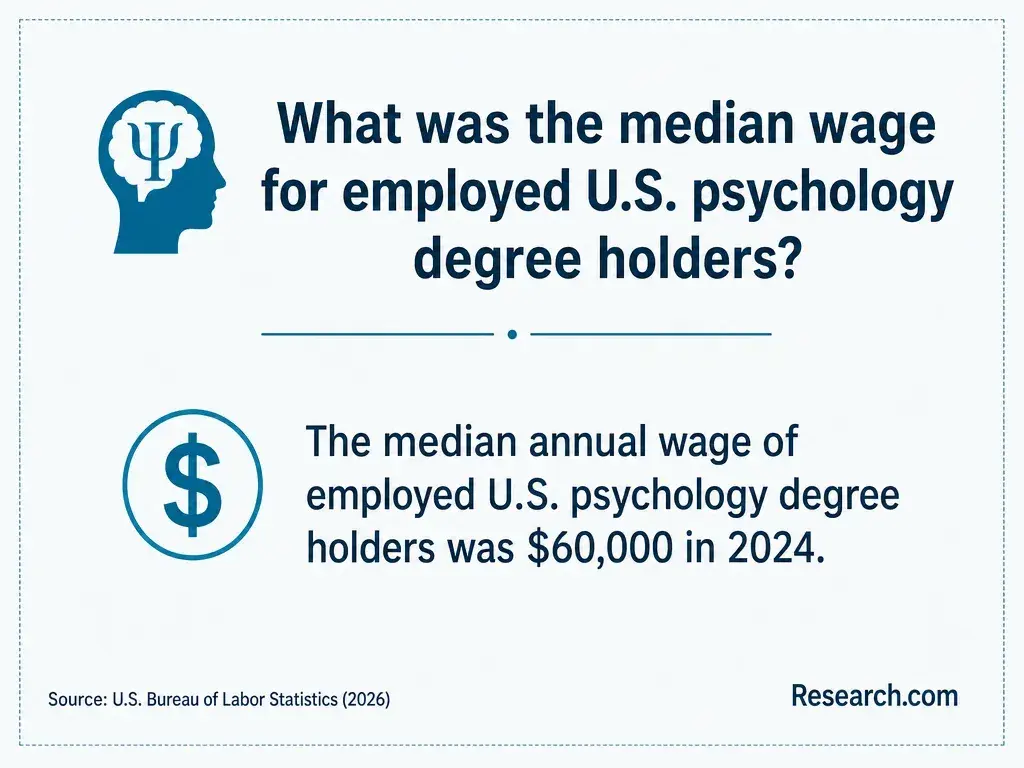
Neither path is categorically better. The communication minor has the stronger fit when job descriptions call for audience research, interviewing, accessible writing, presentations, or outreach. General psychology may be stronger when your target calls for deeper methods training, additional psychology electives, a language, or prerequisites for graduate study.
For example, a student seeking community outreach could pair social psychology with a communication campaign project. A student considering research assistant work might instead use those credits for statistics, research design, and experience handling data ethically. Either student needs work samples or relevant experience; the transcript alone does not establish competence. If your goal is specialized graduate-level forensic work, assess that separate training and hiring market rather than assuming an undergraduate minor is decisive; master's-level forensic psychology employment pathways address a different qualification decision.
A psychology BA commonly includes introductory psychology, statistics, research methods, and courses across areas such as development, social behavior, cognition, and biological or behavioral foundations. A communication minor may add courses in communication theory, interpersonal or organizational communication, media, public speaking, or writing. None of these is a universal course list.
The crucial question is which requirements overlap? A school may permit a course to count toward both the major and minor while still requiring a minimum number of distinct credits; another may restrict double counting. Request a side-by-side degree audit showing prerequisites, course rotation, and remaining electives. If your target is substance-use counseling, do not substitute a communication minor—or coursework about addiction—for a required credential pathway. Compare the applicable state rules and substance use counseling program pathways instead.
There is no dependable rule that online study costs less. Compare the cost to complete your remaining requirements, not advertised tuition alone. Online charges may include technology or distance learning fees; campus attendance may add commuting or housing costs. Either format can become more expensive if the minor adds credits, delays a required course, or limits your ability to work.
Ask each school for a term-by-term estimate using its current tuition and mandatory fees, your expected enrollment level, accepted transfer credits, and the courses that actually satisfy requirements. Include books, placement travel if applicable, and the financial effect of an extra term. Federal aid eligibility and employer reimbursement depend on individual and institutional rules. If you expect graduate study, budget for it separately: accelerated forensic psychology master's costs and outcomes illustrate why a shorter advertised timeline is not the same as a lower total cost.
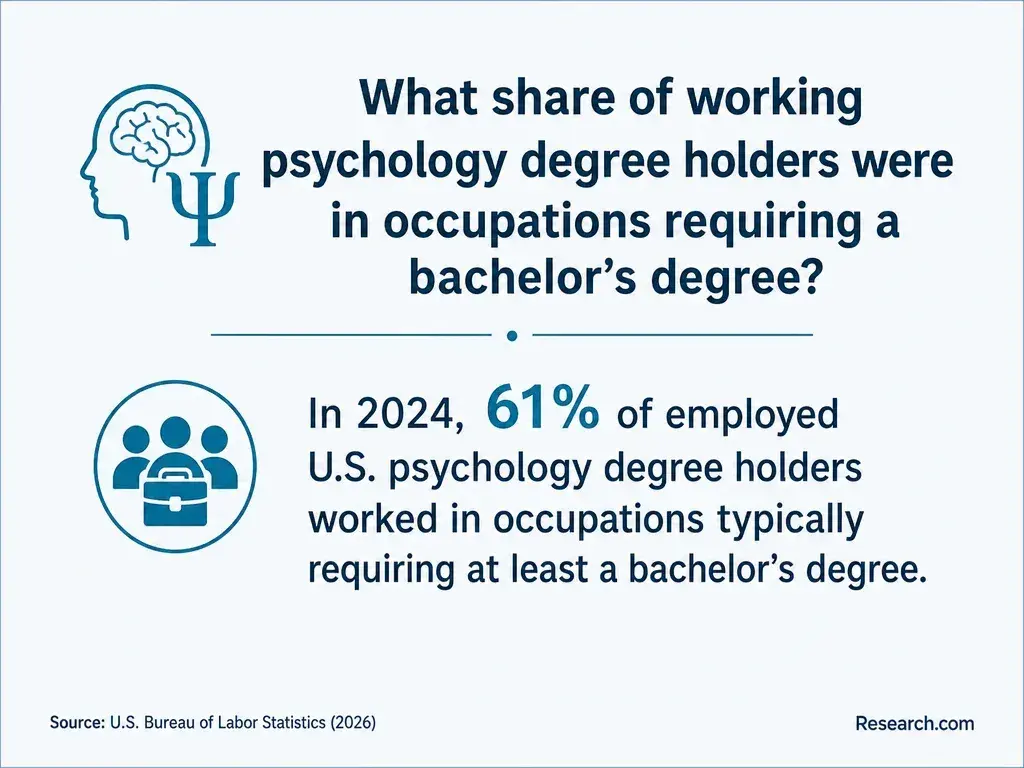
First-year applicants typically submit prior school records; transfer applicants also submit college transcripts. Schools set their own GPA, general education, transfer, and major-entry policies. Admission to the university does not mean every previous psychology, statistics, or communication course will satisfy a degree requirement.
If you have prior credits, obtain a written evaluation showing where each course applies and ask who approves substitutions. Confirm whether you must declare the minor separately and whether entry is limited by prerequisites or course capacity. If a later goal is counseling, undergraduate admission is only the first step: accredited clinical mental health counseling completion pathways involve separate graduate admissions and professional-training requirements.
Completion time depends on remaining credits, course sequencing, transfer evaluations, and the pace you can sustain. At a 120-semester-credit school, eight semesters at 15 credits each would complete 120 credits if every required course were available and passed on schedule. That arithmetic is not an estimate for a particular student.
A minor need not add time if it fits available electives. It can add a term if a prerequisite is offered infrequently or if the school requires credits beyond those already planned. Ask for a proposed schedule that includes major and minor courses, not just a credit total; verify live-session and placement obligations before deciding how many courses to take while working. If graduate study is part of your plan, account for that as a separate timeline. Time-to-degree planning for forensic psychology graduate students concerns a later degree, not a shortcut through the BA.
Potential nonclinical targets include outreach assistant, recruiting coordinator, training assistant, program assistant, and human-services support roles. Responsibilities might involve writing accessible materials, scheduling services, gathering feedback, documenting interactions, or explaining referral options. Job titles vary, and some employers prioritize relevant experience, software skills, or a different degree over the minor.
Build evidence matched to the work: an audience-appropriate writing sample, a supervised outreach project, or a clearly described research contribution. Protect confidential information in any portfolio. For recovery-service roles, compare actual duties and local credential rules; understanding career progression in addiction recovery is more useful than assuming a psychology BA permits counseling or treatment.
There is no single salary or growth rate for psychology BA graduates: employers hire into occupations, not a uniform "psychology graduate" job. For one relevant occupation, the U.S. Bureau of Labor Statistics reports a $45,120 median annual wage for social and human service assistants in May 2024 and projects 6% employment growth from 2024 to 2034. These are occupation-wide figures, not starting pay or outcomes attributable to a psychology major or communication minor.
Use the occupation's duties and local job postings to judge fit before using its wage as a planning reference. Communications and recruiting roles have different markets and experience requirements. If comparing the BA with a future counseling degree, consider the additional education and credential costs alongside occupational wages; evaluating shorter mental health counseling graduate pathways addresses that separate decision, not a salary premium guaranteed by graduate study.
Does a Psychology BA Qualify You for Licensure or Certification?
No psychology BA, with or without a communication minor, independently qualifies you to practice as a licensed psychologist or psychotherapist. Licensed clinical roles require the education, supervised experience, examinations, and other conditions set by the relevant state and profession. Some nonclinical jobs or certifications may accept a bachelor's degree, but their rules and permitted duties differ.
Before choosing coursework for a regulated career, identify the exact job title and state, then check that regulator's requirements. A general psychology BA may provide useful foundations while leaving substantial professional training ahead. For someone specifically aiming to become a licensed counselor, planning an accelerated clinical counseling master's is more relevant than treating a communication minor as licensure preparation.
Other Things You Should Know About Psychology
Often, but declaration deadlines and remaining course availability vary. Ask an advisor for a revised degree audit before adding it.
Only if your school formally awards and records it. Confirm the catalog policy; individual communication electives may appear without a recorded minor.
Possibly, if it teaches the specific skills you need at a lower cost or with fewer credits. Compare its course content, assessment, and employer relevance rather than the credential label.
It can support a coherent interest in outreach or science communication, but it does not replace a target program's prerequisites, research preparation, or other admissions criteria.
- Tuition & Expenses | Student Financial Services https://financialaid.wsu.edu/tuition-and-expenses/
- Discover Psychology Career Paths That Lead to Professional Success | Mount saint vincent https://online.mountsaintvincent.edu/degrees/undergraduate/bachelor-psychology/careers-for-professional-success/
- What can you do with a psychology degree? Explore career paths | Psychology | Capella University Blog https://www.capella.edu/blog/psychology/what-can-you-do-with-a-psychology-degree-explore-career-paths/
- Thinking About Careers in Psychology - Penn State https://psych.la.psu.edu/undergraduate/planning-and-career-resources/thinking-about-careers-in-psychology/
- Practicums, Internships and Projects What's the Difference? | Oregon State University https://health.oregonstate.edu/internships/types-of-experiential-learning
- Online Bachelor's Degree (BA) in Psychology - ECU Flight Path https://onlineprograms.ecu.edu/programs/undergraduate-degrees/ba-psychology/
- Evaluation of Transfer Credit | Cal Poly Academic Catalog https://catalog.calpoly.edu/academic-standards-policies/evaluation-transfer-credit/
- Careers - Public Relations Major | Illinois State University https://illinoisstate.edu/academics/public-relations/careers/
- Online Bachelor's in Psychology | University of Kansas https://online.ku.edu/undergraduate-programs/online-bachelors-psychology
- Psychology careers guide | apa.org https://www.apa.org/education-career/guide/careers