2027 Online BA in Psychology - Addictions for Substance Use Prevention Campaign Evaluation: Which Courses Should You Look For?
Audited and Verified:
Our Editorial and Data Verification Process
Research.com uses government datasets, official education statistics and primary institutional information to support its career and degree guides. Our review process checks factual accuracy, occupational definitions, source dates and the requirements associated with the credentials discussed.
How This Article Was Fact-Checked
Our editorial team verifies salary estimates, employment projections, education requirements and program information against original data providers and official organizations. Salary figures are checked against the relevant occupational definitions and reporting periods. Information about licensure, accreditation and required in-person training is reviewed separately.
Fact-checked and verified on:

Co-Founder and Chief Data Scientist
A course about addiction can explain substance use without teaching you whether a prevention campaign works. If you hope to evaluate outreach for a community organization, school, or public agency, the distinction matters: you will need research methods, measurement, statistics, and an understanding of the people the campaign aims to reach.
This guide identifies the courses to prioritize in an online psychology BA, shows how to assess applied learning opportunities, and explains when a different degree or targeted training may be the more direct choice.
Key Things You Should Know
- Prioritize statistics, research methods, program evaluation, and health communication alongside addiction and social psychology; a concentration name alone does not establish evaluation skills.
- Look for an approved project using feasible measures - such as campaign reach, message recall, or help-seeking intentions - not a promise to demonstrate reduced substance use.
- Confirm course availability, supervision, data permissions, and total degree requirements before enrolling; an online BA prepares students for nonclinical work but does not confer a counseling license.
What Is an Online Bachelor's Degree in Psychology Focused on Addictions?
It is typically a psychology bachelor's degree with an addictions concentration, emphasis, or set of electives. The degree's core introduces psychological science and research; the focus adds academic study of substance use, prevention, recovery, and related social and biological factors. Schools differ in whether the focus is formally recorded on a transcript, so ask what credential the university actually awards.
For campaign evaluation, the strongest fit is not necessarily the program with the most treatment-oriented courses. It is one that lets you combine addiction knowledge with quantitative methods and supervised, nonclinical work. When exploring online college pathways for psychology majors, compare the required courses and available electives rather than relying on the degree label.
Which Courses Prepare Students to Evaluate Substance Use Prevention Campaigns?
Start with statistics and research methods, then add measurement, program evaluation, and prevention-specific content. Evaluating a campaign means defining its intended audience and outcome, choosing credible measures, collecting permissible data, and explaining what the evidence can - and cannot - show. The table distinguishes courses that build those abilities from courses that mainly provide subject knowledge.
| Course to look for | Contribution to campaign evaluation | Catalog detail to check |
| Statistics and research methods | Sampling, comparison groups, uncertainty, confounding, and interpretation | Whether students analyze data and critique study designs |
| Psychological measurement or survey methods | Clear questions and defensible measures of awareness, attitudes, intentions, and behavior | Coverage of reliability, validity, accessibility, and response bias |
| Program evaluation or public health evaluation | Logic models, implementation monitoring, outcome selection, and reporting | Whether an applied evaluation plan is an assessed assignment |
| Social psychology and health communication | Message design, social norms, stigma, and audience differences | Whether students examine evidence for communication strategies |
| Addiction, prevention, and developmental psychology | Substance-use context, risk and protective factors, and age-appropriate interpretation | Whether prevention is covered separately from treatment |
Sequence matters: introductory psychology and statistics usually support methods; methods support evaluation and a capstone. A useful hypothetical capstone could compare campaign exposure and help-seeking intentions across survey respondents. That comparison would not establish that the campaign caused a change or prevented substance use: exposure may be self-selected, intentions are not behavior, and other influences may differ between groups.
If a catalog lacks program evaluation, ask whether a public health course can count toward the degree. Online study options for addiction counseling may offer valuable subject knowledge, but check their methods requirements separately; preparation for counseling and preparation for evaluating campaigns are different goals.
Is an Online Addictions Psychology Degree Accredited and Career-Ready?
Check that the institution holds recognized institutional accreditation and that the accreditation covers the degree-granting institution. Do not look for APA accreditation as a test of a general psychology BA: APA's professional accreditation does not serve as blanket accreditation for undergraduate psychology majors. Institutional accreditation also does not prove that a particular concentration includes evaluation training.
For career readiness, request a degree plan showing when statistics, methods, relevant electives, and a capstone are offered. Ask who supervises applied projects, whether online students can work with a local organization, and what graduates may share in a portfolio. Listings of distance learning bachelor's degrees in addiction psychology can help identify programs to investigate, but confirm each school's current accreditation, curriculum, and delivery requirements directly.
A strong outcome is evidence of work you can explain to an employer: for example, an approved evaluation plan with a logic model, measures, limitations, and a short findings-report template. It is not permission to access client records or a qualification to diagnose or treat substance use disorder.
A psychology BA commonly combines general education, psychology foundations, statistics and research methods, upper-level psychology, electives, and sometimes a capstone or internship. An addictions focus may draw from abnormal, biological, developmental, and social psychology as well as substance-use and prevention courses. Exact requirements - and whether courses are required, optional, or part of a formal concentration - depend on the university.
For this goal, choose electives by the gap they fill. If you already understand community outreach but have little data experience, prioritize statistics, survey design, and evaluation over another broad survey of addiction. If you have analytics experience but are new to behavioral health, prioritize addiction science, health communication, ethics, and culturally responsive prevention. A public health evaluation elective may be more useful than a second clinically oriented course.
Before choosing among shorter undergraduate psychology study pathways, check the course rotation. A faster schedule is a poor trade if it leaves no room for the methods sequence or an applied project.
Online delivery can make lectures and assignments easier to fit around work, but it does not automatically make evaluation training flexible. Group analyses, live faculty meetings, partner-agency meetings, and project deadlines may still occur at fixed times. Campus-based programs may make in-person research teams easier to access; online programs may work equally well for this goal when they offer substantive remote supervision and approved local partnerships.
Ask both types of program how students obtain an evaluation-related project, who approves the site and data, and whether travel or scheduled attendance is required. A comparison with comparing three-year forensic psychology bachelor's routes illustrates why advertised speed and online format should be checked against actual electives: a different specialty may fit a timeline yet offer little prevention-evaluation preparation.
Requirements vary by institution and by whether you apply as a first-year or transfer student. Schools may request prior transcripts and evidence that you meet their general undergraduate admission standards; admission to the university does not necessarily establish admission to every major or concentration. An applicant from another field can bring useful writing, community, health, or analytical experience without assuming it replaces required psychology or statistics coursework.
Transfer applicants should request a written degree audit showing not just which credits are accepted, but which satisfy statistics, methods, major, elective, and residency requirements. Ask when any remaining prerequisites are offered. If you are also evaluating forensic psychology degree admissions, do not assume that specialty's entry rules or transferred-course decisions apply to an addictions-focused BA.
Completion time depends on accepted credits, enrollment pace, prerequisite order, and how often required courses run. The price to compare is the cost of your remaining approved degree plan, not an advertised per-credit rate alone. Include mandatory fees, materials, software, and any travel or unpaid time required for an applied experience. Ask the school for a term-by-term plan and a written estimate based on your evaluated credits.
Financial aid and scholarships can change the out-of-pocket calculation, but eligibility and renewal conditions must be checked individually. Resources on scholarships for undergraduate substance use counseling may suggest funding avenues; confirm that each award applies to your actual psychology program before including it in a budget. If you already hold a bachelor's degree and only need evaluation methods, individual courses or a targeted certificate may cost less time than another BA.
For campaign-focused work, relevant entry points include prevention-program assistant, community outreach coordinator, research assistant, and program-support roles at nonprofits or public agencies. Tasks may include coordinating outreach, maintaining approved records, administering nonclinical surveys, summarizing published evidence, and preparing reports under supervision. Job requirements vary; many evaluation-specific analyst positions expect demonstrated data skills or prior project experience, not simply an addictions concentration.
Build a portfolio around an authorized, nonclinical project: an evaluation question, logic model, proposed measures, analysis plan, and plain-language report. Do not include identifiable participant or client information. If your goal shifts toward leading research or advanced analysis, fast-paced master's study in psychology is one possible route to examine, but compare its methods depth and research opportunities with public health training or supervised work experience before enrolling.
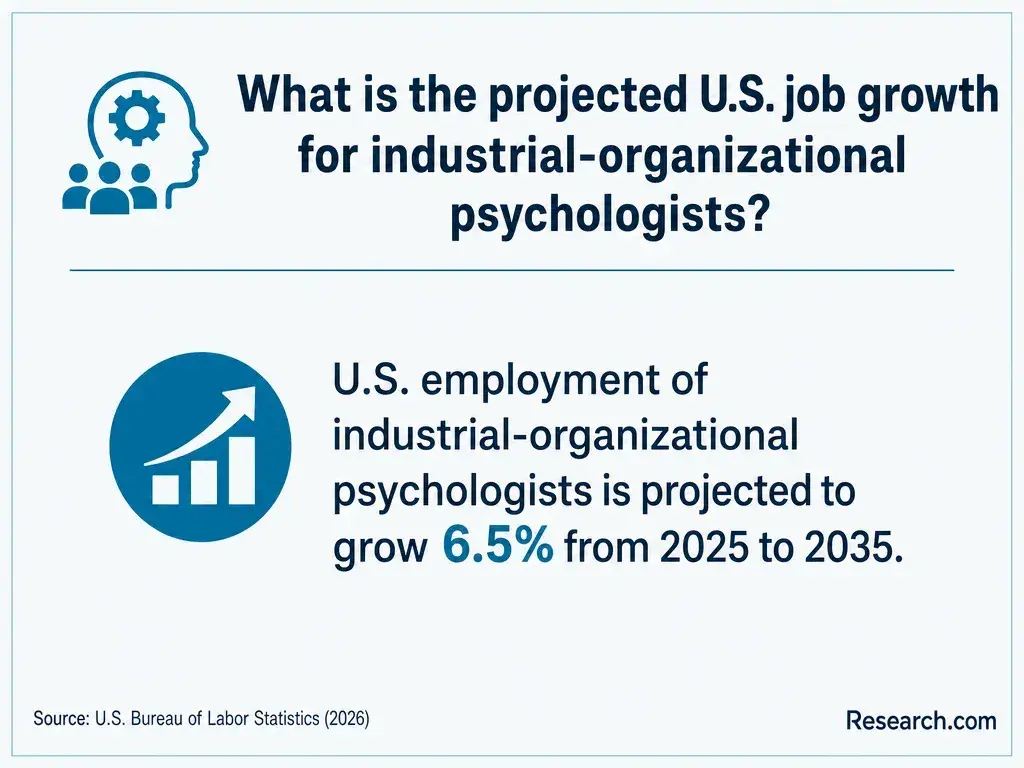
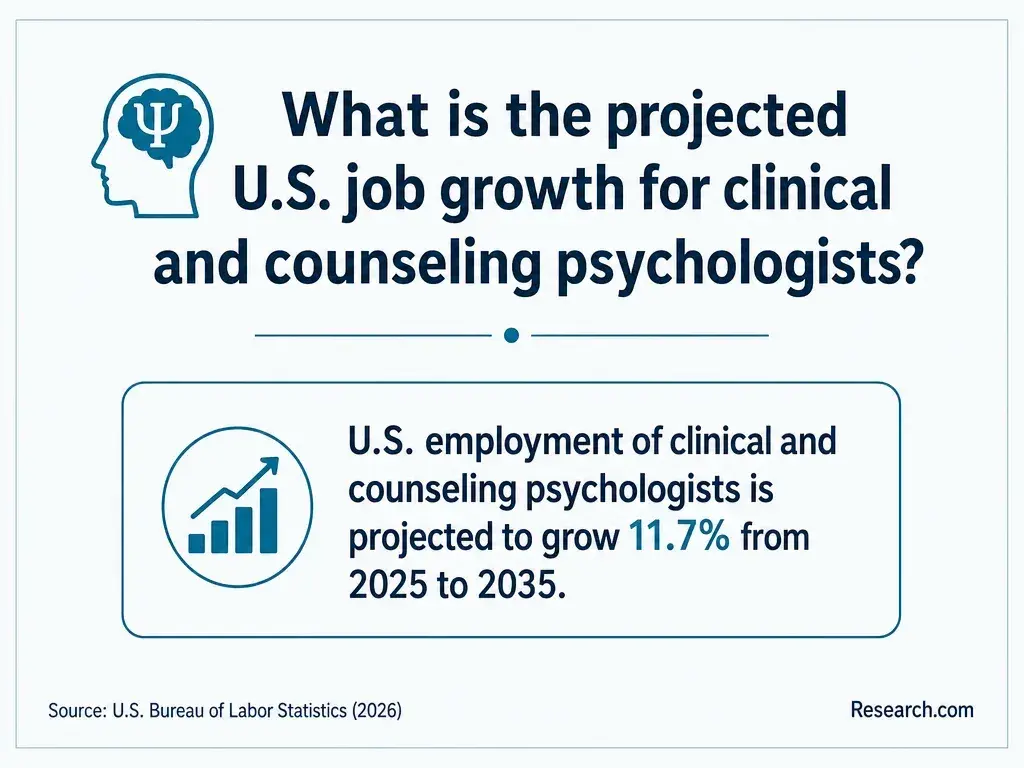
There is no reliable single salary or growth rate for graduates of an addictions-focused psychology BA. Campaign-support and evaluation jobs span different occupational categories, employers, and qualification levels. For a salary comparison, first identify the actual job title and duties in your target location, then consult the corresponding U.S. Bureau of Labor Statistics occupation and local postings. An occupation-wide median is not an expected starting salary or a degree-specific outcome.
When assessing return on education, compare the cost and time of completing a psychology BA with the requirements of the jobs you would actually seek. Information on substance abuse counseling bachelor's affordability and duration may help frame a separate counseling-oriented option, but its career assumptions should not be applied to prevention-evaluation roles. Paid project experience and statistical competence may matter more for those roles than additional treatment coursework.
Which Certifications and Licenses Are Required for Addiction-Related Careers?
A nonclinical campaign-evaluation role generally does not call for a therapy license simply because its subject is substance use. Employers may instead prioritize research ethics training, data-handling skills, evaluation experience, and knowledge of the community served. Requirements for addiction counseling, peer support, and other direct-service roles differ by state and job title; check the relevant state board or credentialing body before choosing courses for a regulated role.
If your intended work is diagnosis or psychotherapy, an addictions-focused psychology BA is not the qualifying credential. Investigate the required professional degree, applicable program recognition, supervised experience, examinations, and state rules. Affordable accredited mental health counseling study options address a different training pathway; verify that any particular program meets the rules of the state where you intend to practice.
Other Things You Should Know About Psychology
Often, but check the dataset's terms and your instructor's requirements. Public access does not automatically make every proposed use appropriate or remove the need to explain data limitations.
No single rule covers every class project. Ask your instructor and institution whether review, another determination, or site permission is needed before recruiting participants or collecting responses.
An approved project might assess campaign materials, document implementation, or use permitted aggregate information. Agree on the question and data permissions with the organization and faculty supervisor before starting.
Ask whether you may share a redacted evaluation plan, codebook, or report template. Do not assume that removing names alone makes a dataset or report safe to publish.
- CDC Approach to Program Evaluation https://www.cdc.gov/evaluation/php/about/index.html
- Evaluation Types and Data Requirements - NCBI https://www.ncbi.nlm.nih.gov/books/NBK594901/
- Internships and Other Placements | Public Health Department https://health.alamedacountyca.gov/work-with-us-ph/internshipsandotherplacements/
- Training Social Work Students to Engage in Substance Use Prevention Using Immersive Learning | Campus Drug Prevention https://www.campusdrugprevention.gov/views-from-the-field/training-social-work-students-engage-substance-use-prevention
- A systematic review of online education initiatives to develop students remote caring skills and practices - PMC https://pmc.ncbi.nlm.nih.gov/articles/PMC9196772/
- Online Bachelor's Degree in Psychology in Addictions | Purdue Global https://www.purdueglobal.edu/degree-programs/psychology/bachelor-psychology-addictions/
- Applied Psychology: Addictions Studies, B.S. - CPS, CPSO | University of New Hampshire https://www.unh.edu/program/bachelor-science/applied-psychology-addictions-studies
- Designing Effective Health Campaigns: Strategies for Public Health Educators | Marymount University https://marymount.edu/blog/designing-effective-health-campaigns-strategies-for-public-health-educators/
- SURV - Survey Methodology | University of Maryland Catalog https://academiccatalog.umd.edu/graduate/courses/surv/
- School-Based Substance Use Disorder (SUD) Prevention Strategies & Programs - Evidence-to-Impact Collaborative https://evidence2impact.psu.edu/resources/school-based-substance-use-disorder-sud-prevention-strategies-programs/