2027 Online BA in Psychology - General Psychology After an AS in Health Sciences: Compare Transfer Credit and Remaining Coursework
Audited and Verified:
Our Editorial and Data Verification Process
Research.com uses government datasets, official education statistics and primary institutional information to support its career and degree guides. Our review process checks factual accuracy, occupational definitions, source dates and the requirements associated with the credentials discussed.
How This Article Was Fact-Checked
Our editorial team verifies salary estimates, employment projections, education requirements and program information against original data providers and official organizations. Salary figures are checked against the relevant occupational definitions and reporting periods. Information about licensure, accreditation and required in-person training is reviewed separately.
Fact-checked and verified on:

Co-Founder and Chief Data Scientist
An AS in Health Sciences can give you a useful start toward an online BA in General Psychology, but the number of credits accepted is not the number that will necessarily shorten your degree. Health courses may count as electives while statistics, psychology prerequisites, and upper-level major courses remain.
This guide shows transfer and returning students how to read a degree audit, compare remaining coursework and costs, and identify the questions that matter before committing to a program.
Key Things You Should Know
- A 60-credit AS and a 120-credit bachelor's degree do not automatically leave 60 credits: accepted courses may not satisfy the BA's specific requirements.
- Compare written degree audits, not transfer-credit totals. Check general education, psychology prerequisites, upper-level credits, and courses that must be taken at the new school.
- Online delivery does not guarantee a faster finish. Course sequencing, enrollment pace, live meetings, and any required placement can change the timeline and cost.
How Many Credits Transfer From an AS in Health Sciences to an Online BA in Psychology?
There is no universal transfer number. A receiving college decides which AS courses it accepts and where each accepted course fits in its BA. Accepted credit may satisfy a general education requirement, a psychology-major requirement, or only a free elective. Only the receiving institution can issue an authoritative evaluation for your entry term.
Consider an illustrative 60-credit AS and a 120-credit BA. Even if all 60 credits are accepted, required psychology courses, upper-level credits, or residency rules may prevent a student from finishing with exactly 60 more credits. The distinction is why remaining coursework after transferring into psychology matters more than the headline transfer total.
Health sciences coursework often provides a strong case for anatomy, biology, health, writing, or quantitative requirements, but course titles alone do not establish equivalence. A health-focused statistics class, for example, might meet a general quantitative requirement without replacing statistics required for the psychology major.
Ask the registrar or transfer-credit office for course equivalencies and the psychology department for decisions about major substitutions. Submit official transcripts and syllabi when a course needs individual review.
What Coursework Remains After Transferring an AS to an Online Psychology BA?
The remaining work is the difference between credits awarded and requirements satisfied. The comparison below shows common outcomes for an AS in Health Sciences; it is not a course-equivalency decision for any particular college:
| Requirement | Possible contribution from the AS | What may still be needed |
| General education | Writing, mathematics, natural science, or social science | Unmet categories or a BA-specific language requirement |
| Psychology foundations | Introductory psychology, if taken and approved | Introduction, developmental, social, or biological psychology |
| Statistics and research | Statistics, if the department accepts its content and level | Psychology statistics, research methods, or a sequenced laboratory |
| Upper-level major work | Usually limited by the level of AS courses | Advanced psychology electives, seminar, or capstone |
| Graduation rules | Transferable electives | Minimum upper-level or in-residence coursework |
Ask each school for a requirement-by-requirement degree audit that identifies unmet courses and whether they are offered online in the terms you could attend.
When comparing online college pathways for psychology majors, look for the option that applies your existing coursework to requirements - not simply the one advertising the largest transfer allowance.
How Long Does an Online BA in General Psychology Take After an AS?
Completion time depends on remaining requirements, enrollment pace, and when prerequisite courses run. In the illustrative 60-credit-remaining scenario, taking 15 credits in each fall and spring term would require four terms of coursework.
That is a planning example, not a graduation estimate: a methods prerequisite, an annually offered capstone, or a minimum number of credits taken at the institution could extend it.
An accelerated calendar may shorten the time between courses, but it does not erase required credits or make a demanding methods course easier to combine with work.
Compare accelerated online psychology degrees by asking for a term-by-term plan based on your evaluated transcript. Confirm course start dates, summer availability, maximum course loads, and whether the plan still works if you attend part time.
Check the college's institutional accreditation with its recognized accreditor and confirm that the online BA is offered by that institution. Institutional accreditation is relevant to credit recognition and federal-aid eligibility, but it does not force another school to accept a course.
APA accreditation does not apply to a general psychology bachelor's program; do not treat the absence of APA accreditation as a defect in a BA.
"Transfer-friendly" is better tested through policy and results than a marketing label. Compare the transfer-credit limit, published equivalencies, appeals process, residency rule, and your written degree audit.
Program-specific checks matter even when a school advertises an adjacent option: guidance on forensic psychology degree program quality checks, for example, should not be mistaken for evidence that its general psychology BA applies your AS courses in the same way.
Requirements vary, but a general psychology BA commonly builds from introductory psychology into statistics and research methods, then covers areas such as development, cognition, social behavior, biological foundations, and psychological disorders.
Advanced electives and a seminar or capstone may complete the major. Study of disorders is academic preparation, not authorization to diagnose or treat people.
For a health sciences transfer student, sequence matters as much as subject. Find out whether introductory psychology is required before methods, whether statistics is a prerequisite for research courses, and which advanced courses are available online each term.
If you are weighing a specialization instead, compare its actual required courses: accelerated undergraduate forensic psychology study may use elective space that a general BA leaves open. Neither option should be chosen on its advertised finish time without an individual audit.
Typically, an applicant submits a transfer application and official transcripts from every college attended; a school may also set GPA, credit, or application-deadline rules.
Admission to the institution is separate from acceptance into the major, approval of particular course substitutions, and eventual graduation eligibility. An AS in Health Sciences does not itself prove that psychology prerequisites have been met.
Before applying, assemble course descriptions or syllabi for statistics, psychology, and health courses you want reviewed. Ask admissions whether the AS must be completed, ask the transfer office how credits will be recorded, and ask the psychology department who approves major equivalencies.
If your goal is graduate study, do not assume that a differently named degree lets you skip undergraduate preparation: compare prerequisites before using online master's psychology programs by affordability as an alternative to finishing a BA.
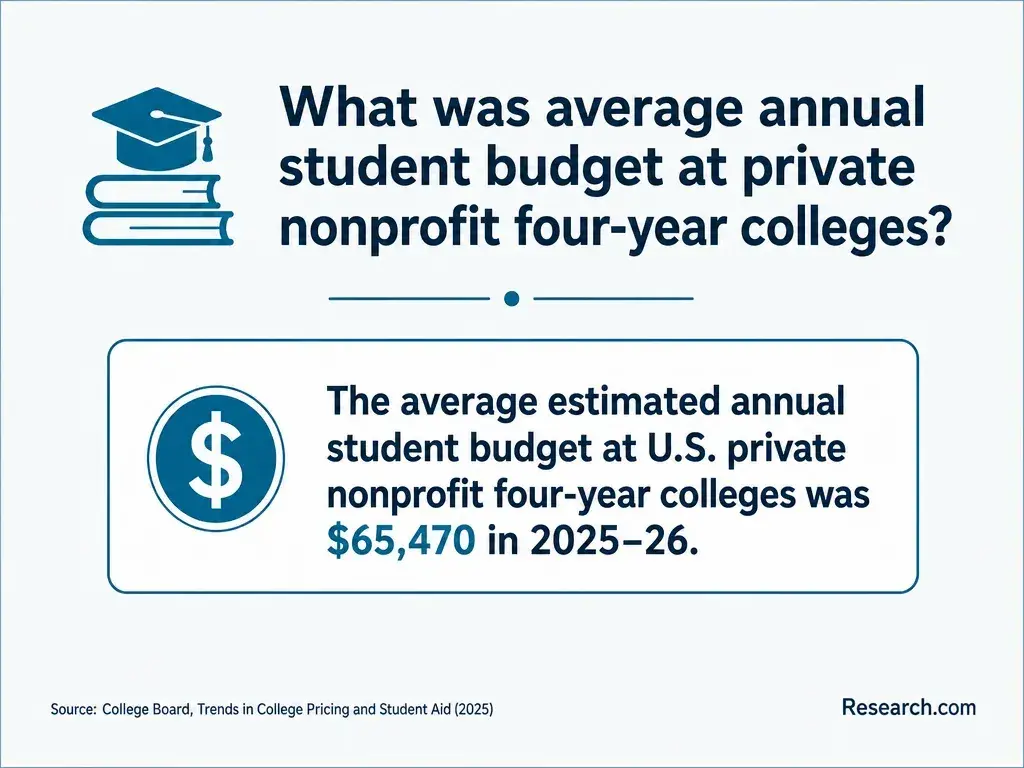
The useful comparison is the cost to complete your remaining requirements, not the advertised price per credit alone. Multiply each school's applicable tuition rate by the credits in its written degree plan, then add mandatory fees, materials, and any travel or placement expense. More accepted electives will not necessarily reduce the bill if the same required courses remain.
Request an itemized estimate for your enrollment pace and entry term. Check whether online students pay different rates, whether summer courses cost more, and how part-time enrollment affects aid eligibility.
Compare cost-focused comparisons of psychology degrees only after applying each school's rates to your remaining credits. The financial-aid office can explain aid and satisfactory-academic-progress rules; it cannot replace an approved academic degree audit.
Online study may fit a student who needs to stay near work or home, provided the required courses are actually available online at a workable pace. Campus study may offer easier access to research teams, faculty office hours, or local placements.
Neither format is inherently more transfer-friendly: compare evaluated credits, course schedules, support, and total costs at specific schools.
Ask whether online courses have scheduled live sessions, group meetings, exams at fixed times, or an in-person internship or capstone component. A locally arranged placement may still involve travel and unpaid hours.
If your intended route is substance-use counseling rather than general psychology, compare the credential requirements and bachelor's-level substance use counseling scholarship planning for that distinct pathway; a general psychology BA does not substitute for a state-required counseling credential.
An AS in Health Sciences plus a psychology BA can be relevant to nonclinical work in community programs, health-service administration, research support, recruiting, or service coordination.
The fit depends on the job's actual duties and your experience: a research-support applicant may need data and methods skills, while a service coordinator may need documentation, referral, and client-communication experience. Employers can set additional requirements.
Use electives, supervised nonclinical experience, or a capstone to demonstrate the skills a target role requests. Do not interpret occupation-wide pay figures as the expected earnings of a BA graduate.
This is especially important with pay comparisons across forensic psychology-related careers: those roles can differ substantially in degree level, experience, and licensing requirements from bachelor's-entry work.
Can a Psychology BA Lead to Licensure, Graduate School, or Higher Salaries?
A general psychology BA can provide academic preparation for graduate applications, especially when the student completes strong statistics and research-methods coursework.
It does not by itself authorize psychotherapy, diagnosis, independent psychological assessment, or practice as a licensed psychologist. Graduate programs and state licensing boards, not the BA's title, determine the next qualifications required for a regulated role.
If graduate study is your goal, use the BA audit to protect room for required prerequisites and research experience. A general psychology master's or a forensic specialization is not automatically a licensure pathway; even under-two-year forensic psychology graduate program options must be judged against the specific next degree or job you want.
A BA may improve eligibility for some positions, but higher pay depends on the occupation, employer, location, credentials, and experience, not degree completion alone.
Other Things You Should Know About Psychology
Possibly. Ask the receiving college whether it requires the completed AS for admission or for a particular transfer agreement. An unfinished AS may change how individual courses are evaluated.
Some colleges assess prior learning, but work experience does not automatically become credit or replace psychology requirements. Request the school's prior-learning policy and any fees before relying on it.
Check the former college's state higher-education agency for its designated records custodian. The receiving school can tell you what official documentation it will accept.
A psychology major generally cannot also count as a separate psychology minor at the same school. If you want a complementary minor, ask whether it adds courses or time beyond your degree plan.
- Cost of Attendance (Budget) | 2025-2026 Federal Student Aid Handbook https://fsapartners.ed.gov/knowledge-center/fsa-handbook/2025-2026/vol3/ch2-cost-attendance-budget
- Pathways Through Psychology | Portland State University https://www.pdx.edu/psychology/pathways-through-psychology
- Transfer Credit - Academics - iMpact Web Portal | Ross IT https://rossweb.bus.umich.edu/academics/studentresources/transfer-credit/
- Austin Community College Transfer Pathway: Accelerated Online Programs | txst.edu https://global.txst.edu/student-resources/acc-accelerated-online-pathway.html
- Psychology Curriculum | charlotte.edu https://psych.charlotte.edu/undergraduate-program/psychology-courses/
- Transfer Credit Articulation Agreements | Howard University https://howard.edu/registrar/transfer-credit-articulation-agreements
- Basic requirements | UC Admissions - University of California https://admission.universityofcalifornia.edu/admission-requirements/transfer-requirements/preparing-to-transfer/basic-requirements.html
- Undergraduate | CSUF - Department of Psychology https://psychology.fullerton.edu/academics/undergraduate.html