2027 Online MS in Psychology - Forensic Psychology After a BA in Counseling Psychology: Compare Prerequisites and Admission Options
Audited and Verified:
Our Editorial and Data Verification Process
Research.com uses government datasets, official education statistics and primary institutional information to support its career and degree guides. Our review process checks factual accuracy, occupational definitions, source dates and the requirements associated with the credentials discussed.
How This Article Was Fact-Checked
Our editorial team verifies salary estimates, employment projections, education requirements and program information against original data providers and official organizations. Salary figures are checked against the relevant occupational definitions and reporting periods. Information about licensure, accreditation and required in-person training is reviewed separately.
Fact-checked and verified on:

Co-Founder and Chief Data Scientist
A BA in counseling psychology can be a strong starting point for an online MS in forensic psychology, but the degree title alone will not tell you whether you meet a program's prerequisites. Admissions offices may look closely at your statistics and research-methods coursework, while your intended career determines whether a nonclinical master's is the right next step.
This guide helps you compare entry requirements, address gaps, evaluate online programs, and distinguish justice-related work from licensed forensic practice before you commit time and money.
Key Things You Should Know
- A counseling psychology BA may meet the bachelor's-degree requirement, but check each program separately for statistics, research methods, psychology credits, and minimum-grade rules.
- Compare three admissions possibilities: direct entry, entry after prerequisite coursework, and conditional entry if the program expressly permits it.
- An online forensic psychology MS can support nonclinical justice-related work; it does not, by itself, qualify you to practice as a licensed forensic psychologist.
What Is an Online Master's in Forensic Psychology After Counseling Psychology?
An online MS in forensic psychology studies psychological science in legal and justice settings. Depending on the program, that may mean research on eyewitness memory, victimization, offending, correctional systems, or the use and limits of psychological evidence. "Online" describes how instruction is delivered, not a common curriculum or professional credential.
Your counseling psychology BA may have given you useful preparation in development, psychopathology, interviewing concepts, and ethical communication. The shift is toward applying research to legal questions and institutions - not simply learning to counsel a different population. Compare actual curricula and stated outcomes when reviewing online forensic psychology programs and graduate outcomes; a forensic label alone does not establish research depth or job eligibility.
What Prerequisites Do Online Forensic Psychology Master's Programs Require?
There is no universal prerequisite list. A program may accept any accredited bachelor's degree, require a psychology major or a specified number of psychology credits, or evaluate applicants course by course. Published admissions requirements - not a general description of a "typical applicant" - control your eligibility.
The table separates common areas of review from the evidence that can resolve a question about your counseling psychology BA. A course title may not show enough detail, so retain syllabi for ambiguous classes.
| Admissions area | What a program may check | Useful evidence |
| Bachelor's degree | Recognized institution, degree completion, and acceptable major | Official transcript and degree conferral |
| Psychology foundation | Introductory, abnormal, developmental, or other specified psychology coursework | Transcript and, if requested, course descriptions |
| Research preparation | Statistics, research methods, or experimental design, including minimum grades | Syllabi showing methods and quantitative content |
| Application record | GPA policy, recommendations, statement, résumé, and any test policy | Current program checklist and application instructions |
If a required undergraduate course is missing, ask whether the program accepts an accredited community-college or online course, requires upper-division credit, or permits completion after admission. Online psychology programs ranked by affordability may help you investigate undergraduate course options, but get written confirmation of equivalency and nondegree enrollment before paying.
Can You Enter Forensic Psychology Graduate School With a Counseling Psychology BA?
A completed counseling psychology BA can satisfy the degree requirement at programs that accept psychology-related majors. It does not automatically satisfy every course, grade, or experience requirement. Conversely, lacking a criminal justice major does not automatically disqualify you: some programs teach legal-system foundations within the master's curriculum.
Separate eligibility from competitiveness. An applicant might meet minimum requirements yet strengthen their application with a well-explained research project, justice-related service experience, or a clear account of why forensic study fits their goal. Neither volunteer work nor counseling coursework should be presented as supervised forensic assessment experience.
If your BA is still in progress, confirm when the graduate program requires degree conferral. Psychology degree completion through accelerated study may be worth considering only if changing your undergraduate plan would actually resolve a documented admissions gap; finishing an eligible counseling BA may be simpler.
For a reliable admissions decision, send the graduate admissions office your unofficial transcript and any disputed course syllabi. Ask which prerequisites are mandatory, which alternatives are accepted, whether conditional admission exists, and when outstanding work must be finished. Obtain the answer for your intended entry term.
The useful comparison is access to instruction, faculty, research, and any required experiences - not whether one format is inherently more rigorous. Use the table to identify obligations that could affect your schedule or location.
| Feature | Online program | Campus-based program |
| Class schedule | May use asynchronous work, live sessions, or both | Usually has scheduled in-person classes |
| Research collaboration | May rely on remote meetings and approved datasets | May offer more direct access to campus research groups |
| Applied experience | May require a locally arranged, approved site | May offer nearby partners but still require a separate application |
| Additional travel | Possible if residencies or campus visits are required | Regular commuting or relocation may be necessary |
Ask about live-session times, group work, time-zone expectations, residency dates, and who secures any placement. A general online psychology degree selection guide can help frame delivery questions, but only the graduate program can confirm its own attendance and supervision rules.
Courses may cover psychology and law, research methods, statistics, ethics, violence or victimization, correctional settings, and the evaluation of behavioral evidence. Some programs offer a thesis, capstone, or applied project; others emphasize coursework. Check whether a listed subject is required, elective, or unavailable during your expected enrollment.
For a counseling psychology graduate, the most consequential academic gap is often not knowledge of mental health terminology but confidence with research design, measurement, and limits on interpreting evidence. If your BA emphasized substance use, addiction psychology bachelor's degree planning may help you recognize related undergraduate subject matter, but it cannot replace a forensic program's specified methods prerequisites.
A class on assessment or interviewing teaches about those practices; it does not authorize a student to administer restricted tests, diagnose someone, or conduct an independent forensic evaluation.
Time to completion depends on required credits, course availability, full-time or part-time enrollment, and whether a thesis or approved project adds a separate sequence. Do not infer your timeline from an advertised fastest-completion option if you plan to work or need prerequisites first.
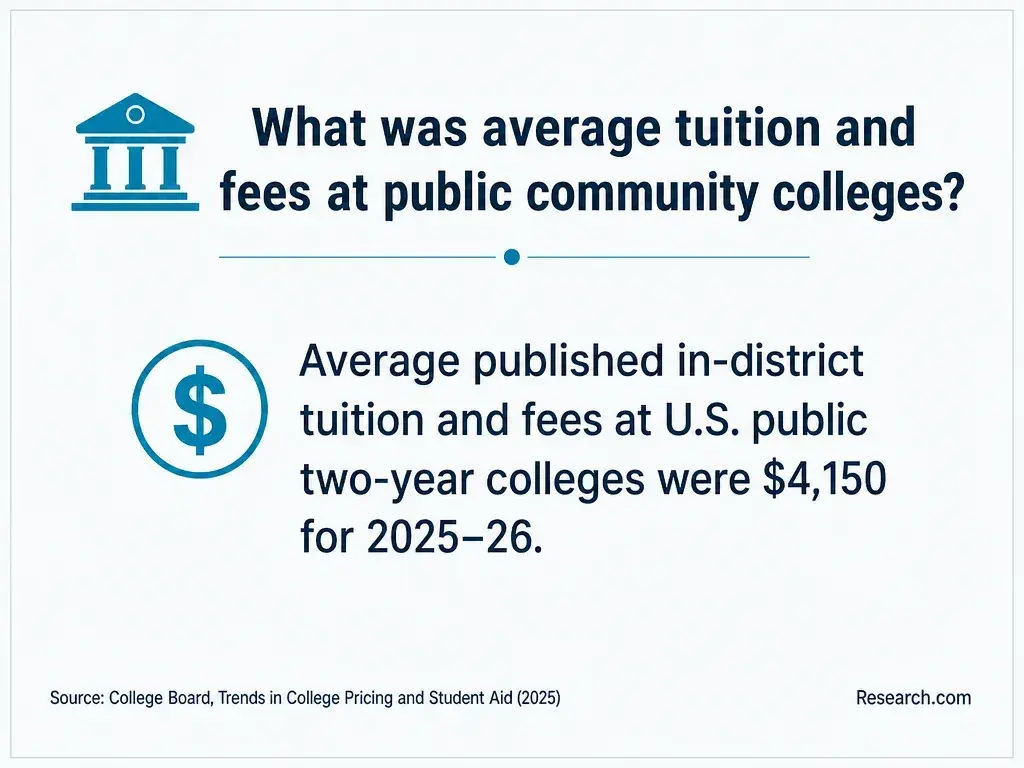
Compare total expected cost, not just the advertised rate per credit: multiply the published tuition rate by required credits, then add mandatory fees, materials, travel, and any placement-related expenses. Request a term-by-term estimate showing whether rates or fees can change. Tuition-focused psychology master's program choices can provide comparison candidates, but the school's current graduate billing schedule determines your estimate.
If your objective is only to satisfy one missing admissions prerequisite, paying for that course may be more efficient than changing degrees. If your objective is a licensed clinical role, include the cost and time of the qualifying professional pathway; a nonclinical forensic MS may not shorten it.
Confirm that the university holds recognized institutional accreditation and that it applies to the degree-awarding institution. Then evaluate the particular program's claims separately. APA accreditation does not generally apply to a standalone, nonclinical forensic psychology MS; institutional accreditation is not proof that the degree meets a state's psychologist-licensing requirements.
Independent forensic psychological evaluation generally requires the credentials and legal authority associated with licensed psychological practice, subject to state rules and the task involved. A master's concentration, research project, or course on testing is not a substitute for those requirements. If psychotherapy is your actual goal, compare a qualifying counseling pathway rather than assuming forensic coursework will count toward licensure. Planning an accelerated clinical counseling master's is a different decision and still requires checking the relevant state board's education and supervised-practice rules.
A forensic psychology MS may be relevant to nonclinical work in victim services, corrections programs, research support, justice-system administration, or program evaluation. Your BA and existing experience may already qualify you for some entry-level roles; the MS is most useful when a target employer values its specialized research or justice-system preparation.
Match job postings to duties and required credentials, not titles alone. An advocate may coordinate services and referrals; a research staff member may manage records or analyze approved data; a corrections-program employee may support operations. These responsibilities differ from therapy, independent assessment, expert testimony, criminal investigation, and legal practice. Work involving confidential client or justice records also requires employer authorization and appropriate data safeguards.
If you want to deliver therapy, a qualifying counseling or social-work degree may be more direct. Compare the full training commitment, not just the master's course titles; clinical counseling master's duration and earning potential addresses a distinct professional route.
There is no single dependable salary for "forensic psychology MS graduates." Pay varies with occupation, location, employer, experience, and whether a role requires a license. U.S. Bureau of Labor Statistics occupational wage figures describe workers in defined jobs - not alumni of a particular degree - so a psychologist median should not be treated as the expected pay of a nonlicensed MS graduate.
For a useful estimate, identify two or three jobs you could actually enter, check their current local postings and requirements, and compare those wages with the program's total cost and your likely foregone earnings. Earning potential after a master's in forensic psychology can suggest occupations to investigate, but verify that each role is attainable with your specific credentials before using its pay in a return-on-investment calculation.
How Do You Choose a Reputable Online Forensic Psychology Program?
Shortlist programs by your target role, then test admissions fit and program claims with documents rather than promotional language. A strong option makes its prerequisites, curriculum, online obligations, costs, and career boundaries clear enough to compare.
Before applying, work through these checks in order:
- Ask admissions to evaluate your counseling psychology transcript against each required prerequisite, including course grades and any methods equivalencies.
- Verify institutional accreditation, the exact degree awarded, required credits, live sessions, residencies, and thesis or project options.
- Ask who approves applied sites, what supervision is available, and whether remote students can realistically complete required work where they live.
- Request the current tuition and fee schedule and ask for documented career outcomes, including which graduates responded and what jobs they entered.
- Compare those findings with requirements in actual job postings or, for a regulated goal, the relevant licensing board's rules.
If prior colleges contributed coursework to your BA, planning a psychology degree with previous college study may help you organize that academic history. Still, the graduate program - not an undergraduate transfer evaluation - decides whether an earlier course meets its admissions prerequisite.
Other Things You Should Know About Psychology
It may. Ask the graduate program whether it accepts the course's level, content, credits, and grade before enrolling.
Policies vary. Send the transcript and course description, and ask whether the program requires a letter grade for that specific course.
Yes. Connect your existing preparation to a specific research or nonclinical career interest, and explain any skill gap you plan to address.
Do not assume it will. A doctoral program decides admission and transfer credit under its own rules; ask prospective programs before enrolling in an MS for that purpose.
- Frequently Asked Questions - California Board of Psychology https://www.psychology.ca.gov/licensees/faq.shtml
- Pursuing a Career in Clinical or Counseling Psychology | apa.org https://www.apa.org/education-career/guide/subfields/clinical/education-training
- How to Become a Forensic Psychologist in California (2026) | Touro University Worldwide https://www.tuw.edu/psychology/how-to-become-a-forensic-psychologist-in-california/
- What is Forensic Psychology? | snhu.edu https://www.snhu.edu/about-us/newsroom/social-sciences/what-is-forensic-psychology
- Requirements | Department of Psychology https://psychology.uchicago.edu/undergraduate-major/requirements
- Forensic Psychology | Concentrations https://psychology.gmu.edu/undergraduate/application/forensic-psychology
- Pathway Programs for Conditional Admission | Fairleigh Dickinson University https://www.fdu.edu/admissions/international/pathway-programs-conditional-admission/
- Guide to Becoming a Psychologist in California | Notre Dame de Namur University https://www.ndnu.edu/articles/psychology/guide-to-becoming-a-psychologis-in-california.html
- Grad school requirements: Everything you need to apply | About the University of Cincinnati https://www.uc.edu/blog/grad-school-requirements.html
- Parts of an Application | Pre-Health Student Resource Center https://healthcareers.umn.edu/program-application-guide/parts-application