2027 Online MS in Psychology - Forensic Psychology Admissions with a College Application After Academic Bankruptcy: What to Ask Before Applying
Audited and Verified:
Our Editorial and Data Verification Process
Research.com uses government datasets, official education statistics and primary institutional information to support its career and degree guides. Our review process checks factual accuracy, occupational definitions, source dates and the requirements associated with the credentials discussed.
How This Article Was Fact-Checked
Our editorial team verifies salary estimates, employment projections, education requirements and program information against original data providers and official organizations. Salary figures are checked against the relevant occupational definitions and reporting periods. Information about licensure, accreditation and required in-person training is reviewed separately.
Fact-checked and verified on:

Co-Founder and Chief Data Scientist
Academic bankruptcy may have improved your undergraduate GPA without removing the grades behind it. If you are considering an online MS in forensic psychology, that distinction can determine where you are eligible to apply and how you should prepare your application.
This guide is for applicants returning after academic difficulty. It explains what schools may see, how to document stronger recent work, and which admissions, cost, and career questions to resolve before paying an application fee.
Key Things You Should Know
- Academic bankruptcy generally changes how an institution calculates grades; it does not erase courses from the transcript a graduate program may review.
- Ask each program whether its GPA minimum uses all attempted undergraduate work, the degree-granting institution's GPA, or another calculation, and whether exceptions are possible.
- An online forensic psychology MS is usually a nonclinical degree. It does not, by itself, qualify you for psychologist licensure or independent forensic evaluations.
What Is an Online Master's in Forensic Psychology?
An online MS in forensic psychology studies psychological science in legal and justice settings. Depending on the program, it may emphasize research, behavior in courts and corrections, victim services, or organizational issues in justice agencies. "Online" describes delivery, not a uniform curriculum or schedule: live classes, group work, campus visits, or an approved local experience may still be required.
First confirm that you have completed a bachelor's degree or will complete one before enrollment. Academic bankruptcy does not itself award a degree or remove graduation requirements. If you still need undergraduate coursework, compare psychology degree options for distance learners before applying to master's programs.
Can You Become a Forensic Psychologist With a Master's Degree?
In the United States, independent practice as a psychologist typically requires a qualifying doctoral degree, supervised experience, examinations, and state licensure. A forensic specialty does not replace those requirements. Program admission and permission to use a protected professional title are separate decisions made by different authorities.
Ask what work you actually want to do. Research or nonclinical justice-system support may fit a master's program; independent psychological evaluations require a substantially different pathway.
If your goal is psychotherapy rather than forensic research or support work, examine licensure-oriented programs instead, including the requirements behind assessing shorter clinical mental health master's program outcomes. A shorter route is useful only if it meets the rules for the credential you seek.
How Does Academic Bankruptcy Affect Graduate School Admission?
Academic bankruptcy, sometimes called academic renewal or forgiveness, is an undergraduate institution's policy for excluding specified earlier grades from a particular GPA calculation.
The courses and original grades commonly remain visible on an official transcript, often with a notation. A graduate school can apply its own admissions calculation even when the degree-granting college reports a higher renewed GPA.
The distinction is especially important if you attended multiple colleges: a graduate program may request every postsecondary transcript, not just the one showing your degree.
Ask its admissions office, in writing, "Will you recalculate my GPA using academically bankrupted courses, and which minimum-GPA rule applies to me?" Also ask whether an explanation, recent coursework, or an exception review is permitted. Do not assume a published minimum guarantees either rejection or a waiver.
If academic bankruptcy helped you return to college but you have not finished a bachelor's degree, undergraduate completion comes first. Compare remaining requirements and scheduling, not just advertised speed, when considering intensive online forensic psychology bachelor's study.
Requirements vary by institution and entry term. Use the current program page and a direct admissions response to separate a formal eligibility rule from evidence that merely makes an application stronger. This comparison identifies the policies most likely to matter after academic bankruptcy.
The table shows what to verify before deciding whether an application is worth submitting.
| Admissions item | Why it matters after academic bankruptcy |
| Bachelor's degree and transcripts | The school may require a completed degree and official records from every college attended. |
| GPA rule | A minimum may use cumulative, last-credit, major, or degree-granting-school grades; the treatment of forgiven grades needs confirmation. |
| Prerequisites | Psychology, statistics, or research-methods preparation may be required, recommended, or built into the curriculum. |
| Application evidence | Statements, recommendations, a résumé, interviews, or tests depend on the program's stated policy. |
| Conditional admission | Some schools may permit outstanding preparation or an exception; others may not. |
If your intended work is substance-use counseling rather than forensic psychology, compare the applicable credential rules before choosing a degree. An addiction counseling degree comparison resource can help you identify programs to investigate, but the relevant state credentialing authority determines whether their education counts.
The strongest application does not ask an admissions committee to ignore the old transcript.
It shows what changed and provides recent, relevant evidence. A strong grade in statistics or research methods may be more informative for this degree than an unrelated collection of new credits, provided the target program accepts the coursework.
Build a compact record before applying:
- Obtain unofficial copies of every college transcript and identify the terms and courses affected by academic bankruptcy.
- Ask target programs which GPA they calculate and whether recent graded coursework can address an eligibility or preparation gap.
- Complete any agreed-upon prerequisites, then seek a recommendation from someone who can describe your current analytical, writing, or research skills.
- Explain the earlier performance briefly and factually in the application, emphasizing documented changes rather than asking for an automatic exception.
Relevant justice, victim-services, or community work can support your statement, but experience does not replace a stated degree or GPA requirement unless the program authorizes an alternative.
If your bachelor's degree remains unfinished and your career goal has shifted toward substance-use services, review online substance use counseling bachelor's aid resources while comparing the cost of finishing an undergraduate credential first.
Start with the institution: confirm that its recognized institutional accreditor covers the school offering the degree. Check the institution's current accreditation statement against the accreditor's directory, and confirm that you can enroll from your state.
Institutional accreditation matters for degree recognition and federal-aid eligibility, but it does not certify that this particular MS meets a professional license's educational requirements.
Do not reject a nonclinical forensic psychology MS solely because it lacks APA accreditation: APA accreditation applies to specified professional psychology training programs, not every psychology master's degree.
Conversely, do not treat institutional accreditation as proof of licensure eligibility. If you are comparing a counseling route, examine the program-specific recognition and state-board rules relevant to that credential; counseling degree affordability and accreditation addresses a different educational decision.
Expect to compare actual course catalogs rather than rely on the degree title. Relevant study may include psychology and law, research design, statistics, ethics, trauma-informed systems, violence research, or behavior in correctional settings. A course about assessment teaches concepts; it does not grant authority to administer restricted tests or issue forensic opinions.
For an applicant rebuilding an academic record, methods instruction deserves particular attention: ask whether the curriculum assumes prior statistics knowledge, whether there is a thesis or applied capstone, and who supervises the work. Also ask whether projects use accessible datasets or require placement approval and access to confidential records.
Coursework about substance use may inform justice-system support, but it is not treatment training; compare the duties described in careers in addiction treatment and support settings if that is your intended field.
There is no dependable total without a school's required credits, tuition schedule, fees, and your enrollment pace. A required prerequisite or reduced course load can extend completion, while a thesis, placement, or synchronous class may constrain when courses can be taken. Ask for a term-by-term plan showing when required courses actually run.
Request a written estimate covering tuition, mandatory online and graduation fees, books or software, and any travel or placement expense. Then compare that estimate with economical routes to graduate psychology study, checking that the compared programs serve the same career objective.
For a returner, also ask how academic standing affects institutional aid and how enrollment intensity affects federal-aid eligibility; a low advertised per-credit price is not a complete cost comparison.
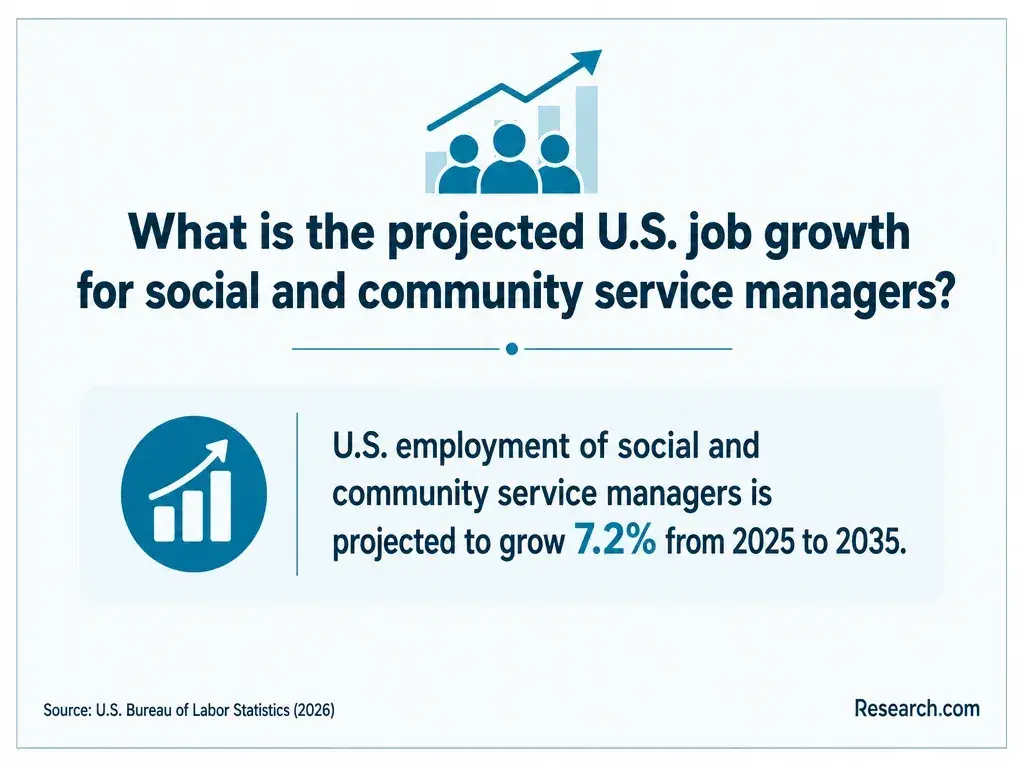
A forensic psychology MS may support applications for nonclinical work in victim services, justice-program coordination, corrections-related research, or policy and program evaluation. Eligibility depends on the employer's job description and your experience, not the degree name alone. Public-agency hiring may also depend on civil-service classifications, background checks, or specified credentials.
There is no reliable salary figure for everyone holding this degree. Federal occupational wage figures describe workers in a defined occupation, including people with different degrees and experience, not graduates of a particular MS.
Before using a published wage to justify tuition, match it to a realistic target job, location, entry requirements, and current vacancies. See graduate forensic psychology job options and qualifications as a starting point for checking those distinctions, not as a promise of earnings.
How Do Licensing and Certification Requirements Affect Forensic Psychology Careers?
Licensing follows the work performed and the state's rules. Psychological diagnosis, independent assessment, and psychotherapy are regulated activities; studying forensic topics does not authorize them. Other jobs may require a social-work, counseling, substance-use, or agency-specific credential, while some research and support roles do not require a clinical license.
Before enrolling, take a target job posting to the relevant state board or credentialing authority and ask whether the proposed degree satisfies any educational requirement. If the answer is no, identify the qualifying degree, supervised experience, and examinations before committing to this MS.
For applicants whose actual goal is entry into substance-use services while completing undergraduate study, budget-friendly substance abuse counseling bachelor's study may be a more relevant comparison—subject to the same state-specific credential check.
Other Things You Should Know About Psychology Programs
Only if that instructor later observed substantial improvement and can describe it specifically. A recent instructor or supervisor who knows your current work is usually a more useful choice.
Yes. Send a concise explanation and ask whether staff can clarify the published eligibility policy using unofficial transcripts. Such guidance may not be an admission decision.
Briefly connect the gap to relevant work, study, or responsibilities, then show why you are prepared for graduate-level reading, writing, and research now.
Apply only after confirming how each treats your academic record and whether its curriculum fits your goal. A smaller set of suitable programs may be more worthwhile than paying for applications that cannot meet a stated eligibility rule.
- Program Integrity Questions and Answers - Satisfactory Academic Progress | U.S. Department of Education http://www.ed.gov/laws-and-policy/higher-education-laws-and-policy/program-integrity-information-questions-and-8
- Academic Bankruptcy Policy Frequently Asked Questions | Daemen University https://www.daemen.edu/about/policies-and-procedures/academic-policies-and-procedures/academic-bankruptcy-policy
- Professional Licensure and State Certification - Policies & Procedures https://www.uwgb.edu/provost/policies-procedures/professional-licensure-and-state-certification/
- Graduate Academic Requirements | John Jay College of Criminal Justice https://www.jjay.cuny.edu/admissions/graduate-admissions/apply/graduate-academic-requirements
- Satisfactory Academic Progress | Financial Aid | Brandeis University https://www.brandeis.edu/registrar/bulletin/provisional/financial-aid/academic-progress.html
- How to Become a Forensic Psychologist in California (2026) | Touro University Worldwide https://www.tuw.edu/psychology/how-to-become-a-forensic-psychologist-in-california/
- Degree Progression and Curriculum Policies - UNLV Catalog https://catalog.unlv.edu/content.php
- Satisfactory Academic Progress Policy | Financial Aid https://finaid.gatech.edu/manage-aid/academic-progress
- Requirements - Graduate School of Professional Psychology https://psychology.du.edu/admission-aid/requirements