2027 Online MS in Psychology - Forensic Psychology for Psychology of Incarceration: Which Courses Should You Look For?
Audited and Verified:
Our Editorial and Data Verification Process
Research.com uses government datasets, official education statistics and primary institutional information to support its career and degree guides. Our review process checks factual accuracy, occupational definitions, source dates and the requirements associated with the credentials discussed.
How This Article Was Fact-Checked
Our editorial team verifies salary estimates, employment projections, education requirements and program information against original data providers and official organizations. Salary figures are checked against the relevant occupational definitions and reporting periods. Information about licensure, accreditation and required in-person training is reviewed separately.
Fact-checked and verified on:

Co-Founder and Chief Data Scientist
A forensic psychology master's may advertise corrections coursework yet offer little training in how incarceration affects behavior, mental health, and reentry. If you work in justice services, or hope to research or support people affected by incarceration, the course titles alone are not enough.
This guide identifies the psychology, methods, ethics, and applied courses worth looking for in an online MS. It also explains how to check whether those courses are actually available, what an online format permits, and when a different degree or shorter training route better fits your goal.
Key Things You Should Know
- Prioritize three connected areas: psychological effects of incarceration, rigorous research and evaluation methods, and ethically supervised application in corrections or reentry settings.
- Check the catalog and course schedule: a listed elective may not run before you graduate, and an online class does not guarantee remote fieldwork or access to corrections data.
- A forensic psychology MS is generally a nonclinical qualification. Coursework about assessment or treatment does not itself authorize diagnosis, therapy, or independent forensic evaluations.
What Is Forensic Psychology of Incarceration?
The psychology of incarceration studies behavior and psychological well-being in custody and across the transition back to the community.
Relevant questions include how confinement and institutional conditions affect people, how staff and residents interact, and which supports may improve reentry. Forensic psychology places such questions in legal and justice-system contexts; it does not mean every student is training to evaluate defendants or testify in court.
A useful course treats incarcerated and formerly incarcerated people as individuals rather than as risk scores. It considers trauma, disability, substance use, developmental history, family connections, and structural barriers alongside institutional safety and accountability.
For readers interested chiefly in community-based support after release, recovery services employment pathways may be more directly relevant than a degree centered on forensic theory.
Which Courses Should Online Forensic Psychology Programs Include?
Look for a coherent sequence, not the longest list of courses with "forensic" in their names. The table separates foundational study from specialized and applied learning; program catalogs may use different titles.
| Course area | What it should teach | Why it matters for incarceration-focused work |
| Psychopathology, trauma, and substance use | How to interpret research on symptoms, coping, and co-occurring needs without treating classroom learning as diagnostic training | Supports informed research and appropriate referrals in custody and reentry settings |
| Social, developmental, and cultural psychology | How identity, relationships, age, and social context shape behavior | Guards against one-size-fits-all explanations of adjustment or reentry |
| Corrections, incarceration, and reentry | Institutional conditions, rehabilitation models, community transition, and relevant legal constraints | Connects psychological concepts to the setting the student wants to understand |
| Research design, statistics, and measurement | Study design, confounding, missing data, validity, and limits of risk or screening measures | Helps students assess claims about programs and outcomes without mistaking association for causation |
| Ethics and applied evaluation | Consent, confidentiality, power imbalances, data governance, and feasible program-evaluation methods | Prepares students to work responsibly with justice-system partners and sensitive information |
For an incarceration-focused MS, methods training is as important as specialized content: a student should be able to question who is missing from a study, whether its measure fits the population, and what its findings can actually support. Ask whether a thesis or capstone lets you apply those skills under faculty supervision.
If your intended work is specifically substance-use treatment rather than research or nonclinical support, compare academic routes into addiction counseling against the credential rules in the state where you plan to work.
Does an Online Forensic Psychology Master's Lead to Licensure?
Most general or forensic psychology master's programs are academic or nonclinical programs. A class in psychological assessment, counseling, or correctional mental health does not establish eligibility to administer restricted tests, diagnose, provide psychotherapy, conduct independent forensic evaluations, or use a protected professional title.
If your target is a licensed psychologist role, examine the doctoral training and state licensing requirements for that role. If it is counseling or clinical social work, compare the relevant qualifying professional degrees and supervised-practice requirements instead.
The time and expense of that alternative matter; a guide to clinical counseling master's fees and graduation timelines can help frame the comparison, but only a program and the applicable state board can confirm eligibility.
Start by verifying the university's institutional accreditation through the accreditor and the U.S. Department of Education's recognition resources. Then check the exact MS program and its stated purpose. Institutional accreditation is important, but it does not prove that a particular forensic course is offered regularly or that the degree meets a licensing board's educational rules.
Do not reject a nonclinical forensic MS because it lacks American Psychological Association accreditation: APA accreditation does not broadly cover general psychology master's programs.
Conversely, do not treat the university's accreditation as a substitute for any program-specific recognition required by a different professional pathway. If you need to complete undergraduate preparation first, the same distinction matters when selecting an online psychology bachelor's program.
Either format can teach theory and research methods. The consequential difference is often access: a campus program may make faculty projects or local partnerships easier to join, while an online program may let a working justice-system professional study without relocating. Neither format guarantees a corrections placement, restricted dataset, or willing research supervisor.
Compare the actual weekly timetable, not the delivery label. Online students may still have live seminars, scheduled group work, campus visits, or site-based projects. An accelerated online master's degree in psychology can shorten the calendar while making those commitments harder to combine with shifts or caregiving. Ask who arranges applied opportunities, whether an existing workplace project can be approved, and what happens if site access falls through.
Requirements vary. Programs commonly review prior undergraduate study, transcripts, academic writing, recommendations, and a statement of purpose; some specify psychology, statistics, or research-methods preparation.
A criminal justice or human-services background can be valuable, but it should not be mistaken for every psychology prerequisite. Likewise, a non-psychology major is not automatically disqualifying.
Before applying, compare your transcript with each program's stated requirements and ask which gaps can be completed before enrollment. If you are still finishing a bachelor's degree, transfer credit reviews for psychology applicants can help you identify questions for that institution's degree audit.
Acceptance of credit does not necessarily mean it satisfies a psychology or methods requirement. Relevant agency experience can strengthen an application, but ask admissions whether it can substitute for coursework rather than assuming it will.
Completion time depends on required credits, course frequency, enrollment pace, and whether a thesis, capstone, or placement needs separate approval. A student taking one course at a time may need substantially longer than the advertised full-time schedule. Specialized electives can also delay completion if they run infrequently.
Request a term-by-term plan showing when incarceration-related courses run and how long project approval usually takes. Compare that plan with your work schedule and total tuition and fees, not just the advertised minimum duration.
Guides to faster routes through forensic psychology graduate coursework are a starting point for questions, not a promise that your preferred electives or project will fit an accelerated schedule.
Potential directions include reentry program coordination, corrections or community-services program support, victim-services administration, research assistance, and program evaluation.
The relevant duties may involve referrals, documentation, stakeholder communication, data analysis, or service monitoring. Employers may prioritize agency experience, a particular credential, security clearance requirements, or demonstrated analytical work over the concentration name.
For someone already employed in a public agency or nonprofit, an approved capstone evaluating an existing service may provide stronger evidence of readiness than an additional theory elective. A newcomer may need supervised entry-level experience first. The forensic psychology master's employment and pay guide can suggest roles to investigate, but check each posting's duties and qualifications: the MS does not itself confer investigative authority or licensed forensic-psychologist status.
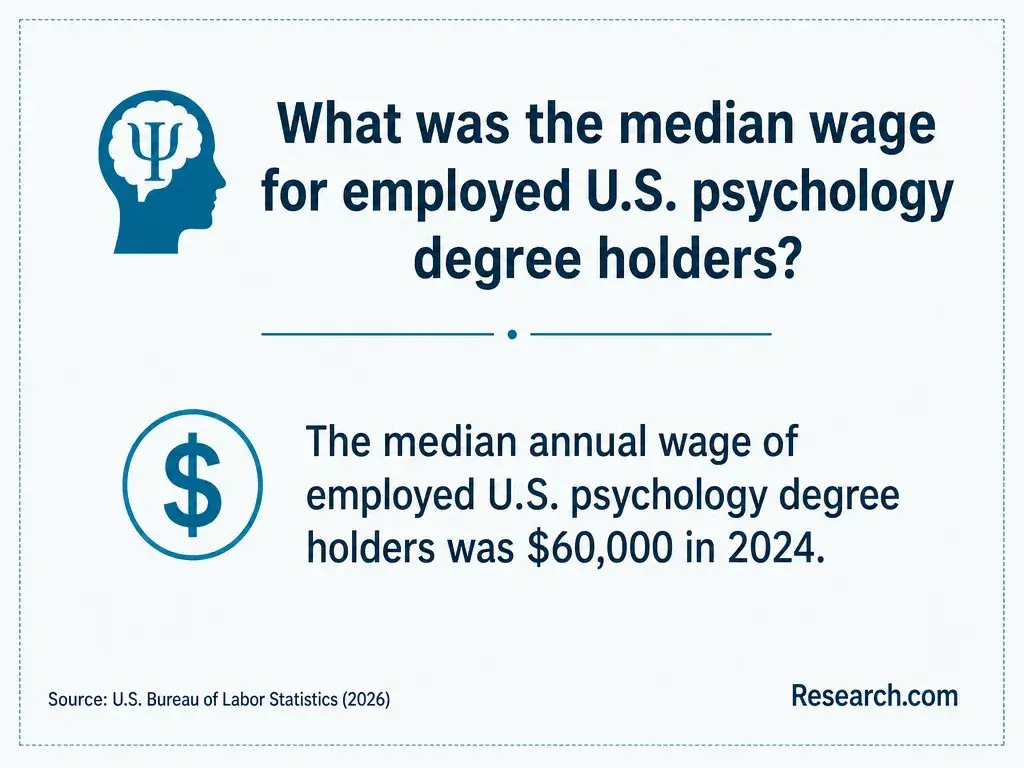
There is no single reliable salary or growth figure for "graduates specializing in the psychology of incarceration." Reentry coordinators, human-services workers, analysts, and licensed clinicians fall into different occupations with different entry requirements.
U.S. Bureau of Labor Statistics occupational wages and projections are useful only after you identify a matching job title and confirm that its occupational definition fits the work you seek; an occupation-wide median is not a forecast of your starting pay.
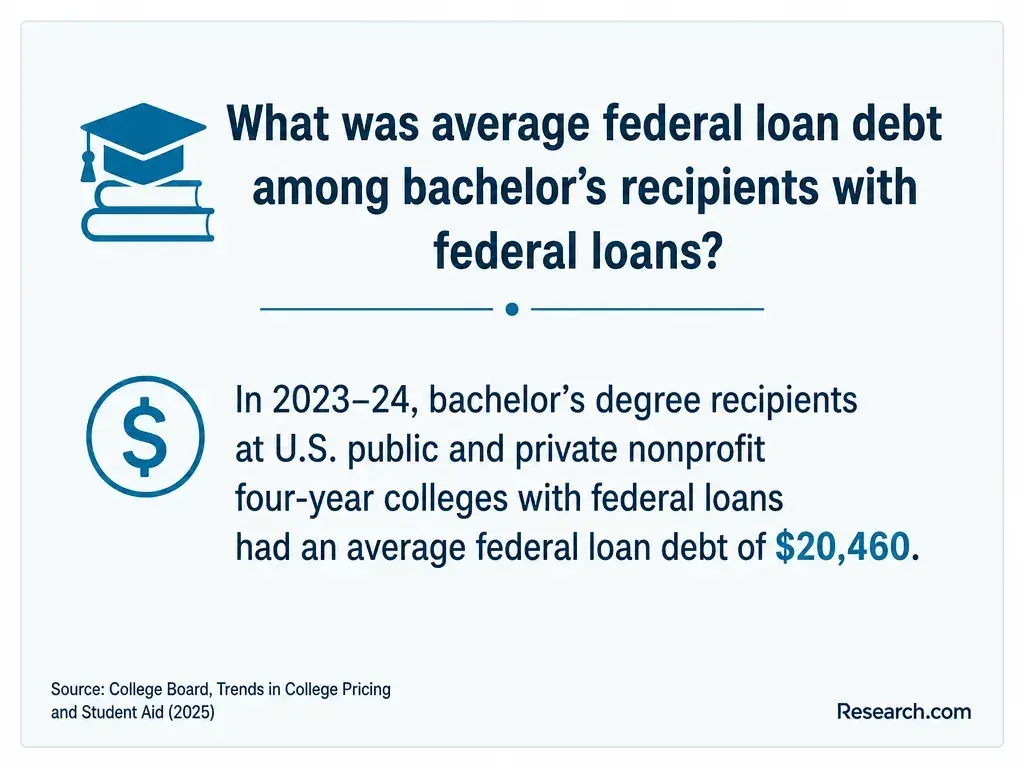
For a financial comparison, pair local job postings and any public-sector pay schedules with the program's full price, including fees, travel, and possible unpaid project time. If your intended role does not require an MS, supervised experience or targeted training may offer a less costly route.
If you are instead considering an undergraduate substance-use-services path, guidance on grants versus loans for substance abuse counseling bachelor's students applies to that different degree level, not automatically to master's funding.
How Can You Choose a Reputable Online Forensic Psychology Program?
Make your shortlist from your intended work backward. A corrections researcher needs methods, faculty fit, and feasible data access; a reentry professional may benefit more from evaluation coursework and an approved agency project. Use the same questions with every program so attractive course titles do not obscure practical gaps.
Before committing, obtain answers to these points:
- Which incarceration, corrections, and reentry courses are required, and which electives are scheduled during your expected enrollment?
- Who supervises the thesis or capstone, and what alternatives exist if a proposed agency project is not approved?
- What live sessions, campus visits, site work, and additional charges will apply to your entry term?
- What evidence does the program provide about graduates' roles, and does it explicitly describe any licensure limitations?
Request the current catalog, sample course sequence, project rules, and itemized cost estimate in writing. If the degree would duplicate skills you already use at work, compare its cost with finding an affordable psychology degree route or taking a focused methods course instead. Choose the full MS when its supervised learning and credential value genuinely advance your specific goal.
Other Things You Should Know About Psychology Programs
Possibly. Public availability does not eliminate the need to check your instructor's project rules, data-use terms, measurement limits, and whether institutional review is required for your proposed work.
Not without appropriate authorization. Facility access, participant protections, consent, institutional review, and safeguards against coercion need to be resolved before recruitment or interviews begin.
Usually not automatically. It may provide valuable institutional context, but the university decides whether any prior training meets a particular academic requirement.
Read peer-reviewed research on incarceration and reentry, examine local nonclinical job descriptions, and speak with program staff about research supervision. Those steps can reveal whether you need a full MS or a narrower skill-building option.
- Accreditation in the U.S. | ed.gov http://www.ed.gov/laws-and-policy/higher-education-laws-and-policy/college-accreditation/accreditation-in-the-us
- NIC Service and Training Catalog | The National Institute of https://nicic.gov/training/catalog
- From Prison to Home: The Effect of Incarceration and Reentry on Children, Families, and Communities | ASPE https://aspe.hhs.gov/reports/prison-home-effect-incarceration-reentry-children-families-communities-0
- Incarceration - Healthy People 2030 | odphp.health.gov https://odphp.health.gov/healthypeople/priority-areas/social-determinants-health/literature-summaries/incarceration
- Student Opportunities | bop.gov https://www.bop.gov/jobs/students.jsp
- Law 101: Legal Guide for the Forensic Expert | Ethics for Experts | National Institute of Justice https://nij.ojp.gov/nij-hosted-online-training-courses/law-101-legal-guide-forensic-expert/ethics-experts
- Incarceration, Prisoner Reentry, and Communities - PMC - NIH https://pmc.ncbi.nlm.nih.gov/articles/PMC4231529/
- Developing an MSW Field Practicum Model in a Forensic Setting | Applied Learning in Social Work Education Journal https://alswe.simmons.edu/article/developing-an-msw-field-practicum-model-in-a-forensic-setting/
- MS in Forensic Psychology | Neumann University https://www.neumann.edu/academics/grad/masters-degree-in-forensic-psychology