2027 Online MS in Psychology - Forensic Psychology for Hospitality Supervisors: What to Check Before Changing Careers
Audited and Verified:
Our Editorial and Data Verification Process
Research.com uses government datasets, official education statistics and primary institutional information to support its career and degree guides. Our review process checks factual accuracy, occupational definitions, source dates and the requirements associated with the credentials discussed.
How This Article Was Fact-Checked
Our editorial team verifies salary estimates, employment projections, education requirements and program information against original data providers and official organizations. Salary figures are checked against the relevant occupational definitions and reporting periods. Information about licensure, accreditation and required in-person training is reviewed separately.
Fact-checked and verified on:

Co-Founder and Chief Data Scientist
Hospitality supervisors already manage conflict, document incidents, train staff, and respond to people under stress. An online MS in forensic psychology may build on those skills, but it is a substantial investment - and it is not a shortcut to becoming a licensed forensic psychologist. This guide helps you decide whether the degree fits your target job, what experience you still need, and which program details to verify before leaving a management career or taking on graduate tuition.
Key Things You Should Know
- An online forensic psychology MS can support a move into justice-related research, victim services, or program support, but it does not itself authorize psychological evaluations, therapy, or use of a licensed psychologist title.
- Compare the degree with your target job's actual requirements first: some support roles value experience or targeted training more than a specialized master's, while licensed practice requires a separate qualifying pathway.
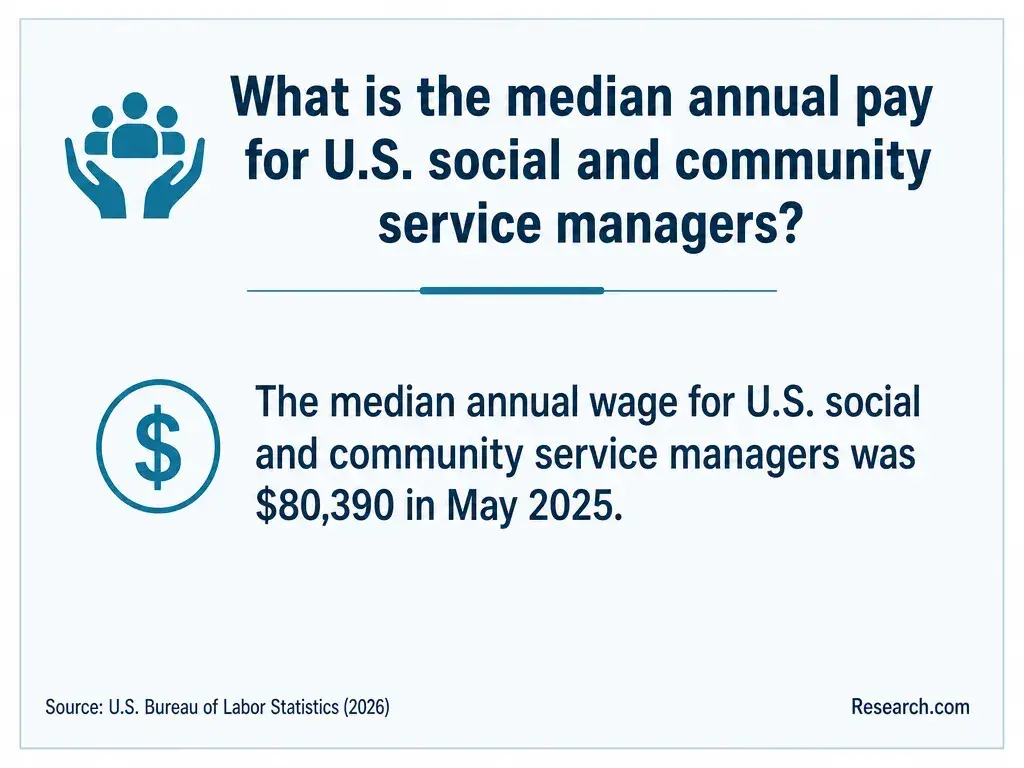
- For a salary reference, the U.S. Bureau of Labor Statistics reports a $45,120 median annual wage for social and human service assistants in May 2024. That occupation-wide figure is not a forecast for forensic psychology MS graduates.
What Is an Online MS in Forensic Psychology for Hospitality Supervisors?
An online MS in forensic psychology is a graduate degree studying psychological science in legal and justice contexts. Depending on the school, it may emphasize research, behavior in legal settings, victimization, corrections, or the interpretation of psychological evidence. "Online" describes delivery, not a professional credential: a program can teach forensic topics without preparing students for psychologist licensure.
For a hospitality supervisor, the appeal is a change in setting and subject matter, not an automatic promotion from incident management to forensic practice. Handling guest complaints may demonstrate de-escalation and careful documentation; it does not establish experience interviewing victims, interpreting psychological tests, or working within a justice agency.
Advertised speed should be weighed against that gap. Reviews of forensic psychology one-year program value considerations can help frame the trade-off, but verify each school's actual schedule and applied-learning requirements.
Can Hospitality Supervisors Become Forensic Psychologists With a Master's Degree?
Generally, not through a nonclinical forensic psychology MS alone. Forensic psychologists who independently conduct psychological evaluations or provide clinical services ordinarily need a qualifying psychologist-licensure pathway, including the education, supervised experience, and examinations required by their state.
A master's concentration does not confer investigative authority or qualify someone to offer expert testimony merely by appearing on a résumé. If your goal is psychotherapy with justice-involved clients, compare programs designed around the applicable counseling or social-work license rather than assuming forensic coursework will count toward it.
The clinical mental health master's tuition and career value comparison illustrates a different educational route; only the relevant state board and program can establish whether a particular degree meets licensure requirements. If your goal is research or nonclinical service coordination, a forensic MS may be relevant without leading to a clinical credential.
How Does an Online Forensic Psychology Master's Degree Support a Career Change?
The strongest transition connects a supervisor's existing evidence to a specific new function. Staff coaching and shift coordination may transfer to program operations; incident reports to documentation-focused support work; and conflict management to supervised intake or referral roles.
The degree can add psychological research literacy and justice-system context, but employers may still prefer applicants who have worked with their client population, records systems, and referral procedures.
For example, a supervisor interested in community reentry could seek a volunteer or entry-level service-coordination role while studying, then develop a faculty-approved project on a public or authorized dataset.
That creates evidence of relevant work without treating private guest or client records as student research material. If the real interest is substance-use recovery services, examine professional pathways in recovery organizations before committing to a forensic degree; state-recognized credentials or supervised experience may be more direct.
Online study can provide rigorous coursework, but format alone cannot establish equivalent preparation. The consequential differences for a working supervisor are access to faculty feedback, research collaboration, employer contacts, and any approved placement - not whether lectures arrive through a screen. An asynchronous course can still require scheduled discussions, group work, or fixed deadlines.
Compare a sample course schedule and the rules for any thesis, capstone, residency, or field experience. Ask whether a student can arrange an approved local site, who supervises the work, and whether current employment could ever qualify; a hotel job should not be assumed to meet a forensic placement requirement. Forensic psychology master's course sequencing for faster completion is useful only after checking which courses are offered when and how those commitments fit rotating shifts.
Curricula differ, but commonly relevant subjects include psychological research methods, statistics, ethics, psychopathology as an academic topic, and psychology in courts, corrections, or victim services.
A program's value depends less on the number of forensic-sounding titles than on whether its assignments build the skills required by your intended role. A research-focused applicant should look for substantive methods work and faculty supervision; a service-focused applicant should examine approved applied opportunities and referral-boundary training.
Courses covering assessment, interviewing, or treatment teach concepts; they do not by themselves permit a student to administer restricted tests, diagnose, or provide therapy. If you specifically want substance-use counseling rather than forensic research or support work, compare addiction counseling programs and education requirements against your state's credential rules. Subject overlap does not make the two pathways interchangeable.
Programs set their own rules. Applicants generally need an accepted bachelor's degree, while requirements for psychology coursework, statistics, research methods, GPA, recommendations, statements, and entrance tests vary. Hospitality management experience can strengthen an explanation of your career goals, but it does not automatically replace a formal prerequisite.
Request the current admissions checklist for your intended entry term and ask admissions to distinguish required courses from recommended preparation. If your bachelor's degree is in hospitality or business, provide course descriptions for any statistics, behavioral science, or research coursework you want evaluated.
If you do not yet hold a bachelor's degree, graduate admission is not the immediate step; investigate fast-paced BA and BS forensic psychology pathways while confirming transfer credit and graduation requirements directly with each institution.
Time to completion depends on credit requirements, course availability, full- or part-time enrollment, and whether a thesis or approved experience is required. Cost is similarly program-specific: compare total required credits and tuition with fees, books, technology, travel, and any unpaid placement time. For a supervisor, the less visible cost may be reduced shifts or a schedule change during a demanding term.
Ask each school for a written estimate based on your intended pace, plus its financial-aid eligibility and leave policies. Compare that total with the likely requirements of your target job rather than assuming the quickest degree is the least expensive.
If you lack a bachelor's and are comparing a different undergraduate route, financial aid planning for a substance use counseling bachelor's addresses that distinct funding decision; undergraduate aid assumptions should not be carried over to an MS.
Plausible targets include victim-services program support, reentry-service coordination, corrections-related program administration, and research or evaluation assistance. Duties can involve scheduling services, maintaining records, explaining referrals, collecting authorized program data, or supporting supervised research. Each employer sets its own degree and experience requirements; some entry-level roles may not require an MS.
Choose a target job description before choosing electives. If postings emphasize client referrals and agency partnerships, pursue relevant supervised service experience. If they emphasize analysis, build statistics, data-handling, and writing evidence through an approved project.
The forensic psychology master's employment and pay guide can broaden the comparison, but check each listed role's credentials and actual duties rather than treating the degree as universal eligibility.
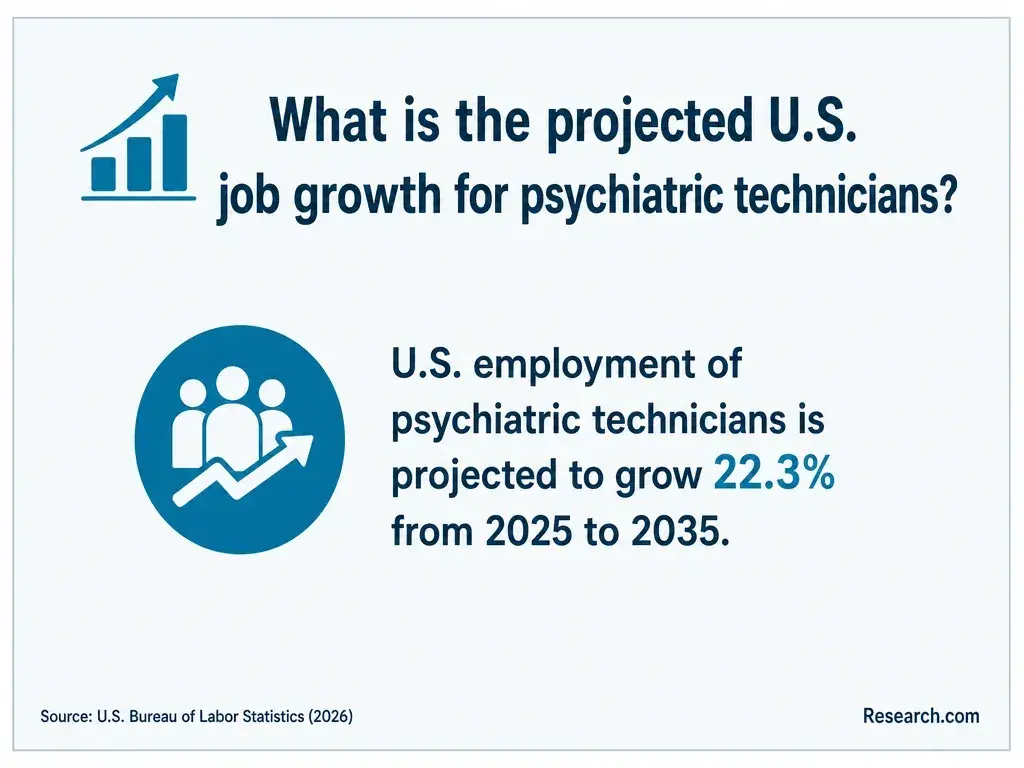
There is no single reliable salary or job-growth figure for "forensic psychology MS graduates." The U.S. Bureau of Labor Statistics reports employment by occupation, not by degree concentration.
Its May 2024 median annual wage of $45,120 for social and human service assistants offers context for one potential support-work category, not an expected starting salary or a ceiling for an individual graduate. Licensed psychologists are a different occupation with different entry requirements, so their wages should not be used to justify the return on a nonclinical MS.
For a useful outlook assessment, collect recent local postings for the exact role you want and record their pay ranges, required credentials, and experience. Compare those requirements with your current compensation and a program-specific total-cost estimate.
If postings do not require a specialized master's, economical routes to graduate psychology study are worth considering alongside targeted training or direct entry into the field.
How Can You Choose an Accredited Online Forensic Psychology Program?
First verify that the institution holds recognized institutional accreditation and that the degree awarded is the program you intend to take. Then evaluate the features that affect this career change: methods training, faculty access, approved applied work, scheduling, total cost, and documented outcomes for comparable students.
Institutional accreditation establishes an important baseline; it does not prove that a nonclinical MS qualifies graduates for psychologist licensure. Do not assume APA accreditation applies to a general forensic psychology master's.
Request the current catalog and ask the program to identify any in-person requirements, placement approval rules, career services, and published completion or employment figures - including how those figures were calculated.
Use evaluating forensic psychology degree admissions as a comparison starting point, then confirm every material policy with the institution for your entry term. Enroll only when the degree's verified opportunities match a job you would actually pursue.
Other Things You Should Know About Psychology
You do not need to disclose an uncertain plan. If you want tuition assistance or a schedule adjustment, first review the employer's eligibility, repayment, and confidentiality policies.
Not without appropriate employer authorization and any required academic oversight. Guest and employee records may contain sensitive information; removing names alone does not establish permission to use them.
Relevant, supervised volunteering can help you test your interest and document service experience. Ask the organization what training, screening, and responsibilities it requires.
Look at operations, training, or program-administration roles in justice and community organizations. Compare their postings with your existing management skills before paying for a specialized degree.
- Supervision Agreement/Verification of Experience Form | California Board of Psychology https://www.psychology.ca.gov/applicants/sup_agree.html
- Types of Financial Aid: Grants, Work-Study, and Loans | studentaid.gov https://studentaid.gov/understand-aid/types
- Programmatic Accrediting Agencies | ed.gov http://www.ed.gov/laws-and-policy/higher-education-laws-and-policy/college-accreditation/programmatic-accrediting-agencies
- Training, practice, and career considerations in forensic... - PMC https://pmc.ncbi.nlm.nih.gov/articles/PMC11638730/
- Top student questions regarding practicum and internships | Xavier University https://www.xavier.edu/counseling/clinical-mental-health/top-student-questions-regarding-practicum-and-internships
- Do I Need a Degree in Psychology to Apply to Graduate School? | William James College https://www.williamjames.edu/news/do-i-need-a-degree-in-psychology-to-apply.html
- A Career in Forensic and Public Service Psychology | apa.org https://www.apa.org/education-career/guide/subfields/forensic/education-training
- Admission Requirements | Department Of Psychology and Neuroscience https://psychology.unc.edu/admission-requirements/
- Choosing a Program - APA Accreditation https://accreditation.apa.org/choosing-a-program
- How to Become a Forensic Psychologist in California (2026) | Touro University Worldwide https://www.tuw.edu/psychology/how-to-become-a-forensic-psychologist-in-california/