2027 Online BA in Psychology - Addictions for Faith-Based Outreach Staff: What to Check Before Changing Careers
Audited and Verified:
Our Editorial and Data Verification Process
Research.com uses government datasets, official education statistics and primary institutional information to support its career and degree guides. Our review process checks factual accuracy, occupational definitions, source dates and the requirements associated with the credentials discussed.
How This Article Was Fact-Checked
Our editorial team verifies salary estimates, employment projections, education requirements and program information against original data providers and official organizations. Salary figures are checked against the relevant occupational definitions and reporting periods. Information about licensure, accreditation and required in-person training is reviewed separately.
Fact-checked and verified on:

Co-Founder and Chief Data Scientist
Faith-based outreach staff often already know how to build trust, organize support, and connect people with local services. Changing careers into addiction-related work, however, may require different education or a state credential - and an online psychology BA does not automatically provide either. This guide explains what an addictions focus can teach, where outreach experience transfers, and which requirements to check before committing to a degree. It will help you decide whether a BA, targeted training, or a qualifying professional program is the more direct next step.
Key Things You Should Know
- An online psychology BA with addictions coursework can strengthen outreach, referral, and program-support skills, but it does not by itself authorize addiction counseling or psychotherapy.
- Check the exact state credential and employer requirements for your target job before enrolling; a bachelor's degree, supervised hours, or a qualifying graduate degree may be required.
- Compare the full cost and time to completion against your existing experience: a four-year degree may be unnecessary if targeted training and supervised support work meet your goal.
What Is an Online Psychology BA in Addictions for Faith-Based Outreach Staff?
It is a bachelor's degree in psychology with coursework focused on substance use, behavior, and recovery. "Addictions" may be an official concentration, a minor, or simply a set of electives; check what the transcript will actually show. The BA's psychology and research foundation is broader than job training for one outreach position.
For staff who arrange recovery meetings, coordinate volunteers, or make referrals, that foundation can improve how they evaluate evidence and communicate with community partners. It does not turn ministry experience into clinical experience. If your intended move is into justice-system or victim-services work rather than addiction outreach, comparing faster forensic psychology undergraduate options may be useful - but choose based on the target job's duties, not the appeal of a concentration name.
Can an Online Psychology BA Qualify You for Addiction Counseling?
Not on its own. States regulate substance-use-disorder counseling differently. A particular credential might require specified addiction coursework, supervised practice, an examination, and a degree at a stated level. Some jurisdictions offer supervised roles with bachelor's-level entry; others require graduate preparation for the work or title you want. Ask the state addiction-counselor credentialing authority whether the exact program and courses satisfy its rules, then confirm the hiring agency's requirements.
Outreach staff can still provide support within their role: explain available services, help someone reach a qualified provider, and follow organizational safeguarding and confidentiality procedures. They should not present spiritual guidance, peer support, or a psychology course as authorization to diagnose or treat a substance-use disorder. If independent mental-health counseling is the goal, investigate a qualifying counseling degree and its state requirements; accelerated accredited clinical mental health counseling programs are a different pathway from a psychology BA, and speed alone does not establish eligibility.
Which Accreditation Should an Online Psychology Program Have?
First, verify that the university holds institutional accreditation recognized by the U.S. Department of Education. Then check that the accreditation covers the institution offering the online degree and that the school can enroll students in your state. Institutional accreditation matters for matters such as credit recognition and federal student-aid eligibility, but it does not certify that an addictions concentration meets a counseling board's rules.
Do not reject a psychology BA because it lacks American Psychological Association program accreditation: APA does not accredit general undergraduate psychology degrees. Conversely, if you are comparing professional counseling programs, check the recognition and coursework the relevant state board requires. Affordable accredited mental health counseling study options should be evaluated against that professional goal, not treated as interchangeable with BA programs.
Expect a broad psychology core, usually including research methods and statistics, alongside any available study of substance use, development, social behavior, mental health, and prevention. The most useful addictions courses connect evidence about risk and recovery with ethical communication, cultural responsiveness, and the limits of screening and referral. Course titles are not proof of supervised counseling preparation.
Look for an opportunity to apply research skills to a nonclinical outreach question - for example, reviewing published evidence to improve a referral directory. If the school offers an internship or capstone at your current organization, obtain academic approval before assuming your paid or volunteer work counts. The faculty and site may also need to approve supervision, confidentiality safeguards, and any use of client information. A comparison of online forensic psychology tuition, admissions, and outcomes addresses a distinct justice-oriented specialty; it cannot establish that a program teaches the addiction competencies your role needs.
Online delivery may let outreach staff keep working and remain connected to their community organization. It does not necessarily mean self-paced study: live classes, group projects, examination windows, or an approved local placement can conflict with evening and weekend outreach. Campus study may make faculty contact and local placements easier, but commuting can add time and cost. Compare the actual weekly timetable and support available in each format.
Ask whether remote students can obtain faculty feedback on research, use career services, and complete any applied requirement locally. If your long-term interest shifts toward justice-related graduate study, accelerated forensic psychology graduate completion routes illustrate why online pace must be assessed separately from career fit: a fast graduate program does not confer addiction-counseling authority.
Requirements depend on whether you apply as a first-time student or transfer student. Schools commonly request prior academic records and may have separate admission standards for the university and the major. Previous ministry training, employer learning, or human-services coursework can be valuable preparation, but only the receiving school can decide whether it awards credit.
If you have college coursework, request a written degree audit showing which credits satisfy general education, psychology prerequisites, electives, and any residency requirement. An accepted course is not necessarily a completed major requirement; statistics and research methods deserve particular attention. Use information on psychology degree completion with transfer coursework to frame your questions, then rely on the admitting institution's evaluation for your own timeline.
A bachelor's degree is commonly planned as four years of full-time study, but a working outreach employee's completion time depends on accepted credits, course sequencing, and manageable enrollment each term. Request a term-by-term plan rather than relying on an advertised "accelerated" timeframe. A required placement or course offered infrequently can delay completion even when other classes are asynchronous.
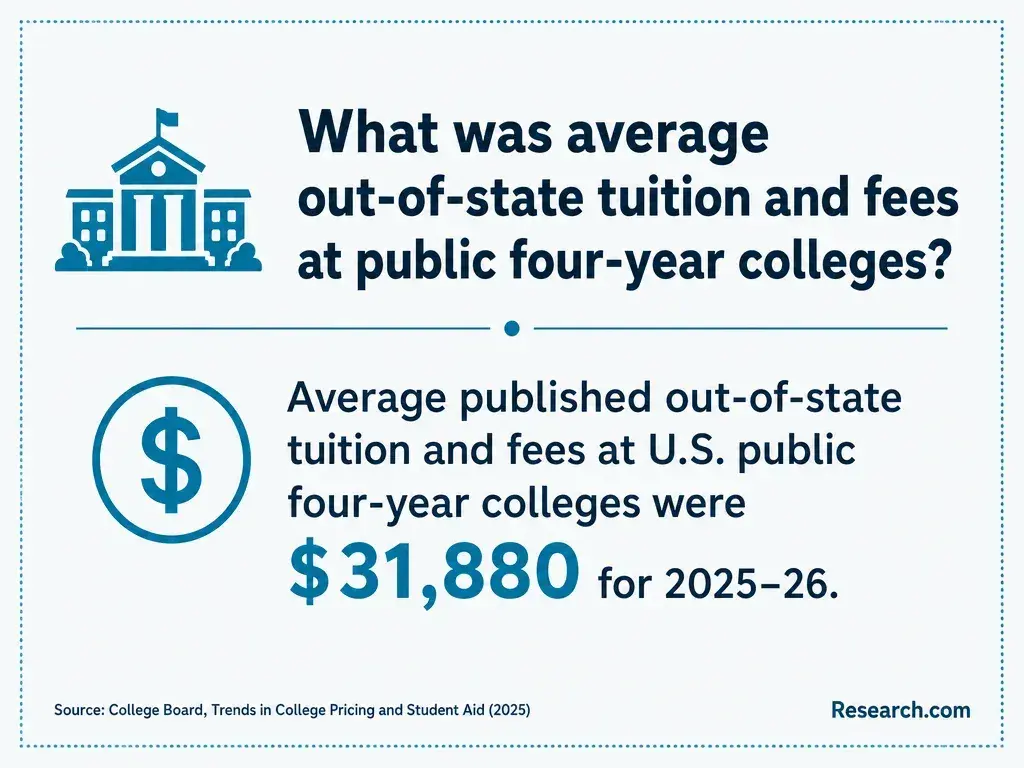
Compare the remaining cost to graduate, not just the advertised tuition rate. Include required credits, university fees, books or software, travel for any in-person obligation, and earnings you might forgo. Ask whether your employer offers education assistance and whether the school considers your intended enrollment level eligible for aid. Online psychology programs ranked by affordability can help identify schools to investigate, but your transfer audit and personalized cost estimate should control the financial decision.
The most plausible transition is often from familiar outreach duties into a larger community or behavioral-health organization - not directly into clinical treatment. The table distinguishes roles by their work and qualification boundaries; job postings and state rules remain decisive.
| Potential direction | Transferable outreach experience | What to verify |
| Recovery or peer-support work | Trust-building, practical support, and connection to services | Whether lived experience, a state peer credential, or supervision is required |
| Intake or referral coordination | Service navigation, documentation, and partner relationships | Employer requirements for privacy training and handling sensitive information |
| Community program coordination | Volunteer management, prevention events, and partnership building | Experience expectations, grant-reporting duties, and safeguarding policies |
| Addiction counseling | Communication and knowledge of local resources | The specific state credential, education, supervised practice, and permitted duties |
Build evidence of the work you want to do: documented referral procedures, staff training, or a supervisor-approved, privacy-safe service-improvement project may be more persuasive than the degree title alone. If your intended work is specifically in courts or corrections, accelerated forensic psychology graduate completion routes require their own role-by-role assessment; they are not a shortcut to addiction treatment practice.
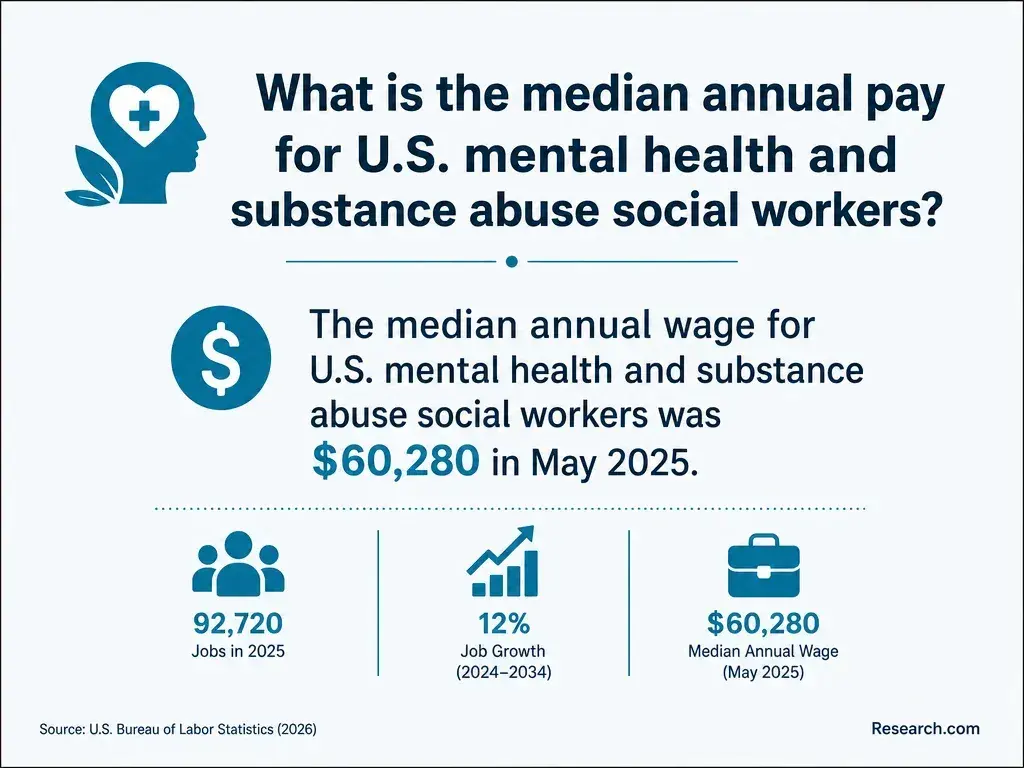
There is no single salary or employment-growth figure for graduates of an addictions-focused psychology BA. The U.S. Bureau of Labor Statistics reports wages and projections by occupation, not by concentration. Its social and human service assistant category is a closer comparison for some support and referral jobs than its substance-use counselor category, which includes workers with different credentials and responsibilities. Neither occupation-wide figure predicts what a particular nonprofit will offer you.
Before changing jobs, compare current local postings for the exact title and credential you can meet, including pay, benefits, supervision, and advancement requirements. If a master's-level counseling role is your intended destination, assess the additional education cost against that role's pay rather than attributing counselor wages to a BA. A comparison of clinical mental health master's tuition and career value addresses that separate investment decision.
Which Certifications Strengthen Faith-Based Addiction Outreach Careers?
The best credential depends on the tasks you will actually perform. A state-recognized peer-support credential may fit a recovery-support position if you meet its eligibility rules. Employer-approved training in overdose response, safeguarding, confidentiality, or crisis referral may be more immediately useful for outreach coordination. An addiction-counselor certification is different: confirm its education, supervised-hours, examination, renewal, and scope requirements with the responsible state authority before paying for a course.
Ask prospective employers which credentials they accept and whether they provide the supervision needed to pursue one. If they value a specific credential and experience over a bachelor's degree, that can be a less costly first move. If later advancement requires graduate education, compare that requirement with budget-friendly online psychology graduate degrees carefully: a lower-cost general psychology master's still may not meet a counseling board's educational rules.
Other Things You Should Know About Psychology
Possibly. Get the university's approval for the site, supervisor, tasks, and any use of organizational information before starting. Your existing position does not automatically count as academic credit.
Do not assume that removing names is enough. Check organizational privacy rules and faculty instructions, and use a hypothetical or publicly available example when permission is unclear.
Only if the institution formally records it. Ask the registrar how the concentration is awarded and what requirements you must complete.
Often, if the schedule is sustainable. Continued work can preserve income and help you test whether referral, program coordination, or another nonclinical role is the career change you actually want.
- Behavioral Health Career Descriptions | samhsa.gov https://www.samhsa.gov/about/careers/behavioral-health-workforce/careers-by-state/descriptions
- Accreditation in the U.S. | ed.gov http://www.ed.gov/laws-and-policy/higher-education-laws-and-policy/college-accreditation/accreditation-in-the-us
- What Financial Aid Offers Don't Tell You About the Cost of College | U.S. GAO https://www.gao.gov/blog/what-financial-aid-offers-dont-tell-you-about-cost-college
- Cost of Attendance (Budget) | 2026-2027 Federal Student Aid Handbook https://fsapartners.ed.gov/knowledge-center/fsa-handbook/2026-2027/vol3/ch2-cost-attendance-budget
- Understanding U.S. Accreditation | EducationUSA https://educationusa.state.gov/understanding-us-accreditation
- Types of Financial Aid: Grants, Work-Study, and Loans | studentaid.gov https://studentaid.gov/understand-aid/types
- Certified Addiction Counselor (CAC) clinical training program | colorado.gov https://bha.colorado.gov/for-service-providers/learning-and-development/certified-addiction-counselor-cac-clinical-training
- Online Addictions and Recovery Psychology Degree | Military Affairs https://www.liberty.edu/online/behavioral-sciences/bachelors/psychology/addictions-recovery/
- Addiction Counseling and Treatment A.A.S. - Career Degree | CLC https://www.clcillinois.edu/programs/bssdv/human-services/addiction-counseling-and-treatment-aas-career-degree
- How Do Transfer Credits Work When You Go Back to School? | Whitworth Online https://online.whitworth.edu/news-articles/how-do-transfer-credits-work-when-you-go-back-to-school/