2027 Online BA in Psychology - General Psychology for Recovery Coaches: Compare Transferable Skills and Degree Requirements
Audited and Verified:
Our Editorial and Data Verification Process
Research.com uses government datasets, official education statistics and primary institutional information to support its career and degree guides. Our review process checks factual accuracy, occupational definitions, source dates and the requirements associated with the credentials discussed.
How This Article Was Fact-Checked
Our editorial team verifies salary estimates, employment projections, education requirements and program information against original data providers and official organizations. Salary figures are checked against the relevant occupational definitions and reporting periods. Information about licensure, accreditation and required in-person training is reviewed separately.
Fact-checked and verified on:

Co-Founder and Chief Data Scientist
If you already support people in recovery, an online psychology BA may strengthen how you understand behavior, evaluate evidence, and communicate across service teams. It may not be the fastest route to a recovery coach job.
This guide compares what a general psychology degree teaches with what coaching requires in practice, then explains coursework, credentials, cost, and career options. Use it to decide whether a full degree advances your goals—or whether targeted training and supervised experience would do more for you sooner.
Key Things You Should Know
- A general psychology BA can deepen recovery-coaching skills, but it does not replace any peer credential, employer training, or supervision required for a particular job.
- Compare degree requirements against the tasks you want to perform: psychology courses build scientific understanding, while coach training addresses recovery-support practice and role boundaries more directly.
- Request a written degree audit and a complete cost estimate before enrolling; transfer acceptance alone does not establish how much coursework remains.
What Is an Online BA in General Psychology for Recovery Coaches?
An online BA in general psychology is a broad undergraduate degree covering human behavior, psychological research, and related social and biological processes. It is usually not a recovery-coaching credential or a formal addictions concentration. For a coach, its value lies in applying that foundation to nonclinical support work and, potentially, preparing for later study.
General psychology offers room to explore development, learning, social behavior, and research methods. A student who wants more addiction-specific coursework can compare undergraduate psychology programs with an addictions focus, while checking whether that focus is an officially designated concentration or simply a group of electives. Neither option authorizes addiction counseling.
Can a Psychology Bachelor's Degree Prepare You for Recovery Coaching?
Yes, as academic preparation—but not as a stand-alone qualification. Recovery coaches commonly help people identify self-directed goals, connect with resources, navigate services, and sustain engagement. Someone already doing community outreach or peer-support work may gain useful perspective from psychology coursework, especially when paired with feedback from an experienced supervisor.
The degree does not teach every task of a specific coaching job. Employers may require peer-support training, documented lived experience for designated peer roles, background checks, or a state-recognized credential. Compare postings for your target setting with career options in recovery services before choosing a program. If your immediate aim is an entry-level coach position and no bachelor's degree is required, approved coach training plus supervised experience may be the more direct first step.
Coaching also has a firm boundary: a coach can support goals and referrals within the job's policies but cannot use a psychology BA to diagnose a substance use disorder, provide psychotherapy, or independently deliver clinical treatment.
What Skills Transfer From General Psychology to Recovery Coaching?
The strongest transfer occurs when a coach can connect an academic concept to a permitted work task. This comparison separates what coursework can contribute from the practice a coach must still develop:
| Psychology preparation | Recovery-coaching application | Preparation still needed |
| Learning, motivation, and behavior | Discussing client-defined goals without treating setbacks as moral failures | Role-specific coaching methods and supervised practice |
| Developmental and cultural perspectives | Adapting communication to a person's circumstances and preferences | Local resources, accessibility practices, and community knowledge |
| Research methods and statistics | Reading claims about recovery programs critically | Agency-approved documentation and evaluation procedures |
| Ethics and communication | Recognizing confidentiality concerns and when to refer | Employer policies, reporting duties, and escalation procedures |
These are transferable foundations, not proof of proficiency. If you want to provide substance use counseling rather than recovery support, compare the more occupation-specific addiction counseling degree curriculum choices against your jurisdiction's credential rules. Similar course titles do not make coaching and counseling qualifications interchangeable.
Requirements vary by institution, but a general psychology BA typically combines general education with introductory psychology, statistics, research methods, and upper-level psychology courses. Depending on the school, students may study development, social psychology, cognition, biological psychology, and psychological disorders, then complete electives or a capstone. Courses about disorders or addiction teach subject matter; they do not confer clinical authority.
For recovery-coaching relevance, prioritize a workable sequence: build writing and quantitative foundations, take methods before advanced research work, then use electives to address gaps such as health behavior or community psychology. Check whether an addiction-related elective is offered regularly and whether it counts toward the major. An online forensic psychology degree selection guide illustrates why a named specialization should be evaluated separately; it is not a substitute for checking the general psychology curriculum you would actually complete.
If a capstone or internship interests you, ask whether it is required, whether your current recovery-service workplace could qualify, and who approves the site. Existing employment does not automatically count for academic credit.
First-time undergraduate applicants generally submit evidence of secondary-school completion and the institution's requested application materials. Transfer and returning students should expect to provide official college transcripts. Some schools have separate rules for entry to the psychology major, so admission to the university does not necessarily settle every degree requirement.
Ask an admissions or transfer adviser for a written evaluation showing where each accepted course applies: general education, the psychology major, an elective, or a prerequisite. Confirm any statistics or research-methods equivalency, minimum in-house coursework, course availability, and graduation requirements with the office authorized to issue the degree audit.
Admission and aid are different decisions. Students planning to use federal aid can review FAFSA and grants for substance abuse counseling students for funding questions to raise, then confirm eligibility and deadlines with the chosen school's financial-aid office.
Completion time depends on applicable transfer credits, enrollment pace, prerequisite order, and when required courses run. A school's advertised accelerated timeline may describe a student who enters with substantial usable credit; it may not describe your starting point. Even a fast-track bachelor's study in forensic psychology should be compared against an individualized degree audit, not treated as a timeline for a general psychology BA.
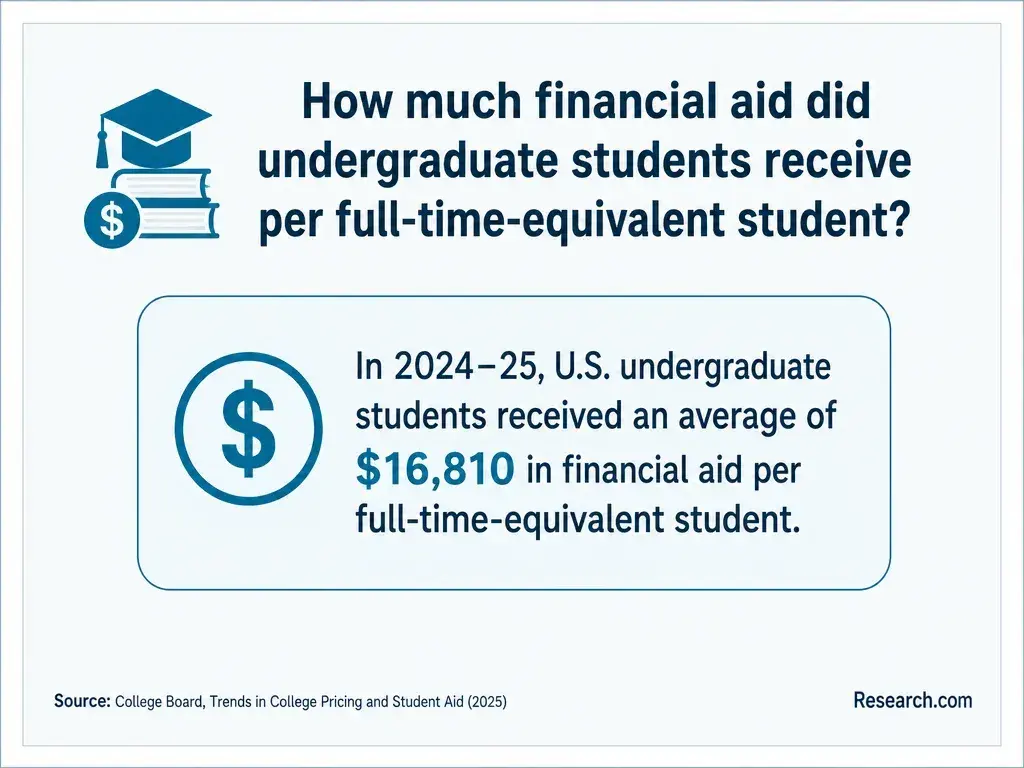
Calculate the cost from the credits remaining on your audit at the applicable tuition rate, then add mandatory fees, books, technology, and any travel or placement expense. Request a term-by-term estimate that reflects the pace you can sustain while working. Compare that total with the cost of approved coach training and the value of keeping your current earnings; a degree can be worthwhile for broader goals without being the least expensive way to qualify for coaching.
Online delivery does not, by itself, make a psychology BA less useful. For a recovery coach, the more consequential questions are whether the institution is appropriately accredited, whether the curriculum meets your goals, and whether you can obtain meaningful practice and feedback alongside it. Employers may place particular weight on your coaching experience and required credentials rather than the course delivery mode.
Check the actual schedule before relying on an "online" label. Classes may be asynchronous yet still require live discussions, group work, proctored assessments, or an approved in-person experience. If graduate study is a longer-term goal, compare those obligations and undergraduate costs with the additional expense of further education; psychology master's tuition comparisons can help frame that later decision, but a psychology master's is not required simply to become a recovery coach.
Verify the college or university's institutional accreditation through the accreditor and the U.S. Department of Education's recognized-accreditor information. Confirm that the accreditation covers the institution offering the degree and ask the school how its status affects transfer or federal-aid eligibility. Accreditation supports an institution's educational standing; it does not certify that a graduate meets a state's recovery-coach requirements.
Do not reject a general psychology BA because it lacks American Psychological Association program accreditation: APA accreditation applies to specified professional psychology programs and training, not general undergraduate psychology majors. Professional-program recognition becomes relevant if you later pursue a regulated career. For example, accelerated counseling study and accreditation requirements concern a different degree and credential pathway from recovery coaching.
There is no single nationwide recovery-coach license that makes every holder eligible for every US job. Requirements depend on the state, employer, funding arrangement, and job title. Some positions use a state-recognized peer or recovery-support certification; others specify employer training or a different credential. A designated peer role may have lived-experience criteria. Do not assume a BA waives training, supervised practice, examination, or renewal requirements.
Before paying for a degree or credential, obtain the target job description and ask the state credentialing body or employer which training provider it accepts, what experience must be documented, and what duties credential holders may perform. If your actual goal is psychotherapy, investigate a qualifying professional graduate pathway instead. Resources on shorter routes through mental health counseling graduate study address that separate goal; faster completion does not remove state licensure requirements.
What Careers and Salaries Can Follow a Psychology Bachelor's Degree?
A coach with a psychology BA may pursue recovery-support, outreach, intake, service-coordination, or other nonclinical human-services positions, subject to each employer's requirements. The degree may also support applications to further education. It does not automatically qualify its holder as a counselor or psychologist, and advancement often depends on demonstrated experience, supervision, and the credential attached to the target role.
Use salary figures carefully. The U.S. Bureau of Labor Statistics reports occupational data for broader groups, such as social and human service assistants, but does not publish a national wage specifically for "recovery coaches with a psychology BA." A broad occupational median would not predict your offer. Compare local postings that match your duties, credential, location, and experience instead. Likewise, forensic psychology graduate occupations and salary considerations describe a different educational and employment market, not an expected earnings upgrade for a recovery coach.
The practical choice is to start with the jobs you want, mark which require a bachelor's degree and which require a peer credential, and price only the education that closes a documented gap. Choose the BA when its broader learning and future options justify its remaining cost—not because a degree title appears to promise a coaching salary.
Other Things You Should Know About Psychology
Generally, a psychology application is about academic admission, not a requirement to disclose personal recovery history. A particular peer credential or employer may have separate lived-experience criteria; ask that organization what documentation it requires and how it protects your information.
Often, if an organization accepts volunteers and provides appropriate training and oversight. Agree on your duties and confidentiality rules first; volunteering does not automatically become degree credit or credential-qualifying experience.
Do not assume it will. Ask the credentialing body in the destination state whether it recognizes your training and experience and whether additional steps are required.
Look for clearly identified research, an appropriate comparison, and an explanation of limitations. Be cautious when a single study or personal account is presented as proof that an approach works for everyone.
- Principles of Good Practice for Distance Education | texas.gov https://reportcenter.highered.texas.gov/agency-publication/miscellaneous/principles-of-good-practice-approved-oct-2023/
- Chapter 2 - Roles of the Peer Worker - NCBI https://www.ncbi.nlm.nih.gov/books/NBK596269/
- Become a Certified Recovery Peer Advocate | ny.gov https://oasas.ny.gov/recovery/become-certified-recovery-peer-advocate
- Recovery Coach | dutchessny.gov https://apps.dutchessny.gov/OB-Public-Access-API/api/Document/ASSk3Vb5bTTxMZxjy%C3%891suXmQLK9tKqlgANH%C3%819%C3%81jK%C3%890yKkUpF%C3%81oylAQEGwg%C3%81AF2GcLNKsSPLO8V37gcYUy1CZfOA=
- Behavioral Health Practicum, Internship, and Field Experience Opportunities | NC DAC https://www.dac.nc.gov/divisions-and-sections/health-services/behavioral-health-practicum-internship-and-field-experience-opportunities
- Evaluation of Transfer Credit | Cal Poly Academic Catalog https://catalog.calpoly.edu/academic-standards-policies/evaluation-transfer-credit/
- Find the Right Online Degree Program by Using a Comparison Framework | Columbia Southern University https://www.columbiasouthern.edu/blog/blog-articles/2026/august/find-the-right-online-degree-program
- BA in Psychology | Cal State LA https://www.calstatela.edu/nss/psychology/ba-psychology
- Online Psychology Bachelor Degree - Vols Online https://volsonline.utk.edu/program/bachelors/psychology-bapsy/
- General Transfer Guideline Bachelor | wgu.edu https://partners.wgu.edu/general-transfer-guideline-bachelor-dynamic