2027 Online BA in Psychology - Mental Health for Work in Domestic Violence Service Organizations: Compare Degree Fit and Hiring Requirements
Audited and Verified:
Our Editorial and Data Verification Process
Research.com uses government datasets, official education statistics and primary institutional information to support its career and degree guides. Our review process checks factual accuracy, occupational definitions, source dates and the requirements associated with the credentials discussed.
How This Article Was Fact-Checked
Our editorial team verifies salary estimates, employment projections, education requirements and program information against original data providers and official organizations. Salary figures are checked against the relevant occupational definitions and reporting periods. Information about licensure, accreditation and required in-person training is reviewed separately.
Fact-checked and verified on:

Co-Founder and Chief Data Scientist
If you want to work at a domestic violence service organization, an online psychology BA may build useful mental health knowledge—but it may not be the qualification an employer values most. Survivor advocacy, shelter support, and counseling have different hiring rules and responsibilities.
This guide is for prospective students, career changers, and current nonprofit workers deciding whether a degree is worth the investment. You'll learn how to match coursework and supervised experience to actual job postings, compare online and campus options, and recognize when targeted advocate training or a different degree is the more direct route.
Key Things You Should Know
- An online psychology BA can support nonclinical advocacy and service-coordination applications, but it does not qualify you to diagnose, provide psychotherapy, or practice as a licensed psychologist.
- Advocate qualifications depend on the employer and jurisdiction; survivor-centered training, relevant experience, safety procedures, and language skills may matter more than the major's name.
- A bachelor's degree commonly requires about 120 semester credits. Before enrolling, compare the credits you still need and total cost against the qualifications in local job postings.
What can an online psychology bachelor's degree prepare you for in domestic violence services?
A psychology BA studies behavior, development, relationships, mental health, and research. In a domestic violence organization, that background can help you understand trauma-related responses, communicate without blaming survivors, evaluate service information, and recognize when a referral to a qualified clinician is appropriate. It is academic preparation—not training to assess a survivor's diagnosis or deliver treatment.
The strongest fit is generally nonclinical work: answering a helpline under agency protocols, explaining available options, coordinating referrals, supporting prevention programs, or assisting with program evaluation. These tasks also require organization-specific preparation in safety planning, confidentiality, documentation, and survivor choice. When reviewing online psychology education pathways, look beyond the degree title for relevant electives and opportunities to demonstrate those skills.
If you already work in a shelter or nonprofit, a degree may help you qualify for positions that explicitly require a bachelor's degree or involve more research and program responsibilities. If your target posting accepts equivalent experience and your main gap is advocate training, a full BA may not be the quickest solution.
What degree and training requirements do domestic violence service organizations typically expect?
There is no single nationwide educational requirement for domestic violence advocates. Requirements vary by job duties, funding conditions, employer policy, and state law. A shelter support role may accept relevant experience without a bachelor's degree; a coordinator position may request one; a clinical therapist role requires a separate qualifying professional pathway.
To read a posting accurately, separate its requirements into three categories: degree or equivalent experience, training completed before or after hiring, and duties that require a license or other credential. Employers may also assess crisis communication, culturally responsive practice, confidentiality, scheduling availability, and experience with community referrals. Positions serving children can have additional screening and safeguarding requirements.
Do not assume that a course on trauma replaces an employer's advocate training. Likewise, programs at online colleges offering addiction counseling study address an adjacent service area, not an automatic qualification for domestic violence advocacy or substance-use counseling. Compare the specific credential requested in each posting.
Does an online psychology bachelor's degree meet domestic violence advocate qualifications?
Sometimes, but not on its own in every setting. If a posting accepts a bachelor's degree in psychology or a related field, an appropriately accredited online BA can satisfy that educational condition. You must still meet any experience, training, background check, or scheduling requirements. If a posting does not require a degree, completing one is not a prerequisite for applying.
The word "mental health" on a concentration or transcript does not expand an advocate's scope of practice. A concentration may provide useful context for referrals and communication, but an employer must determine whether your preparation fits its work. The same caution applies when comparing addiction-focused undergraduate psychology degrees: overlapping course topics do not make two service roles interchangeable.
For a concrete check, collect several local postings for your target title. Highlight the exact degree language, required training, preferred experience, client-contact duties, and any credential. If "or equivalent experience" appears, ask the hiring organization how it evaluates your existing work rather than assuming you need another degree.
Neither format is inherently better preparation for survivor services. The deciding issue is whether you can complete the degree and gain relevant, safely supervised experience. Online coursework may let a working advocate remain employed, but live classes, group projects, proctored assessments, or local placements can still impose fixed hours.
This comparison focuses on the parts of program delivery that can affect readiness for domestic violence work:
| Decision factor | Online program | Campus program |
| Schedule | May reduce commuting; confirm live-session and deadline requirements | May provide a predictable in-person schedule but require travel |
| Applied experience | May require you to locate a locally approved site | May offer nearby partnerships; access is not guaranteed |
| Faculty and peer access | Often depends on virtual meetings and response times | May allow more in-person contact; availability still varies |
| Geographic fit | Can allow study while building relationships with local agencies | May make sense when campus partners match your intended workplace |
Ask each school whether placements are optional or required, who approves a site, and whether your current nonprofit job can count. Do not choose a program merely for an appealing forensic label: planning a shorter undergraduate forensic psychology degree is a different decision from securing survivor-advocacy experience.
Prioritize courses that improve nonclinical judgment and communication: developmental and social psychology, psychopathology taught as academic subject matter, research methods, statistics, and ethics. Offerings on trauma, family systems, cultural psychology, substance use, or community psychology may add context if the program actually provides them. Check whether each is a required course, an elective offered regularly, or part of an officially named concentration.
Research methods matter because service organizations must interpret needs assessments, evaluate outreach, and report outcomes without overstating what limited data proves. A course on disorders can help you understand terminology; it cannot authorize diagnosis. For work involving co-occurring substance-use needs, recovery support career planning can clarify how referral and support responsibilities differ from counseling credentials.
Pair coursework with approved, supervised experience in intake support, prevention education, or referrals. Before using any experience for a class project, confirm agency permission and privacy rules; identifiable survivor records are not a student portfolio resource.
Check that the institution holds recognized institutional accreditation and that the accreditation covers the institution offering the online degree. Then confirm the exact degree name and requirements in the current catalog. Accreditation is important for institutional quality assurance and can affect credit-transfer and further-study decisions, but another school retains authority to decide which credits it accepts.
Do not look for APA accreditation of a general psychology BA: APA accreditation applies to specified professional psychology programs and training, not ordinary undergraduate psychology majors. If your long-term aim is counseling, investigate the accreditation and state educational rules that apply to the future counseling program. A guide to accredited clinical counseling timelines for working students addresses that separate decision; it does not turn a BA into a clinical credential.
First-year admission commonly involves a secondary-school credential and an institutional application; transfer applicants also submit prior college records. Requirements differ by school, and admission to a university does not always mean immediate admission to its psychology major. A bachelor's degree commonly totals about 120 semester credits, but your remaining time depends on accepted credits, how they apply to requirements, course sequencing, and your enrollment pace.
For cost, compare the school's published tuition rate and mandatory fees with a written estimate of your remaining requirements. Add books, technology, possible travel, and any costs associated with an unpaid placement. A low per-credit price can be poor value if many prior credits count only as electives or required courses are offered infrequently.
Ask for a degree audit before relying on a completion estimate, and use the institution's aid office to check your eligibility. If substance use services are also a serious career option, substance use counseling bachelor's financial aid options provide a comparison point—not evidence that the same aid package or professional outcome applies to a psychology BA.
Possible nonclinical titles include domestic violence advocate, shelter advocate, hotline worker, prevention educator, intake coordinator, and community-service or referral coordinator. Some organizations also hire program assistants to track activities and prepare reports. Titles are not standardized: one "case manager" opening may emphasize practical referrals, while another may require a social work degree or credential.
For each vacancy, compare actual tasks with your evidence of readiness. Can you describe supervised experience communicating options without directing a survivor's decisions, following confidentiality procedures, documenting work appropriately, and knowing when to involve a supervisor? Employers may value those examples more than an unrelated elective.
If your aim is specifically substance-use counseling rather than victim advocacy, affordable substance abuse counseling bachelor's costs and careers address a different set of qualifications. For psychotherapy or independent clinical assessment, plan for an appropriate graduate professional degree, supervised practice, and applicable licensure instead of treating an entry-level service job as clinical authorization.
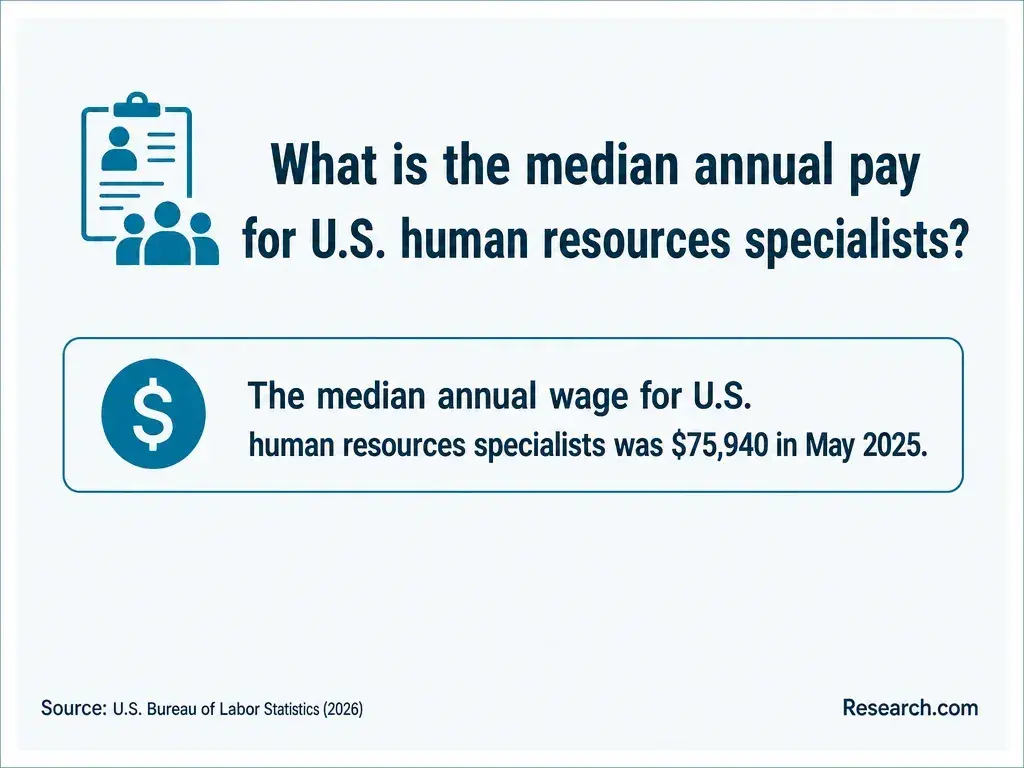
There is no reliable national salary figure for "psychology BA graduates in domestic violence services." The U.S. Bureau of Labor Statistics tracks broader occupations, such as social and human service assistants, whose duties can overlap with some support and referral jobs. Its occupation-wide wages and employment projections are useful context, but they are not a prediction for an advocate, a particular nonprofit, or a new graduate. Check the latest published BLS occupation definition and reference period before using a figure in your budget.
Local postings are more useful for comparing offers. Account for posted pay, hours, evening or on-call duties, benefits, travel, and whether advancement requires a degree or license. If a future master's degree is part of your earnings plan, compare its full cost with the specific roles it could qualify you for; graduate psychology tuition and program value are relevant only after confirming that the proposed degree matches those roles.
Which licenses and certifications require education beyond a psychology bachelor's degree?
A psychology BA does not itself qualify someone for licensure as a psychologist, professional counselor, or clinical social worker. Those are distinct professional pathways with jurisdiction-specific education, supervised experience, examinations, and other requirements. State rules for addiction counselors and some other credentials also vary; never infer eligibility from a course title or concentration.
Domestic violence advocate training or certification is a separate question. Some employers provide required training, while particular states or positions may specify additional standards. Ask the employer or responsible state authority which training applies to the exact job before paying for a certificate.
If your goal is to provide therapy rather than advocacy, compare qualifying graduate programs against the licensing board's rules for the state where you intend to practice. Tuition-conscious mental health counseling degree choices may help frame the financial comparison, but affordability cannot substitute for verifying licensure eligibility.
Other Things You Should Know About Psychology
Yes. You can begin with coursework, agency-approved prevention materials, or administrative volunteering. Confirm the employer's training and supervision requirements before taking on direct contact.
They can be valuable when an organization serves speakers of those languages. Employers may still assess proficiency and require you to follow policies on interpreters, confidentiality, and accurate communication.
Describe your responsibilities and skills without identifying clients or disclosing protected agency information. Obtain agency approval before sharing work products, even if names have been removed.
Yes. Ask which entry-level roles it hires for, what qualifications it requires, and whether it offers training or supervised opportunities. That information can prevent you from paying for education that does not address your main hiring gap.
- DAPIP | Homepage - Office of Postsecondary Education (OPE) https://ope.ed.gov/dapip/
- OMH Funded Training for Providers | ny.gov https://omh.ny.gov/omhweb/planning/training-for-providers/
- Mandatory State Reporting Guidance - Research at the UW https://research.washington.edu/research/hsd/guidance/mandatory-reporting/
- How to Become a Crisis Counselor | Boundless Learning Online Learning Services https://onlinedegrees.bradley.edu/blog/how-to-become-a-crisis-counselor
- What Is the Difference Between Psychologists, Psychiatrists and Social Workers? | apa.org https://www.apa.org/ptsd-guideline/patients-and-families/psychotherapy-professionals
- How to Become a Victim Advocate in California: Steps and Pay | Touro University Worldwide https://www.tuw.edu/psychology/how-to-become-a-victim-advocate/
- Do Employers Accept Online Degrees? What Matters Most to Hiring Managers | University of the People | https://www.uopeople.edu/blog/do-employers-accept-online-degrees/
- BSW vs BA Psychology: Jobs, Salary & More - AU https://online.aurora.edu/program-resources/social-work-vs-psychology-degree/
- Why APA Accreditation Matters https://accreditation.apa.org/why-accreditation-matters
- What Does a Domestic Violence Social Worker Do? | Virginia Commonwealth University https://onlinesocialwork.vcu.edu/blog/what-does-a-domestic-violence-social-worker-do/