2027 Online BA in Psychology - Addictions vs. a Future Master's in Social Work: Compare Curriculum, Cost, and Career Fit
Audited and Verified:
Our Editorial and Data Verification Process
Research.com uses government datasets, official education statistics and primary institutional information to support its career and degree guides. Our review process checks factual accuracy, occupational definitions, source dates and the requirements associated with the credentials discussed.
How This Article Was Fact-Checked
Our editorial team verifies salary estimates, employment projections, education requirements and program information against original data providers and official organizations. Salary figures are checked against the relevant occupational definitions and reporting periods. Information about licensure, accreditation and required in-person training is reviewed separately.
Fact-checked and verified on:

Co-Founder and Chief Data Scientist
An online psychology BA with an addictions focus can be a practical first step into recovery services - but it is not a shorter version of a master's in social work. If you hope to become a clinical social worker, the bachelor's degree you choose now affects your preparation, cost, and possible time to the MSW. This comparison explains what each degree teaches, which jobs each may support, and why fieldwork and licensing rules matter even when classes are online. Use it to choose a bachelor's path that fits both your immediate work goals and your intended graduate degree.
Key Things You Should Know
- An addictions-focused psychology BA supports nonclinical work and can precede an MSW, but it does not itself qualify you for clinical social work or psychotherapy.
- A psychology BA generally follows the regular MSW route; advanced-standing MSW admission is generally reserved for graduates of qualifying accredited BSW programs.
- Under CSWE's 2022 accreditation standards, an MSW includes at least 900 hours of field education. Budget for the placement schedule and any lost work time, not just online tuition.
What Is an Online Bachelor's in Psychology With an Addictions Focus?
It is an undergraduate psychology degree that adds coursework on substance use, prevention, recovery, or behavioral health. "Addictions focus" might mean an official concentration, a set of electives, or simply a program description; the transcript and degree requirements tell you which. Online refers to course delivery, not necessarily to internships or other applied experiences.
The degree can help you understand behavior and evaluate research while preparing for support-oriented work. It is also a possible undergraduate route to an MSW. If you are finishing an earlier degree, compare psychology degree completion with transfer coursework, but request a degree audit: accepted credits do not necessarily satisfy the psychology major or addictions requirements.
How Does an Addictions Psychology Bachelor's Compare With an MSW?
These are different degree levels, not interchangeable specializations. The BA primarily develops psychological knowledge and research literacy; the MSW is graduate professional education in social work practice. The comparison matters most if you are choosing a bachelor's degree now with clinical social work in mind later.
| Decision factor | Psychology BA with addictions focus | MSW |
| Primary emphasis | Psychological science, research methods, and addiction-related study | Social work practice, service systems, ethics, and supervised field education |
| Typical applied learning | Program-dependent internship, research, or project; it may be nonclinical | Required, supervised social work field education |
| Clinical social work pathway | May meet the undergraduate-degree condition for regular MSW admission; not a clinical credential | Can meet the graduate education component of a state's clinical social work pathway, subject to program and state rules |
| Key limitation | Does not usually confer advanced-standing MSW eligibility | Requires additional time, expense, fieldwork, and post-degree licensing steps |
If your immediate goal is a state-recognized substance-use counseling credential rather than clinical social work, compare inexpensive undergraduate substance use counseling degree choices against that state's rules before selecting either path. A program's name alone does not establish credential eligibility.
Which Degree Leads to More Career Options in Addiction and Mental Health?
For an immediate entry-level move, the BA may support applications for recovery-program coordination, intake support, outreach, research assistance, or other nonclinical human-services jobs. Employers may also require experience, training, or a separate credential. Work involving referrals and documentation is not the same as diagnosing a disorder or providing therapy.
An MSW can open a broader range of social work positions. After the applicable state's additional supervised experience, examination, and licensing requirements, it can also support clinical social work practice. If that is your clear destination, a CSWE-accredited BSW deserves comparison with the psychology BA because qualifying BSW graduates may be eligible for advanced-standing MSW programs. Choose the psychology BA instead when its research training or broader undergraduate options better serve you and you accept the likely regular-length MSW route.
Different interests call for different comparisons. A forensic psychology program review before enrollment is useful if justice-system work, rather than addiction services or clinical social work, is your actual target; a forensic label does not add social work credentials.
Look first for statistics, research methods, developmental and social psychology, and the biological or behavioral foundations of psychology. Addiction-focused offerings may examine substance-use patterns, prevention, treatment systems, recovery, and co-occurring concerns. Catalogs vary: a course titled "counseling" may teach concepts without preparing students to counsel clients.
For future MSW study, prioritize writing, ethical reasoning, cultural responsiveness, and opportunities to work appropriately with communities. A supervised nonclinical project could demonstrate that you can evaluate a prevention program or communicate evidence without claiming treatment competence. Ask whether specialty courses run every term and whether any placement needs local site approval.
Speed can conceal curricular gaps. Readers also comparing three-year forensic psychology bachelor's routes should apply the same test here: check the actual methods courses, electives, transfer evaluation, and graduation sequence rather than relying on an advertised finish time.
MSW study typically combines social work practice with ethics, policy, research, human behavior in social environments, and supervised field education. Clinical offerings may address assessment, intervention, and work with individuals or families; available specializations differ by school. A course on addiction is useful, but the full curriculum and placements - not its title - determine how well the program supports your intended work.
Field education is the decisive scheduling difference from many online bachelor's programs. Under CSWE's 2022 standards, MSW programs provide at least 900 hours of field education. Confirm when hours must be completed, whether your local site can be approved, and how work or caregiving commitments fit around supervision. Online classes do not make fieldwork remote or self-paced.
If psychotherapy is the goal but social work's policy and systems emphasis does not fit, accelerated online master's preparation in mental health counseling is a separate route to investigate. Compare the relevant state licensing pathways rather than treating a counseling master's and an MSW as interchangeable.
Psychology BA admission and completion time depend heavily on transfer credits, general education, major sequencing, and course availability. Regular-standing MSW programs typically require a completed bachelor's degree and review applicants under their own academic and experience criteria; a psychology major is not universally required. Advanced standing generally requires a qualifying accredited BSW, with each MSW setting its own eligibility rules.
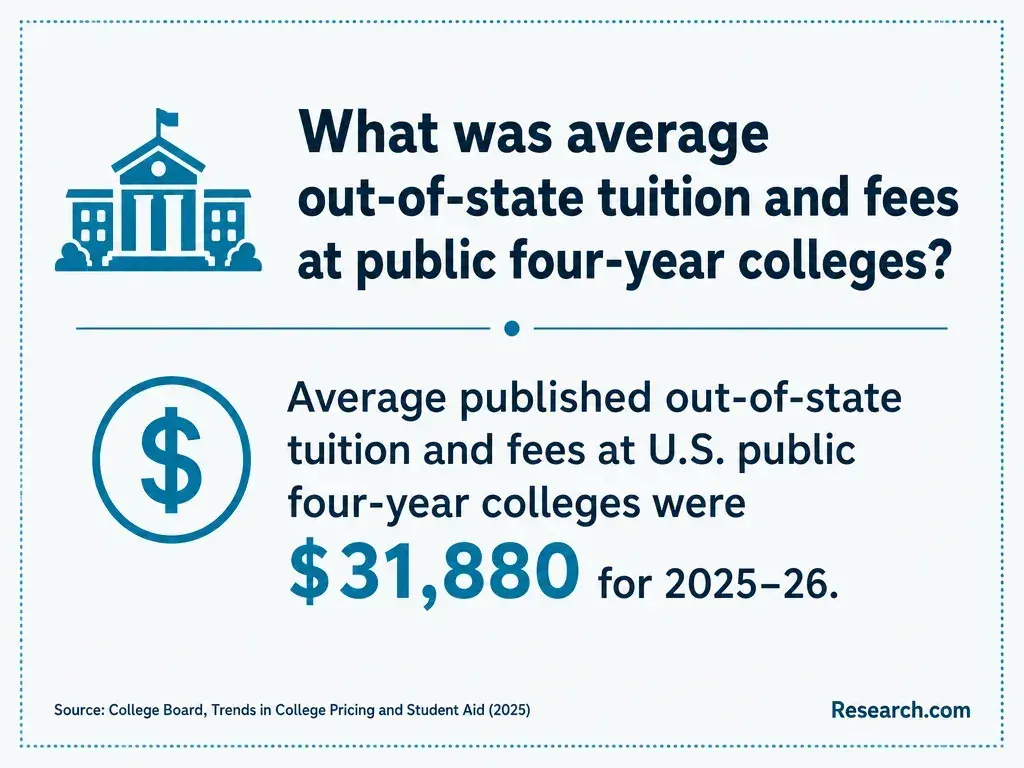
Published tuition is only one part of the comparison. These cost categories can change which path is affordable:
- Bachelor's: Remaining credits after an official degree audit, per-credit charges, fees, materials, and any travel for applied learning.
- MSW: Regular- versus advanced-standing credit requirements, fees, placement travel, and earnings forgone when field hours conflict with paid work.
- Both: Financial-aid eligibility, borrowing costs, and any employer education assistance that has been confirmed in writing.
For a fair estimate, request each school's required remaining credits and current charges, then calculate tuition and mandatory fees separately from living and placement costs. Planning a budget for an online psychology degree is a starting point, not a substitute for a personalized degree audit and MSW cost estimate.
Not through the BA alone. States regulate addiction counseling, professional counseling, and clinical social work through different rules. Depending on the state and credential, an addiction counselor pathway may involve specified coursework, supervised experience, and an examination; independent mental health counseling generally requires qualifying graduate education and further supervised practice. An MSW is the social work route, not an automatic professional counselor license.
Begin with the exact job title and state where you intend to work. Compare that regulator's required degree, approved coursework, supervision, and permitted duties with the program's written disclosures. If professional counseling rather than social work is the goal, budget planning for mental health counseling study should include the qualifying master's and supervised period, not just an inexpensive bachelor's degree.
There is no reliable single salary for "addictions psychology BA graduates" or "MSW graduates." Pay depends on the occupation, location, employer, experience, and license. The U.S. Bureau of Labor Statistics (BLS) reports occupation-wide wages and projections for categories including social workers and substance abuse, behavioral disorder, and mental health counselors. Those categories include workers with different credentials; neither is a starting-salary forecast for a new graduate.
Use the latest BLS Occupational Outlook Handbook entry for the specific job you want, then compare local postings that match your current or prospective credentials. Read its typical entry requirements as carefully as its wage and growth figures. For the same reason, pay comparisons across forensic psychology-related careers should not be used to estimate earnings in addiction support or clinical social work: the occupational roles differ.
How Can You Choose a Reputable Online Psychology or MSW Program?
Start with the job you want after the bachelor's degree and the credential you might seek later. Ask each school for answers specific to your entry term and state. The following checks expose the differences that program names and tuition advertisements can hide:
- Obtain a written transfer evaluation showing which credits satisfy general education, psychology, addictions, and remaining graduation requirements.
- Verify institutional accreditation, the MSW's CSWE status where applicable, and the target state board's education rules.
- Request sample course schedules and field-placement policies, including live sessions, local site approval, supervision, travel, and weekly availability.
- Compare remaining credits, mandatory charges, likely placement costs, and documented career support; ask what evidence supports any reported outcomes.
If cost is decisive, investigate scholarship options for online addiction counseling undergraduates alongside each school's aid offer. Do not assume a scholarship applies to a psychology BA - or that aid for the BA will cover a later MSW.
Other Things You Should Know About Psychology
No. Schools may record a concentration on a transcript, award a separate certificate, or offer only electives. Ask what the official academic record will show before describing the focus on applications.
Possibly, but employment does not automatically count. The program must approve the site, supervision, learning activities, and any rules separating paid duties from placement duties.
Yes, if it fits your degree plan. Statistics helps you assess research and program outcomes, though an individual MSW decides its own admission prerequisites.
Possibly. Confirm that the school can enroll students in your state, support an approved local field placement, and explain how its curriculum relates to your state's licensing requirements.
- Cost of Attendance (Budget) | 2025-2026 Federal Student Aid Handbook https://fsapartners.ed.gov/knowledge-center/fsa-handbook/2025-2026/vol3/ch2-cost-attendance-budget
- Understanding College Costs | studentaid.gov https://studentaid.gov/resources/prepare-for-college/students/choosing-schools/consider-costs
- Online Bachelor's in Psychology | University of Kansas https://online.ku.edu/undergraduate-programs/online-bachelors-psychology
- Online Bachelor's Degree in Psychology in Addictions | Purdue Global https://www.purdueglobal.edu/degree-programs/psychology/bachelor-psychology-addictions/
- How an MSW Prepares for Clinical and Non-Clinical Careers | Missouri Baptist University Online https://online.mobap.edu/about/news/msw-careers-clinical-and-nonclinical/
- Transfer Students/College Degree Holders | fitnyc.edu https://www.fitnyc.edu/admissions/undergraduate-applicants/transfer-students.php
- Is an MSW Worth It? 2026 Cost, Salary and ROI Guide | UK College of Social Work https://socialworkonline.uky.edu/resources/article/things-consider-applying-msw-program/
- Transfer Credit Guidelines | Undergraduate Admissions https://admissions.uconn.edu/apply/transfer/transfer-credit-guidelines/
- Social Work vs Psychology Degree: Choose Your Path | Missouri Baptist University (Mobap) https://www.mobap.edu/news/social-work-vs-psychology-degree-which-path-fits-your-goals/
- How Online Social Work Degrees Work: A Guide to BSW and MSW Programs | Herzing University https://www.herzing.edu/blog/how-online-social-work-degrees-work