2027 Online BA in Psychology - Mental Health: Should You Take an Entry-Level Related Job Before Enrolling?
Audited and Verified:
Our Editorial and Data Verification Process
Research.com uses government datasets, official education statistics and primary institutional information to support its career and degree guides. Our review process checks factual accuracy, occupational definitions, source dates and the requirements associated with the credentials discussed.
How This Article Was Fact-Checked
Our editorial team verifies salary estimates, employment projections, education requirements and program information against original data providers and official organizations. Salary figures are checked against the relevant occupational definitions and reporting periods. Information about licensure, accreditation and required in-person training is reviewed separately.
Fact-checked and verified on:

Co-Founder and Chief Data Scientist
An entry-level mental health job can show you what support work is like before you commit to an online psychology BA. But postponing enrollment is not automatically the best way to gain that experience. For prospective students and career changers, the choice depends on your target role, finances, schedule, and tolerance for the job's demands.
This guide explains when working first is worthwhile, when studying and working together makes more sense, and what to check before choosing a degree that studies mental health but does not qualify you to provide therapy.
Key Things You Should Know
- A related job before enrollment is usually optional. Take one first if you need to test your fit with direct-service work or clarify your career goal; do not delay solely because a psychology BA seems to require it.
- Look for supervised, nonclinical duties such as outreach, scheduling, referrals, or program support. A mental health focus in a BA does not authorize diagnosis or psychotherapy.
- Compare the job's pay and schedule with the degree's total cost, required credits, and placement obligations. Prior work experience may strengthen your preparation without shortening the degree.
Should You Work in Mental Health Before Enrolling in an Online Psychology BA?
Work first if you are uncertain whether you want a client-facing career, need income before committing to tuition, or lack relevant experience for your intended support role. Start the BA sooner if your goal is already clear, the available jobs would require an unsustainable schedule, or delaying would not improve your qualifications. Most online psychology bachelor's programs do not require mental health employment for admission, although each school sets its own rules.
The useful test is whether a job will answer a specific question. For example, a supervised outreach role can reveal whether you enjoy helping people navigate services; an administrative role may teach you more about documentation and referrals than about direct support. Neither is a substitute for studying statistics and research methods.
The choices differ most in what they cost you and what you can learn from them:
| Path | Best fit | Main trade-off |
| Work before enrolling | You need to test a target role or stabilize your finances. | Enrollment is delayed, and the job may not lead to academic credit. |
| Work while enrolled | You need income and can protect study time. | Shift work, live classes, and deadlines may conflict. |
| Enroll without a related job | You have a clear goal or limited access to suitable work. | You must seek other ways to test your interest and build experience. |
Ask a prospective employer about training, supervision, safety procedures, and actual duties before accepting. If time matters more than pre-enrollment experience, compare shorter routes to an online psychology major, but check whether the pace leaves room for paid work.
What Can You Do With an Online BA in Psychology and Mental Health?
An online BA can help you explain behavior using psychological evidence, evaluate claims about mental health, and communicate with people in service settings. Paired with appropriate experience, it may support applications for nonclinical outreach, intake, program coordination, research support, or human-services work. The degree alone does not establish eligibility for a particular job; employers may also require relevant experience, training, a background check, or a separate credential.
Use your intended job description to decide whether working first will help. If postings emphasize documentation and referral coordination, a supervised service job may be valuable. If they emphasize data collection or analysis, research methods coursework and a faculty-guided project may provide stronger evidence. A specialized interest may point elsewhere: compare online forensic psychology programs and graduate outcomes only if justice-related support or research is your actual goal, not simply because the title sounds career-specific.
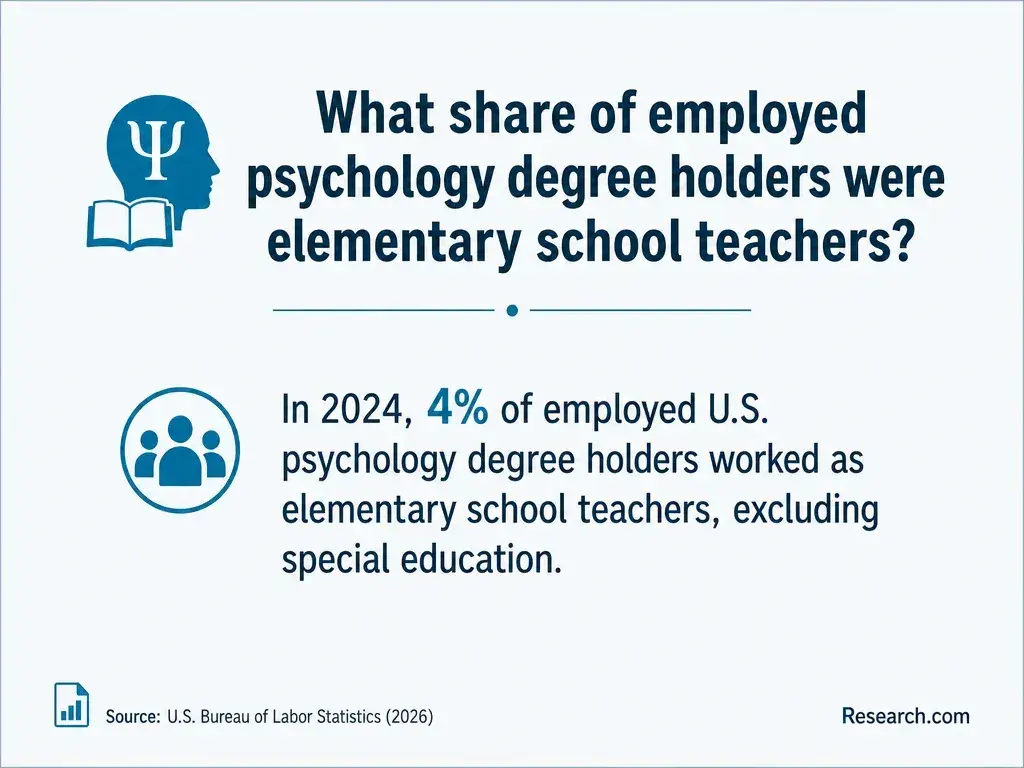
Does an Online Psychology BA Prepare You for Mental Health Licensure?
A psychology BA, including one focused on mental health, does not by itself qualify you to diagnose conditions, provide psychotherapy, or practice as a licensed psychologist or counselor. Related employment before enrollment does not change that boundary. You may study psychopathology and treatment systems while performing only the support duties your employer permits.
If your goal is therapy, identify the license and state where you intend to practice before choosing an undergraduate program. Counseling, clinical social work, and psychology follow different graduate-education, supervised-experience, and examination pathways. A psychology BA can be academic preparation, but it is not necessarily the most direct undergraduate choice for every pathway. Budget for the education beyond the BA; financial planning for accredited counseling degrees can help frame that longer commitment. Confirm eligibility with the relevant state licensing board and prospective graduate program.
For this decision, the important difference is not whether online coursework is inherently better or worse. It is whether the format lets you gain relevant experience without sacrificing academic support. An asynchronous program may accommodate rotating shifts; required live discussions, group work, exams, or a locally arranged placement may not. A campus program may make in-person faculty contact or local opportunities easier, but commuting can reduce time available for work.
Ask each school how online students access research projects, career advising, internships, and faculty recommendations. Check whether any site experience requires advance approval and whether your existing job could qualify; do not assume it will. If you eventually pursue clinical training, its practical requirements are a separate question. Comparing clinical counseling degree formats and completion estimates can illustrate why an online academic schedule should never be mistaken for an entirely remote professional-training pathway.
Expect a broad psychology foundation rather than a sequence of therapy-training courses. Depending on the school, requirements may include statistics, research methods, developmental and social psychology, biological foundations, and courses on psychological disorders. A mental health concentration may add electives on community services, health, addiction, or prevention; at another school, similar subjects may be electives without a formally awarded concentration.
Compare the catalog with what a prospective job would teach you. Employment can develop respectful communication, documentation, and service-system knowledge, while coursework should develop evidence appraisal and research literacy that a support job may not. If graduate counseling is the goal, check that program's prerequisites rather than assuming mental-health electives satisfy them. Even faster-paced online mental health counseling master's study represents a distinct professional pathway, not a continuation automatically covered by the BA's concentration.
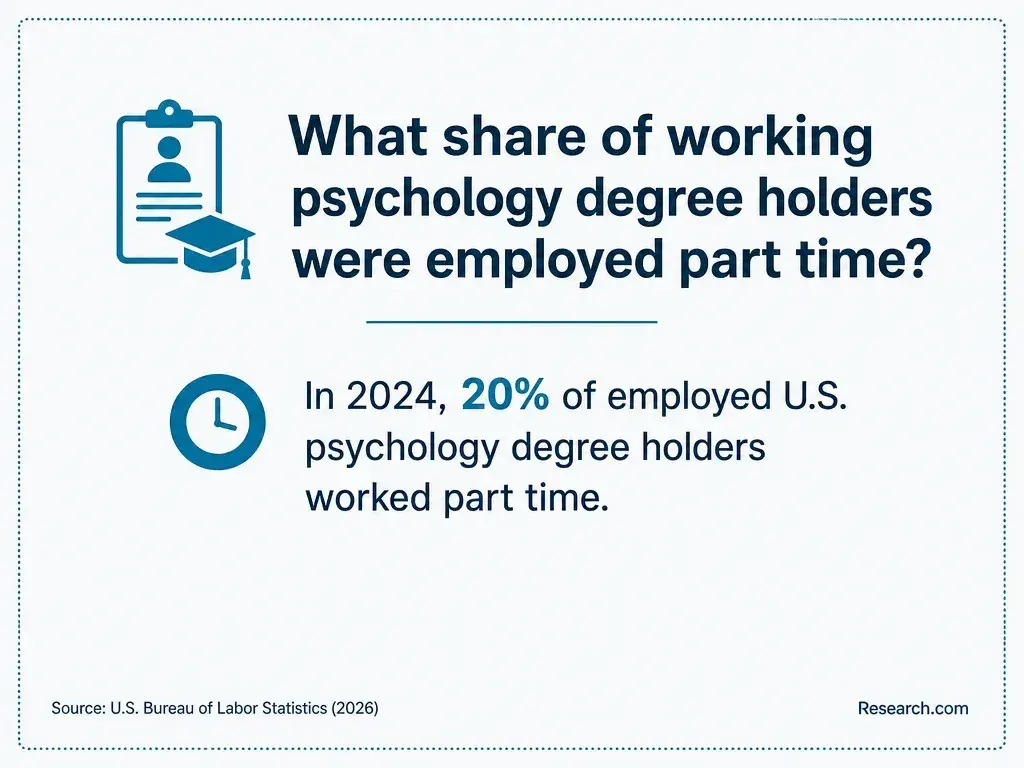
Requirements vary by institution and by whether you apply as a first-time or transfer student. Schools commonly request prior academic records and may set separate standards for admission to the university and entry into the major. Related employment can provide context for an application, but it should not be treated as a universal prerequisite or a replacement for academic requirements.
If you already hold college credit, request an official degree audit before deciding that a job is worth delaying enrollment. Accepted transfer credit may count toward electives without satisfying psychology, statistics, general education, or residency requirements. Ask which courses remain, when they are offered, and who approves substitutions. A comparison of psychology program transfer policies can help you formulate questions, but only the admitting school can evaluate your record.
Completion time depends on accepted credits, course availability, enrollment pace, and any required experiential component. An entry-level job can help pay expenses, but postponing school may also defer graduation. Conversely, combining demanding shifts with too many courses can extend the timeline. Request a term-by-term plan based on your own transcript and realistic work hours.
Compare total tuition and mandatory fees for the remaining requirements, not just an advertised per-credit price. Include books, technology, travel to an approved site if required, and the earnings you might give up for an unpaid experience. Ask the financial-aid office how your planned enrollment pace affects eligibility. If addiction services are your specific target, substance use counseling undergraduate tuition versus salary outlook offers a related comparison; verify separately whether your state requires a credential for the work you want.
Potential nonclinical roles include behavioral-health support staff, intake or referral coordinator, community outreach worker, victim-services assistant, and program or research assistant. Some employers consider applicants without a completed BA, making these roles possible ways to test the field before enrolling. Others require a degree, experience, employer training, or a jurisdiction-specific credential. Read the duties as closely as the title.
In interviews, ask who supervises client contact, what you may document, when you must refer concerns to qualified staff, and what training covers confidentiality and safety. Crisis response, peer support, and addiction-service duties can have additional rules. If justice-related work appeals to you, understanding pay and entry requirements in forensic psychology careers may help distinguish support jobs from positions requiring substantially more education or professional authority.
There is no single salary for psychology BA graduates. Pay follows the occupation, location, employer, shift, and experience - not the degree title alone. When comparing offers, use wages for the specific job and local labor market; an occupation-wide median is not an entry-level offer or a prediction of what you will earn after graduation.
Before delaying enrollment for a job, compare its compensation and benefits with the time and tuition involved in your intended pathway. A modestly paid role may still be worthwhile if it provides strong supervision and confirms your career fit. A higher-paying unrelated job may be the better financial choice if the related position offers little learning or advancement. If you are considering further study to improve your options, compare its purpose and total cost rather than assuming it raises pay: affordable online psychology master's programs are not automatically licensure-qualifying or necessary for support work.
How Can You Choose an Accredited Online Psychology Bachelor's Program?
Verify the institution's accreditation through the accreditor and school, then examine the actual psychology degree requirements. Institutional accreditation matters for educational recognition and aid eligibility, but it does not prove that a mental health concentration leads to licensure. APA accreditation is not a standard endorsement of general psychology bachelor's programs.
Prioritize evidence that bears on your work-before-enrollment decision: a written transfer evaluation, predictable course scheduling, access to advising and research opportunities, and clear rules for approving job-based or external placements. Ask whether career services assist online students seeking local support roles. Compare the school's answer with your prospective employer's schedule before paying a deposit. A faster or narrower option, such as planning a shorter undergraduate forensic psychology degree, makes sense only if its curriculum and remaining-credit requirements fit your goal - not merely because it advertises speed.
Other Things You Should Know About Psychology
Usually, focus on your academic preparation and reasons for studying psychology. Share personal information only if you choose to and it serves a clear purpose; you do not need lived experience to justify an interest in the field.
Not necessarily. Peer roles may specifically draw on lived experience and can have training or certification rules set by a state or employer. Check the position's eligibility requirements and permitted duties.
Ask your employer and instructor first. Do not submit identifiable client information or assume removing a name makes a case safe to share. Use an approved, appropriately fictionalized example when needed.
Discuss supervision, workload, and safety with your manager, and use available support. Leaving an unsuitable role does not mean psychology study is a poor fit; research, administration, and community-program work may suit you better.
- Mental health at work | who.int https://www.who.int/news-room/fact-sheets/detail/mental-health-at-work
- Behavioral Health Career Roadmap NYC | Mayor's Office of Community Mental Health https://mentalhealth.cityofnewyork.us/workforce-career-roadmap
- 31-1133.00 - Psychiatric Aides https://www.onetonline.org/link/summary/31-1133.00
- Psychiatric Aides | NC Careers.org https://nccareers.org/occupation-profile/311133/1284
- The Emerging Field of Behavioral Health Paraprofessionals | National Governors Association https://www.nga.org/publications/the-emerging-field-of-behavioral-health-paraprofessionals/
- What Is a Psychiatric Technician and Aide? What They Do | Cleveland Clinic https://my.clevelandclinic.org/health/articles/psychiatric-technician-psychiatric-aide