2027 Online BA in Psychology - Addictions: Choosing a Degree for Nonclinical Work in Medication Treatment Settings
Audited and Verified:
Our Editorial and Data Verification Process
Research.com uses government datasets, official education statistics and primary institutional information to support its career and degree guides. Our review process checks factual accuracy, occupational definitions, source dates and the requirements associated with the credentials discussed.
How This Article Was Fact-Checked
Our editorial team verifies salary estimates, employment projections, education requirements and program information against original data providers and official organizations. Salary figures are checked against the relevant occupational definitions and reporting periods. Information about licensure, accreditation and required in-person training is reviewed separately.
Fact-checked and verified on:

Co-Founder and Chief Data Scientist
If you want to help people receiving medication for substance use disorders, an online psychology BA may be useful - but it is not the only route into the workplace, and it does not qualify you to provide treatment.
This guide is for prospective students and career changers considering support, outreach, intake, or program roles. It explains what an addictions focus teaches, where nonclinical duties end, and how to compare a degree with more direct training. The goal is to help you spend time and money on qualifications that match the job you actually want.
Key Things You Should Know
- An addictions-focused psychology BA can support nonclinical work in medication treatment settings, but employers may value relevant experience or a role-specific credential more than the concentration name.
- Medication treatment, counseling, and nonclinical support are different responsibilities; a psychology BA does not authorize prescribing, diagnosis, or psychotherapy.
- Compare the remaining credits and total cost against actual job postings, state credential rules, and placement opportunities before enrolling.
What is an online bachelor's degree in psychology with an addictions focus?
It is an undergraduate psychology degree that combines general study of behavior and research with coursework on substance use, prevention, recovery, or service systems. "Addictions focus" may mean an official concentration, a set of electives, or simply a program's marketing description. Ask for the degree requirements and the exact wording that will appear on your transcript.
Online describes how courses are delivered, not necessarily how applied learning works. A program may require live classes, a locally arranged placement, or an in-person visit. For someone seeking nonclinical work at an opioid treatment program or another medication treatment provider, the strongest fit is a program that pairs addiction science with practical preparation in communication, service coordination, and ethical documentation.
If your aim is specifically substance use counseling rather than support work, compare the BA with a more directly aligned program and your state's credential rules. The substance abuse counseling undergraduate education investment is a separate decision from whether a broad psychology major is worthwhile.
What careers can you pursue with an addictions psychology bachelor's degree?
Start with your existing skills and the work you want to perform. Experience in customer service, health administration, community outreach, or data reporting may transfer to a medication treatment provider. The BA can add useful knowledge, but hiring also depends on employer requirements, demonstrated skills, and local rules.
The distinctions below help separate plausible nonclinical openings from positions that require another qualification.
| Role to investigate | Typical nonclinical contribution | Qualification to check |
| Intake or patient services coordinator | Scheduling, explaining administrative steps, and directing questions to qualified staff | Employer requirements for records access and client-facing work |
| Recovery support or peer worker | Engagement, practical support, and connection to resources | Whether the employer or state requires lived experience or peer certification |
| Outreach or case coordination assistant | Referral follow-up, transportation coordination, and service navigation | Job-specific boundaries, documentation training, and supervision |
| Program or quality-improvement assistant | Preparing approved reports and tracking service processes | Spreadsheet skills and permission to handle sensitive data |
Search postings by duties, not just titles: "case manager," for example, can describe very different levels of responsibility. A forensic graduate degree targets a different employment question; master's-level forensic psychology employment pathways should not be mistaken for a route into medication treatment support.
Can you work in medication treatment settings without a clinical license?
Medication treatment teams need administrative, outreach, navigation, peer-support, and program staff as well as clinicians. An unlicensed worker can help a person reach an appointment or locate an approved resource; that worker should not independently recommend a medication, interpret symptoms as a diagnosis, or provide psychotherapy. Employers set duties within applicable state rules and supervision arrangements.
"Medication treatment setting" covers more than one service model. An opioid treatment program, a medical practice prescribing buprenorphine, and a community organization coordinating referrals can have different staffing and workflow requirements. Before accepting a role or placement, ask who supervises nonclinical staff, which tasks require escalation, and what training governs confidential substance use treatment information.
If your intended work is independently providing therapy, plan for a qualifying professional pathway instead. Fast online clinical mental health counseling master's programs may be worth investigating, but speed alone does not establish eligibility for a state counseling license.
Check that the institution holds recognized institutional accreditation and that it applies to the school awarding the degree. Confirm its status through the accreditor and the U.S. Department of Education's accreditation information, rather than relying only on a program advertisement. Institutional accreditation matters for academic recognition and can affect federal aid eligibility, but it does not verify a particular career outcome.
Do not reject a psychology BA because it lacks American Psychological Association program accreditation: APA does not accredit general undergraduate psychology degrees. Nor does institutional accreditation make an addictions concentration a counselor-licensure program. If a school claims a specialized approval or a credential pathway, ask which body grants it, which program it covers, and whether it applies in your state.
These distinctions matter across psychology specialties. A comparison of online forensic psychology degree costs versus career outcomes, for example, should not be used as evidence that an addictions BA satisfies a medication treatment employer's requirements.
Expect a general psychology foundation, commonly including research methods and statistics, alongside whatever addiction-related courses the school offers. Relevant offerings might examine substance use and behavior, biological foundations, health psychology, prevention, recovery systems, and the social conditions affecting access to care. Course titles alone do not show how deeply a topic is covered.
For nonclinical work, look for assignments that build usable evidence of skill: evaluating a study without overstating its findings, writing a clear resource guide, practicing referral communication, or analyzing an appropriately authorized, nonidentifiable program dataset. Ask whether applied courses include supervised work with a community partner and whether the school - not the student alone - must approve a site.
Do not substitute a course about counseling techniques for supervised clinical preparation. Likewise, one-year forensic psychology study and career outcomes concern a different specialization and degree level; an accelerated credential is useful only if its curriculum matches the intended work.
Requirements vary by institution and by whether you are applying as a first-time or transfer student. Schools typically request prior academic records and may set separate conditions for entry to the psychology major. Ask admissions which documents are needed, then request a degree audit showing where accepted credits actually apply.
For a career changer with previous college work, the decisive question is not simply how many credits transfer. Find out whether prior statistics, general education, and psychology courses satisfy specific requirements; which major courses must be completed at the new school; and whether remaining courses are offered on a workable schedule. Comparing transfer-friendly psychology degree programs can help frame that review, but only the receiving institution can approve your individual credits.
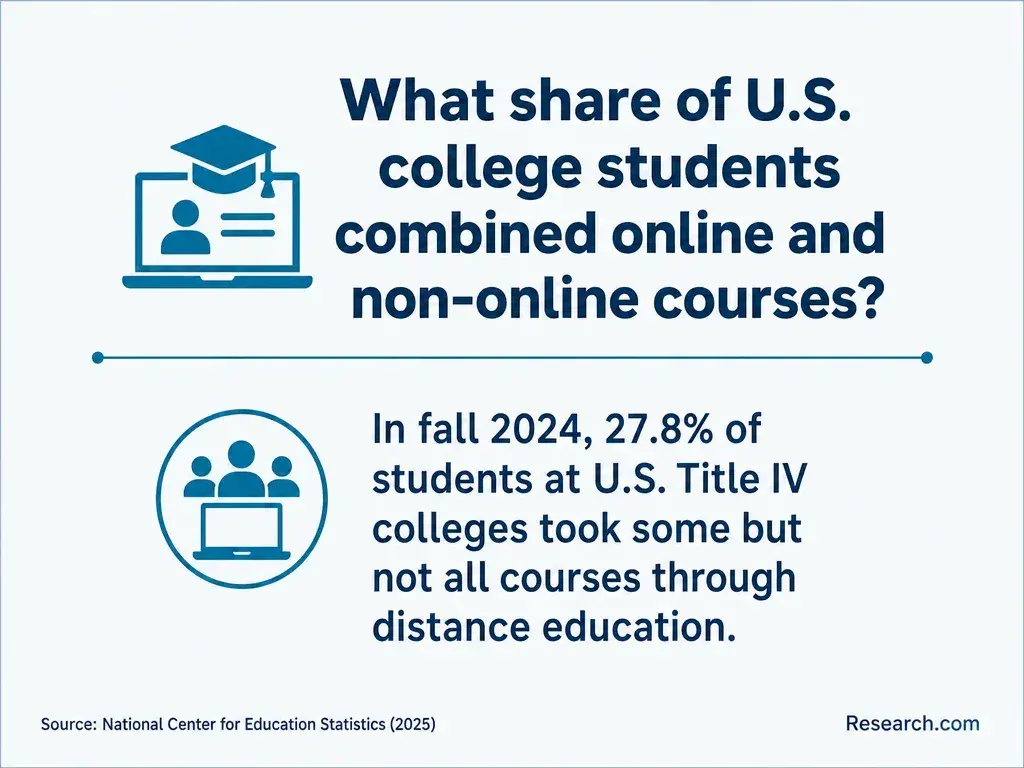
Completion time depends on accepted credits, the courses still required for graduation, course availability, and how many classes you can take while meeting other obligations. An online label does not mean every required class is self-paced. Live meetings, group assignments, and a supervised placement can be harder to schedule than recorded lectures.
Request a term-by-term plan that identifies prerequisite sequences, when addiction electives are offered, and any local placement deadlines. If you work at a treatment provider, ask whether your existing job could be considered for an applied requirement; do not assume employment automatically qualifies. Advice about online forensic psychology master's graduation planning illustrates the importance of sequencing, but its accelerated graduate timelines do not predict how quickly you can finish a BA.
There is no reliable single price for this degree. Your cost depends on tuition rates, fees, accepted credits, enrollment pace, and whether applied learning creates travel or unpaid-work expenses. Compare schools using a written estimate for the courses you still need - not the advertised price for a credit or a term in isolation.
For the comparison, ask each school to separate the charges below and identify which could change if you attend part time.
- Tuition for the remaining required credits and any mandatory online or course fees
- Books, software, equipment, and possible travel or placement expenses
- Financial aid eligibility, employer assistance conditions, and the cost of repeating or delaying a course
Then compare that estimate with the qualifications in local job postings. If your target support role does not require a bachelor's degree, targeted training plus relevant employment may be the lower-cost first step. If a degree is needed for advancement, finding an affordable psychology degree route should include a credit evaluation and a realistic completion plan, not tuition alone.
There is no single salary or employment projection for graduates of an addictions-focused psychology BA. The U.S. Bureau of Labor Statistics reports wages and outlook by occupation, not by undergraduate concentration. Its substance abuse, behavioral disorder, and mental health counselors category is relevant to the broader treatment workforce, but counselor qualifications and duties may differ substantially from those of an intake coordinator or peer worker. Using that category's median wage as a predicted BA starting salary would be misleading.
For a useful comparison, identify local postings for the exact role you would accept, note their pay ranges and required credentials, and compare those with the full cost of any additional education. A nonclinical psychology master's is not automatically a promotion or treatment credential; inexpensive psychology master's degree pathways deserve consideration only when a specific next role or further-study requirement justifies them.
What certifications can strengthen a career in medication treatment services?
Choose a credential for the duties you intend to perform, not because it contains the word "addiction." Depending on the role and state, useful options may include a recognized peer-support credential, employer-required training in confidentiality and overdose response, or a state addiction-counselor credential. These are not interchangeable: peer support, workplace training, and counseling have different eligibility and scope rules.
Before paying for training, take a target job posting to the relevant state credentialing authority or certifying organization. Confirm required education, supervised experience, examinations, renewal conditions, and permitted duties. Compare those requirements with degree pathways for substance use counseling work if counseling - not nonclinical support - is your eventual goal. An employer-recognized short course may be sufficient for an immediate support role, while counseling can require a substantially different plan.
Other Things You Should Know About Psychology
Diploma wording varies by institution. Ask the registrar what the diploma and official transcript will say before enrolling.
It can be valuable, particularly in peer roles, but it does not replace a required credential. You should not have to disclose personal health information beyond what a specific, lawful hiring or certification process requires.
Not necessarily. Rules differ by state, employer, role, and funding arrangement. Ask about background-check policies early, without assuming one provider's decision applies everywhere.
Often, but confirm that the school can enroll students where you live and that any required placement can be completed there. Enrollment permission does not establish eligibility for a local professional credential.
- Behavioral Health Career Descriptions | samhsa.gov https://www.samhsa.gov/about/careers/behavioral-health-workforce/careers-by-state/descriptions
- Substance Use Disorder Workforce Issue Brief - HHS ASPE https://aspe.hhs.gov/reports/substance-use-disorder-workforce-issue-brief-0
- Medications for Opioid Use Disorder | National Institute on Drug Abuse https://nida.nih.gov/research-topics/medications-opioid-use-disorder
- Requirements Related to the Practice of Counseling - NCBI https://www.ncbi.nlm.nih.gov/books/NBK259170/
- Accreditation in the U.S. | ed.gov http://www.ed.gov/laws-and-policy/higher-education-laws-and-policy/college-accreditation/accreditation-in-the-us
- Information about Medications for Opioid Use Disorder (MOUD) | FDA https://www.fda.gov/drugs/food-and-drug-administration-overdose-prevention-framework/information-about-medications-opioid-use-disorder-moud
- NCDAC Behavioral Health Services Practicum, Internship & Field Opportunities https://www.dac.nc.gov/html/ncdac-behavioral-health-services-practicum-internship-field-opportunities
- Accredited Online Colleges | WGU https://www.wgu.edu/student-experience/how-you-learn/accreditation.html
- Medical Social Worker - Explore Healthcare Careers | Mayo Clinic College of Medicine and Science https://college.mayo.edu/academics/explore-health-care-careers/careers-a-z/medical-social-worker/
- OAR 309-019-0125 | state.or.us https://secure.sos.state.or.us/oard/viewSingleRule.action