2027 Online BA in Psychology - Addictions: Choosing a Degree for Addiction Research Rather Than Counseling
Audited and Verified:
Our Editorial and Data Verification Process
Research.com uses government datasets, official education statistics and primary institutional information to support its career and degree guides. Our review process checks factual accuracy, occupational definitions, source dates and the requirements associated with the credentials discussed.
How This Article Was Fact-Checked
Our editorial team verifies salary estimates, employment projections, education requirements and program information against original data providers and official organizations. Salary figures are checked against the relevant occupational definitions and reporting periods. Information about licensure, accreditation and required in-person training is reviewed separately.
Fact-checked and verified on:

Co-Founder and Chief Data Scientist
An addictions-focused psychology degree can sound like preparation for counseling, even when your goal is to study substance use, prevention, and recovery. That distinction matters before you commit to an online program: courses about treatment are not the same as research training or a license to provide it. This guide is for prospective students who want research-oriented or nonclinical work. It explains how to compare curricula, find meaningful research experience online, assess career and graduate-school options, and avoid paying for a pathway that does not match your goal.
Key Things You Should Know
- For addiction research, prioritize statistics, research methods, faculty mentorship, and a feasible project over the word "addictions" in a degree title.
- A psychology BA with an addictions focus does not itself qualify you to diagnose or counsel people with substance use disorders; those roles have separate requirements.
- Compare the credits you still need, total attendance costs, and actual access to research supervision before choosing an online program.
What Is an Online Bachelor's Degree in Psychology With an Addictions Focus?
It is usually a psychology bachelor's degree that combines the discipline's core subjects with courses on substance use, behavior change, prevention, or recovery. The focus might be a formally named concentration, a set of electives, or simply a theme a student builds through coursework. Check the transcript designation rather than assuming those arrangements are equivalent.
For a research-minded student, the degree's value lies less in its label than in whether it builds a foundation in psychological science and offers a way to investigate addiction-related questions. Compare an advertised focus with the actual requirements, electives, and project opportunities in academic preparation through an addiction psychology bachelor's.
A BA rather than a BS is not inherently weaker for research. The consequential difference is the coursework you complete: a BA with substantial statistics and research experience may fit your goal better than a BS whose additional science requirements leave little room for addiction research.
How Does an Addictions Psychology Degree Differ From a Counseling Degree?
An addictions-focused psychology BA studies behavior; a counseling pathway prepares students for a defined helping profession. Their subject matter can overlap, but the intended outcomes are different. The comparison below shows which route better fits your goal.
| Pathway | Primary emphasis | What to verify |
| Psychology BA with an addictions focus | Psychological theory, research methods, and addiction-related electives | Methods depth, research access, and graduate prerequisites |
| Addiction counseling pathway | Helping skills and preparation for a specified counseling credential or role | State educational criteria, supervised experience, examinations, and permitted duties |
| Nonclinical psychology MS | Advanced academic or applied study, sometimes including a thesis | Faculty fit and research requirements; do not assume licensure eligibility |
If you want to evaluate prevention programs or study relapse-related behavior, favor the strongest research training you can access. If you want to deliver treatment, work backward from your state's credential rules and compare substance use counseling program pathways. A course about counseling techniques is not a substitute for qualifying professional training.
What Careers Can You Pursue With an Addictions Psychology Bachelor's Degree?
A bachelor's graduate may pursue research-support and nonclinical service roles, subject to employer requirements and prior experience. Research assistants can help recruit participants under an approved protocol, maintain records, review literature, or prepare data. Program assistants may track outreach and prevention activities. Recovery-service or intake staff may provide support, information, and referrals within their authorized duties.
The distinction is job tasks, not job title alone. A posting for an "addiction specialist" might mean outreach in one organization and credentialed counseling in another. Compare the listed responsibilities, supervision, and required credentials when exploring career options in recovery services. A BA does not authorize psychotherapy, diagnosis, or independent psychological assessment.
If research is the target, build evidence of data handling, careful writing, and work under supervision. Coursework alone may not be competitive for a research-assistant opening; a faculty project, approved internship, or well-documented capstone can make your preparation easier to assess.
Expect a psychology foundation that may include biological and social influences on behavior, development, abnormal psychology, statistics, and research methods. Addiction electives may examine substance use, prevention, recovery systems, or policy. Course titles do not reveal how much practice you will get designing a study or interpreting evidence.
For research, inspect assignments as closely as course descriptions. A useful sequence moves from statistical reasoning and research design to measurement, critical reading, and a supervised project. Students interested in substance use within courts or corrections may also compare forensic psychology degree formats and academic requirements, but that setting-specific interest should not displace the methods courses needed for addiction research.
Ask whether students critique addiction studies for selection bias and confounding, distinguish an association from a causal effect, and discuss whether a measure captures the intended behavior. Those skills travel across research topics; memorizing treatment terminology alone does not replace them.
Online courses can support literature searches, statistical analysis, research writing, and collaboration with a faculty team. They do not automatically provide a lab position, participant access, or an approved placement. Ask who supervises remote research students, whether meetings are live, what software and datasets students can use, and whether projects can be completed from their location.
Compressed calendars deserve particular scrutiny. A student considering faster forensic psychology bachelor's degree pathways as an alternative should apply the same test to any accelerated addictions-focused option: does the schedule leave enough time for methods prerequisites, faculty feedback, and a substantive project? Speed is useful only if it preserves the preparation your next step requires.
For an addiction-related project, an evidence review or an analysis of appropriately accessible data may be more feasible than recruiting people receiving services. Before collecting information from participants or using agency records, check faculty oversight, institutional review requirements, consent, site permission, and privacy obligations. "Deidentified" does not, by itself, establish permission to use a dataset.
Confirm that the degree-granting institution holds recognized institutional accreditation and that its status covers the school offering your online degree. Then examine the program's curriculum and outcomes separately: accreditation does not establish that remote students can obtain research mentorship or that a BA meets counseling credential requirements.
Do not reject a psychology BA because it lacks APA program accreditation. APA accreditation applies to specified professional psychology programs and training settings, not general undergraduate psychology majors. If your goal changes to licensed counseling, investigate the applicable state rules and program recognition for that profession; accredited clinical counseling program timeline comparisons address a different educational pathway than an addictions research BA.
Before enrolling, confirm accreditation through the accreditor and ask the school for the degree name, concentration designation, online attendance requirements, and policies that apply to your intended entry term.
Requirements vary by institution and by whether you apply as a first-year or transfer student. Schools commonly request prior transcripts and evidence that you meet their undergraduate admission standard; some have separate rules for entering the major. A prior psychology background is not automatically required to start a bachelor's degree.
If you have previous college coursework, obtain a written degree audit before treating transferred credits as time saved. The school may accept a statistics course as elective credit without counting it toward the psychology major. Ask specifically how prior statistics, research methods, and addiction-related courses apply, and review guidance on using previous coursework toward a psychology degree.
For research preparation, confirm when you can take the methods sequence and whether prerequisites are offered online often enough to keep your planned graduation date realistic.
A bachelor's degree is commonly planned as four years of full-time study, but your timeline depends on applicable transfer credit, course sequencing, enrollment pace, and the availability of required classes. Online delivery alone does not shorten the degree. Request a term-by-term plan that includes prerequisites and any capstone or internship.
For cost, compare the school's estimate for all credits remaining, not just its advertised tuition rate. Include mandatory fees, books or software, required travel, and the cost of reducing work hours for a project or placement. Aid packages also differ: grants versus loans for substance abuse counseling bachelor's students explains a financing distinction that matters when assessing an addictions-related education, even if your chosen major is psychology.
If a less expensive program lacks research supervision, compare the savings against what you would need to arrange independently. If a more expensive program advertises research access, ask what online undergraduates have actually been able to do before paying a premium.
The psychology BA itself is not a clinical license. State-regulated addiction counselor credentials can have distinct coursework, supervised-experience, examination, and background requirements. Some recovery-support or peer credentials have different eligibility and role limits. Check the relevant state board or credentialing body for the exact title and duties you seek before selecting courses on the assumption that they count.
Research jobs generally do not require an addiction counseling license, though employers may require training for participant protections, data security, or specific project procedures. An advanced degree can deepen research preparation, but comparing accelerated MS psychology options should not be confused with finding a license-qualifying counseling program. A nonclinical psychology MS does not automatically confer counseling authority.
What Are the Salaries and Job Outlook for Addiction-Related Careers?
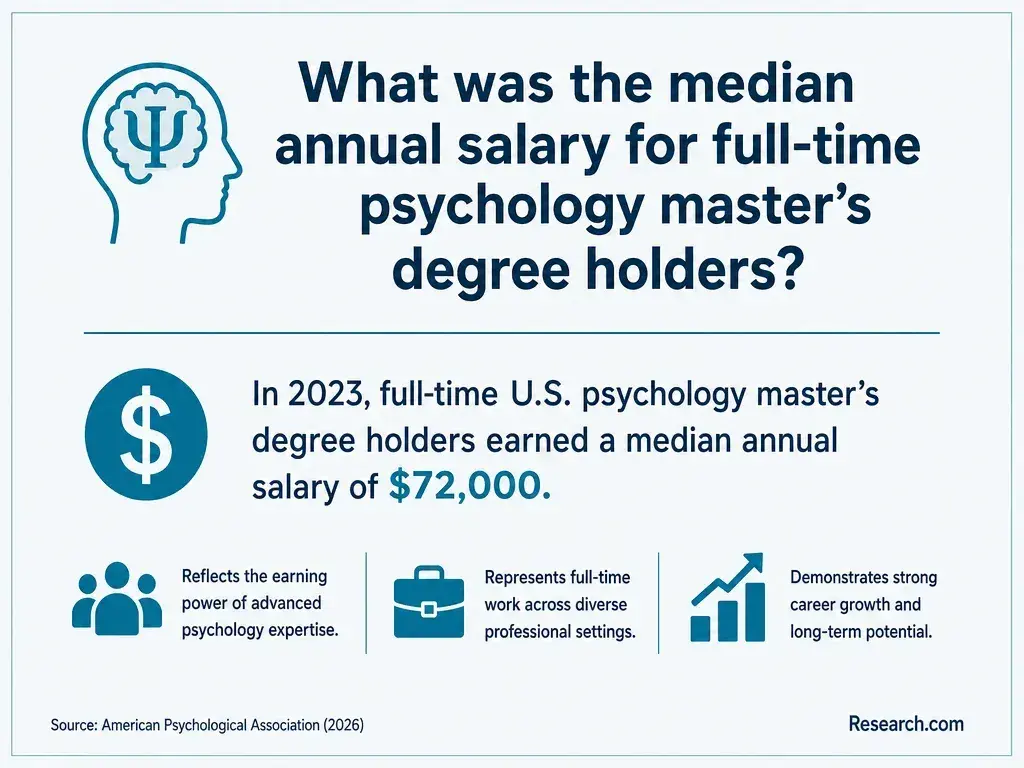
There is no single reliable salary or growth figure for graduates of an addictions-focused psychology BA. A licensed substance use counselor, a research assistant, and a recovery-support worker have different duties, entry requirements, and labor markets. U.S. Bureau of Labor Statistics occupational figures can help you assess a specific occupation, but a counselor-wide median is not an expected starting salary for a BA graduate pursuing research.
For a practical return-on-investment comparison, collect local postings for the role you actually want. Record their required degree, research skills, experience, credentials, pay range, and location; then compare those requirements with your prospective program's opportunities and total cost. If your target is an entry-level research role, lower-tuition undergraduate psychology options may be worth examining alongside your ability to secure mentorship and project experience.
Bottom line: Choose the addictions-focused BA when it provides strong methods training and credible access to research work. Choose a counseling pathway only if its credential preparation matches your intended profession and jurisdiction.
Other Things You Should Know About Psychology
Possibly. Check whether electives and faculty projects cover your topic; an "addictions" label does not establish that every type of addictive behavior is taught or researched.
It may be if your interests center on population-level programs and policy. Psychology may fit better when your questions concern behavior and psychological measurement. Compare the actual methods courses and projects.
Usually not for entry to a psychology BA. Basic comfort with spreadsheets and statistics is a useful start; ask which analytical tools your intended courses use.
Yes, if it shows a clear question, a transparent search approach, critical evaluation, and careful conclusions. It demonstrates research reasoning, though it is not the same as experience collecting or analyzing original data.
- Understanding College Costs | studentaid.gov https://studentaid.gov/resources/prepare-for-college/students/choosing-schools/consider-costs
- Cost of Attendance (Budget) | 2025-2026 Federal Student Aid Handbook https://fsapartners.ed.gov/knowledge-center/fsa-handbook/2025-2026/vol3/ch2-cost-attendance-budget
- Cost & Aid - Columbia Undergraduate Admissions https://undergrad.admissions.columbia.edu/affordability/cost
- Tuition and College Costs - The City University of New York https://www.cuny.edu/financial-aid/tuition-and-college-costs/
- A Guide to Professions in Addiction Studies and Recovery | University of the Cumberlands https://www.ucumberlands.edu/blog/guide-to-professions-in-addiction-studies-and-recovery
- Summary Reports: Graduate Study in Psychology | apa.org https://www.apa.org/education-career/grad/survey-data
- Practicums, Internships and Projects What's the Difference? | Oregon State University https://health.oregonstate.edu/internships/types-of-experiential-learning
- Research Methods, Measurement, and Quantitative Data Analysis Graduate Certificate Degree | UCF Orlando, FL https://www.ucf.edu/degree/research-methods-measurement-and-quantitative-data-analysis-graduate-certificate/
- Available Research Methods Courses - PhD CIS Program https://www.hawaii.edu/cis/current_students/coursework/available-research-methods-courses/
- Opportunities - USC Institute for Addiction Science https://ias.usc.edu/opportunities/