
2027 Online BA in Psychology - General Psychology: How to Evaluate Group Projects in an Asynchronous Program
Audited and Verified:
Our Editorial and Data Verification Process
Research.com uses government datasets, official education statistics and primary institutional information to support its career and degree guides. Our review process checks factual accuracy, occupational definitions, source dates and the requirements associated with the credentials discussed.
How This Article Was Fact-Checked
Our editorial team verifies salary estimates, employment projections, education requirements and program information against original data providers and official organizations. Salary figures are checked against the relevant occupational definitions and reporting periods. Information about licensure, accreditation and required in-person training is reviewed separately.
Fact-checked and verified on:

Co-Founder and Chief Data Scientist
An online psychology course may be asynchronous, but its group project can still depend on other students' schedules. That distinction matters if you work, care for family, or need predictable study hours.
Before choosing a general psychology BA, look beyond the promise of "learn anytime" to see how teams communicate, divide work, handle missed deadlines, and receive grades. This guide shows you what to request from a program, how to judge the academic value of its projects, and when a different course format may fit better.
Key Things You Should Know
- Asynchronous does not mean independent: Check whether group projects require live meetings, shared deadlines, or responses within a set window before you enroll.
- Judge the project and the grading separately: A useful psychology assignment needs sound methods and ethical data practices; fair assessment also needs visible individual contributions and a way to address nonparticipation.
- Request evidence, not assurances: Compare a recent syllabus, project rubric, academic calendar, and written answers about scheduling and dispute procedures across programs.
What Is an Online BA in General Psychology With Asynchronous Group Projects?
An online BA in general psychology is a bachelor's degree covering psychological science across several subject areas rather than training for one licensed profession. In an asynchronous course, students usually access lessons and submit work without attending class at a fixed time.
A group project is a shared assignment, such as a literature review, research proposal, or analysis of an approved dataset, with coordinated tasks and deadlines.
The important distinction is between asynchronous instruction and asynchronous collaboration. A recorded lecture does not tell you whether teammates must meet live, edit a document during overlapping hours, or agree on decisions before a weekly deadline. For a working parent, those requirements may matter more than the lecture format.
General psychology offers breadth, but project topics and electives vary. If you want sustained study of substance use rather than occasional related assignments, compare the actual course sequence with academic preparation through an addiction psychology bachelor's. Neither route, by its name alone, establishes clinical qualifications.
How Do You Evaluate Group Projects in an Asynchronous Psychology Program?
Ask for a recent syllabus and project rubric from a required psychology course, not just a description of the learning platform. A strong project teaches disciplinary skills while giving students a workable process for coordinating across schedules.
Use the following sequence to compare programs. Ask whether each practice is required by course policy, left to the instructor, or merely recommended to students:
- Map the schedule: Identify team-formation dates, interim deadlines, expected response times, and any mandatory live meetings. Check whether you can complete your part around work or caregiving without making teammates wait until the final deadline.
- Examine the psychology task: Look for a clear research question, appropriate evidence, division of methodological and writing work, and faculty feedback before final submission. A shared slide deck alone does not demonstrate research training.
- Inspect grading: Ask how the rubric distinguishes the quality of the shared product from each student's contribution, and what evidence - such as drafts or documented task completion - informs individual grades.
- Check the contingency plan: Find out how students report an unresponsive teammate, when an instructor intervenes, and whether a student can complete a defined individual component if collaboration breaks down.
- Check data and accessibility rules: Determine which collaboration tools are approved, how accommodations work, and whether projects use public sources or require additional permission to collect or handle participant information.
A reasonable arrangement has intermediate checkpoints and instructor oversight; it does not make students responsible for enforcing academic policy themselves. Ask how these rules operate in a required course, since one well-designed elective cannot compensate for recurring problems elsewhere in the major.
If an advertised accelerated psychology curriculum planning option appeals to you, check project milestones especially closely: shorter courses leave less time to recover from a delayed teammate.
How Can You Verify Accreditation for an Online Psychology Bachelor's Degree?
Confirm the institution's current accreditation through the accreditor's directory and the school's published accreditation information. Check that the institution, not just another campus or an affiliated organization, is the one awarding the online BA.
Then confirm with the school that the program is available to students in your state and that the delivery format and degree name match what you intend to enter.
Institutional accreditation is relevant to academic quality assurance and may affect transfer and financial-aid considerations, but it does not prove that group projects are well run. The American Psychological Association does not accredit general psychology bachelor's programs. Ask separately for syllabi, assessment policies, and evidence of instructor support.
Accreditation questions change if your eventual goal is a regulated occupation. For example, comparing addiction counseling degree curriculum choices may help you identify subject matter to study, but a future credential depends on the rules of the relevant state and credentialing body - not on a general psychology BA's accreditation alone.
Look for a foundation in major areas of psychology alongside statistics, research methods, scientific writing, and ethics. Developmental, social, cognitive, biological, and abnormal psychology courses can provide breadth; the exact requirements and elective options differ by school.
For evaluating group work, methods and statistics deserve particular attention: students should learn to assess evidence together, not merely split a paper into disconnected sections.
Ask to see how required courses build toward a research proposal, evidence review, or other final assignment. A well-sequenced curriculum lets students practice finding sources, defining psychological concepts, recognizing measurement limits, and explaining why a conclusion is or is not supported.
If a project involves people or nonpublic data, the instructor should clarify consent, privacy, authorization, and any institutional review requirements before work begins.
Specialized electives can be useful without being essential. Compare the general major's course availability and project options against your interests; faster online forensic psychology degree completion, for example, is a different planning question from whether a general psychology course provides strong research collaboration. A forensic elective does not grant investigative or clinical authority.
Delivery format changes how collaboration happens, not the need for collaboration. The comparison below highlights practical differences to verify in specific courses; neither format is inherently stronger:
| Feature | Asynchronous online course | Campus-based course |
| Team coordination | Often relies on messages, shared documents, and scheduled checkpoints; live meetings may still be required. | May allow discussion around class meetings but can still require work outside class. |
| Contribution record | Document histories and posted milestones may make individual work more visible. | In-person discussion may be easier to observe, while work outside class can remain less visible. |
| Scheduling trade-off | Reduces routine travel but may create waiting time between teammates' replies. | Requires attendance and travel, though class time may support faster decisions. |
For someone balancing employment or caregiving, the best fit depends on the whole weekly schedule. Ask whether office hours, presentations, research meetings, examinations, or any campus visits are mandatory.
An online format with predictable written checkpoints may be easier to manage than a campus commute; an online course that expects frequent impromptu calls may not be.
Plans for later graduate study should be checked independently. Even shorter graduate degree timelines in forensic psychology do not establish whether a bachelor's program's group-project schedule will suit you now, or whether graduate coursework will use the same delivery rules.
Schools set their own undergraduate admission and transfer requirements. A first-time applicant may be asked for prior school records, while a transfer applicant should expect a separate evaluation of college coursework.
Admission to the university, acceptance of credits, and application of those credits to the psychology major are different decisions.
Returning students should request a written degree audit showing which prior courses satisfy general education, statistics, research methods, major, and remaining institutional requirements.
Ask when a required methods course is offered: a course that runs infrequently can delay participation in an advanced group project even when many credits transfer. The receiving institution has final authority over equivalencies and substitutions.
Use published psychology program transfer policies to prepare questions, then obtain a program-specific evaluation before relying on a completion estimate. If caregiving could interrupt enrollment, also ask about readmission, leave, and course-sequencing policies.
Completion time depends on accepted credits that actually satisfy degree requirements, course availability, enrollment pace, and any prerequisites for upper-level work.
An accelerated term is not necessarily a faster path if a required course is unavailable when you need it or overlapping group deadlines exceed the time you can reliably commit.
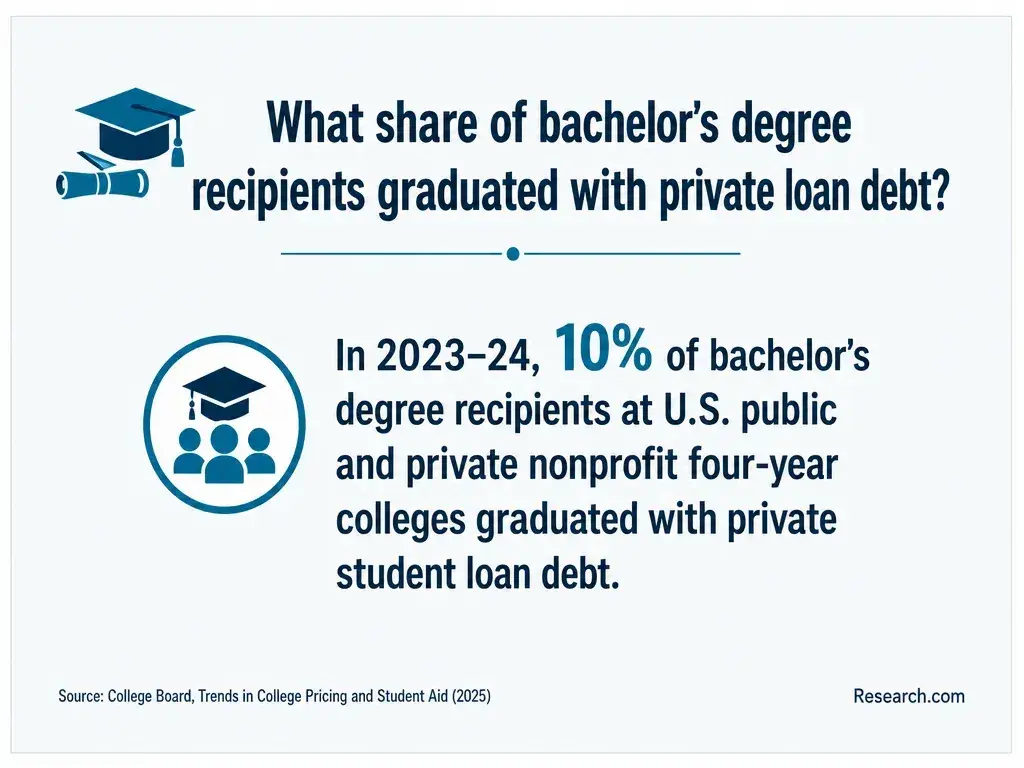
Request an individualized plan listing remaining courses by term and an itemized cost estimate for that plan. Compare tuition with mandatory fees, textbooks, software, potential proctoring or travel costs, and the effect of part-time enrollment on aid.
If an employer offers education assistance, verify its eligibility, grade, and repayment conditions before treating it as funding.
Lists of affordable bachelor's study in psychology online can help you identify schools to investigate. The meaningful comparison is your estimated remaining cost and workable completion schedule, not an advertised tuition figure detached from your transfer evaluation or household budget.
A general psychology BA can support applications for nonclinical roles in human services, program support, research support, and workplace functions where communication and evidence evaluation matter. Hiring requirements vary by employer and role.
Group projects are most useful as career evidence when you can explain your own contribution: for example, how you evaluated sources, coordinated an approved analysis, documented decisions, or communicated limitations.
In community-serving work, roles such as service coordination or recovery support may involve referrals, records, outreach, and collaboration under organizational rules. They are not psychotherapy positions. If recovery services are your target, compare job postings and state rules with the skills and education for recovery services work before assuming a psychology major is the most direct route.
A project should not be presented as supervised field experience if it was a classroom assignment. If a job asks for direct-service experience, an approved internship, relevant employment, or supervised volunteering may provide stronger evidence than another group presentation. Share portfolio samples only when you have permission and can remove confidential or identifying material.
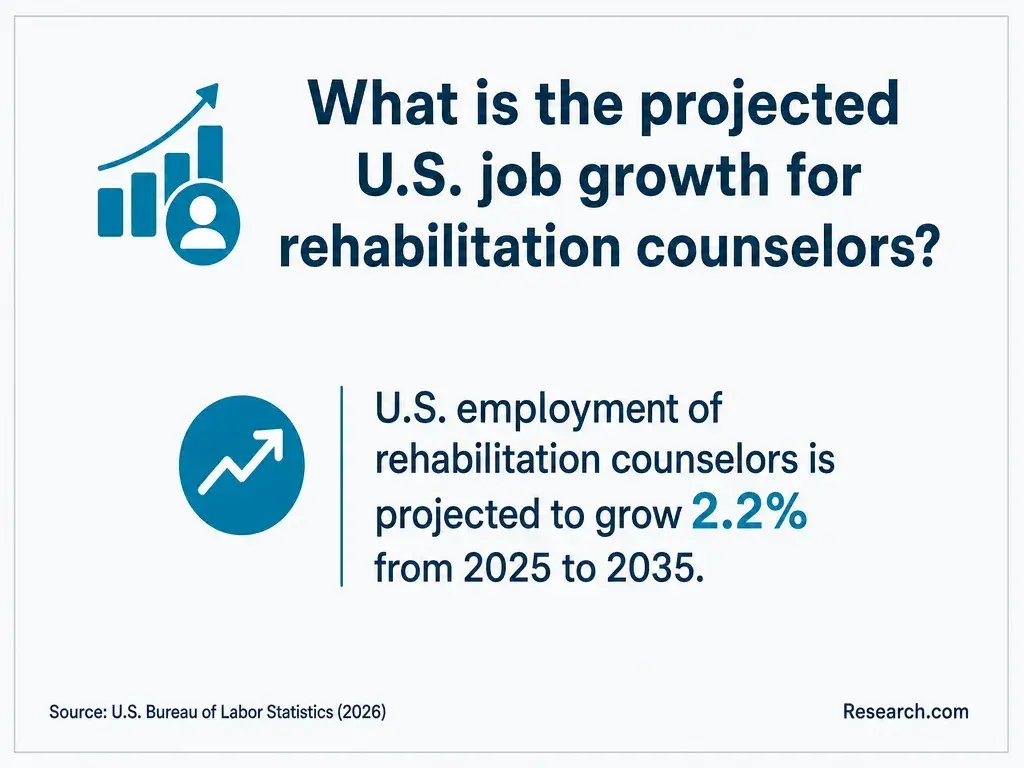
There is no single salary or growth rate for "psychology BA graduates": they enter different occupations, often with different experience and credential requirements.
For a realistic comparison, identify a specific job title, check the current U.S. Bureau of Labor Statistics Occupational Outlook Handbook entry for the closest occupation, and read its typical entry-level education alongside its wage and employment projections. An occupation-wide median is not an expected starting salary or a program outcome.
Local job postings add information national figures cannot: required experience, shift schedules, credentials, and pay ranges for the work you would actually seek.
Compare those requirements with the experience you already have and the opportunities a program provides beyond coursework. When weighing cost-conscious substance use counseling undergraduate options, check the particular occupation and state credential rules rather than treating a degree title or broad salary comparison as an earnings promise.
Does a Psychology Bachelor's Degree Qualify You for Licensure or Certification?
A general psychology BA does not, by itself, authorize someone to diagnose mental-health conditions, provide psychotherapy, perform independent psychological assessment, or use the protected title of psychologist.
Those activities follow occupation, and jurisdiction-specific education, supervised practice, examination, and licensing rules. An undergraduate group project remains academic work even if its subject is clinical or forensic.
Some nonclinical jobs or credentials may be accessible with a bachelor's degree plus other specified training or experience. Check the state regulator or credentialing body for the exact role you want, then ask the program how its coursework maps to those requirements; do not assume it does.
Likewise, online forensic psychology master's options with compressed schedules should be evaluated for their actual purpose rather than presumed to create psychologist licensure eligibility.
If your goal is licensed clinical work, choose your eventual qualifying professional pathway first and judge the BA by its preparation for that pathway. If your goal is a nonclinical role, a targeted credential or supervised experience may address the hiring requirement more directly than additional general psychology coursework.
Other Things You Should Know About Psychology
Usually, if course rules allow it. Identify your own work accurately, credit teammates, and remove material you lack permission to share, particularly participant or client information.
Do not assume one student owns the whole submission. Check the institution's intellectual-property and course policies, and get teammates' permission before sharing their contributions publicly.
Follow the instructor's and institution's rules, disclose permitted use as required, and verify every source and claim. Do not enter confidential, restricted, or identifiable information into an unapproved tool.
Contact the school's disability services office early and discuss the assignment's requirements with the instructor. An accommodation can address access needs, but its specific form must be arranged through the school's process.
- Online group projects in higher education - PMC https://pmc.ncbi.nlm.nih.gov/articles/PMC10038701/
- Student Data Privacy Guidance | National Student Support Accelerator https://nssa.stanford.edu/tutoring/data-use/measures-data-collection/student-data-privacy-guidance
- Discussions in Online Courses: Best Practices & Expectations | jhu.edu https://ep.jhu.edu/faculty-staff/teaching-technology-resources/discussions-in-online-courses-best-practices-and-expectations/
- Psychology Program Learning Objectives (PLOs) - Penn State https://psych.la.psu.edu/undergraduate/degrees-and-requirements/psychology-program-learning-objectives-plos/
- EdTech Tools for Collaboration and Engagement | ucsf.edu https://libraryhelp.ucsf.edu/hc/en-us/articles/24005107285015-EdTech-Tools-for-Collaboration-and-Engagement
- Using peer evaluation in assessed group work | economicsnetwork.ac.uk https://economicsnetwork.ac.uk/showcase/guest_peer
- Asynchronous Tools and How to Use Them - Online Teaching https://onlineteaching.umich.edu/articles/asynchronous-tools-and-how-to-use-them/
- Rubrics for Assessment | Center for Innovative Teaching and Learning | Northern Illinois University https://www.niu.edu/citl/resources/guides/instructional-guide/rubrics-for-assessment.shtml
- Assessing Student Learning: Group Projects | Oregon State University https://ctl.oregonstate.edu/assessing-student-learning-group-projects
- Program Learning Outcomes | William Paterson University https://www.wpunj.edu/cohss/departments/psychology/program-learning-outcomes


