2027 Online BA in Psychology - Mental Health: How to Evaluate a Virtual Research Lab
Audited and Verified:
Our Editorial and Data Verification Process
Research.com uses government datasets, official education statistics and primary institutional information to support its career and degree guides. Our review process checks factual accuracy, occupational definitions, source dates and the requirements associated with the credentials discussed.
How This Article Was Fact-Checked
Our editorial team verifies salary estimates, employment projections, education requirements and program information against original data providers and official organizations. Salary figures are checked against the relevant occupational definitions and reporting periods. Information about licensure, accreditation and required in-person training is reviewed separately.
Fact-checked and verified on:

Co-Founder and Chief Data Scientist
A virtual research lab can be the most valuable part of an online psychology BA—or little more than a page advertising faculty interests. If you hope to study mental health, build research skills, or prepare for graduate applications, that difference matters. This guide shows you how to examine actual student tasks, mentorship, data access, ethical oversight, and scheduling before enrolling. It also puts the lab in context: what the degree teaches, what it costs, and which career or further-study goals research experience can realistically support.
Key Things You Should Know
- Judge a virtual lab by documented undergraduate participation, supervised research tasks, feedback, and a feasible path to an approved output—not by a lab name or software list.
- Ask whether meetings, recruitment, data access, and any campus visits fit your schedule; an online BA does not make research participation automatically asynchronous.
- A mental health psychology BA can support nonclinical research and service roles, but neither a concentration nor virtual lab work qualifies a graduate to diagnose or provide therapy.
What Is an Online BA in Psychology Focused on Mental Health?
It is an undergraduate psychology degree that combines a broad study of behavior and psychological science with courses concerning mental health, such as psychopathology, prevention, or behavioral health systems. Schools may call the focus a concentration, track, or set of electives; only the school's catalog can establish whether it is formally recorded on the academic transcript.
A virtual research lab is a faculty-supervised research group whose students collaborate remotely. Depending on the project, undergraduates might review literature, prepare a codebook, work with permitted datasets, or help communicate findings. It is distinct from a simulated experiment in a course and from a clinical placement. If your primary interest is substance use rather than mental health research broadly, compare the curriculum with a bachelor's study in addiction psychology online before choosing a focus.
How Do You Evaluate a Virtual Research Lab in an Online Psychology Program?
Start with evidence of what online undergraduates actually do, not a promise that research opportunities exist. A strong lab matches your interests with available supervision and a project you can complete ethically within your time and access limits.
Request a recent example of an undergraduate role description and ask a faculty member or research coordinator the following questions. Their answers should make participation, supervision, and a feasible output concrete.
- Access: Can online BA students join the lab, how are students selected, and are places available in the term you expect to participate?
- Work: What tasks do undergraduates perform, and can they progress beyond observing meetings or completing course exercises?
- Mentorship: Who checks work, how often is feedback given, and what happens if the faculty lead or project changes?
- Feasibility: Are meetings live, are recruitment or campus visits required, and what software, secure workspace, or training must students use?
- Output and credit: Can work contribute to a course, independent study, poster, or appropriately redacted portfolio sample, and who approves that arrangement?
For mental health topics, press further on participant protections. Ask who obtains institutional permissions, determines whether institutional review board review is needed, controls access to identifiable information, and trains students to handle sensitive material. A public dataset, a deidentified dataset, and confidential service records have different access rules; none should be treated as automatically available. Lab participation can strengthen a later research-oriented application, but it does not replace checking the methods and faculty-fit expectations while evaluating shorter graduate psychology degree options.
Is an Online Psychology Bachelor's Degree Accredited and Recognized?
Check that the institution holds recognized institutional accreditation and that the accreditation covers the school awarding the online degree. Then confirm the exact degree title, any formal mental health concentration, and the applicable catalog for your entry term. Institutional accreditation does not verify that a particular virtual lab is active or that every undergraduate can join it.
Do not look for APA accreditation as proof of a general psychology BA: APA's professional accreditation applies to specified graduate professional psychology programs and training, not general undergraduate psychology majors. If your longer-term goal is licensed counseling, evaluate that future professional program and your state's rules separately. Even accelerated accredited clinical mental health counseling programs require scrutiny of their specific accreditation, placement obligations, and jurisdictional fit.
Expect the major to build from introductory psychology toward statistics, research methods, and upper-level study of behavior. Mental health-related options may cover psychopathology, development, health psychology, addiction, or community services. Course names and requirements vary, so inspect the catalog rather than treating an advertised topic as a guaranteed elective.
For a virtual lab, method preparation matters more than the number of mental health course titles. Statistics helps you interpret uncertainty; research design helps you distinguish association from causation; and ethics coursework helps you recognize consent, privacy, and measurement limits. Check whether prerequisites are offered in time for you to join the lab before graduation. Coursework about addiction or counseling does not itself establish eligibility for those roles; students pursuing that objective should compare academic routes into addiction counseling against their state's credential rules.
Remote work can support substantive psychological research, particularly literature synthesis, survey design, coding, and analysis of data students are authorized to use. Campus access can make some supervised observations, equipment-based studies, and in-person team activities easier. Neither setting is inherently more rigorous; project design, supervision, and data governance determine the experience's quality.
The comparison below describes common possibilities, not promises made by any particular lab. Use it to identify which research activities matter for your goal.
| Research activity | Virtual lab | Campus-based lab |
| Literature review and analysis | Often feasible remotely with shared documents and approved data access | Also feasible, with opportunities for in-person collaboration |
| Participant-facing work | May involve approved online recruitment or interviews | May also involve in-person recruitment, observation, or testing |
| Specialized facilities | May be unavailable or require a visit | Potentially accessible, subject to training and lab capacity |
| Mentorship | Depends on scheduled meetings and written feedback | Depends on scheduled meetings and available supervision |
If you are weighing undergraduate research against a specialized graduate route, keep the purpose of each separate. For example, evaluating faster-paced forensic psychology master's degrees involves different research, admission, and career questions; a short program is not a substitute for the specific methods experience you need.
First-year applicants typically submit evidence of secondary education; transfer applicants submit prior college records. Schools set their own GPA, documentation, and major entry policies, so distinguish admission to the university from admission to the psychology major or a particular lab.
If you have prior credits, ask for a degree audit showing which courses satisfy statistics, research methods, and other major requirements—not just how many credits the school accepts. A delayed methods prerequisite could leave too little time for meaningful lab participation. Applicants comparing faster completion should apply the same check to accelerated bachelor's program choices in forensic psychology: the institution, not an advertised timeline, decides transfer equivalencies and remaining requirements.
Time and price depend on accepted credits that satisfy degree requirements, enrollment pace, course sequencing, tuition policy, and fees. Research opportunities add another constraint: joining near graduation may allow only introductory tasks, while a project with repeated supervision and revision may require a longer commitment.
Request a term-by-term plan and a written cost estimate covering tuition, mandatory fees, software, any required travel, and credits needed for independent study or a capstone. Confirm whether lab participation is paid, unpaid, credit-bearing, or simply voluntary; do not assume research access comes with funding. If you are comparing addiction-focused undergraduate options, grants for substance abuse counseling bachelor's study can prompt useful aid questions, but your school must determine your actual eligibility and award.
Relevant nonclinical possibilities include research support, behavioral-health program support, intake or referral coordination, and community-service roles. Job titles do not reliably define duties: an employer may require particular experience, training, background checks, or credentials even when a bachelor's degree is acceptable.
A virtual lab is most useful for these roles when you can explain verifiable work: how you followed a protocol, documented decisions, protected data, checked an analysis, or communicated a limitation. It does not substitute for supervised client-facing experience when a job requires it. If your target is substance use services, compare job requirements with substance abuse counseling bachelor's tuition and earning potential without assuming that a psychology major qualifies you for a counselor credential.
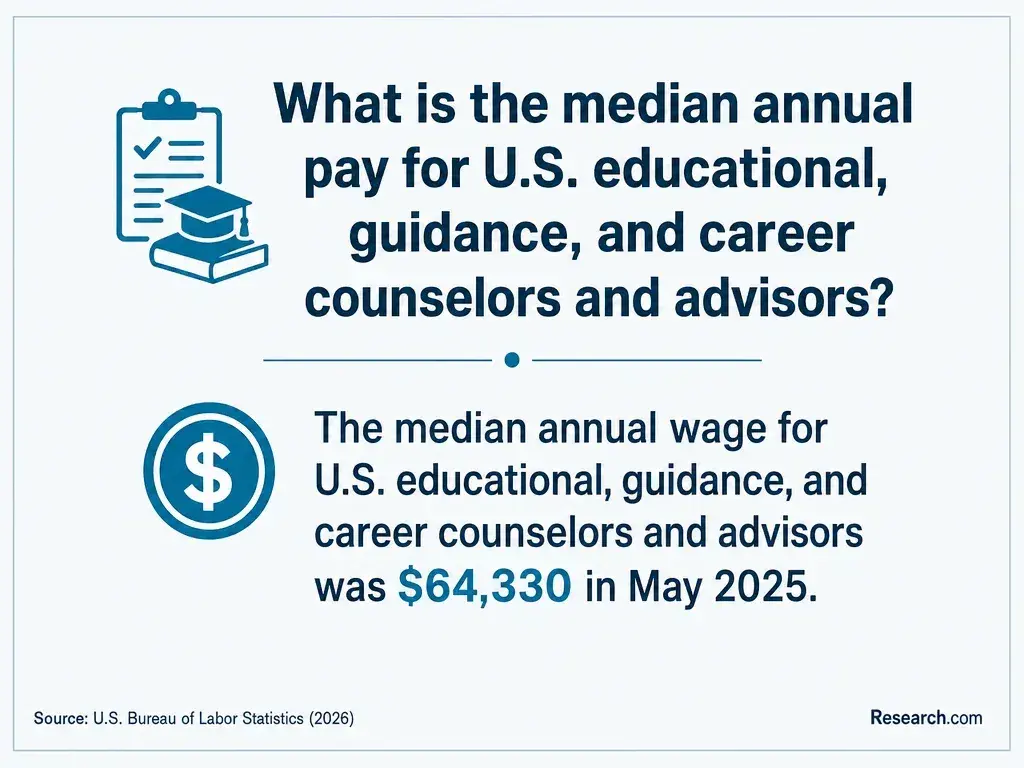
There is no single salary or growth rate for graduates of an online mental health psychology BA. Pay and openings depend on the actual occupation, location, employer, responsibilities, and experience. For a meaningful comparison, match job postings to a specifically defined occupation in the US Bureau of Labor Statistics Occupational Outlook Handbook, then check that occupation's wage reference year, projection period, and typical entry requirements. An occupation-wide median is not a prediction of your starting pay.
Compare that evidence with the full cost of the degree and any further qualification your target job requires. In particular, a counseling master's has different costs and potential roles from a research-oriented BA; clinical counseling master's fees and graduation timelines are relevant only if licensed counseling is your intended path.
Does a Psychology Bachelor's Degree Qualify You for Mental Health Licensure?
No. A psychology BA, mental health concentration, and virtual research lab do not by themselves authorize psychotherapy, diagnosis, independent psychological assessment, or use of a protected clinical title. Counseling, clinical social work, psychology, and other regulated occupations have distinct educational and supervised-practice requirements that vary by jurisdiction.
If licensure is your goal, identify the exact profession and state board before choosing the BA. Check the required later degree, program recognition, placements, and examinations, then decide whether this undergraduate lab advances your preparation. Budget for that separate pathway as well: mental health counseling tuition fees and financial aid concern a different educational decision from selecting an undergraduate research experience.
Other Things You Should Know About Psychology
Yes. Ask admissions or the psychology department whom prospective students may contact. A faculty member can describe current projects, but only the school can confirm admissions and credit policies.
No. Authorship depends on contributions and team policy; a useful recommendation depends on sustained work and a supervisor who knows your work well. Ask how contributions are documented.
Only with permission. Use approved, nonconfidential materials and describe your own contribution accurately; remove restricted data and participant details.
Ask whether another supervised project, independent study, or authorized public-data project meets your goals. If research access is central to your decision, obtain a realistic alternative before enrolling.
- How to obtain informed consent for research - PMC - NIH https://pmc.ncbi.nlm.nih.gov/articles/PMC5980471/
- IRBs | ORI https://ori.hhs.gov/content/chapter-3-The-Protection-of-Human-Subjects-IRBs
- Informed Consent FAQs | hhs.gov https://www.hhs.gov/ohrp/regulations-and-policy/guidance/faq/informed-consent/index.html
- Independent Study & Directed Research Guidelines | Speech, Language, and Hearing Sciences https://slhs.arizona.edu/independent-study-directed-research-guidelines
- Institutional Review Board (IRB) - Human Subjects Research Policy - Policies and Procedures https://policies.daemen.edu/knowledge-base/human-subjects-research-review-policy-2/
- Five principles for research ethics | apa.org https://www.apa.org/monitor/jan03/principles
- Bachelor of Arts in Psychology - Online Program | CSULB CPaCE https://www.cpace.csulb.edu/courses/bachelor-of-arts-in-psychology
- Research Ethics and Informed Consent | Educational Research Basics by Del Siegle https://researchbasics.education.uconn.edu/ethics-and-informed-consent/
- Mason Online Psychology (BS/BA) https://psychology.gmu.edu/undergraduate-programs/online-degree-completion
- Online BA in Psychology | Rowan University https://www.rowan.edu/online/academic-programs/bachelors/ba-psychology/