2027 Online BA in Psychology - Addictions: How to Evaluate Access to Library Databases After Business Hours
Audited and Verified:
Our Editorial and Data Verification Process
Research.com uses government datasets, official education statistics and primary institutional information to support its career and degree guides. Our review process checks factual accuracy, occupational definitions, source dates and the requirements associated with the credentials discussed.
How This Article Was Fact-Checked
Our editorial team verifies salary estimates, employment projections, education requirements and program information against original data providers and official organizations. Salary figures are checked against the relevant occupational definitions and reporting periods. Information about licensure, accreditation and required in-person training is reviewed separately.
Fact-checked and verified on:

Co-Founder and Chief Data Scientist
An online addictions course can assign a research paper due Sunday night, when the library building and help desk are closed. For a student balancing work or caregiving, access to journal articles at that hour is a practical program feature - not a minor perk. This guide shows how to test remote database access, distinguish searchable citations from usable full text, and assess the backup support available when something fails. It also puts that library test in context with the degree's coursework, cost, and career limits so you can compare programs before enrolling.
Key Things You Should Know
- Test off-campus access at the hours you expect to study: search for an addictions article, open its full text, and confirm what happens when authentication fails.
- A database name alone proves little. Check psychology and substance-use coverage, recent full-text availability, article restrictions, and interlibrary-loan turnaround.
- Ask the library to confirm access for online undergraduates in your entry term; a psychology BA with an addictions focus does not itself qualify you to provide counseling.
What is an online bachelor's degree in psychology with an addictions focus?
It is an undergraduate psychology degree that combines broad study of behavior and research with coursework on substance use, prevention, recovery, or service systems. "Addictions focus" may mean an official concentration, a set of electives, or simply a program description. Check the catalog and transcript rules before treating those labels as equivalent.
The distinction matters when evaluating the library. A student writing about motivation and substance use needs psychology research; one examining recovery services may also need public-health and social-services literature. Compare the actual course requirements and library holdings alongside addiction psychology BA and BS degree options, rather than assuming every addictions-focused program assigns the same research work.
How can online students access library databases after business hours?
Many universities provide remote database access through a library website and school sign-in, sometimes using a proxy, single sign-on, or VPN. An online catalog may be available overnight even when librarians are not. Access also depends on the student's enrollment status and the library's licenses, so get the procedure from the specific institution.
Before committing, request an online-student library orientation or permitted trial. Test the complete path - not just whether the database homepage loads:
- From a personal device and off-campus connection, sign in through the library website at an hour you ordinarily study.
- Find a recent peer-reviewed article relevant to a sample addictions assignment and open its publisher PDF or full-text page.
- Sign out and try again in a private browser window; note any extra authentication, VPN, or multi-factor steps.
- Ask how to report a failed login after hours and what access remains available while a ticket awaits staff.
Students managing work and caregiving should also check whether databases require campus visits or special software. A program's psychology degrees with condensed course schedules may leave less time to recover from a weekend access problem; faster coursework does not imply faster library support.
How do you evaluate library database quality in an online psychology program?
Judge whether the library supports the research your courses assign, not the length of its database directory. A psychology index can help you discover relevant studies without supplying their full text. Likewise, a "peer-reviewed" filter helps narrow a search but does not establish that a particular article is an empirical study or that its methods are sound.
This comparison separates resources that are easy to confuse when reviewing a university's library page:
| Feature to verify | Why it matters for addictions coursework | Evidence to request |
| Psychology and substance-use indexing | Helps locate research across behavior, health, and recovery topics | A demonstration search using an assigned or sample topic |
| Full-text holdings and embargoes | A citation may lead to restricted or delayed article access | A successful off-campus full-text retrieval of recent articles |
| Interlibrary loan and document delivery | Can fill gaps, but may not meet a near-term deadline | Eligibility and stated delivery expectations for online undergraduates |
| Research and technical assistance | Search strategy and login failures require different kinds of help | Service hours, contact methods, and after-hours instructions |
Use your likely assignments as the test. If you are comparing a different specialization, such as accredited forensic psychology study and career preparation, repeat the search with that field's literature; a strong general collection does not prove adequate coverage of every specialty.
Verify the institution's current accreditation through the accreditor and the U.S. Department of Education's recognized-accreditor information, then confirm that the online degree is awarded by that institution. Institutional accreditation addresses the school; it does not certify that a particular library database, concentration, or professional pathway meets your needs. APA accreditation does not apply to a general undergraduate psychology BA.
Recognition for employment or further study depends on the receiving employer, graduate program, or credentialing body. If future clinical work is your goal, compare the BA with the separate requirements for planning completion of accredited clinical counseling coursework. Neither institutional accreditation nor an addictions label turns undergraduate study into a counseling qualification.
Programs commonly build from introductory psychology, statistics, research methods, and behavioral or developmental study toward electives on substance use and related services. The catalog - not the program's marketing page - determines which courses are required, how often they run, and whether an addictions focus is formally recorded.
Library needs follow those assignments. Methods courses may require original empirical articles and careful interpretation of correlation; addictions courses may ask students to compare prevention approaches or evaluate evidence on recovery support. Check whether course guides demonstrate database searching and whether instructors accept interlibrary-loan delays. If the goal is a specific counseling credential rather than psychology research preparation, choosing an addiction counseling degree route calls for a separate review of state rules and supervised training.
Undergraduate applicants typically need evidence of prior schooling and must meet the institution's admission rules; transfer applicants also need an evaluation of previous college work. Admission, acceptance of credits, and application of those credits to psychology requirements are separate decisions. Ask for a degree audit showing remaining courses and confirm that admitted online students receive the same library borrowing, database, and interlibrary-loan privileges described in the program materials.
If you already hold a bachelor's degree, first check whether another undergraduate degree is necessary for your goal. Targeted prerequisites or evaluating shorter graduate psychology degree options may be more direct, though graduate admission and professional licensure requirements must be checked separately.
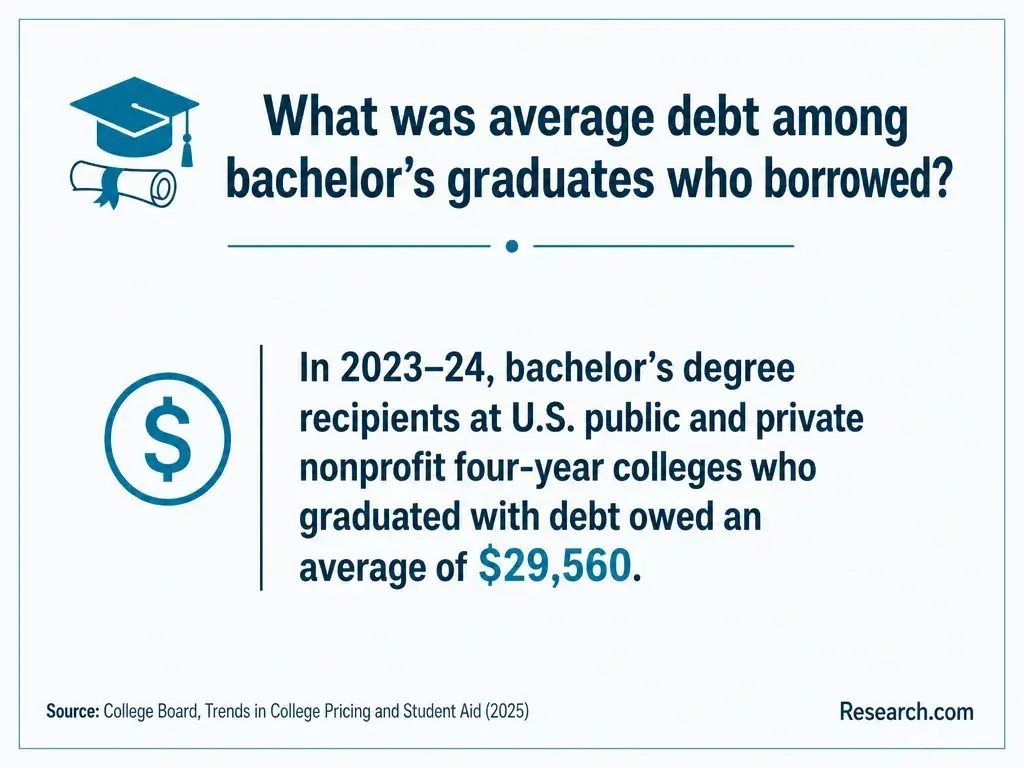
Time and cost depend on accepted credits, the courses still required, term schedules, enrollment pace, tuition, and fees. Request a written degree audit and a term-by-term course plan before estimating a graduation date. For someone studying chiefly after business hours, an inexpensive or fast program can be a poor fit if required courses have live meetings or research materials are difficult to obtain remotely.
When comparing low-cost substance use counseling undergraduate degree pathways, request an itemized estimate for your own remaining credits. Ask whether online students pay separate technology, library, document-delivery, or course-material charges; do not assume a listed tuition rate is the total cost.
Depending on employer and state requirements, graduates may pursue nonclinical work in recovery-service coordination, community outreach, intake support, research assistance, or program administration. Relevant evidence for an application could include literature-search skill, accurate summaries of research, respectful communication, and supervised experience with referrals or service documentation. A degree alone does not establish eligibility for a particular title or duty.
Identify the work you want before choosing a specialization. For example, forensic psychology graduate programs with shortened study plans address a different academic direction; they are not a shortcut to addictions counseling or forensic clinical authority. For an addictions-support role, compare local job postings with the BA's coursework and any required experience or credential.
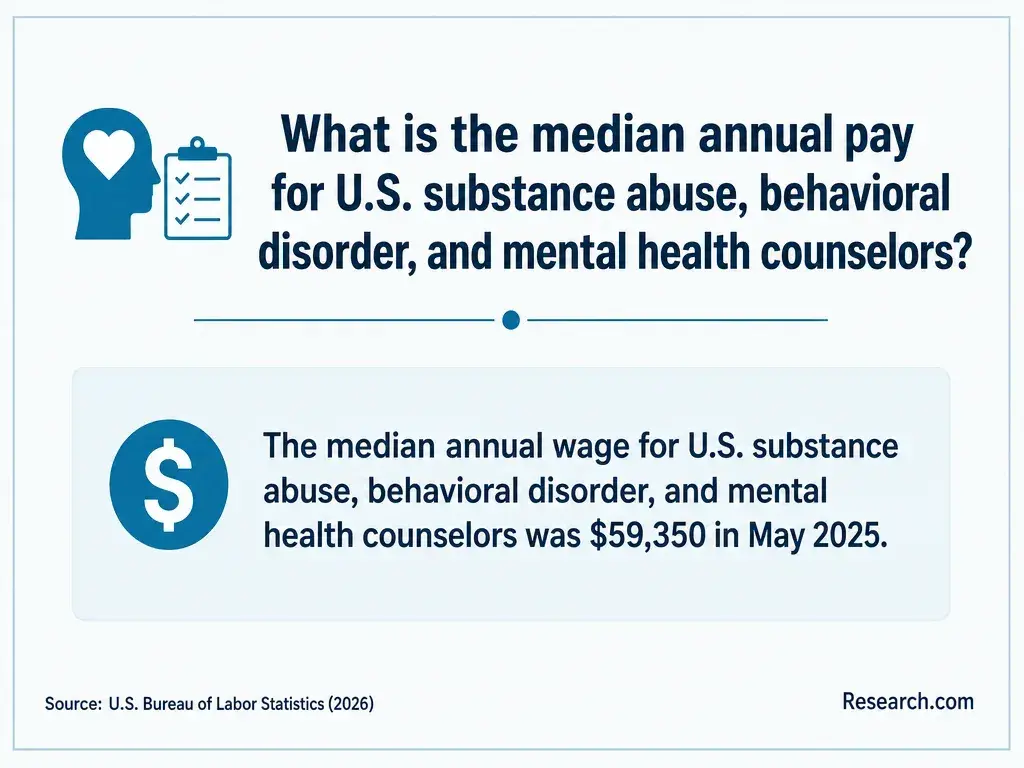
There is no reliable single salary or growth rate for "addictions-focused psychology BA graduates." Addiction services include occupations with different duties and entry requirements. The U.S. Bureau of Labor Statistics groups substance abuse, behavioral disorder, and mental health counselors for occupational reporting, but its occupation-wide wage and outlook figures are not BA-graduate outcomes, and many counseling positions require further education or credentials.
For a useful comparison, select a specific job title in your intended location, check its employer requirements, and then consult the latest BLS occupational figures for the closest matching role. Compare likely pay with your personal education costs using planning a budget for an online psychology degree. If the accessible entry job is support or administrative work rather than counseling, do not use counselor pay as your expected return.
Does an addictions-focused psychology bachelor's degree lead to licensure or certification?
Not by itself. A psychology BA teaches about substance use and psychological science; it does not authorize independent diagnosis, psychotherapy, or use of a protected professional title. Addiction-counselor and peer-support credentials differ by state and may specify education, approved coursework, supervised experience, examinations, or other conditions.
Start with the regulator or certifying body for the state and exact role you want. Ask the university to identify which requirements its courses satisfy, if any, and obtain confirmation from the credentialing authority before relying on that claim. If your intended role requires a clinical master's pathway, compare its actual qualification rules and supervised-practice obligations before choosing a shorter clinical mental health counseling master's.
Other Things You Should Know About Psychology
Do not assume so. Alumni access often differs from enrolled-student access because database licenses restrict who may use them. Ask the library which resources, if any, remain available after graduation.
Contact the library and disability-services office before enrolling. Ask how they handle inaccessible PDFs, screen-reader compatibility, and requests for alternative formats when an assignment has a short deadline.
Usually, a citation and your own analysis are safer than uploading a publisher's PDF. Check the article's reuse terms and your school's guidance before sharing full text publicly.
Document the citation and access error, contact the library and instructor promptly, and ask whether an accessible equivalent meets the assignment. Do not rely on unauthorized copies or wait until the deadline to report the problem.
- Online Databases - Psychology: A Research Guide | Research Guides at Library of Congress https://guides.loc.gov/psychology-guide/online-databases
- Library Research in Psychology: Finding it Easily | apa.org https://www.apa.org/education-career/undergrad/library-research
- Electronic Resources Access: Home | mobap.edu https://libguides.mobap.edu/offcampus
- Databases A-Z - Academic Guides - Walden University https://academicguides.waldenu.edu/az/databases
- Applied Psychology: Addictions Studies, B.S. - CPS, CPSO | University of New Hampshire https://www.unh.edu/program/bachelor-science/applied-psychology-addictions-studies
- Library Research Guides: InterLibrary Loan (ILL): Need an Article, Book Chapter, eBook or Thesis? (PDFs) https://libguides.wellesley.edu/ill/articlebookchapter
- Requesting Articles We Don't Have Full-text - Library Guides | LibGuides at Oregon State University https://guides.library.oregonstate.edu/c.php
- How do I access online databases and ejournals from off-campus? - Ask Us! https://libanswers.wustl.edu/faq/5308
- Request: Interlibrary Loan | thechicagoschool.edu https://library.thechicagoschool.edu/access/document-delivery/interlibrary-loan
- Q. Can I access the library research databases from off-campus? | UNM Libraries https://libanswers.unm.edu/faq/134550