2027 Online BA in Psychology - Addictions for Work in Reentry Support Organizations: Compare Degree Fit and Hiring Requirements
Audited and Verified:
Our Editorial and Data Verification Process
Research.com uses government datasets, official education statistics and primary institutional information to support its career and degree guides. Our review process checks factual accuracy, occupational definitions, source dates and the requirements associated with the credentials discussed.
How This Article Was Fact-Checked
Our editorial team verifies salary estimates, employment projections, education requirements and program information against original data providers and official organizations. Salary figures are checked against the relevant occupational definitions and reporting periods. Information about licensure, accreditation and required in-person training is reviewed separately.
Fact-checked and verified on:

Co-Founder and Chief Data Scientist
Reentry support organizations help people returning from incarceration connect with housing, employment, benefits, health care, and recovery services. An online BA in psychology with an addictions focus can prepare you to understand behavior and support recovery, but it may not be the most direct qualification for every job - and it does not authorize counseling.
This guide compares the degree with actual reentry tasks, hiring requirements, alternative pathways, and the experience you may need alongside coursework, so you can choose an education plan that fits the role you want.
Key Things You Should Know
- An addictions-focused psychology BA can support nonclinical reentry work, especially intake, referrals, service coordination, and recovery education; its value depends on relevant experience as well as coursework.
- Reentry hiring requirements vary by employer and state. Counseling roles may require a qualifying graduate degree, supervised experience, and a license; peer roles may require a separate state-recognized credential.
- A bachelor's degree commonly requires about 120 semester credits, but transfer decisions, placement obligations, and per-credit charges determine the time and cost that matter to you.
What jobs can an online psychology degree prepare you for in reentry support organizations?
For someone entering the field, the strongest BA-level targets are nonclinical support roles: reentry program assistant, intake or referral coordinator, employment-support specialist, housing navigator, and, where employer requirements permit, case coordinator. Duties can include documenting service needs, arranging appointments, following up on referrals, and helping participants navigate agencies. A psychology BA supplies useful context; an employer still needs evidence that you can do this work reliably and respectfully.
A person with prior nonprofit, corrections, benefits-navigation, or recovery-service experience may be competitive for more responsibility than a new graduate. Conversely, a forensic-sounding title can signal substantially different duties. Consult a forensic psychology master's employment and pay guide only if you are considering that separate graduate pathway; it should not be read as a list of BA-level reentry jobs.
Is an online BA in psychology with an addictions focus a good fit for reentry support work?
Yes, if you want broad behavioral-science preparation for nonclinical support work and can gain direct experience with reentry services. The addictions focus is particularly relevant when participants need connections to substance-use treatment and recovery resources. It does not substitute for knowledge of housing systems, employment barriers, benefits, community partnerships, or the effects of incarceration.
The best route depends on your starting point and target job. This comparison separates useful academic content from qualifications a particular role may require.
| Pathway | Best fit | Main limitation to check |
| Psychology BA with addictions focus | Broad nonclinical support, behavioral-science literacy, possible later study | Whether coursework and field experience address reentry systems |
| Human services, social work, or criminal justice bachelor's | Roles emphasizing service systems, case coordination, or justice operations | Whether the curriculum covers addiction and recovery sufficiently |
| Targeted training plus relevant work experience | Someone who already meets a support job's education requirement | Whether advancement requires a degree or specific credential |
Compare actual curricula rather than relying on a concentration label. A bachelor's-level addiction psychology program guide can help identify programs to investigate, but confirm each school's current course list, degree designation, and fieldwork options before applying.
What hiring requirements do reentry support organizations expect from psychology graduates?
Requirements follow the job description, funding arrangement, and jurisdiction, not the degree title alone. An entry-level navigator posting may accept several majors or equivalent experience. A case-management position may ask for documented service-coordination experience. Positions involving counseling, probation authority, or restricted records can have additional requirements that a psychology BA does not satisfy.
Read postings for the tasks beneath the title. Look for required experience with referrals and case notes; knowledge of local housing, employment, and treatment resources; driving or travel obligations; background-check rules; and required training in confidentiality, safety, and mandated reporting. A background-check policy should be confirmed with the employer rather than assumed to exclude every applicant with justice-system involvement.
If the work you want is psychotherapy rather than navigation or support, budget for a qualifying professional pathway, not just a BA. Comparing mental health counseling program costs is relevant to that different decision; first verify that the program meets the licensing rules where you intend to practice.
Prioritize courses that help you understand recovery and work within a service organization. Addiction psychology, developmental and social psychology, and research methods can inform communication and evidence appraisal. Ethics and cultural psychology matter when working with people whose experiences of treatment, incarceration, and community services differ.
For reentry work, look beyond the psychology major for electives in substance-use service systems, public health, human services, criminal justice, and program evaluation. A course on counseling theory may improve your understanding of referrals, but it does not train you to provide therapy. When reviewing online psychology degree program comparisons, check whether the courses you need are required, regularly offered electives, or unavailable online.
Online delivery may let a working student keep a job while studying; a campus program may make it easier to meet local agencies and arrange supervised experience. Neither format guarantees a reentry placement. Compare live-class times, group work, exams, campus visits, internship approval, and the school's ability to support a placement near you.
For this career goal, access to appropriate community experience matters more than delivery format alone. Program-length claims also need context: accelerated forensic psychology graduate completion routes describe a different degree level, not a faster way to earn this BA or qualify for reentry counseling. Ask each bachelor's program for a course-by-course completion plan based on your own credits and schedule.
Yes. Confirm that the institution holds recognized accreditation and that the specific online BA is offered by that institution. This matters for academic credibility and can affect transfer, aid, and future applications, although another school decides which credits or degree it will accept.
Do not look for APA accreditation of a general psychology BA: APA professional accreditation applies to covered graduate professional programs and training, not ordinary bachelor's majors. Even an accredited institution's addiction or forensic concentration is not a professional license. The same distinction matters when exploring accredited online pathways in forensic psychology: check the institution, the exact degree, and any credential rules separately.
Requirements vary by school and by whether you are a first-year or transfer applicant. Schools commonly ask for an application and prior academic records; some set separate standards for entry to the major. An addictions focus may be a selectable set of courses rather than a separately admitted program, so confirm its official status.
If you have prior college credit, request a written degree audit showing not just credits accepted but how they apply to general education, psychology requirements, electives, and remaining residency credits. Guidance on transferring college credits into a psychology degree can help you prepare questions, but the receiving institution has final authority over equivalencies and graduation requirements.
A full-time bachelor's pathway is often planned around four academic years and approximately 120 semester credits. Your actual timeline depends on accepted credits, course sequencing, enrollment pace, and whether a field experience must be completed on a fixed schedule. Online study does not remove placement travel or unpaid-work costs.
For a useful cost comparison, obtain each school's current per-credit tuition and mandatory fees, then ask for an estimate based on credits remaining after your degree audit. Add books, required technology, travel, and any earnings you would give up for fieldwork. Do not compare advertised per-credit rates as if they were complete program prices.
If aid is important, investigate eligibility before enrolling. A guide to grants for substance abuse counseling bachelor's study may suggest questions to ask the financial-aid office, but award availability and eligibility depend on your circumstances and the specific program.
Not every reentry job does. Navigation, referrals, and administrative support may be nonclinical. Substance-use-disorder counseling, psychotherapy, and use of protected professional titles are different: the state and the specific role determine required education, supervised experience, examinations, and permitted duties. Peer recovery positions may have their own certification and lived-experience requirements.
If you want to provide treatment, identify the state credential and work backward to an eligible program. Accredited clinical counseling timelines for working students illustrate a distinct graduate route; verify state eligibility and post-degree requirements rather than assuming an online psychology BA or addictions concentration qualifies you. While in a support role, follow agency protocols for referrals, crises, confidentiality, and clinical supervision.
What are the salary and job outlook for reentry support careers?
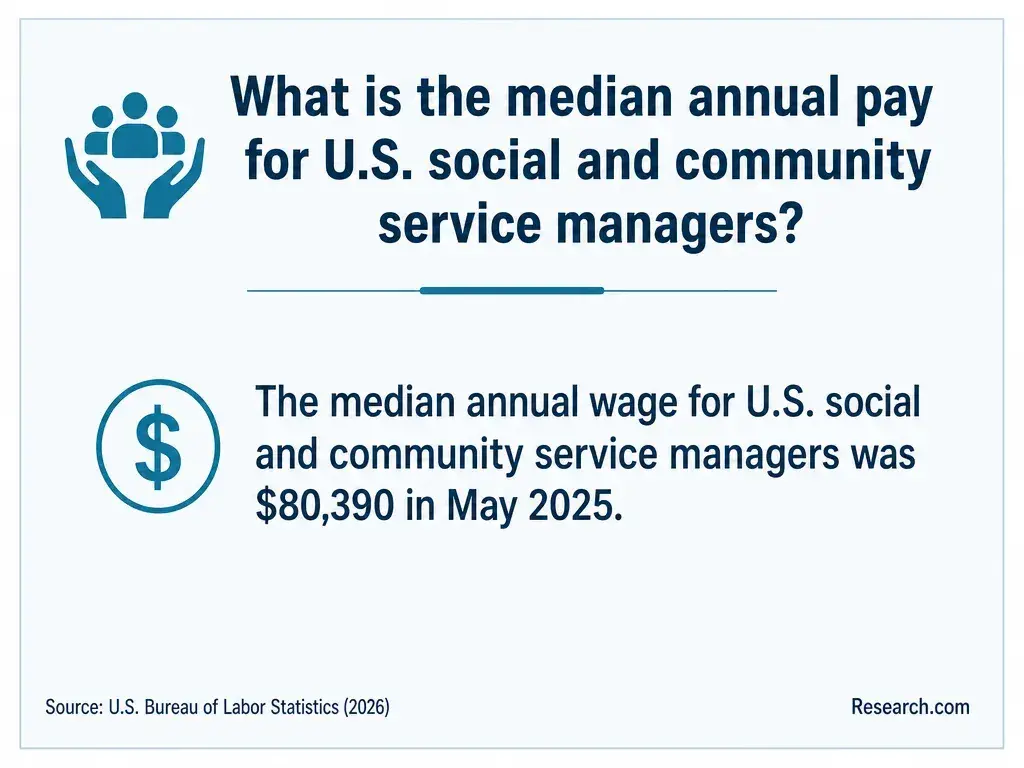
There is no single US wage or employment projection for "reentry support worker." Employers use different titles, and the US Bureau of Labor Statistics groups jobs by occupation rather than mission. Its social and human service assistants category can provide a broad comparison for some support positions; substance abuse, behavioral disorder, and mental health counselors is a different category that includes jobs with substantially different credential requirements. Neither category reports outcomes for graduates of an addictions-focused psychology BA.
For a realistic local estimate, compare posted pay ranges for the exact duties you want and note whether the positions are full-time, grant-funded, public-sector, or credential-dependent. If you are considering graduate study for advancement, compare its total cost and foregone work time with the requirements of specific jobs. Planning the cost of a psychology master's is useful for that calculation, but a general psychology master's is not automatically a counseling qualification or a route to higher reentry pay.
Other Things You Should Know About Psychology
Yes, if it gives you relevant, referenceable experience with outreach, resource navigation, or program operations. Ask a prospective employer how it evaluates volunteer experience against its paid-work requirements.
Follow the application's questions and applicable rules. If lived experience is relevant to the role, you can explain the skills it informs without sharing private details you are not required to provide.
Not without appropriate organizational permission and any required academic review. Access for your job does not automatically authorize use for coursework; ask about an approved, non-identifiable alternative.
Ask who supervises students, which nonclinical tasks are available, what training and screening are required, and whether the schedule fits your degree program. Obtain academic approval before treating the opportunity as credit-bearing.
- DAPIP | Homepage - Office of Postsecondary Education (OPE) https://ope.ed.gov/dapip/
- Medi-Cal Peer Support Services Specialist Program - DHCS https://www.dhcs.ca.gov/medi-cal-peer-support-services-specialist-program-frequently-asked-questions/
- Re-Entry Services | ny.gov https://doccs.ny.gov/re-entry-services
- Reentry Specialist | City of New York Jobs https://cityjobs.nyc.gov/job/reentry-specialist-in-manhattan-jid-31432
- Cost of Attendance (Budget) | 2025-2026 Federal Student Aid Handbook https://fsapartners.ed.gov/knowledge-center/fsa-handbook/2025-2026/vol3/ch2-cost-attendance-budget
- Chapter 6 - How To Become a Peer Specialist - NCBI https://www.ncbi.nlm.nih.gov/sites/books/NBK596268/
- Reentry | Overview | Office of Justice Programs https://www.ojp.gov/feature/reentry/overview
- Student Field Experience - WVU School of Social Work https://socialwork.wvu.edu/field-education/for-students
- Online Tuition & Cost Calculator - ASU Online https://asuonline.asu.edu/what-it-costs/
- A Guide to Professions in Addiction Studies and Recovery | University of the Cumberlands https://www.ucumberlands.edu/blog/guide-to-professions-in-addiction-studies-and-recovery