2027 Online BA in Psychology - Mental Health: How to Evaluate a Digital Portfolio Instead of a Traditional Final Exam
Audited and Verified:
Our Editorial and Data Verification Process
Research.com uses government datasets, official education statistics and primary institutional information to support its career and degree guides. Our review process checks factual accuracy, occupational definitions, source dates and the requirements associated with the credentials discussed.
How This Article Was Fact-Checked
Our editorial team verifies salary estimates, employment projections, education requirements and program information against original data providers and official organizations. Salary figures are checked against the relevant occupational definitions and reporting periods. Information about licensure, accreditation and required in-person training is reviewed separately.
Fact-checked and verified on:

Co-Founder and Chief Data Scientist
A digital portfolio can show more of a psychology student's work than a timed final exam - but only if the assignment is rigorous, fairly graded, and safe to share. For students considering an online BA with a mental health focus, the assessment method also affects workload, privacy, and the evidence they can take into a job search or graduate application.
This guide explains what a strong portfolio contains, how to judge a program's requirements, and when an exam or another assessment may be the better fit.
Key Things You Should Know
- A portfolio is a credible final assessment when it demonstrates research reasoning, revision, ethical judgment, and individual work against a published rubric - not merely polished presentation.
- Ask whether the portfolio replaces one course exam or serves as a degree-wide capstone; those arrangements require different amounts of time, supervision, and evidence.
- A mental health portfolio can support applications for nonclinical roles or further study, but neither the portfolio nor the BA qualifies its owner to diagnose or provide psychotherapy.
What Is an Online BA in Psychology With a Mental Health Focus?
An online BA in psychology is an undergraduate degree built around psychological science, research methods, and general education. A mental health focus may be a formally named concentration, a group of electives, or simply the theme of a capstone. Those distinctions matter: an elective does not appear on a transcript as a separate credential unless the institution awards one.
For a portfolio, the most useful focus is a nonclinical question the student can investigate responsibly - for example, how to communicate research on help-seeking or evaluate the accessibility of publicly available referral information. Studying disorders or services does not authorize clinical assessment or treatment. Students whose primary interest is substance-use services may also consider comparing accredited addiction psychology BA pathways, while checking what each school actually requires for its final project.
How Does a Digital Portfolio Replace a Traditional Psychology Final Exam?
A traditional final exam usually samples what a student can recall and apply within a fixed period. A digital portfolio instead collects selected artifacts - such as an evidence review, research proposal, annotated resource, or program-evaluation plan - alongside explanations of how the work developed. "Portfolio-based" does not necessarily mean "no exams": a portfolio might replace one course final while other courses retain tests.
Assessment quality depends less on the platform than on the evidence and rubric. The following comparison clarifies what each format can show, and what it may miss.
| Assessment | What it can reveal | Important limitation |
| Timed final exam | Independent application under common, controlled conditions | Limited opportunity to show revision or sustained project work |
| Digital portfolio | Research choices, written communication, feedback, and improvement over time | Authorship and individual contribution require clear documentation |
To evaluate a portfolio requirement, request the assignment brief, grading rubric, and an appropriately anonymized example. Then check these elements:
- Scope: Identify the required artifacts, intended audience, submission format, and whether the work spans a course or the entire major.
- Psychology content: Look for accurate use of evidence, clear distinctions between findings and claims, and discussion of uncertainty rather than unsupported mental health advice.
- Process: Confirm that drafts, faculty feedback, revisions, and individual contributions count - not just the finished website or slides.
- Ethics: Verify what data and images may be used, whether any site or research approval is needed, and how confidential material must be excluded.
- Fair grading: Check that subject knowledge and reasoning carry more weight than expensive software, design polish, or access to a workplace site.
A manageable example is a literature review paired with a proposed, unimplemented outreach evaluation: a question, evidence table, draft measures, limitations, and revision memo. It should not imply that participants were recruited or outcomes achieved. If a school advertises speed alongside portfolio assessment, compare the actual course sequence and revision time before choosing an accelerated psychology degree route.
Is an Online Psychology BA Accredited and Valid for Mental Health Careers?
Check the institution's current accreditation with the accreditor and the U.S. Department of Education's recognized-accreditor information, then confirm that the degree and online format appear in the school's catalog for your entry term. Institutional accreditation supports recognition of the school; it does not certify the quality of a particular portfolio or establish eligibility for a regulated mental health occupation.
The American Psychological Association does not accredit general psychology bachelor's programs. Professional-program recognition for counseling or social work applies to different programs and must be checked against the intended credential. This distinction is especially important when comparing a BA with lower-cost accredited counseling degree pathways: a lower price or an accredited institution does not, by itself, satisfy a state board's educational rules.
For the portfolio itself, ask who evaluates it, whether students receive substantive feedback, and whether the rubric is published. These answers tell you more about the assessment's value than the phrase "career-ready portfolio."
Course titles and requirements vary, but a useful portfolio rests on introductory psychology, research methods, statistics, and study of development and social behavior. Courses on psychopathology, health, addiction, or service systems can supply a mental health context. The crucial test is whether students must evaluate evidence and its limitations, not just describe conditions or interventions.
Look for a sequence that lets students practice finding credible studies, interpreting results, writing for a defined audience, and revising after feedback before the final submission. A course about psychological testing may teach measurement concepts without granting access to restricted instruments or authority to interpret them clinically. Likewise, distance learning degrees in addiction counseling may follow a different curriculum and credential pathway; similar subject matter does not make their assessments or professional outcomes interchangeable with those of a psychology BA.
Applicants generally need to meet the institution's undergraduate admission rules and submit the records it requests. Transfer applicants should obtain a degree audit that separates credits the school accepts from credits that actually satisfy psychology, statistics, general education, and graduation requirements. The receiving institution makes that determination.
Admission is also the right time to ask about portfolio prerequisites. A student entering with prior research coursework may still need a school-specific methods course or capstone sequence; another student may be able to build artifacts across several courses. Ask whether the final assessment requires a placement, live presentation, group project, or prior approval of a topic. Advertised shorter forensic psychology BA and BS timelines illustrate why completion claims from another specialization cannot substitute for a personal audit and a confirmed portfolio schedule.
Completion time depends on accepted credits, courses still required, term offerings, and whether the portfolio must be developed over multiple courses. An online format does not remove prerequisites or guarantee that a capstone is offered every term. Request a term-by-term plan showing when drafts, feedback, and the final submission occur.
For cost, compare the price of remaining credits rather than a headline tuition rate. Include mandatory online or technology fees, materials, any portfolio platform costs, and possible travel or unpaid placement time. Ask whether a slower pace changes aid eligibility and whether a delayed capstone would add another term. If graduate study is the eventual goal, keep that separate expense visible through psychology master's tuition comparisons; a BA portfolio does not replace the education required for a later professional credential.
Both formats can support a rigorous portfolio. Online study may make drafts and feedback easier to document, while campus study may offer more routine access to faculty meetings or local project partners. Neither advantage is automatic: evaluate the actual supervision, library access, methods support, and opportunities to present work.
For students balancing employment or caregiving, the decisive issue is the assessment schedule. Ask which meetings are live, when peers must collaborate, whether a presentation is synchronous, and how quickly instructors return feedback. An asynchronous lecture does not make a supervised project asynchronous. Students planning a later licensure-track degree should separately check its fieldwork and attendance requirements; accredited clinical counseling timelines for working students address a different, more practice-intensive stage of education.
A well-documented portfolio can give applicants examples to discuss for nonclinical work in human services, community outreach, research support, or program administration. It is evidence of particular skills, not a job qualification on its own. Employers may also require relevant experience, training, background checks, or a role-specific credential.
The distinction between a portfolio artifact and workplace responsibility is important. An evidence review can demonstrate research writing; it does not demonstrate that its author has managed a caseload. A proposed evaluation can show planning; it does not prove that a community partner approved or used it. Describe the work accurately on applications, and seek supervised experience to fill gaps the portfolio cannot show.
If the target job involves counseling, investigate its state-specific professional route rather than relying on the BA's mental health label. If the interest is legal-system research or support work, comparing forensic psychology master's programs by study length may help with later planning, but a forensic degree name does not confer clinical or investigative authority.
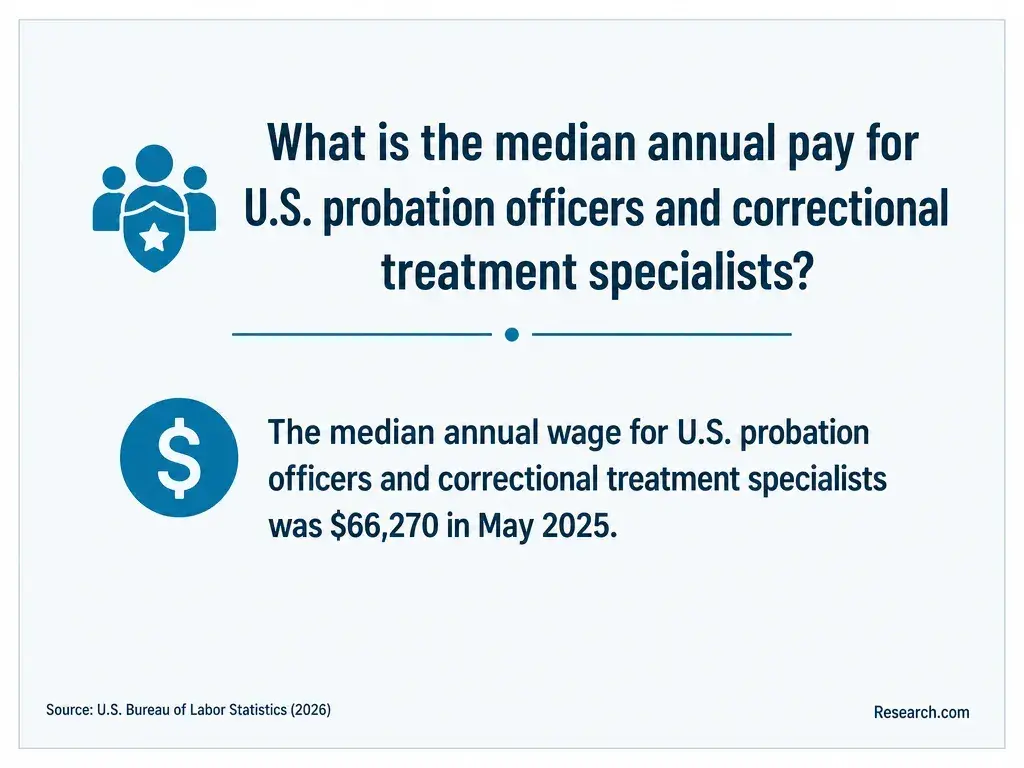
There is no single salary or job-growth figure for "psychology BA graduates." U.S. Bureau of Labor Statistics figures describe defined occupations, which may include workers with different degrees and levels of experience. Choose a target job first, read its current Occupational Outlook Handbook profile, and compare the listed duties and typical entry requirements with your preparation. Do not use a licensed counselor's occupation-wide median as a forecast for a new BA graduate seeking support work.
The portfolio matters financially only if it helps demonstrate skills an attainable role asks for, such as evidence synthesis, careful documentation, or evaluation planning. Weigh that potential benefit against tuition and time away from paid work. If counseling is the intended occupation, mental health counseling graduate costs and career outcomes belong in a separate calculation that includes required training and licensing steps.
What Licenses or Certifications Require Graduate Psychology Education?
Independent psychotherapy, diagnosis, and use of protected clinical titles require qualifications beyond a psychology BA. Licensed psychologists generally need doctoral-level professional preparation; licensed professional counselors and clinical social workers follow distinct qualifying graduate-degree and supervised-practice routes. Rules differ by state and occupation. Some addiction or peer-support credentials have different education thresholds, so do not assume that all certifications require graduate psychology education - or that mental health coursework satisfies them.
Before treating a portfolio-based BA as preparation for a specific credential, check the relevant state board's educational criteria and ask prospective graduate programs which undergraduate courses they expect. A strong portfolio may help explain research interests or writing ability, but it cannot substitute for required graduate coursework or supervised clinical training. Compare fast-track online clinical counseling master's options against those requirements, including field placement feasibility, rather than speed alone.
Other Things You Should Know About Psychology
Follow the course's AI and citation policy. Disclose permitted assistance, verify every claim and reference, and retain drafts that show your own reasoning.
Only if you have rights to share each component. Remove confidential information and check permissions for employer materials, images, instruments, and group work.
Contact the school's accessibility office and instructor early to discuss an approved format that assesses the same learning outcomes.
Include a brief contribution statement and, where permitted, drafts or version history. Do not present collaborators' work as your own.
- Informed Consent FAQs | hhs.gov https://www.hhs.gov/ohrp/regulations-and-policy/guidance/faq/informed-consent/index.html
- Guidance on Web Accessibility and the ADA https://www.ada.gov/resources/web-guidance/
- Frequently Asked Questions | Protecting Student Privacy https://studentprivacy.ed.gov/frequently-asked-questions
- Rubrics: Tools for Making Learning Goals and Evaluation Criteria Explicit for Both Teachers and Learners - PMC https://pmc.ncbi.nlm.nih.gov/articles/PMC1618692/
- Disability Discrimination: Technology Accessibility | ed.gov http://www.ed.gov/laws-and-policy/civil-rights-laws/disability-discrimination/disability-discrimination-key-issues/disability-discrimination-technology-accessibility
- Using Generative AI to Support Your Learning as a Student | University of Chicago https://genai.uchicago.edu/resources/students/generative-ai-student-guide
- Portfolio Assessment Guidelines - Prior Learning Assessment https://priorlearning.psu.edu/portfolio-assessment-guidelines
- Program Learning Outcomes | Psychology | Financial Aid and Scholarship Office https://www.sjsu.edu/psych/about-us/program-learning-outcomes.php
- Rubrics | Center for the Advancement of Teaching Excellence | University of Illinois Chicago https://teaching.uic.edu/cate-teaching-guides/assessment-grading-practices/rubrics/
- Using Portfolios in Program Assessment | Assessment and Curriculum Support Center https://manoa.hawaii.edu/assessment/resources/using-portfolios-in-program-assessment/