2027 Online BA in Psychology - Addictions: How to Compare a Liberal Arts Core Versus a Professional Studies Core
Audited and Verified:
Our Editorial and Data Verification Process
Research.com uses government datasets, official education statistics and primary institutional information to support its career and degree guides. Our review process checks factual accuracy, occupational definitions, source dates and the requirements associated with the credentials discussed.
How This Article Was Fact-Checked
Our editorial team verifies salary estimates, employment projections, education requirements and program information against original data providers and official organizations. Salary figures are checked against the relevant occupational definitions and reporting periods. Information about licensure, accreditation and required in-person training is reviewed separately.
Fact-checked and verified on:

Co-Founder and Chief Data Scientist
Two online psychology degrees can share an addictions focus yet prepare students differently. A liberal arts core may leave more room for scientific inquiry and graduate-school preparation; a professional studies core may emphasize service systems and workplace applications. That distinction matters if you are choosing between research, recovery-support work, and a future counseling qualification. This guide shows prospective and returning students how to compare the actual courses, applied opportunities, transfer rules, and costs - rather than relying on a concentration's name.
Key Things You Should Know
- Choose a liberal arts core for broader disciplinary and research preparation; favor professional studies when its required courses and approved experiences match a specific nonclinical service role.
- A typical bachelor's degree requires about 120 semester credits, but accepted transfer credits may not satisfy psychology, addictions, or residency requirements. Neither core makes a graduate an independent addiction counselor.
- Check the target state's education, supervised-experience, examination, and credential rules before enrolling.
What Is an Online BA in Psychology With an Addictions Focus?
It is an undergraduate psychology degree that combines study of behavior and psychological science with coursework on substance use, prevention, recovery, or service systems. "Addictions focus" might mean an official concentration, a group of electives, or simply a program's stated emphasis. Check the catalog to see which designation appears on the transcript and which courses are required.
The degree title does not tell you which core it uses. An online BA housed in a liberal arts college may emphasize theory and research, while one housed in a professional studies division may organize requirements around applied human services. Either can be worthwhile. When reviewing addiction psychology undergraduate degree selection, compare the current catalog and degree audit - not just the program description.
How Do Liberal Arts and Professional Studies Cores Differ?
The core is the set of requirements surrounding the psychology major. These are tendencies, not rules: a liberal arts program can offer field experience, and a professional studies program can teach rigorous research methods. The comparison below identifies what to look for in each school's required courses.
| Comparison point | Liberal arts core | Professional studies core |
| Typical emphasis | Humanities, natural and social sciences, writing, and inquiry across disciplines | Applied communication, organizations, policy, and practice in workplace or service settings |
| Potential strength | Flexible foundation for research questions and varied graduate prerequisites | Direct connection between coursework and nonclinical service tasks |
| Potential gap to check | Whether addiction-service practice or an approved placement is available | Whether statistics, research methods, and advanced psychology have enough depth for the next degree |
| Transfer consideration | How prior general education courses fill breadth requirements | Whether prior applied courses satisfy requirements rather than transfer only as electives |
Compare required courses before counting attractive electives. A course offered occasionally may not fit your graduation plan. For a wider look at evaluating psychology degree programs for online learning, also check whether essential classes have live meetings, campus visits, or fixed placement hours.
Which Core Better Prepares Students for Addiction-Related Careers?
For nonclinical recovery or community-service work, choose the curriculum that provides relevant tasks and supervised experience - not the more occupational-sounding label. A professional studies core may be the closer fit if it includes service coordination, documentation, ethics, and an approved community placement. A liberal arts core may be stronger if you want to evaluate prevention programs, assist with research, or preserve room for graduate prerequisites.
For either route, ask what a student actually does in an internship or capstone: observe services, prepare educational materials, coordinate referrals, or analyze permitted program data? Those experiences demonstrate different skills. Work involving clients requires appropriate supervision, confidentiality protections, and clear referral boundaries; an undergraduate placement is not clinical counseling training. Descriptions of working in substance use recovery support can help you match a target job's duties to the courses and experience on offer.
If your goal is licensed counseling, work backward from that credential instead. Neither core substitutes for any additional education or supervised practice your state requires, and a directly qualifying counseling or social-work pathway may be a better long-term choice.
Common psychology foundations include introductory psychology, statistics, research methods, developmental or social psychology, and coursework on abnormal behavior. An addictions focus may add substance-use science, prevention, recovery systems, family or community contexts, and professional ethics. Course names and depth vary, so distinguish requirements from electives and check prerequisites that determine when you can take them.
For a research-oriented goal, look for opportunities to interpret evidence, evaluate measures, and communicate findings without overstating causation. For a service-oriented goal, look for instruction in culturally responsive communication, confidentiality, referral pathways, and the limits of a support worker's role. A class discussing screening or treatment does not authorize a student to diagnose or provide therapy. Compare online addiction counseling coursework and admissions separately if your intended occupation calls for counselor-specific preparation.
Verify the institution's current accreditation with its recognized institutional accreditor and confirm that it covers the school offering the online degree. Institutional accreditation matters for matters such as federal aid eligibility and credit review, but it does not establish addiction-counselor licensure eligibility. Do not expect APA accreditation of a general psychology BA; APA's professional accreditation applies to specified doctoral programs and related training, not ordinary undergraduate majors.
For transfer students, "credits accepted" and "requirements satisfied" are different outcomes. Ask the registrar or transfer office for an official evaluation, then ask the psychology department for a degree audit showing where prior statistics, research methods, general education, and applied coursework count. Confirm minimum grades, course equivalencies, residency credits, and whether required online classes are offered often enough to finish on schedule. A guide to finding psychology colleges that consider prior credits can help you identify candidates, but the receiving institution makes the final evaluation.
Schools commonly request an application and prior high school or college transcripts; transfer applicants may face separate credit, grade, or major-entry policies. Some programs admit students directly to the major, while others require particular introductory courses first. Ask admissions whether your application is for the institution, the psychology major, or both.
Returning students should submit records from every prior college and request the degree audit before committing. If you are comparing a different specialty, such as fast-paced BA and BS forensic psychology pathways, review that program's own entry and transfer rules rather than assuming the timelines or requirements carry over to addictions. Forensic coursework is not a substitute for addiction-service preparation.
A conventional bachelor's plan is often built around roughly four years of full-time study and about 120 semester credits. Your remaining time depends on the approved degree audit, enrollment pace, prerequisites, and when required courses run. A school may accept many transfer credits yet still require several terms to complete a sequenced psychology major.
Before choosing an accelerated schedule, map every remaining requirement by term and confirm whether an internship has fixed hours or an in-person site. Asynchronous lectures do not make agency supervision or group research meetings asynchronous. Guidance on planning an intensive online psychology degree is most useful after you know your actual remaining requirements.
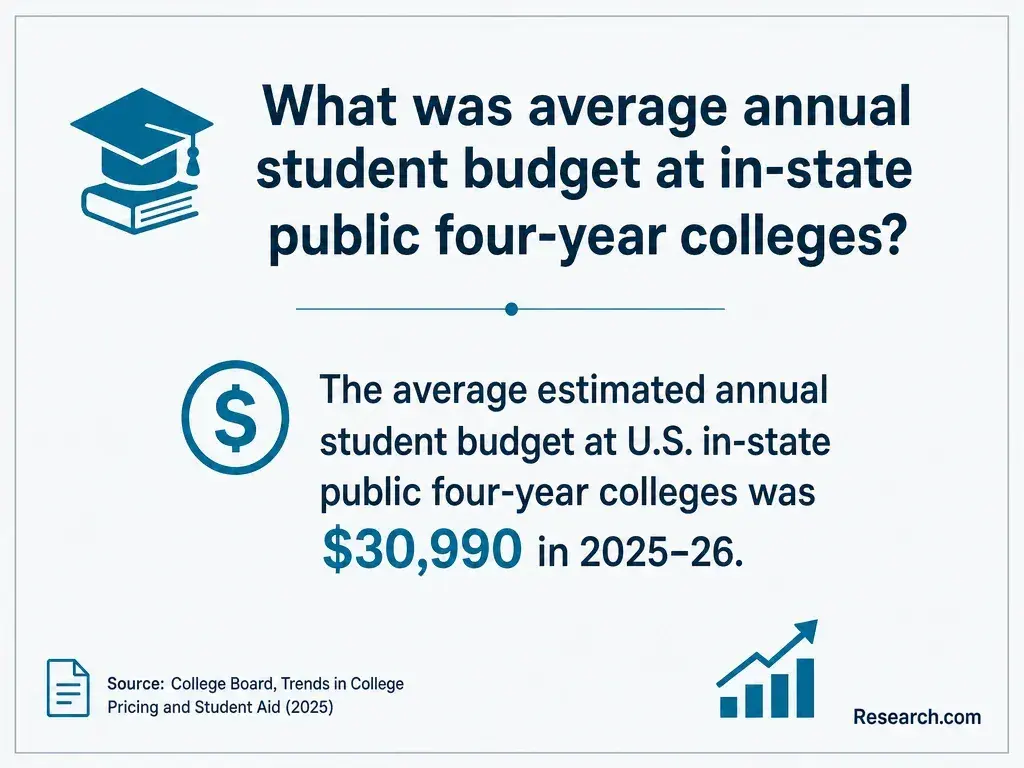
There is no reliable single price for this degree type. Compare each school's tuition per credit or term, mandatory online and course fees, remaining credits after evaluation, and the cost of any placement travel or unpaid hours. A lower advertised rate can cost more if fewer prior courses satisfy degree requirements.
Request a written estimate based on your audited remaining courses, not the maximum number of credits the school might accept. Check financial-aid eligibility and satisfactory-academic-progress rules with the aid office, and do not assume an employer benefit or grant will cover every term. Resources on funding an online bachelor's in substance abuse counseling can inform the aid questions to ask, although awards and program eligibility must be confirmed for your chosen psychology BA.
Possible entry points include recovery-support, outreach, intake, referral, and human-services roles, depending on the employer and state. Graduates with suitable methods experience may also pursue research or program-support work. Hiring can depend more on demonstrated documentation skills, supervised experience, and a required state credential than on whether the degree's core is called liberal arts or professional studies.
Use salary data cautiously. The U.S. Bureau of Labor Statistics reports occupational wages, not earnings for graduates of a particular BA. Its substance abuse, behavioral disorder, and mental health counselors category combines roles with differing education and credential requirements; its median should not be treated as an expected starting salary for an unlicensed psychology graduate. Check local postings for your target job title, required credentials, pay range, and duties before estimating a return on the degree.
A later specialization also changes the comparison: forensic psychology master's careers and earning potential concern a different occupational direction and should not be used to forecast addiction-support pay or assume clinical eligibility.
What Licenses and Certifications Require Additional Addiction Counseling Training?
Addiction-counselor titles, education levels, approved coursework, supervised hours, examinations, and permitted duties vary by state. Some support or peer roles have separate certification rules. A psychology BA with addictions electives should therefore be treated as academic preparation until the relevant state board or certifying body confirms how its courses count; it is not permission to provide psychotherapy, diagnose a substance use disorder, or practice independently.
Before enrolling, identify the exact credential and state where you intend to work. Obtain that authority's requirements, ask the university for course descriptions and any documented credential alignment, and request clarification from the credentialing authority when equivalency is uncertain. If a qualifying graduate degree is required, include its time and cost in your decision; a general psychology master's is not necessarily a licensure-track counseling degree. Comparisons of graduate psychology tuition and program value can help frame the financial question, but verify professional eligibility before choosing a graduate program on price.
Other Things You Should Know About Psychology
Possibly, if the program approves the site, supervisor, tasks, and learning objectives. Employment alone does not satisfy a capstone requirement, and access to client information requires separate authorization.
No. You can study substance use and recovery as academic subjects without sharing personal or family history. Review participation expectations and ask an instructor about alternatives if an assignment appears to require disclosure.
Yes, if it provides the specific program's prerequisites and credible evidence of research readiness. Check statistics, methods, faculty-guided research opportunities, and each graduate program's published requirements.
It may help if its courses fill a clear gap in prevention, community programs, or service coordination. Compare the minor's added time and cost with taking only the relevant courses or gaining supervised experience.
- Counselor Certification - DHCS - CA.gov https://www.dhcs.ca.gov/providers-partners/counselor-certification/
- Understanding College Costs | studentaid.gov https://studentaid.gov/resources/prepare-for-college/students/choosing-schools/consider-costs
- Accreditation in the U.S. | ed.gov http://www.ed.gov/laws-and-policy/higher-education-laws-and-policy/college-accreditation/accreditation-in-the-us
- Differences Between BA and BS in Psychology | ASU Online https://asuonline.asu.edu/newsroom/online-learning-tips/online-psychology-degree-bachelor-arts-or-bachelor-science/
- How Do Transfer Credits Work When You Go Back to School? | Whitworth Online https://online.whitworth.edu/news-articles/how-do-transfer-credits-work-when-you-go-back-to-school/
- 4.1.18 Credit Earned through Transfer, Examination, and Prior Learning | Illinois State https://policy.illinoisstate.edu/academic/4-1-18/
- Bachelor of Arts in Psychology - Texas State's online programs https://online.txst.edu/degrees/undergraduate/ba-psychology/
- Transfer Credit | Registrar's Office | Georgia Tech https://registrar.gatech.edu/transfer-credit
- Approved Fieldwork Site Application Process | The University of New Mexico https://coehs.unm.edu/departments-programs/ifce/counselor-education/fieldwork.html
- Transfer Credit and Prior Learning https://www.bigbend.edu/student-center/prior-learning.html