2027 Online MS in Psychology - Forensic Psychology for Unit Secretaries: Choosing a Program Without Leaving Your Job
Audited and Verified:
Our Editorial and Data Verification Process
Research.com uses government datasets, official education statistics and primary institutional information to support its career and degree guides. Our review process checks factual accuracy, occupational definitions, source dates and the requirements associated with the credentials discussed.
How This Article Was Fact-Checked
Our editorial team verifies salary estimates, employment projections, education requirements and program information against original data providers and official organizations. Salary figures are checked against the relevant occupational definitions and reporting periods. Information about licensure, accreditation and required in-person training is reviewed separately.
Fact-checked and verified on:

Co-Founder and Chief Data Scientist
A unit secretary already knows how much a hospital depends on accurate records, discreet communication, and coordinated handoffs. An online MS in forensic psychology could build on those skills, but it may also require more time, money, or schedule flexibility than its advertising suggests.
This guide helps working unit secretaries assess whether the degree fits a specific career goal, compare programs around shifts and placement requirements, and recognize when a different credential offers a more direct route.
Key Things You Should Know
- An online forensic psychology MS can support a move into justice-related research, program support, or services, but it does not itself qualify you as a licensed psychologist.
- Compare required credits, per-credit charges, live classes, and any placement hours against your actual work schedule; "online" does not mean self-paced. Before applying, match the degree to job postings you would pursue.
- For context, the U.S. Bureau of Labor Statistics reported a $45,120 median annual wage for social and human service assistants in May 2024 - not a salary forecast for MS graduates.
What is an online MS in forensic psychology, and can it advance a unit secretary's career?
An online Master of Science in forensic psychology studies psychological science in legal and justice settings. Depending on the program, that can mean research on decision-making and behavior, victim services, corrections, or the limits of psychological evidence in court. It is not training in criminal investigation or, by itself, professional forensic assessment.
Unit secretaries bring useful experience: handling sensitive information, maintaining records, communicating across teams, and staying organized under pressure. The degree makes the most sense when a target employer values graduate-level research, program evaluation, or justice-system knowledge and you can gain relevant experience. It is a weaker investment if your immediate goal is a higher-level hospital administrative position that does not request psychology training.
A bachelor's degree is normally the starting point for MS admission. If you do not yet have one, compare undergraduate options against your intended job before planning for graduate school. For example, someone interested in substance-use services could consider a relevant bachelor's pathway and its financing through financial aid planning for a substance use counseling bachelor's; that route still requires checking the credentials for any counseling role.
What jobs can unit secretaries pursue after earning a forensic psychology master's degree?
The realistic transition is usually from administrative work into a nonclinical service, research, or program function - not directly into forensic practice. Job titles alone can mislead, so compare the duties and minimum qualifications in local postings. These examples show where hospital experience might help and what you may still need to demonstrate.
| Target work | Potentially transferable experience | Likely preparation gap to check |
| Victim-services or court-services program support | Confidential communication and referral coordination | Agency procedures, trauma-informed support, and relevant service experience |
| Corrections or reentry program administration | Scheduling, records, and multidisciplinary handoffs | Justice-system knowledge and employer-specific hiring requirements |
| Research or program-evaluation assistant | Careful documentation and workflow tracking | Statistics, research methods, and approved data-handling experience |
For a substantial career change, seek a supervised nonclinical project, volunteer role, or internal transfer that demonstrates the missing skills. A degree alone cannot substitute for required experience or an agency's screening process. Use forensic psychology graduate occupations and salary considerations as a starting point, then confirm each occupation's actual entry requirements.
Does an online forensic psychology master's degree lead to psychologist licensure?
Generally, no. A nonclinical forensic psychology MS does not, by itself, authorize diagnosis, psychotherapy, independent psychological evaluation, expert practice, or use of a protected psychologist title. Psychologist licensure typically involves doctoral-level professional training and additional state requirements. A course on assessment or testimony does not change that boundary.
If you want to provide therapy rather than study forensic settings, investigate a program explicitly designed to meet your state's requirements for counseling, social work, or another regulated profession. Those pathways have distinct accreditation, supervised-practice, and examination rules; their online classes may also be accompanied by substantial in-person training. A clinical mental health counseling master's pacing guide can help frame the scheduling difference, but confirm eligibility with the intended state licensing board and program.
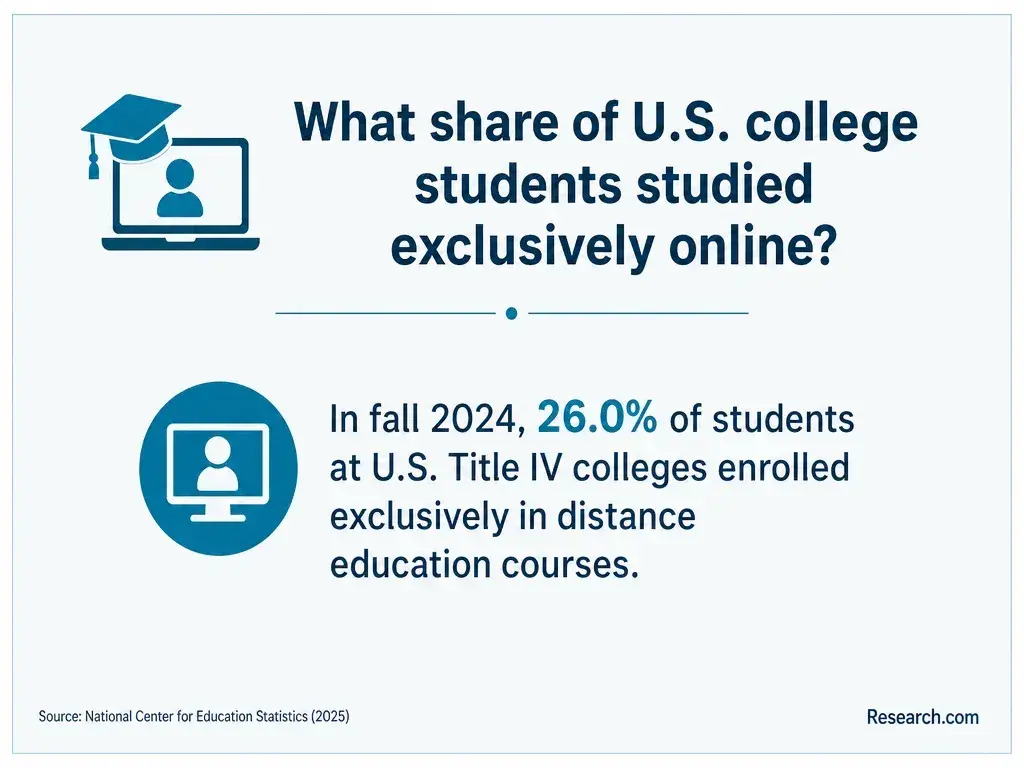
Online delivery removes a regular commute, not necessarily fixed commitments. A unit secretary on rotating shifts should distinguish recorded coursework from mandatory live seminars, group meetings, examinations, residencies, and local placements. Campus study may offer easier face-to-face networking or research access, but travel and class times can be harder to reconcile with hospital coverage.
Ask for the schedule of required courses across several terms, not just a sample week. Find out whether sections run every term, whether a missed live session can be made up, and what happens if your shift changes. Programs advertised as accelerated may compress the same obligations into fewer weeks; compare shorter graduate degree timelines in forensic psychology against the pace you can sustain while employed.
Curricula vary, but useful programs connect psychological theory with research methods, statistics, ethics, and the interpretation of evidence in legal contexts. Possible specialized subjects include psychology and law, victimization, corrections, and psychological assessment as an academic subject. Read course descriptions and required-versus-elective labels: one appealing elective is not a guaranteed specialization or a professional credential.
For a working unit secretary, the most valuable applied work may be a supervised research brief or program-evaluation project using authorized, appropriate data - not patient charts brought home for coursework. Ask who approves projects, what data students may access, and whether a thesis or capstone requires scheduled meetings. Review accelerated graduate psychology course sequencing if you are considering a heavier course load; prerequisite order and course availability matter more than an advertised minimum completion time.
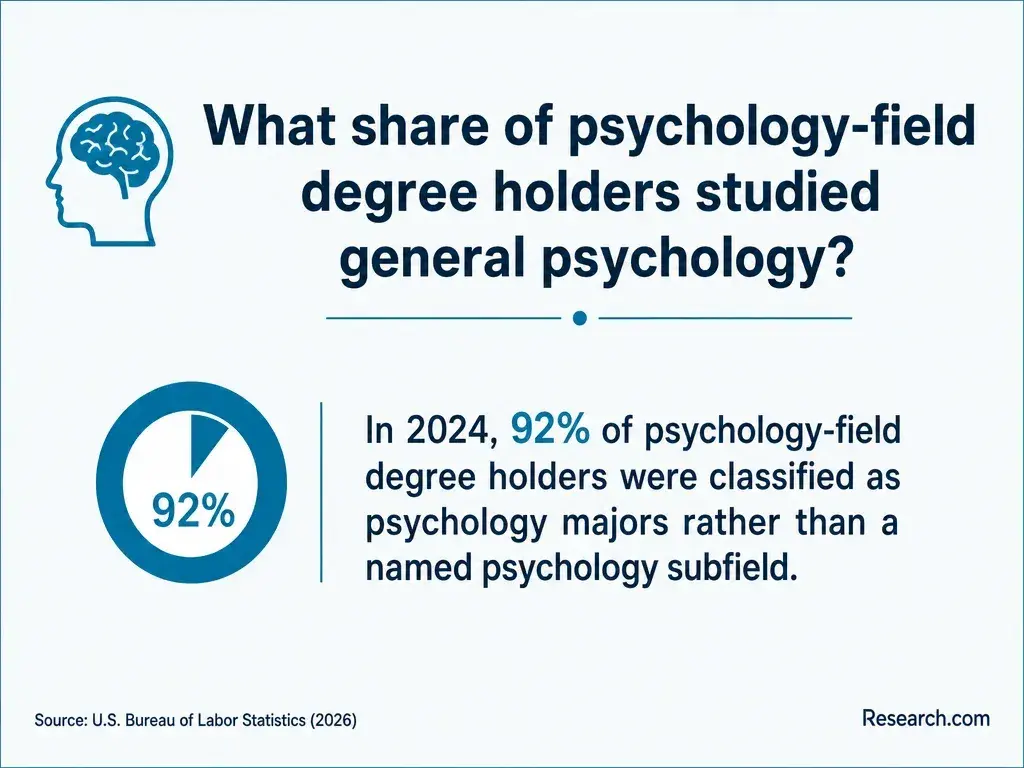
Programs commonly review a completed bachelor's degree, transcripts, an application statement, and references, but psychology prerequisites, GPA policies, tests, and work-experience expectations differ. A healthcare job can strengthen an application without replacing a required statistics or research-methods course. Applicants with a non-psychology bachelor's should ask which courses are mandatory before enrollment and which are merely recommended.
If you still need an undergraduate degree, request a written degree audit before assuming prior college credit will shorten the path. Compare the remaining psychology, statistics, and research courses - not just accepted credits - when considering accelerated psychology curriculum planning. If you already hold a bachelor's, send prospective MS programs your transcript and request a specific prerequisite review before paying application fees.
Completion time depends on required credits, course frequency, enrollment pace, and any capstone or placement. A shorter published timeline may assume a course load that conflicts with full-time shifts. Ask what happens to tuition, aid eligibility, and graduation timing if you take fewer courses or pause for a term.
For a usable cost comparison, multiply each program's required credits by its published per-credit tuition, then add mandatory fees, books or software, travel, and any unpaid placement costs. Check whether your employer offers education assistance and whether the degree qualifies under its policy; do not count reimbursement until confirmed. One-year forensic psychology graduate tuition comparisons can provide options to investigate, but obtain an itemized, entry-term estimate from each institution before committing.
First, verify the university's institutional accreditation through the accreditor or the U.S. Department of Education's accreditation database. Then determine whether any separate program recognition actually applies to the credential you want. APA accreditation of covered professional psychology programs should not be assumed to cover a general or nonclinical forensic psychology MS.
Accreditation establishes an important institutional baseline, not proof of flexible scheduling, strong outcomes, or licensure eligibility. Confirm the exact degree name and campus or online offering in the current catalog. Use accredited forensic psychology study and career preparation to develop a shortlist, then verify each program's status and policies directly.
There is no single wage or employment projection for "forensic psychology MS graduates." The relevant labor market depends on the job you qualify for, its location, and your prior experience. As one bounded reference, the U.S. Bureau of Labor Statistics reported a $45,120 median annual wage in May 2024 for social and human service assistants. That occupation includes workers without a forensic psychology MS, so its median is neither a graduate starting salary nor evidence that the degree raises pay.
For outlook, consult the latest BLS projection for the specific occupation in a target posting, then check local openings and pay ranges. Do not use psychologist wages or growth projections to estimate returns from a non-licensure MS. If your intended outcome is licensed counseling, compare that distinct career and its training costs; budget planning for mental health counseling study is more relevant than projecting counseling earnings from a forensic psychology degree.
How can you choose a reputable online forensic psychology program while working?
Start with the job you would apply for, then test whether each program supplies the qualifications and evidence of skill that job demands. A workable shortlist should survive these checks before you enroll:
- Collect target job postings and mark required degrees, experience, technical skills, and credentials; eliminate programs that cannot serve the stated goal.
- Request the current catalog, a term-by-term course schedule, live-attendance rules, and written placement or capstone requirements; compare them with your shifts and leave options.
- Verify institutional accreditation and request an itemized cost estimate for your expected enrollment pace, including fees and possible travel.
- Ask career services for relevant employer connections and clearly defined outcomes, including who was counted and when; treat testimonials as individual experiences, not placement rates.
If you mainly want to move from hospital administration into community support, test that goal through an internal transfer or supervised experience before purchasing a specialized MS. For a substance-use-services goal, careers in addiction treatment and support settings can help distinguish support roles from positions requiring state-recognized counseling credentials. The best program is the one whose actual requirements and outcomes fit your target work and your schedule - not simply the one labeled online.
Other Things You Should Know About Psychology
Only if the program approves the site, supervisor, and duties. Your existing job does not automatically satisfy an academic placement, and access to patient information does not grant permission to use it for coursework.
Possibly. Ask human resources whether the institution, degree, courses, and enrollment pace qualify, and whether reimbursement depends on grades or continued employment.
Check the program's attendance, withdrawal, leave, and course-repeat policies before enrolling. Ask an advisor how a missed required course would affect your graduation date and charges.
Yes, if the program accepts professional references. Choose supervisors who can describe your judgment, confidentiality, communication, and readiness for graduate study; check whether an academic reference is also required.
- Cost of Attendance (Budget) | 2025-2026 Federal Student Aid Handbook https://fsapartners.ed.gov/knowledge-center/fsa-handbook/2025-2026/vol3/ch2-cost-attendance-budget
- Frequently Asked Questions - California Board of Psychology https://www.psychology.ca.gov/licensees/faq.shtml
- Types of Financial Aid: Grants, Work-Study, and Loans | studentaid.gov https://studentaid.gov/understand-aid/types
- Training, practice, and career considerations in forensic... - PMC https://pmc.ncbi.nlm.nih.gov/articles/PMC11638730/
- Tuition & Expenses | Student Financial Services https://financialaid.wsu.edu/tuition-and-expenses/
- How to Become a Forensic Psychologist in California (2026) | Touro University Worldwide https://www.tuw.edu/psychology/how-to-become-a-forensic-psychologist-in-california/
- What Is Asynchronous Learning? Benefits for Busy Students | Northern Virginia Community College https://www.nvcc.edu/discover/what-is-asynchronous-learning-benefits-for-busy-students.html
- What's the Difference Between Asynchronous and Synchronous Learning? | Ohio State Online https://online.osu.edu/content-hub/blogs/whats-the-difference-between-asynchronous-and-synchronous-learning/
- How Do Asynchronous Classes Work? | Hopkins EP Online https://ep.jhu.edu/news/how-do-asynchronous-classes-work/
- A Career in Forensic and Public Service Psychology | apa.org https://www.apa.org/education-career/guide/subfields/forensic/education-training