2027 Online MS in Psychology - Forensic Psychology: How to Evaluate Career Advising for Non-Licensed Graduates
Audited and Verified:
Our Editorial and Data Verification Process
Research.com uses government datasets, official education statistics and primary institutional information to support its career and degree guides. Our review process checks factual accuracy, occupational definitions, source dates and the requirements associated with the credentials discussed.
How This Article Was Fact-Checked
Our editorial team verifies salary estimates, employment projections, education requirements and program information against original data providers and official organizations. Salary figures are checked against the relevant occupational definitions and reporting periods. Information about licensure, accreditation and required in-person training is reviewed separately.
Fact-checked and verified on:

Co-Founder and Chief Data Scientist
An online forensic psychology master's can deepen your understanding of behavior in legal settings without qualifying you to practice as a psychologist. That distinction makes career advising unusually important: a program should help you turn your existing experience and new skills into a realistic job search, not just suggest forensic-sounding titles. This guide is for prospective students considering non-licensed work in victim services, corrections, research, or related organizations. You'll learn what evidence to request from advisers, which career claims to question, and when a different credential may serve your goal better.
Key Things You Should Know
- Effective advising starts with a named target role and its actual hiring requirements - not the assumption that an MS qualifies graduates as forensic psychologists.
- Ask for three kinds of evidence: examples of relevant student projects or placements, employer-specific job-search support, and outcomes with clear cohort definitions and response rates.
- Compare total program cost with the experience you still need; a lower-cost credential or supervised entry-level job may be a more direct route to your target position.
What Is an Online Master's in Forensic Psychology?
An online master's in forensic psychology is graduate study of psychological science as it relates to courts, corrections, victimization, public safety, and other legal contexts. Programs differ: one might emphasize research and statistics, while another emphasizes justice-system applications. The degree name alone does not establish a formal concentration, a placement opportunity, or eligibility for professional licensure.
For someone with a psychology bachelor's degree, the MS may add specialized methods and applied work. For a career changer with experience in criminal justice, social services, education, or data analysis, its value depends on whether it fills a specific knowledge gap employers recognize. If you still need undergraduate preparation, compare online college pathways for psychology majors before assuming graduate admission is the best first step.
Ask whether "online" means recorded coursework, scheduled live meetings, an in-person residency, or a locally arranged placement. Those differences determine whether you can complete the degree while working - and whether its applied opportunities are accessible where you live.
Can Non-Licensed Graduates Work in Forensic Psychology Careers?
Yes, but the distinction is between working in a forensic-related setting and practicing as a forensic psychologist. Non-licensed staff may coordinate services, support victims, assist research, prepare program reports, or work in corrections administration, depending on the employer and jurisdiction. They do not gain authority from the MS alone to diagnose, provide psychotherapy, conduct independent psychological evaluations, or offer expert opinions as licensed practitioners.
Start with your current skills and a specific vacancy. A victim-services employee may already have referral and documentation experience but need stronger evaluation skills; a data analyst may have research skills but lack direct service experience. If your preferred work is recovery support, examine the skills and education for recovery services work and check any state credential rules. Forensic coursework may be useful context, but it may not be the most direct qualification.
How Does Career Advising Support Non-Licensed Forensic Psychology Graduates?
Strong advising translates a student's background, coursework, and supervised experience into evidence for particular non-licensed jobs. It also identifies missing requirements before enrollment. An adviser who recommends "forensic psychologist" positions to every graduate without addressing licensure is not providing a workable employment plan.
Use a conversation with a career adviser as a test of the service. Request specific answers to these questions:
- Which recent job postings fit my experience, location, and intended duties, and which requirements would this MS actually satisfy?
- Who helps students secure approved nonclinical projects or placements, and what happens if no local site is available?
- Can I receive feedback on a résumé, interview examples, and a portfolio that describes research or service work without exposing confidential records?
- What graduate-outcome data are available for this exact program, including the cohort, number who responded, job categories, and time after graduation?
Look for advising that can distinguish a useful next step from an expensive detour. A prospective student targeting an existing agency role should compare the proposed MS with shorter training and affordable distance learning in graduate psychology. Request a written account of which services remain available to online students and alumni; a university-wide career portal is not the same as tailored employer connections.
Check that the institution holds recognized institutional accreditation, then verify the accreditation's current status and whether it covers the institution offering the online degree. This is a baseline check for educational quality and matters when evaluating credit recognition and potential aid eligibility. It does not prove that a particular career service, placement, or licensure pathway is available.
Do not reject a nonclinical forensic psychology MS merely because it lacks American Psychological Association program accreditation: APA accreditation applies to specified professional psychology doctoral programs and internships, not general nonclinical psychology master's programs. Conversely, do not treat an institution's accreditation as proof that the MS meets a state licensing board's educational requirements.
Compare accreditation and actual program outcomes before comparing sticker prices. Guidance on choosing a cost-conscious psychology degree program can help frame that comparison, but the school must confirm its own accreditation status, charges, and services for your entry term.
Do not assume it does. A non-licensure forensic psychology MS generally provides academic preparation rather than the specific professional education, supervised practice, examinations, and approvals needed for independent clinical work. Rules and protected titles differ by state and profession, so ask the relevant licensing board - not only admissions staff - whether an exact program meets an intended credential's requirements.
If your goal is psychotherapy, compare qualifying counseling or social-work routes rather than relying on forensic subject matter. For example, shortening the path through a clinical counseling master's is a different decision from choosing a nonclinical MS; any accelerated format still needs scrutiny for required fieldwork and state eligibility. If your goal is forensic assessment, establish the applicable psychologist-licensure pathway before paying for a master's that may not advance it.
Coursework varies, but relevant offerings may cover research methods, statistics, psychology and law, violence or victimization, correctional settings, ethics, and the interpretation of research in legal contexts. Examine the catalog rather than relying on course titles: a class about psychological assessment can teach its uses and limitations without qualifying students to administer restricted tests.
For career purposes, connect assignments to demonstrable work. A research brief that explains evidence limitations may support an analyst application; an approved program-evaluation project may better support a services role. Ask whether faculty supervise such work, whether a thesis or capstone is required, and what can legally be shared with employers. Work involving client records or human participants may require agency permission and institutional ethics review.
Do not mistake this curriculum for the supervised clinical training in a qualifying counseling degree. Even intensive schedules in accredited mental health counseling study involve obligations that forensic coursework alone does not replace.
Requirements depend on the school. Programs may evaluate an accredited bachelor's degree, prior psychology or related coursework, statistics or research preparation, academic performance, writing, recommendations, and relevant experience. An undergraduate major outside psychology does not automatically bar admission; applicants should distinguish required prerequisites from preparation the school merely recommends.
Ask admissions for a review of your transcript and a written list of any missing courses. If you already have a bachelor's degree, confirm whether a standalone prerequisite would meet the requirement before pursuing another degree. If you are still finishing undergraduate study, guidance on transferring college credits into a psychology degree may help you formulate questions, but only the receiving institution can determine how credits apply.
Also ask whether admission is separate from access to a thesis supervisor, internship, or particular elective. Eligibility to enroll is not proof that the experience most relevant to your career plan will be available.
There is no dependable program-wide answer without a current degree plan and tuition schedule. Credit requirements, course availability, enrollment pace, and a thesis or placement can change completion time. Online students should also check live-session schedules, travel, background-check expenses, technology charges, and whether a placement would reduce paid work hours.
Before comparing advertised completion times - including options in comparing the fastest psychology master's formats - ask each school for a term-by-term plan you could actually follow. Then request an itemized estimate using that plan. The most useful financial test is whether the degree develops qualifications your target employer seeks that you cannot obtain more directly through experience or narrower training.
Potential jobs depend more on duties, prior experience, location, and employer requirements than on the degree's title. This table separates plausible nonclinical targets from qualifications the MS should not be presumed to supply.
| Potential role | Relevant work | Important hiring distinction |
| Victim-services advocate or coordinator | Information, referrals, service coordination, documentation | Employers may prioritize direct service experience, training, and safety protocols. |
| Corrections or reentry program coordinator | Program support, referrals, reporting, interagency coordination | Agency rules, background checks, and relevant experience may control hiring. |
| Research assistant or program analyst | Literature reviews, data handling, evaluation support, reports | Methods and demonstrable analytical work may matter more than a forensic label. |
| Licensed forensic psychologist | Regulated psychological services and, where qualified, forensic evaluation | A non-licensure MS alone does not establish eligibility. |
A career adviser should help you narrow this table to real postings and identify which tasks you can already document. If you primarily want substance-use service work, compare the required credential and experience with comparing undergraduate substance use counseling costs and outcomes rather than assuming a forensic MS is necessary.
What Are the Salary and Job Outlook for Forensic Psychology Careers?
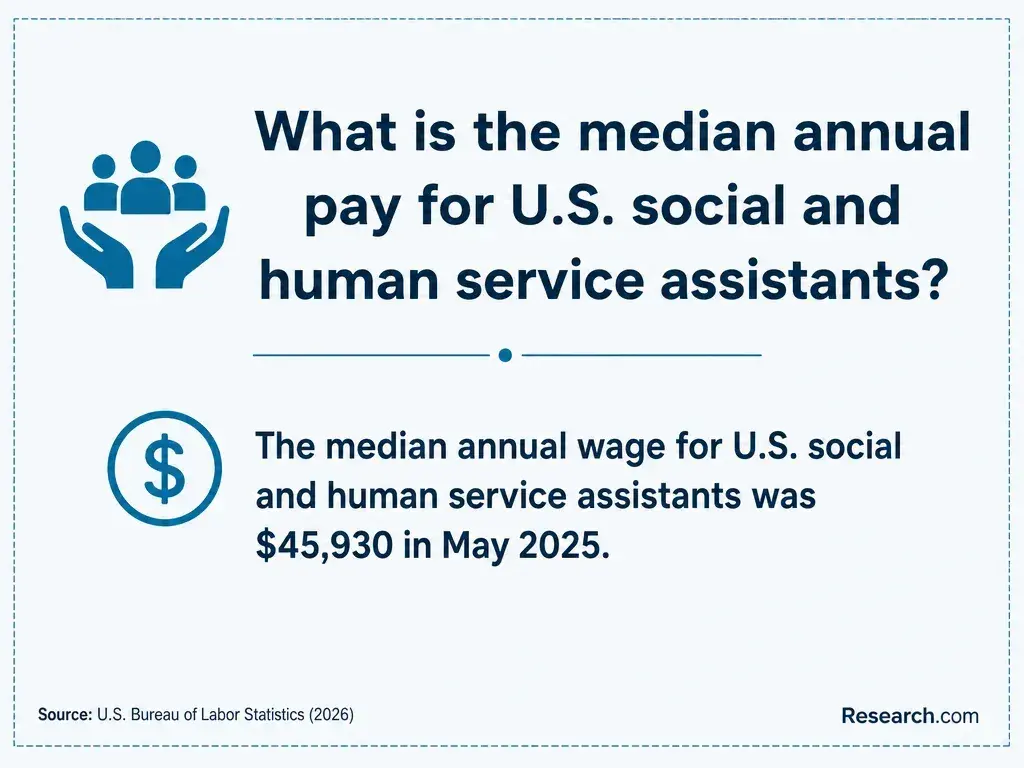
"Forensic psychology career" is not a single labor-market occupation with one meaningful salary or growth rate. A licensed psychologist, a social and human service assistant, and a research employee have different duties and entry requirements. Use the U.S. Bureau of Labor Statistics occupation that matches a specific job posting, and check its wage reference year, geographic data, and projection period. An occupation-wide median is not a prediction of what graduates of a particular MS will earn.
Ask programs for outcomes specific to their non-licensed graduates, including job titles and how many graduates supplied information. If those data are unavailable, compare local postings' pay and requirements with your likely total education expense. A prospective clinical-career changer should include the cost of the qualifying education route in that comparison; information about mental health counseling fees and financial support is relevant only if counseling is genuinely the target profession.
Other Things You Should Know About Psychology
No. Ask whether employer introductions or interview events are available to online students in your location, and whether participation or interviews are guaranteed.
Possibly, with the agency's and program's permission. Remove protected information and confirm what work you are authorized to describe or share; anonymization alone may not satisfy agency policy.
Yes, if alumni agree. Ask how advising worked for students seeking non-licensed roles, what experience they needed beyond the MS, and what they would verify before enrolling.
Treat them as university-wide results, not evidence of forensic psychology outcomes. Request program-level information and compare it with current job requirements in your area.
- Internships | Pretrial Services Agency https://www.psa.gov/resources/internship
- NCWorks Career Centers | NC Commerce https://www.commerce.nc.gov/jobs-training/resources-job-seekers/ncworks-career-centers
- Training, practice, and career considerations in forensic... - PMC https://pmc.ncbi.nlm.nih.gov/articles/PMC11638730/
- Career Outcomes for Graduate Students | Meruelo Family Center for Career Development https://careerdevelopment.nd.edu/outcomes/graduate/
- A Career in Forensic and Public Service Psychology | apa.org https://www.apa.org/education-career/guide/subfields/forensic/education-training
- MS in Forensic Psychology | Nova Southeastern University https://psychology.nova.edu/degrees/masters/forensic-psychology/index.html
- Do I Need To Be A Clinical Psychologist To Be A Forensic Psychologist? | Palo Alto University https://paloaltou.edu/resources/business-of-practice-blog/clinical-psychologist-and-or-forensic-psychologist
- Careers With a Forensic Psychology Master's Degree | The Chicago School https://www.thechicagoschool.edu/insight/career-development/career-options-masters-degree-forensic-psychology/
- Internship Information | wisc.edu https://criminaljustice.wisc.edu/internships/
- Best Practices | Field Study - UC Irvine https://fieldstudy.soceco.uci.edu/pages/best-practices