2027 Online BA in Psychology - Addictions for Work in Faith-Based Recovery Nonprofits: Compare Degree Fit and Hiring Requirements
Audited and Verified:
Our Editorial and Data Verification Process
Research.com uses government datasets, official education statistics and primary institutional information to support its career and degree guides. Our review process checks factual accuracy, occupational definitions, source dates and the requirements associated with the credentials discussed.
How This Article Was Fact-Checked
Our editorial team verifies salary estimates, employment projections, education requirements and program information against original data providers and official organizations. Salary figures are checked against the relevant occupational definitions and reporting periods. Information about licensure, accreditation and required in-person training is reviewed separately.
Fact-checked and verified on:

Co-Founder and Chief Data Scientist
If you work or volunteer in recovery services, an online BA in psychology with addictions coursework may strengthen your understanding of substance use and client support. But the degree's value depends on the job you want: a nonprofit may hire bachelor's-level coordinators while requiring a separate credential for counselors. This guide compares those paths, explains what faith-based employers may look for, and shows how to check online programs against real job postings before committing time and money.
Key Things You Should Know
- An online psychology BA can support applications for recovery outreach, intake, and program-coordination roles; an addictions focus does not itself qualify you to provide addiction counseling.
- State credential rules and employer requirements control counseling eligibility. The U.S. Bureau of Labor Statistics reported a $59,190 median annual wage in 2024 for its broad substance abuse, behavioral disorder, and mental health counselors occupation - not for psychology BA graduates.
- Choose a program by checking institutional accreditation, relevant coursework, approved field-experience options, total remaining cost, and whether local faith-based employers accept the degree for your target role.
What is an online psychology degree for addictions and faith-based recovery work?
It is usually a bachelor of arts in psychology delivered largely online, with an official addictions concentration, a related certificate, or selected electives in substance use and recovery. Those three arrangements are not interchangeable: a course in addiction does not necessarily appear as a formal concentration on a transcript. Confirm the exact award and requirements in the school's catalog.
Psychology can help nonprofit staff understand behavior change, trauma-informed communication, research evidence, and barriers to accessing care. Faith-based recovery organizations may also provide spiritual support, housing assistance, peer connection, or referrals. A psychology degree prepares someone to understand and support these services; it does not authorize treatment or make religious activities a substitute for evidence-informed care. When evaluating online bachelor's study in addiction psychology, compare actual required courses rather than relying on the program's label.
What jobs can a psychology bachelor's degree qualify you for in recovery nonprofits?
A BA can meet the education preference for some nonclinical jobs, particularly when paired with documented outreach, administrative, or service experience. Hiring still depends on the posting, population served, funding rules, and any required screening or training. The distinction that matters is what the employee does, not whether the organization calls its work "recovery."
The following comparison separates plausible bachelor's-level duties from responsibilities that require additional authorization.
| Role to investigate | Typical contribution | Requirement to check |
| Outreach or intake coordinator | Explain services, collect permitted intake information, arrange referrals | Experience, confidentiality training, and whether clinical screening is assigned |
| Recovery program assistant | Schedule groups, track attendance, support operations and grant reporting | Data-handling skills and employer-specific requirements |
| Case-coordination assistant | Help clients connect with housing, transportation, and treatment providers | Supervision, documentation rules, and whether a credential is required |
| Addiction counselor | Deliver counseling within an authorized scope | State credential, approved education, and supervised practice requirements |
For someone already working at a nonprofit, a BA is most useful when it fills a stated degree requirement or opens a specific advancement route. A faster degree in a different specialty is not automatically a better fit: short-duration undergraduate forensic psychology programs, for example, should be judged against recovery-service duties rather than speed alone.
What degree and licensing requirements apply to addiction counseling careers?
There is no single nationwide credential called "addiction counselor" with identical entry rules in every state. Depending on the state and the services provided, a position may require a state-issued license or certification, specified addiction coursework, supervised hours, an examination, or a qualifying graduate degree. Some states also define supervised entry-level counselor roles. A psychology BA - even with an addictions concentration - does not independently authorize diagnosis or psychotherapy.
Start with the state regulator or certifying body for the state where you intend to work. Match its rules to the exact job title and scope, then ask any prospective school for written documentation showing which requirements its curriculum addresses and which remain. A nonclinical psychology MS should not be assumed to satisfy counseling requirements either. If counseling is the objective, comparing online substance use counseling degrees is more direct than choosing a psychology program by its addictions-themed name.
Peer-support credentials are a separate pathway and may have different training, experience, and supervision rules. Neither peer support nor a nonprofit job title permits a worker to practice outside the scope authorized in that state.
Online delivery can let a nonprofit employee keep working while studying, but it does not guarantee an asynchronous schedule or a remote placement. Campus programs may make in-person faculty contact and local agency connections easier; either format can be appropriate if it provides the courses and experience the target job requires.
Ask about live class times, group projects, exam arrangements, campus visits, internship-site approval, and who secures a supervisor. If you hope to use your current nonprofit as a placement, obtain the school's approval before counting on it; ordinary employment or volunteer hours may not satisfy academic learning and supervision rules.
Compare formats against the same career goal and full cost, not convenience alone. That principle also applies when reviewing online forensic psychology degree costs versus career outcomes: a program's delivery and price cannot compensate for coursework that misses your intended recovery role.
Prioritize psychology research methods and statistics alongside courses on addiction, developmental psychology, social psychology, and mental health. Research literacy helps a nonprofit employee distinguish evidence for a recovery service from a compelling testimonial; developmental and social psychology can inform age-appropriate, culturally responsive outreach. Coursework in ethics, public health, or human services can add useful context on referrals and service systems.
For applied learning, look for an approved nonclinical internship or project involving outreach materials, referral mapping, or evaluation of aggregate program activity. Confirm supervision and permission before accessing client information. Spiritual-care coursework may help with a particular organization's mission, but staff must respect clients' choices and the organization's policies; it cannot replace appropriate clinical referrals.
If your intended work is therapy rather than support or program operations, undergraduate electives are preparation for - not a substitute for - a qualifying professional pathway. Examine evaluating shorter mental health counseling graduate pathways only after checking whether the specific program meets your state's educational criteria.
Verify that the institution holds recognized institutional accreditation and that it applies to the school awarding the online BA. Check the accreditor's own directory and the school's current catalog, rather than treating an advertising claim as confirmation. Institutional accreditation matters for degree recognition and may affect financial-aid eligibility, but it does not establish eligibility for an addiction counseling credential.
Do not look for APA accreditation of a general psychology BA: APA's professional accreditation is not a blanket approval system for undergraduate psychology majors. If you later consider counseling or social work, investigate the recognition relevant to that specific professional program and, above all, your state's credential rules. The same distinction matters when comparing lower-cost accredited counseling degree pathways; "accredited" must refer to the right institution or program and the credential you seek.
Requirements vary by school and by whether you are entering as a first-year or transfer student. Schools commonly request prior transcripts and evidence that you meet their undergraduate admission standards; some have separate rules for entering the psychology major. An existing nonprofit job can strengthen your understanding of the field but does not replace academic admission requirements.
If you have prior college credit, request a degree audit showing not just how many credits the school accepts, but which satisfy general education, psychology, statistics, and residency requirements. The awarding institution decides equivalencies. For returning students, psychology transfer eligibility and degree planning can help frame questions for an admissions or transfer adviser before you enroll.
A bachelor's degree is commonly structured around 120 semester credits, but remaining time depends on accepted credits, course sequencing, enrollment pace, and required experiences. An advertised accelerated calendar is useful only if its course load fits your work schedule and the courses you still need are offered when needed.
Request an individualized estimate covering remaining tuition, mandatory fees, books, technology, and any travel or unpaid placement time. Compare that total with the wage or advancement opportunity attached to a specific target job. Ask whether employer tuition assistance, federal aid, or a lower-cost transfer route is available to you; none should be assumed. Accelerated psychology curriculum planning is especially relevant if faster completion would require heavier terms or reduced working hours.
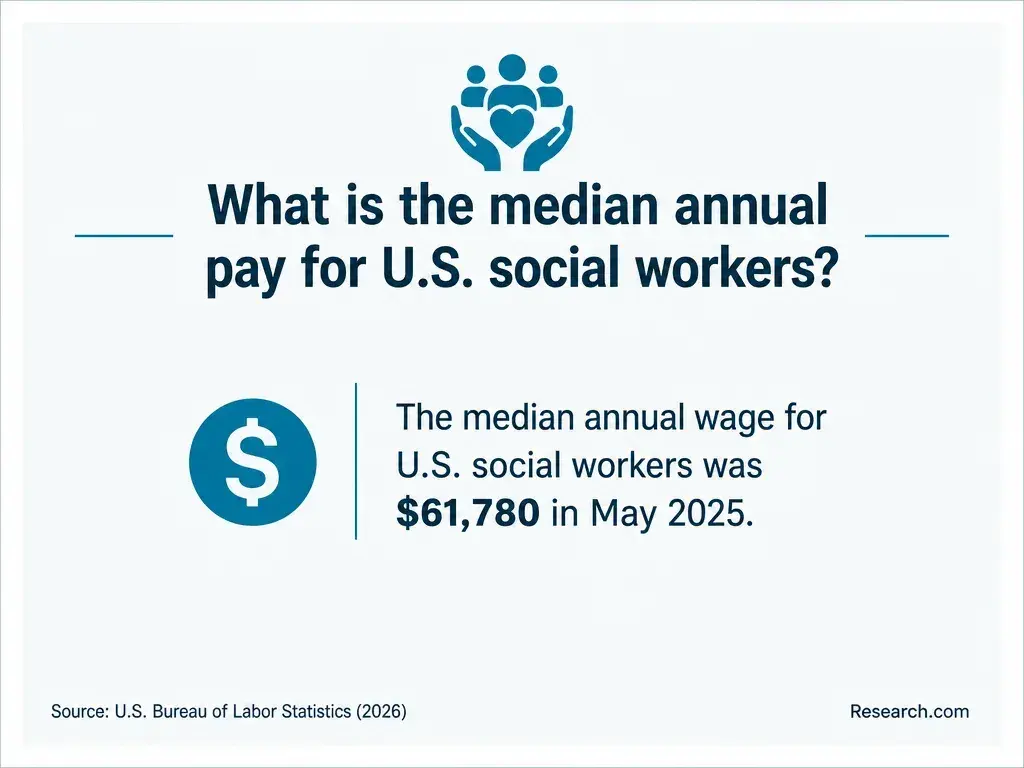
Pay depends more on the occupation, credential, location, and employer budget than on the wording of a psychology concentration. The U.S. Bureau of Labor Statistics reports a $59,190 median annual wage for 2024 for substance abuse, behavioral disorder, and mental health counselors, with 17% projected employment growth from 2024 to 2034. Those occupation-wide figures include workers with differing qualifications; they are not a starting-pay estimate for a BA holder or a faith-based nonprofit employee.
For outreach and coordination jobs, use local postings with matching duties to assess likely pay. Check whether positions are full-time, grant-funded, or contingent on a credential. Broad comparisons - such as pay comparisons across forensic psychology-related careers - should not be used to project earnings in addiction recovery: the roles and qualification pathways differ.
How can students choose a reputable online psychology program for recovery work?
Start with several actual postings from organizations where you would consider working. Separate their required degrees, credentials, experience, and faith-related expectations from preferences. Then ask each school for the catalog, remaining-credit audit, complete cost estimate, course schedule, and placement policy for your entry term.
A strong fit offers an affordable route to the requirements those employers actually name, plus a realistic way to build supervised, nonclinical experience. If the postings chiefly seek a state-recognized counseling credential, compare that route instead; planning affordable bachelor's-level substance abuse counseling study may be a more relevant starting point than a general psychology BA. If your current experience already meets outreach-job requirements, targeted training and a well-documented project may be more economical than another degree.
Other Things You Should Know About Psychology
No. Some peer roles may have lived-experience criteria, while administrative, outreach, and program roles may not. Read the specific posting and credential rules rather than disclosing personal history unnecessarily.
Possibly, but only if the program approves the site, duties, supervisor, and learning objectives. Ask the internship coordinator before assuming past or future hours will count.
Do not include identifiable client details without the required permissions. Use authorized, appropriately deidentified or hypothetical material, and follow both school and organization policies.
No universal rule covers every employer and position. Requirements can depend on the organization, role, applicable law, and funding conditions. Ask about the actual hiring policy and duties for the job you want.
- Types of Financial Aid: Grants, Work-Study, and Loans | studentaid.gov https://studentaid.gov/understand-aid/types
- Become a Certified Recovery Peer Advocate | ny.gov https://oasas.ny.gov/recovery/become-certified-recovery-peer-advocate
- Faith Organizations Tips for Programs/Grants | dol.gov https://www.dol.gov/agencies/faith/organizations-tips
- Cost of Attendance (Budget) | 2025-2026 Federal Student Aid Handbook https://fsapartners.ed.gov/knowledge-center/fsa-handbook/2025-2026/vol3/ch2-cost-attendance-budget
- Behavioral Health Career Descriptions | samhsa.gov https://www.samhsa.gov/about/careers/behavioral-health-workforce/careers-by-state/descriptions
- Your financial path to graduation | consumerfinance.gov https://www.consumerfinance.gov/paying-for-college/your-financial-path-to-graduation/
- Peer Support Specialist - Frequently Asked Questions | Washington State Department of Health https://doh.wa.gov/licenses-permits-and-certificates/professions-new-renew-or-update/peer-support-specialist/frequently-asked-questions
- Addiction Counseling Licensing and Certification | City Vision University https://www.cityvision.edu/addiction-counseling-licensing-and-certification-understanding-your-career-path/
- Online Bachelor's Degree in Psychology in Addictions | Purdue Global https://www.purdueglobal.edu/degree-programs/psychology/bachelor-psychology-addictions/
- Applied Psychology: Addictions Studies, B.S. - CPS, CPSO | University of New Hampshire https://www.unh.edu/program/bachelor-science/applied-psychology-addictions-studies