2027 Paying for an Online BA in Psychology - Mental Health: A Graduate Course Prerequisite Paid Out of Pocket
Audited and Verified:
Our Editorial and Data Verification Process
Research.com uses government datasets, official education statistics and primary institutional information to support its career and degree guides. Our review process checks factual accuracy, occupational definitions, source dates and the requirements associated with the credentials discussed.
How This Article Was Fact-Checked
Our editorial team verifies salary estimates, employment projections, education requirements and program information against original data providers and official organizations. Salary figures are checked against the relevant occupational definitions and reporting periods. Information about licensure, accreditation and required in-person training is reviewed separately.
Fact-checked and verified on:

Co-Founder and Chief Data Scientist
A graduate program may require one psychology course you never took. If you are considering an online BA in psychology with a mental-health focus to fill that gap, the difference in cost could be substantial. This guide is for prospective graduate students and returning undergraduates deciding whether to pay out of pocket for a prerequisite or complete a bachelor's degree. It explains how to confirm what the graduate program will accept, estimate the full expense, check aid eligibility, and choose the route that serves your longer-term goal.
Key Things You Should Know
- If you already hold an accepted bachelor's degree and lack only one prerequisite, a standalone course may be more direct than another BA - but obtain written approval from the graduate program first.
- Compare the full amount payable, not advertised tuition alone: fees, required credits, transfer-credit application, and the course's availability can change the result.
- Paying out of pocket is possible, but non-degree enrollment may have different financial-aid eligibility; a psychology BA or mental-health concentration does not qualify you to provide therapy.
What Is an Online BA in Psychology - Mental Health?
An online Bachelor of Arts in psychology is an undergraduate degree covering psychological science, research, and general education. "Mental health" may identify a formal concentration, a group of electives, or simply a program's emphasis. The transcript and catalog - not the marketing description - show which applies.
Such a BA can make sense if you still need a bachelor's degree or substantial psychology coursework. If you already have a bachelor's and need only statistics, research methods, or another specified course, the second degree's unrelated requirements may add cost without improving graduate eligibility. When comparing online psychology degree curricula, look for the exact required course and its placement in the program, rather than relying on the mental-health label.
Online delivery also varies. Recorded lectures may be flexible, while exams, group work, research meetings, or an optional placement can require scheduled participation. Academic study of disorders and services is not training or authorization to diagnose or treat people.
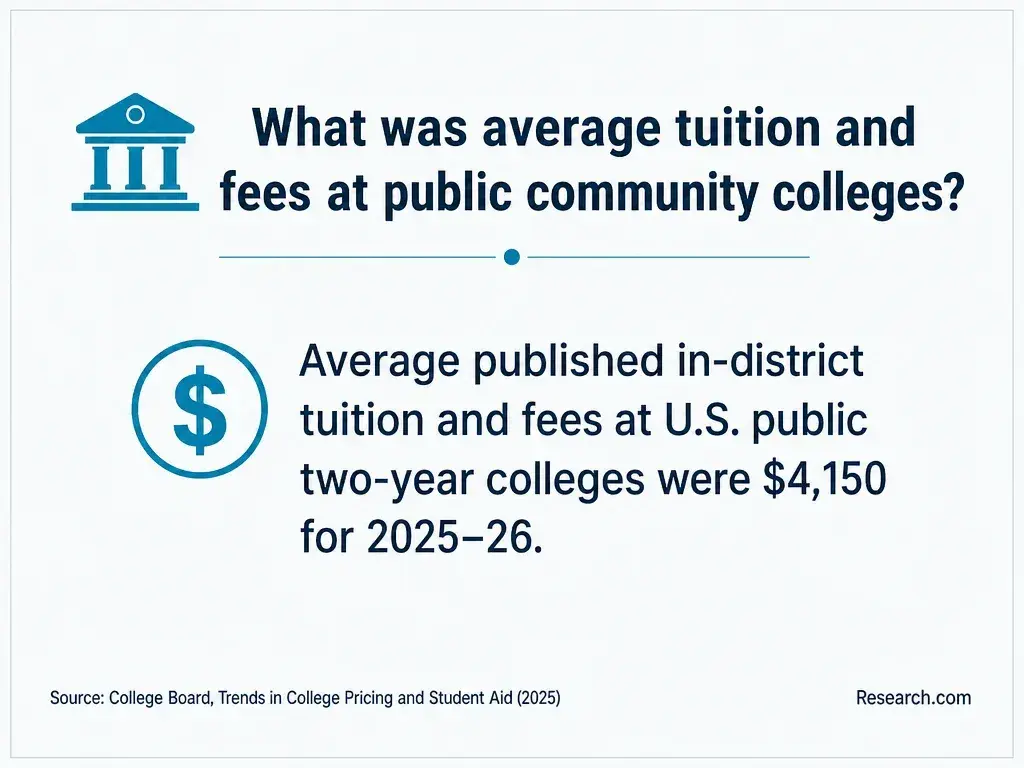
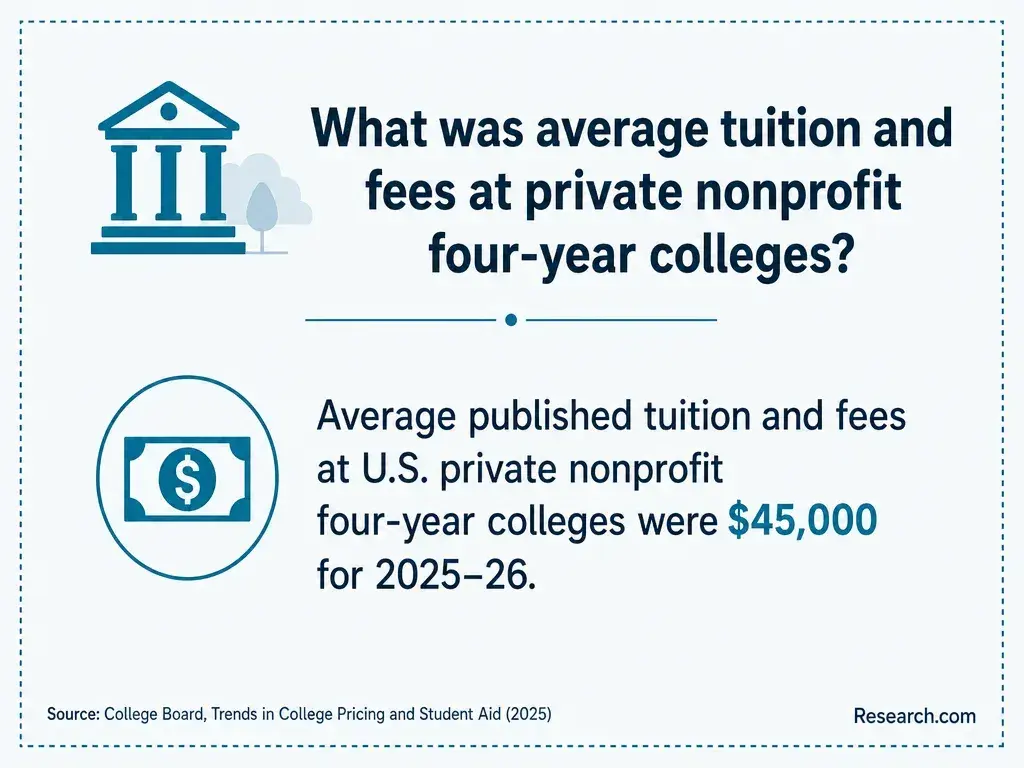
How Much Does an Online Psychology BA Cost to Complete?
There is no reliable single price for an online psychology BA. Your cost depends on the school's charge per credit or term, the credits you must complete there, and which previous courses satisfy specific degree requirements. A transfer credit accepted as an elective may not replace the psychology prerequisite you need.
The table separates charges that are easy to overlook. Use the school's current, student-specific estimate to compare a complete BA with a standalone course.
| Cost component | Full BA | Standalone prerequisite |
| Tuition | Remaining degree credits, including general education and residency requirements | Required course credits, subject to the school's enrollment classification |
| Fees and materials | Possible term, technology, books, and course-specific charges | Possible registration, technology, textbook, and lab charges |
| Time-related costs | Multiple terms and potential work-schedule changes | Course availability and the graduate application deadline |
For a comparable lower-cost undergraduate route, undergraduate substance use counseling study on a budget illustrates a different degree focus. Compare its actual curriculum with your graduate prerequisite before treating a lower advertised price as a saving.
Can You Pay for a Graduate Psychology Prerequisite Out of Pocket?
Yes. A student can generally pay tuition directly if a school offers enrollment in the needed course and permits that student to register. The harder question is whether the intended graduate program will accept the course. "Graduate prerequisite" often means coursework required before graduate admission, not necessarily a graduate-level course.
Before paying, send the graduate admissions office the proposed course title, catalog description, credit value, institution, level, and planned completion date. Request written confirmation that it meets the named requirement, including any minimum grade and transcript deadline. Ask whether an undergraduate course, community-college course, or online section is acceptable; do not assume that similar titles establish equivalence.
If you already have a qualifying bachelor's degree, ask whether non-degree enrollment lets you take only the missing course. If you do not, a degree-completion audit matters more: applying associate-level credits to psychology study may reduce remaining coursework, but only the receiving school can determine how those credits apply.
For an eligible undergraduate degree, the Free Application for Federal Student Aid (FAFSA) is the starting point for determining federal aid eligibility. Grants, federal loans, state aid, institutional scholarships, and employer education benefits may be available depending on the student, school, and enrollment. Aid is not assured, and satisfactory academic progress and enrollment rules can affect it.
A standalone prerequisite is a different financing question. Non-degree students are generally not eligible for the same federal aid as students in eligible degree programs, although limited federal loan provisions can apply to qualifying preparatory coursework. Ask the school's financial-aid office to assess your specific enrollment status before assuming either eligibility or ineligibility. A payment plan may spread charges without reducing them; ask about fees and what happens if you withdraw.
Students exploring an addictions-related bachelor's route can review financial aid for substance abuse counseling bachelor's degrees, then confirm which options apply to their own program. Compare any borrowing with the cost of taking just the approved prerequisite.
Check whether the institution holds accreditation recognized by the U.S. Department of Education. That matters for federal aid, transfer review, and many employers' education requirements. Then check the degree actually awarded and whether the graduate program accepts coursework from that institution. Recognition of the school does not guarantee that a particular course fulfills a graduate prerequisite.
Do not look for APA accreditation as a general test of BA quality: APA accreditation applies to covered professional psychology training programs, not ordinary psychology bachelor's degrees. Similarly, a mental-health concentration is not professional licensure. If forensic study is part of your longer-term plan, forensic psychology admissions and education planning can help frame program comparisons, but the target graduate school remains the authority on its prerequisites.
Psychology BAs commonly combine introductory psychology with statistics, research methods, developmental and social psychology, and electives. A mental-health emphasis may add psychopathology, health psychology, addiction, or community mental-health topics. Requirements differ, and an elective is not automatically a formal concentration.
For prerequisite planning, course sequence matters more than the concentration name. Research methods may require statistics first; an advanced elective may be offered only in certain terms. Request a term-by-term degree plan showing when the exact graduate prerequisite is available, including whether it has live meetings or in-person obligations. This is especially important when weighing accelerated undergraduate psychology program choices: a faster overall schedule does not help if the required course arrives after your graduate application deadline.
Coursework about counseling or assessment teaches concepts; it does not authorize a student to conduct psychotherapy or independent clinical assessment.
Schools set their own freshman, transfer, and returning-student requirements. They may request prior transcripts and evidence of secondary-school completion; transfer applicants may face different credit or GPA rules. Admission to the university, acceptance of previous credits, and satisfaction of the psychology major's requirements are separate decisions.
For a returning student, obtain an official degree audit before committing to another BA. Ask which credits count toward general education, statistics, research methods, the major, and any minimum number of credits that must be earned at the new school. Guidance on applying associate-level credits to psychology study can help you prepare questions, but the receiving institution makes the binding evaluation.
If you already have a bachelor's degree, ask about second-degree admission rules and non-degree course access separately. Being admitted to a BA may be unnecessary if the graduate program accepts a single course taken outside a degree.
A short master's timeline is not a reason to rush an unapproved prerequisite; choosing a fast-track psychology master's program still requires checking its admission and course-start deadlines.
A psychology BA can provide preparation for research-oriented or applied psychology master's programs, subject to each program's prerequisites and selection criteria. It can also precede professional study in counseling, social work, school psychology, or clinical psychology, but those are distinct training routes with their own admission and, where relevant, licensure requirements.
If your goal is licensed counseling, compare the prerequisites and professional recognition of qualifying counseling programs rather than assuming a general psychology master's will suffice. Fast online clinical mental health counseling master's programs may be worth examining for that goal, but verify state educational requirements and any live, residency, or placement obligations before applying.
If your goal is research, ask whether the intended graduate program values statistics, methods, research experience, or faculty fit beyond its formal minimum courses. A second BA is not automatically necessary to demonstrate that preparation.
Depending on experience and employer requirements, a graduate may pursue nonclinical roles such as human-services assistant, behavioral-health program assistant, intake coordinator, research assistant, or community outreach worker. Duties can include scheduling, resource navigation, documentation, data collection, and referrals under organizational procedures. Relevant work or supervised experience may matter as much as the concentration name.
These jobs are not interchangeable with licensed counselor or psychologist roles. Even a subsequent specialized master's may have a different purpose: one-year forensic psychology master's workload and outcomes, for example, should be assessed against actual job qualifications rather than assumed to confer clinical authority.
If the immediate goal is a support job, compare local postings with your existing skills before financing another degree. An approved prerequisite, targeted training, or relevant employment may be the more direct next step.
What Salaries and Job Outlook Can Psychology Graduates Expect?
There is no single salary or job-growth figure for holders of a psychology BA with a mental-health focus. The U.S. Bureau of Labor Statistics reports pay and projections by occupation, not by undergraduate concentration. Its Occupational Outlook Handbook entries for roles such as social and human service assistants can provide a relevant starting point, but their occupation-wide figures do not predict an individual graduate's earnings.
For a sound financial comparison, identify the job you actually want, check its current BLS occupational data and local postings, and separate bachelor's-entry roles from positions requiring a professional degree or license. If licensed counseling is the intended outcome, planning the time and cost of a counseling master's belongs in the calculation. Paying for a prerequisite is worthwhile only if it advances a feasible education or career plan - not because a broad occupation's median wage appears attractive.
Other Things You Should Know About Psychology
Possibly. Ask whether the course qualifies under your employer's education-benefit policy, whether approval is required before enrollment, and what grade or continued-employment conditions apply.
That depends on the institution. Request a sample transcript or written explanation if the distinction matters to your intended graduate program.
Some programs allow an outstanding course at application but require completion before enrollment; others do not. Confirm the program's rule and transcript deadline in writing.
The school's refund schedule determines any tuition refund, and a withdrawal may appear on your transcript. Check both policies before the course begins.
- Cost of Attendance (Budget) | 2025-2026 Federal Student Aid Handbook https://fsapartners.ed.gov/knowledge-center/fsa-handbook/2025-2026/vol3/ch2-cost-attendance-budget
- What are the different ways to pay for college or graduate school? | Consumer Financial Protection Bureau https://www.consumerfinance.gov/ask-cfpb/what-are-the-different-ways-to-pay-for-college-or-graduate-school-en-545/
- Types of Financial Aid: Grants, Work-Study, and Loans | studentaid.gov https://studentaid.gov/understand-aid/types
- Admission Requirements - UCR Graduate Division https://graduate.ucr.edu/admission-requirements
- Undergraduate and Graduate Tuition and Fees | Purdue Global https://www.purdueglobal.edu/tuition-financial-aid/undergraduate-graduate-tuition-and-fees/
- Taking Courses Outside of Your Academic Requirements | NCMC Consumer Information https://www.ncmissouri.edu/financialaid/courses-outside-your-academic-requirements/
- Admissions Policies | University of Maryland Catalog https://academiccatalog.umd.edu/graduate/policies/admissions-policies/
- Cost of Attendance | Financial Aid - Georgia Tech https://finaid.gatech.edu/current-cost-overview
- Graduate School Rules and Regulations - Academic Catalog https://catalog.louisiana.edu/content.php
- Academic Affairs Graduate Program Admissions Policy | Ferris State University https://www.ferris.edu/policies/academic-affairs-graduate-program-admissions-policy.htm